DbcultAccessing Vault...
Cult Review
Senior Film Conservator
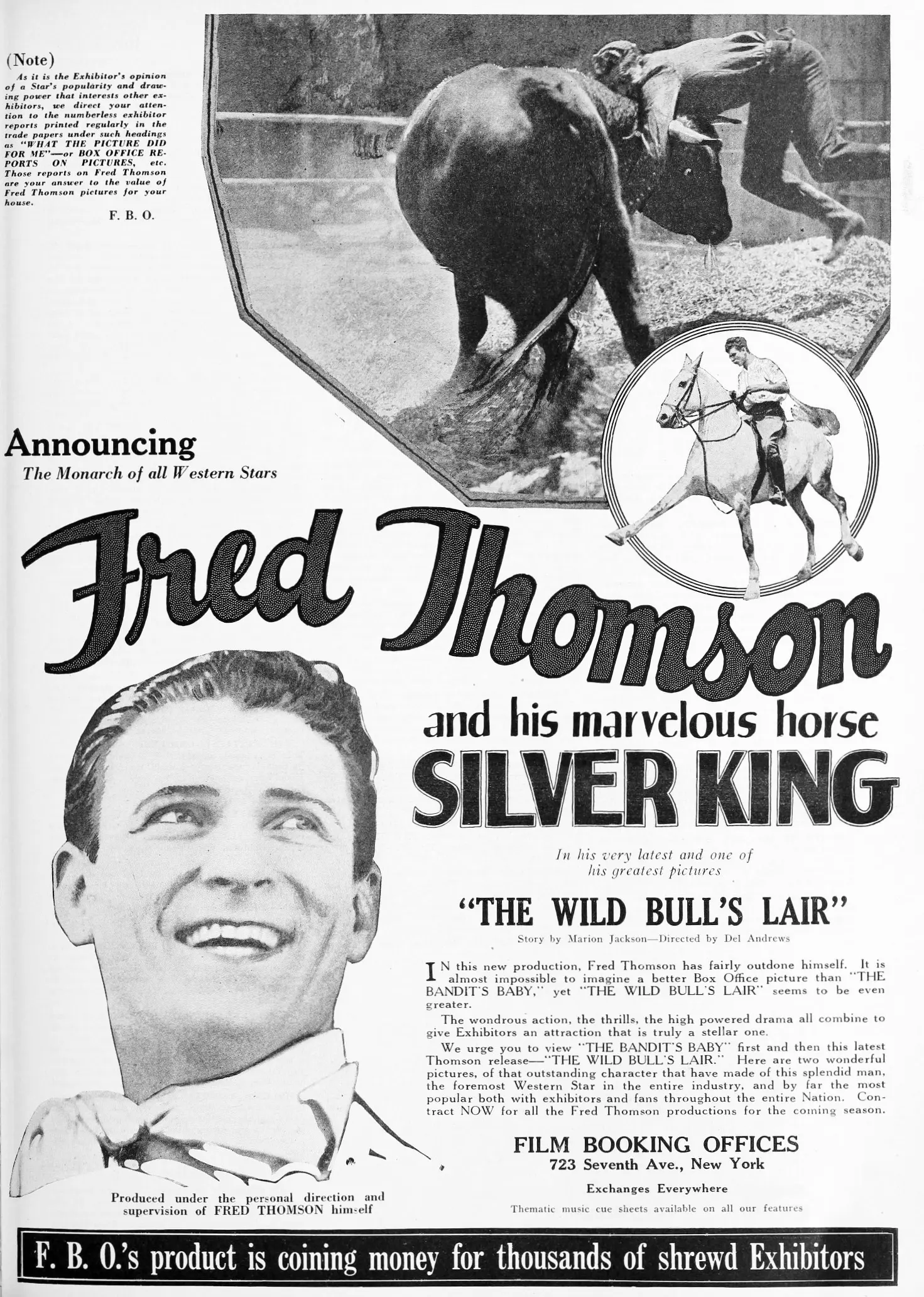
Short answer: Yes, but only if you possess an appetite for the raw, kinetic energy of the silent era’s most athletic Westerns. This film is for those who appreciate the physical craft of early stunt work and animal training; it is emphatically not for viewers who require modern pacing or a sensitive, contemporary approach to cultural representation.
The 1925 production of The Wild Bull's Lair stands as a fascinating, if occasionally jarring, intersection of generic tropes. It is a film that refuses to settle into a single groove. One moment it is a traditional romance between a government agent and a rancher’s daughter; the next, it is a proto-horror film featuring a genetically engineered monster (at least by 1920s standards) stalking the crags of a place ominously named Skull Mountain. Unlike the ethereal, atmospheric dread found in The Phantom Carriage, this film finds its tension in the dirt, the dust, and the very real threat of several hundred pounds of charging muscle.
This film works because the physical presence of the hybrid bull, Diablo, creates a genuine sense of primal threat that transcends silent era technical limitations. In an era where many Westerns relied on repetitive chase sequences, director Del Andrews and writer Marion Jackson (a prolific voice in early Westerns) understood that a singular, terrifying antagonist—even a four-legged one—could anchor a film’s stakes. The scenes where Diablo is 'trained' by Eagle Eye are genuinely unsettling. There is a specific moment where the bull is framed against the jagged rocks of Skull Mountain, looking less like livestock and more like a mythological chimera. It’s a visual choice that elevates the film above the standard B-movie fare of the time.
However, this film fails because the antagonist's motivations, while grounded in a fascinating resentment of his 'white' education, are ultimately flattened into a standard villain archetype for the sake of a clean resolution. Eagle Eye is introduced as a college graduate, a detail that suggests a deep, intellectual core to his rage. Yet, as the film progresses, the script abandons this nuance in favor of making him a 'savage' leader of a band of Indians. It’s a missed opportunity for a more sophisticated character study, a trait sometimes found in more adventurous serials like The Broken Coin.
You should watch it if you want to see Fred Thomson at the height of his athletic prowess, demonstrating why he was once a rival to Tom Mix. Thomson wasn't just an actor; he was a world-class athlete, and his performance as Dan Allen is a masterclass in physical charisma. When he eventually confronts Diablo at Skull Mountain, the sequence is not built on trick photography but on genuine proximity to the animal. There is a palpable tension in the way Thomson moves—he doesn't just play a hero; he inhabits the space with a confidence that makes the far-fetched plot feel grounded.
Then there is Silver King. In the 1920s, horse stars were often as big as their human counterparts, and Silver King is no exception. His 'performance' here is more than just transportation. In one sequence, the horse’s reaction to the bull’s scent provides a better sense of the beast's danger than any dialogue intertitle could. The chemistry between Thomson and his horse is actually more convincing than the romantic subplot with Catherine Bennett’s Eleanor. While Bennett is charming, her role is largely reactive, fitting the mold of the 'pretty daughter' in need of rescue, a trope that was already becoming stale even in 1925.
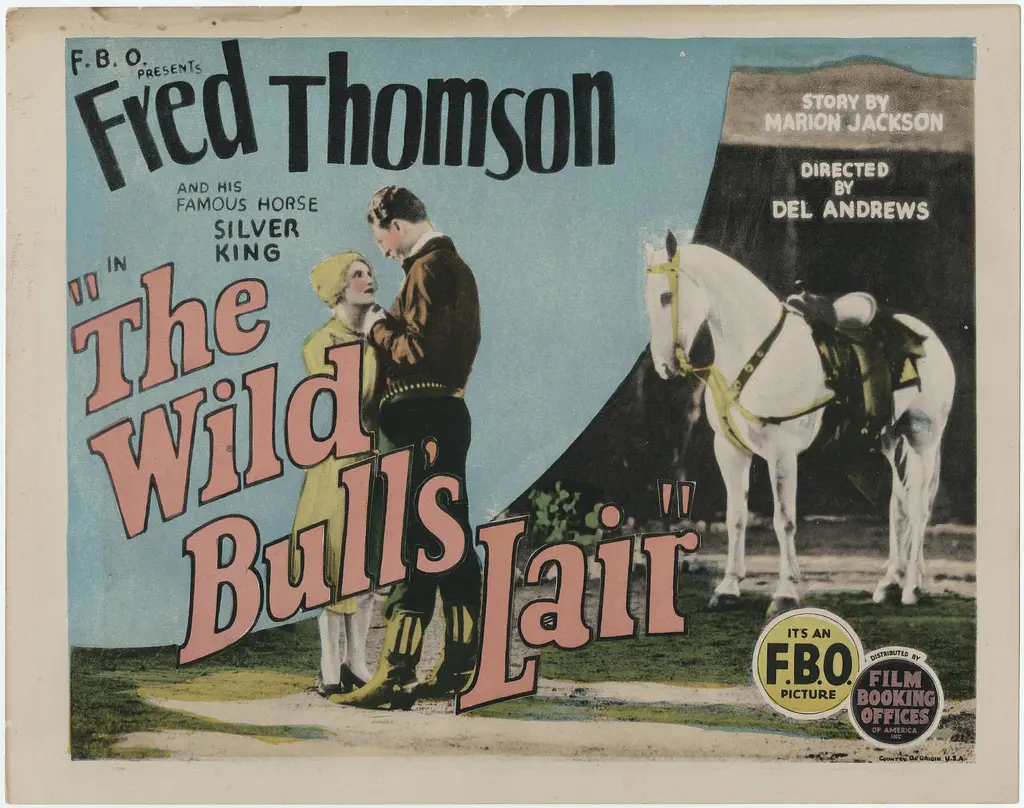
The cinematography by Ross Fisher deserves significant credit. The location shooting at Skull Mountain provides a stark, desolate backdrop that contrasts beautifully with the domesticity of the Harbison ranch. The use of light and shadow in the mountainous terrain creates a sense of isolation that feels modern. It lacks the maritime scale of The Adventures of Robinson Crusoe, but it makes up for it with a claustrophobic, rocky intensity. The way the camera tracks the bull’s movement through the narrow passes is surprisingly sophisticated for the era.
One of my more debatable opinions is that The Wild Bull's Lair is secretly a horror movie disguised as a Western. If you replace the bull with a werewolf or a slasher, the beats remain almost identical. The 'lair' of the title is treated with the same reverence as a vampire's castle. This genre-bending is what makes the film stand out. It isn't just about cattle rustling; it's about the fear of the uncontrollable, the hybrid, and the 'other' that refuses to be tamed by the government or the rancher.
To truly answer if this film is worth your time, one must look at what they value in cinema. If you value the evolution of the Western and the history of animal stunts, it is an essential watch. It offers a glimpse into a time when the Western was still figuring out its own rules. It’s a film of high energy and low subtlety. It’s punchy. It’s fast. It’s occasionally quite violent for its time.
However, if you are looking for a film that treats its Indigenous characters with any degree of modern sensitivity, you will be disappointed. The character of Eagle Eye is a fascinating concept—the educated man returning to the wild—but the film ultimately treats his education as a weapon rather than a bridge. It’s a cynical take on assimilation that reflects the anxieties of the 1920s more than the reality of the characters.
The Wild Bull's Lair is a kinetic, albeit troubled, relic of a bygone era. It possesses a raw power that many of its contemporaries lacked, largely due to the presence of Fred Thomson and the genuinely menacing Diablo. While its social politics have aged poorly, its technical execution and sheer willingness to embrace a 'monster movie' aesthetic within the Western genre make it a noteworthy piece of silent cinema. It’s a wild ride that, much like its central beast, is hard to look away from once it starts charging.
"This isn't just a Western; it's a testament to the physical risks early filmmakers took to capture the primal struggle between man, beast, and the land they both claim."
IMDb —
1924
Community
Log in to comment.