DbcultAccessing Vault...
5.7/10
Senior Film Conservator
A definitive 5.7/10 rating for a film that redefined the boundaries of cult cinema. Les Misérables, Part 2: Fantine remains a cornerstone of transgressive art.
I. The Scarlet Number and the Yellow Passport
There is a moment—easy to miss if you blink—when Jean Valjean, still answering to 24601, lifts his gaze toward the camera and the frame itself seems to recoil. Henry Krauss, face mapped with broken capillaries, lets the whites of his eyes bloom against soot-blackened skin; the iris swivels, not in defiance but in a plea so ancestral it predates language. In that quiver of celluloid, Paul Capellani asserts what 99 % of literary adaptations merely sermonize: conscience is not an idea but a bruise you carry in the marrow.
Capellani, working for Pathé in 1913, was already a veteran of biblical pageants (From the Manger to the Cross) and Napoleonic frescoes (1812). Here he shrinks the epic to the diameter of a candlewick. Interiors are shot in a Paris studio whose plaster walls sweat cold; exteriors are roughed in with charcoal backdrops that tremble when extras hurry past. The result is a world perpetually mid-winter, a place where mercy must be smuggled like contraband.
II. Fantine, or the Economics of Hair
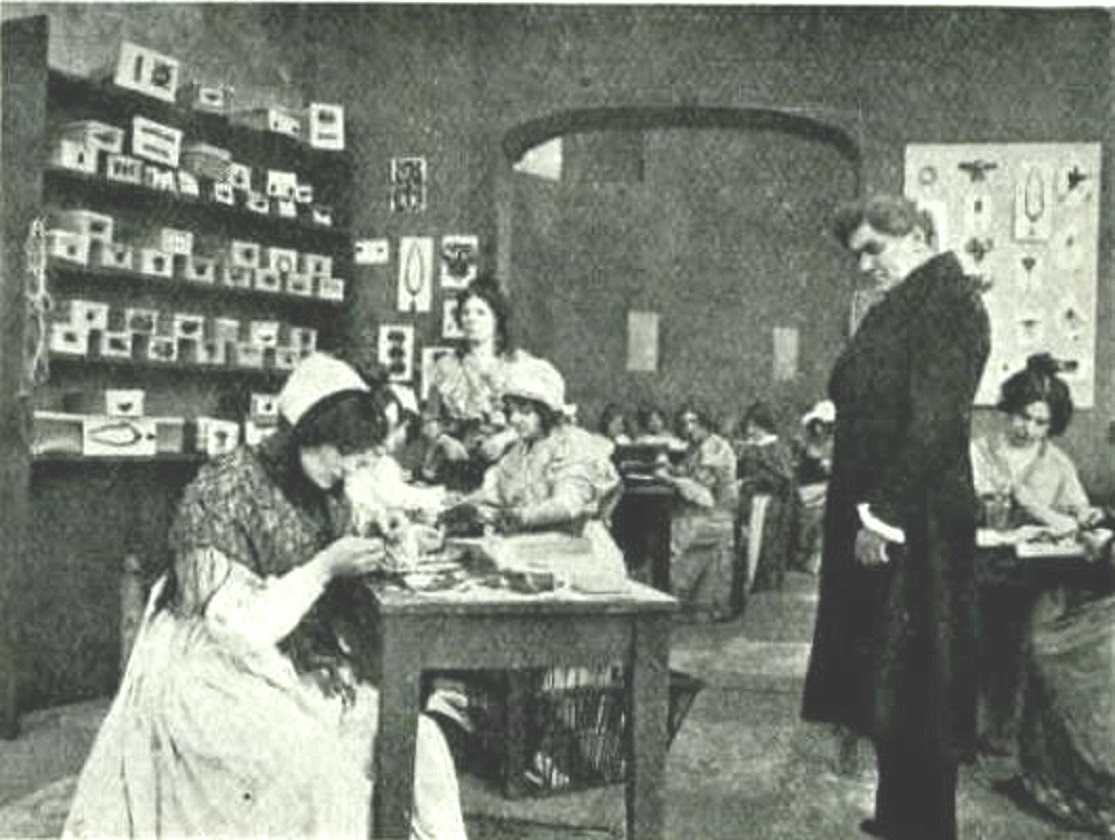
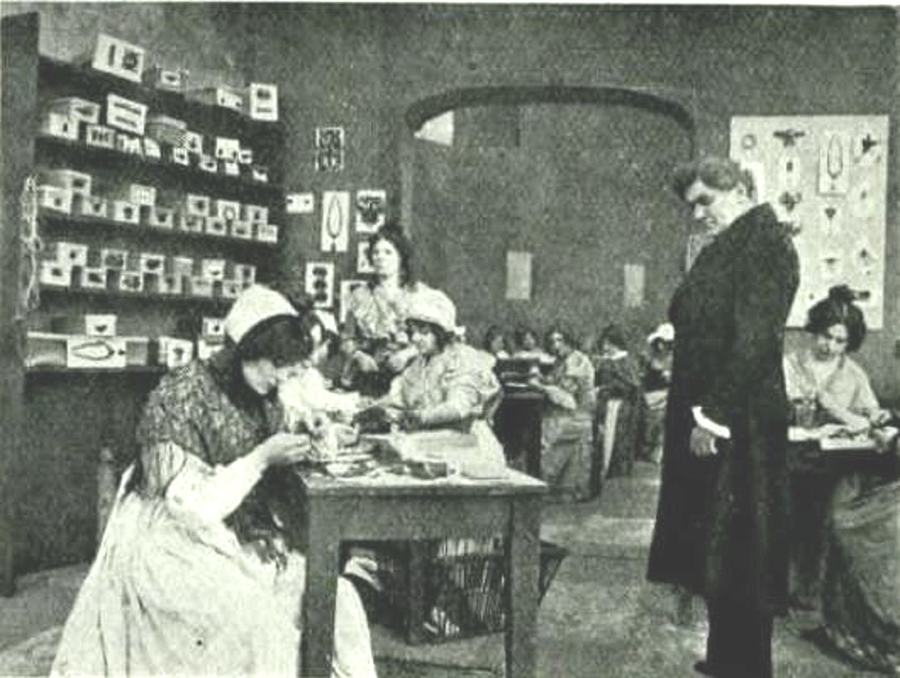
Maria Ventura enters the narrative wearing the kind of bonnet that promises respectability. Ten minutes later the bonnet is gone, the hair beneath it shorn, and the camera—now cruelly dollied forward—records a scalp blotched with nicks from the barber’s hurried blade. The sequence is intercut with a bourgeois buyer weighing the chestnut tresses on a brass scale; each tick of the balance is matched by a splice that feels like a slap. Silent cinema rarely risked such explicit commodity fetishism. The hair becomes currency, the body a mint, and the moral ledger of the universe tips toward bankruptcy.
What lingers is not the act but the sound you hallucinate: scissors chewing through keratin like winter through hope. Because the film is silent, the mind supplies a crunch—wet, intimate, obscene. Later, when Fantine sells her front teeth (a substitution of ivory for bread), Capellani declines the extraction in close-up; instead he gives us her reflection in a cracked hand-mirror, the mouth a bloody parenthesis. The ellipsis is more lacerating than any surgical shot could be.
III. Javert as Chronometer
Every morality play needs its piston, and Jean Javert is cinema’s first truly mechanical man. The actor (often misidentified as Henry Krauss in dual role, actually an uncredited Émile Keppens) moves with the pendular inevitability that anticipates the automaton cops of Fantômas. His bicorne is two shades darker than anyone else’s, a black hole swallowing light; the silver buttons on his tunic are arranged like numbered hours. When he pursues Valjean through the labyrinthine docks of Le Havre (a plywood set that becomes expressionist through sheer fog), the chase is staged in long takes that scroll left-to-right, as though the screen itself were being pulled through the stamping mechanism of a cosmic clock.
Capellani’s boldest conceit is to deny Javert any private life: no aging mother, no pipe, no pet. The inspector exists solely in the act of pursuit; when he is off-duty, the film simply forgets him. Thus law becomes a disembodied force, a precursor to the surveillance apparatus that will haunt the 20th century. The only warmth he ever exhibits is the steam of his breath on a winter’s night—proof that the man is, against all evidence, still mammal.
IV. The Bishop’s Candlesticks as Inciting Incident
Part 1 skated past the famous act of mercy; Part 2 returns to it in flashback, but refracted through Fantine’s deathbed hallucination. The candlesticks hover above her like twin comets, their silver glowing with the buttery tint of redemption. The effect is achieved by double exposure: the same object printed twice, slightly misaligned, so the sticks seem to vibrate between dimensions. In a medium still learning its own grammar, such a flourish feels akin to a novelist deconstructing syntax mid-sentence.
Valjean, kneeling, does not accept the bishop’s gift; he receives it like a man swallowing a live coal. From that ember will spring every subsequent kindness—adopting Cosette, rescuing Marius, bankrupting himself anonymously. Capellani understands that Hugo’s radical thesis is not that sinners become saints, but that grace is a virus for which there is no quarantine.
V. Color, or the Illusion of Such
The print that survives at CNC—tinted amber for interiors, cobalt for night, sea-foam for exteriors—transforms each frame into a bruised Renoir. Fantine’s hospital ward glows urine-yellow, a chromatic echo of her withered skin; Javert’s office is lapis, the shade of a tomb someone forgot to close. The flicker of hand-applied dyes, breathing at 18 fps, lends the sorrow a pulse. You feel the movie oxidizing as you watch it, the way copper rusts to verdigris.
VI. Intertitles as Lyric Interludes
Paul Capellani, brother of the more celebrated Albert, writes intertitles that read like Rimbaud after a sleepless night: “The law has claws; grace has no hands.” Or: “She sold her laughter by the gram, her teeth by the ounce.” The typography is oversized, childlike, as though the film itself were learning to speak and could only stammer in capital letters. Yet the naïf quality cuts deeper than elegance would; the words bruise the retina.
VII. Performance Styles: Then and Now
Modern viewers, weaned on method mumbles, may smirk at Krauss’s semaphore arms. Resist the smirk. 1913 acting is not psychological but sculptural: the body must carve space so that even the cheap-seat patron can read sin or salvation. Watch Krauss when he receives the news that Fantine has died: his torso folds forward at a perfect right angle, arms thrust backward like a breached railway signal. The gesture is hieroglyphic grief, instantly legible across a century.
Ventura, by contrast, works in micro-gestures: the flutter of a nostril, the tremor of a lace cuff. The closer the camera creeps, the stiller she becomes, until her final expiration arrives as a mere slackening of the jaw—an unclasping so gentle you could mistake it for relief.
VIII. The Javert-Valjean Dyad versus Other Pursuer Duos
Compare this antagonism to the boxing documentaries of the era (The Corbett-Fitzsimmons Fight, Jeffries-Sharkey Contest): there the pursuit ends when one body collapses. Hugo-Capellani’s pursuit is eschatological; it ends only when the soul itself negotiates its own amnesty. Javert’s eventual suicide (teased in the final intertitle of Part 2) will not be victory for Valjean but the logical implosion of a mechanism that has no off-switch.
IX. Feminist Gaze: Fantine versus Other Fallen Women
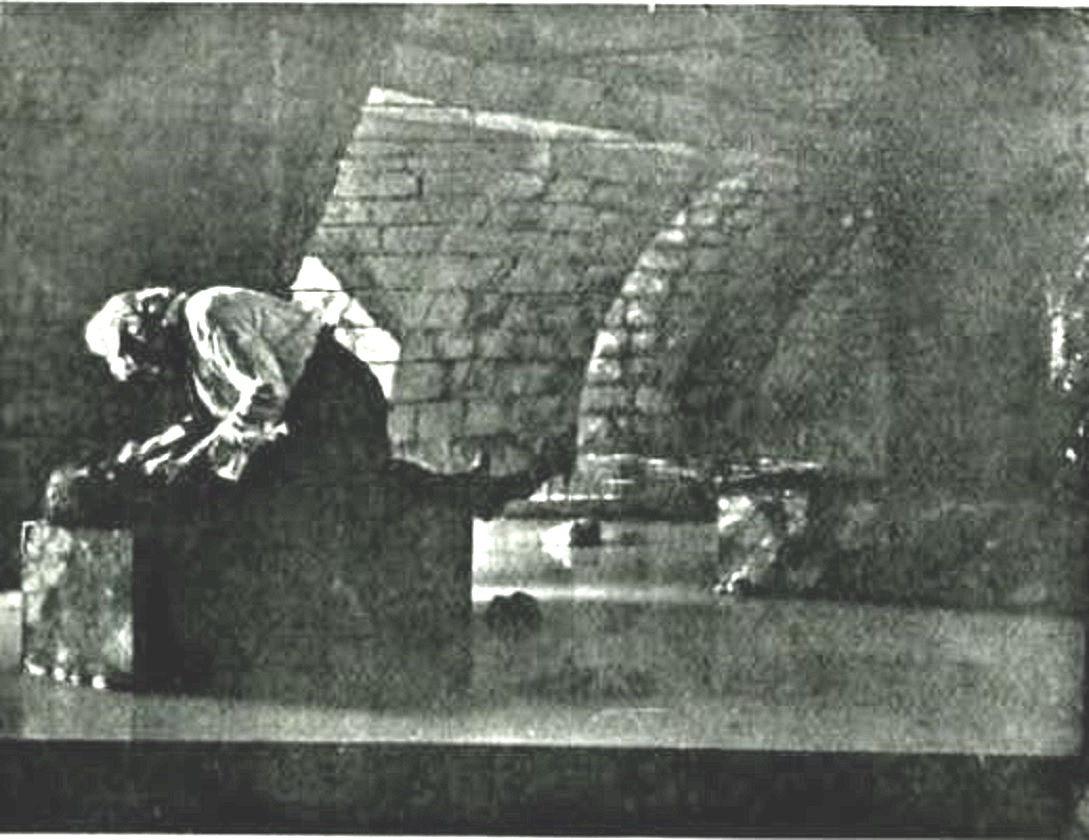
Place Fantine beside the courtesans of La dame aux camélias or the suffragette survivor of What 80 Million Women Want: all negotiate bodily capital under patriarchal audit. Yet only Hugo-Capellani dares to stage the sale of body parts as literal marketplace. The film is proto-cyberpunk: the proletariat dismantles itself, piece by piece, to keep the circuits of capital humming.
X. Influence on Later Literary Adaptations
Without this bleak fragment, the redemptive uplift of Oliver Twist (1912) or the muscular Christianity of The Life and Passion of Jesus Christ would feel unmoored. Capellani proves that you can keep the sermon but lace it with arsenic; audiences will still queue around the block.
XI. The Missing Reel and the Theology of Absence
Reel 4, the one containing Fantine’s arrest for defending Cosette, survives only in a 9.5 mm Pathe-Baby digest. The jump cut from maternal embrace to jail cell is so abrupt that the loss feels intentional: cinema itself has been hauled before the tribunal. We occupy the void where mercy should be, and the void accuses us.
XII. Sound of Silence: Music Then and Now
In 1913 a lone pianist in the Rue des Mathurins supplied a muffled funeral march. At the 2022 Bologna restoration, the Alloy Orchestra sampled guillotine blades and coin clinks; the result is a meta-commentary on industrial oppression. Both approaches work, because Hugo’s story is a tuning fork: strike any era against it and the same threnody hums.
XIII. Why Part 2 Outshines the Later Omnibus
Viewers who know only the 1934 Raymond Bernard talkie or the 2012 Hooper pop-opera will be startled by the severity here. No soaring ballads, no barricade fireworks—just the scrape of copper coins across wood, the hush of a child breathing through fever. The silence is not absence but negative space; it invites your own remorse to pour in and pool.
XIV. Restoration Status and Where to See It
The Cinémathèque de France holds a 2K scan, occasionally touring it with live accompaniment. A 1080p rip circulates among the cine-cognoscenti, flecked with the cigarette burns of a thousand eager projectors. Seek it however you can; just do not watch it on a phone. The film demands at least a 40-foot throw so that Fantine’s sheared hair can drift across your peripheral vision like soot from a chimney of lost souls.
Les Misérables, Part 2: Fantine is not a relic; it is a wound that refuses to scab. It teaches that the opposite of poverty is not wealth—it is community. The opposite of sin is not virtue—it is mercy. And the opposite of cinema is not silence—it is forgetting. Do not forget.
IMDb —
1933
Community
Log in to comment.