DbcultAccessing Vault...
4.2/10
Senior Film Conservator
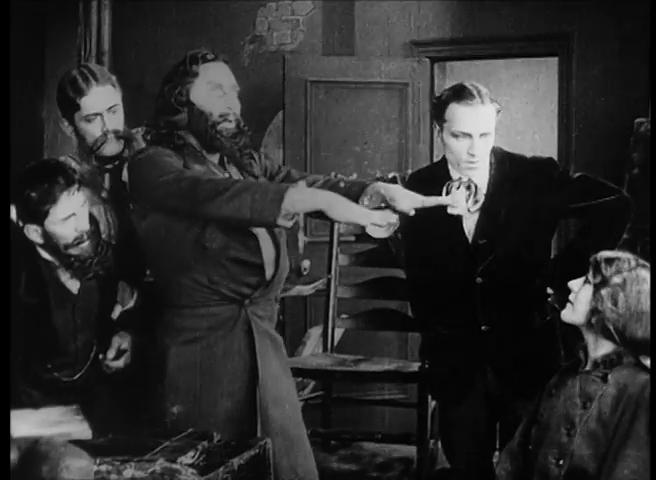
A definitive 4.2/10 rating for a film that redefined the boundaries of cult cinema. Trilby remains a cornerstone of transgressive art.
Stepping back into the nascent years of cinematic artistry, one encounters 'Trilby' (1915), a film that, despite its temporal distance, resonates with a disquieting psychological depth. Adapted from George L. Du Maurier’s sensationally popular 1894 novel, this early silent feature by Bannister Merwin dares to explore themes of manipulation, artistic integrity, and the very essence of human will long before such concepts became commonplace in storytelling. The film, a product of its era, carries the distinct theatricality of its time, yet within its frames, it manages to convey a chilling narrative that continues to intrigue scholars and cinephiles alike. It’s a fascinating artifact, not merely for its historical significance, but for its audacious attempt to translate the ethereal, almost supernatural, power of hypnotic control onto the silent screen.
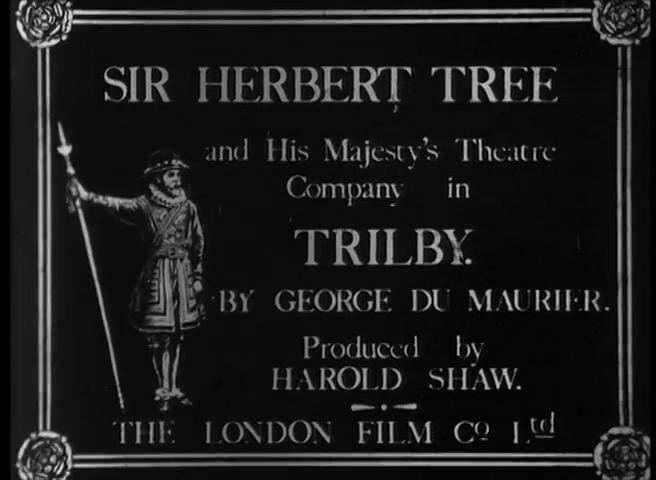
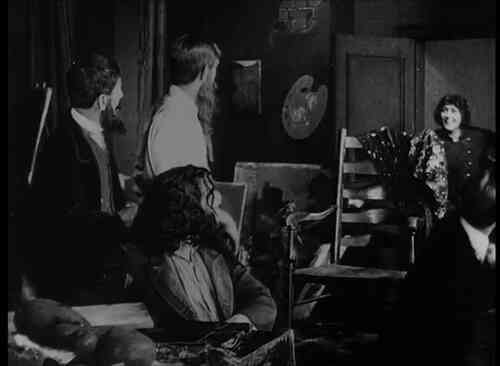
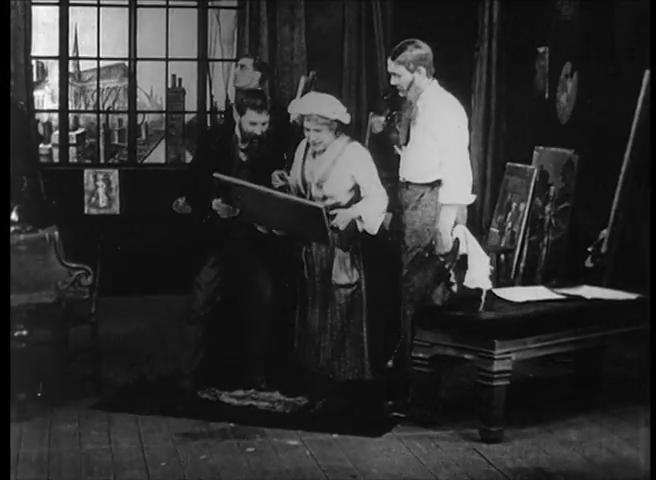
The story plunges us into the vibrant, often squalid, bohemian quarter of 19th-century Paris, a world teeming with aspiring artists, models, and dreamers. Here, we meet Trilby O'Ferrall, portrayed with a poignant blend of innocence and vulnerability by Viva Birkett. Trilby is an artist's model, captivating in her natural charm, yet utterly devoid of musical talent. Her life takes a fateful turn with the introduction of Svengali, a character so iconic he transcended the novel to become a byword for insidious control. Herbert Beerbohm Tree, a titan of the British stage, embodies Svengali with a mesmerizing intensity that must have been truly unsettling for audiences of the time. His Svengali is not merely a villain; he is a force of nature, a maestro of the mind whose hypnotic gaze can bend reality to his will. Through a series of increasingly unsettling encounters, Svengali slowly ensnares Trilby, exploiting her vulnerability and transforming her, under his absolute hypnotic command, into a world-renowned singer. The irony is excruciating: a woman with no natural singing ability becomes a vocal sensation, her voice an exquisite instrument played entirely by another's will. This is the core tragedy: the theft of self, the usurpation of artistic agency. Yet, the narrative's profound twist lies in the fact that while Svengali can command her voice, her body, her public persona, he cannot penetrate the sanctity of her heart. That remains irrevocably pledged to Little Billee, a sweet-natured painter portrayed by Ian Swinley, whose pure affection stands in stark contrast to Svengali's possessive obsession. The film thus navigates the treacherous waters between external control and internal freedom, culminating in a denouement that is both tragic and, in its own way, triumphant for the human spirit.
The gravitational pull of 'Trilby' undeniably resides in Herbert Beerbohm Tree's portrayal of Svengali. Tree, a legendary actor-manager of his era, brought a formidable theatricality to the screen, a characteristic often found in early cinema. Unlike many of his contemporaries who struggled to adapt their stage mannerisms to the more intimate medium of film, Tree understood the power of the close-up and the subtle gesture. His Svengali is a figure of almost demonic charisma, his piercing eyes conveying a palpable sense of power and malevolence even without spoken dialogue. One can almost feel the weight of his hypnotic suggestion, the insidious creep of his influence. The performance is a fascinating study in non-verbal communication, relying on exaggerated facial expressions, sweeping hand gestures, and a menacing physical presence to articulate the character's profound evil. This was a challenging role, demanding the actor convey not just a character, but an abstract force – the very essence of mind control. Tree's success in this endeavor cemented Svengali's place in popular culture as the archetypal manipulator, a testament to his extraordinary talent. His performance is a crucial anchor, preventing the film from descending into mere melodrama and instead elevating it to a psychological drama of considerable impact. The way he commands the screen, even in moments of stillness, speaks volumes about his understanding of the nascent cinematic language, setting a high bar for villainous portrayals in silent film.
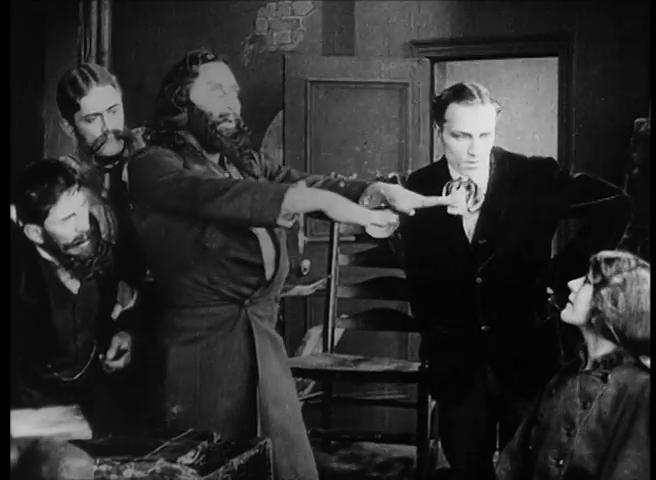
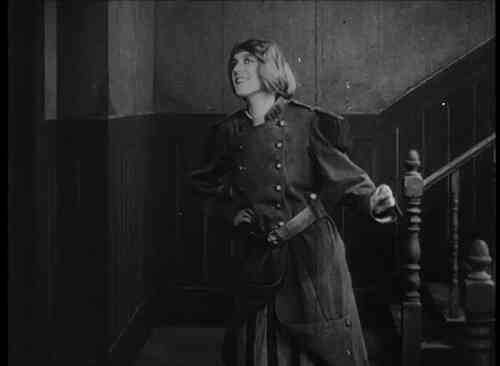
Opposite Tree's formidable Svengali, Viva Birkett delivers a performance as Trilby that is marked by its delicate vulnerability and tragic grace. Her challenge was arguably even greater than Tree's: how does one portray a world-renowned singer in a silent film, especially when the character's natural voice is described as unmusical? Birkett navigates this by focusing on Trilby's transformation, her physical and emotional subjugation under Svengali's spell. We witness her initial vivacity slowly dim, replaced by a vacant, almost puppet-like demeanor when under hypnosis. Her eyes, once sparkling with life, become glazed and distant, conveying the profound loss of her own agency. The moments where she performs, her gestures fluid and her expressions serene, are chilling precisely because we know this artistry is not her own. Birkett masterfully portrays the internal conflict, the lingering echoes of her former self struggling against the hypnotic chains. Her performance is a testament to the power of subtle acting in the silent era, relying on nuanced expressions and body language to communicate the character's inner turmoil. The tragedy of Trilby is not just that her voice is stolen, but that her very identity is subsumed, a harrowing prospect that Birkett conveys with remarkable pathos. She embodies the fragility of the human spirit when confronted with overwhelming psychological force, making Trilby a figure of enduring sympathy and a potent symbol of artistic exploitation.
'Trilby' is far more than a simple melodrama; it's a profound meditation on several enduring themes. At its core lies the stark contrast between authentic artistic expression and manipulated performance. Svengali's 'art' is born of coercion, a spectacle that dazzles but lacks genuine soul. Trilby's true artistic potential is never realized, only hijacked. This raises pertinent questions about the ethics of creation and the ownership of talent, questions that remain relevant in today's world of ghostwriters and AI-generated art. Furthermore, the film delves into the harrowing concept of psychological control. Hypnosis, at the time, was often viewed with a mixture of fascination and fear, bordering on the occult. Svengali's power taps into this societal anxiety, presenting a villain who conquers not through brute force, but through the insidious invasion of the mind. This makes him a particularly terrifying figure, as his weapon is invisible and his dominion absolute, at least over Trilby's public self. Yet, the film's most potent message is the resilience of the human heart. Despite Svengali's total command over Trilby's professional life, her affection for Little Billee remains untainted, a bastion of purity that his dark magic cannot breach. This unwavering emotional core highlights the fundamental difference between control and love, between possession and devotion. It suggests that while external forces can shape our actions, the deepest recesses of our being, our capacity for true affection, remain inviolable. This thematic richness elevates 'Trilby' beyond a period piece, cementing its status as a timeless exploration of power, vulnerability, and the enduring strength of the human spirit. The film, in its silent eloquence, speaks volumes about the sanctity of individual will and the boundaries that even the most formidable external forces cannot cross.
As an early silent film, 'Trilby' offers a fascinating glimpse into the nascent techniques of cinematic storytelling. Without spoken dialogue, filmmakers had to rely heavily on visual cues, intertitles, and the expressive power of their actors. The challenge of portraying a hypnotist and a singer without sound is particularly noteworthy. The film utilizes close-ups to emphasize Svengali's penetrating gaze, allowing audiences to feel the weight of his psychological power. Intertitles are employed not just for dialogue, but to convey internal thoughts, narrative exposition, and even the emotional tenor of musical performances, describing Trilby's 'angelic' voice even as we hear nothing. The mise-en-scène, with its detailed Parisian settings and theatrical blocking, transports the viewer into the bohemian world of the novel. The use of light and shadow, though perhaps rudimentary by later standards, contributes to the film's atmospheric quality, particularly in scenes involving Svengali, where shadows often play across his face, accentuating his sinister nature. The film's pacing, while deliberate, builds a sense of dread and suspense effectively. Comparisons to other early adaptations of literary or theatrical works, such as Hamlet (1911) or The Life and Death of King Richard III, highlight the common struggles and innovations of the era in translating complex narratives to the screen. These films, like 'Trilby', often retained a theatrical flair, yet they were simultaneously experimenting with cinematic grammar, paving the way for more sophisticated visual storytelling. The very act of depicting a singing performance through visual means alone, relying on the audience's imagination guided by the actress's expressions and the intertitles, is a testament to the ingenuity of silent filmmakers. It forces the viewer to engage actively, to 'hear' the music in their mind's ear, making the experience uniquely immersive in its own way.
The enduring impact of 'Trilby' extends far beyond its initial run. The character of Svengali, in particular, has permeated popular culture, becoming a widely recognized archetype for a person who, with evil intent, manipulates and dominates another. This legacy speaks volumes about the power of Du Maurier's original creation and Herbert Beerbohm Tree's indelible portrayal. The film, and the novel before it, tapped into a universal fear of losing control, of being a puppet in someone else's play. This psychological resonance ensures its continued relevance. Furthermore, 'Trilby' stands as an important milestone in the history of psychological drama on screen. It demonstrated that cinema could explore complex internal states and power dynamics without the aid of spoken words. Its themes of artistic exploitation, unrequited love, and the battle for selfhood continue to be explored in modern storytelling, albeit with different cinematic tools. One might even draw a thematic parallel to films like Den sorte drøm, if one considers its exploration of dark psychological states and the allure of dangerous, manipulative figures, showcasing how early cinema grappled with profound human experiences. 'Trilby' serves as a crucial reminder of silent cinema's capacity for profound storytelling and its foundational role in shaping the narrative techniques we take for granted today. It's a film that demands to be viewed not just as a historical curiosity, but as a potent, if somewhat unsettling, artistic statement that continues to echo in the annals of film history. Its examination of the fragile boundary between influence and coercion, between inspiration and domination, is as pertinent now as it was over a century ago. The silent era, often underestimated, produced works of surprising depth and emotional complexity, and 'Trilby' is a shining, albeit dark, example of this often-overlooked richness. It remains a compelling watch for anyone interested in the evolution of cinema and the timeless power of a truly captivating narrative.
IMDb 6.2
1935
Community
Log in to comment.