DbcultAccessing Vault...
6.8/10
Senior Film Conservator
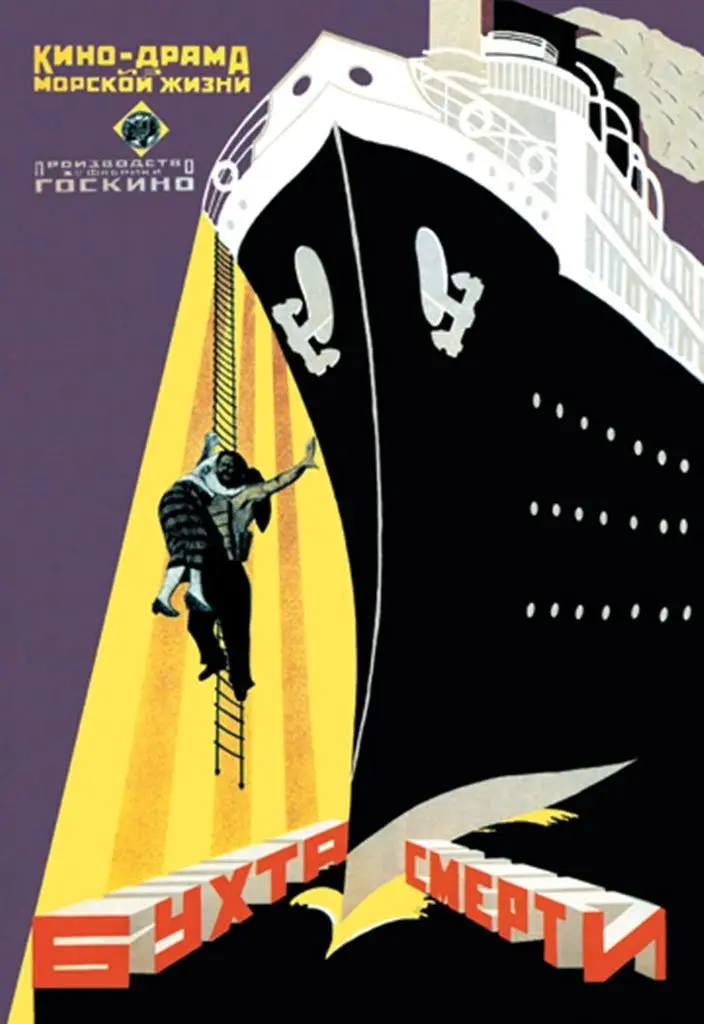
A definitive 6.8/10 rating for a film that redefined the boundaries of cult cinema. The Bay of Death remains a cornerstone of transgressive art.
Should you watch this nearly century-old relic of Soviet cinema today? Short answer: yes, but only if you have the stomach for heavy-handed political messaging and an interest in the mechanical grit of the silent era.
This film is for the cinephile who finds beauty in the industrial aesthetic and the historian who wants to see the Bolshevik Revolution through a lens of domestic tragedy. It is absolutely not for those seeking light entertainment or a fast-paced action flick.
This film works because it transforms the battleship into a sentient, suffocating character that reflects the internal chaos of its protagonists.
This film fails because the ideological archetypes often override the human nuances, making the son feel more like a pamphlet than a person.
You should watch it if you want to see how early directors like Abram Room used claustrophobia to heighten the stakes of a family drama.
Abram Room was never one for the sweeping, romantic vistas found in films like The Virgin Queen. Instead, he finds his muse in the grime.
In The Bay of Death, the engine room is the true star. The way the camera lingers on the sweating brow of Aleksei Kharlamov as he operates the machinery is hypnotic.
Every shot is composed with a geometric precision that makes the ship feel like a cage. You can almost smell the oil and the salt water through the screen.
The film lacks the breezy social commentary of Politics, opting instead for a somber, almost religious dedication to the labor of war.
Kharlamov delivers a performance that is surprisingly restrained for the silent era. He doesn't rely on the wild gesticulations common in 1920s melodrama.
His eyes carry the weight of a man who knows that no matter who wins the war, he has already lost his family. It is a haunting portrayal of forced neutrality.
When he confronts his son, played with a fiery, perhaps too-earnest intensity by the supporting cast, the screen practically vibrates with tension.
It reminds me of the stoic suffering seen in Calvaire d'amour, though transposed into a much more violent and political landscape.
The cinematography by Grigori Giber is a masterclass in low-angle power dynamics. He shoots the ship's officers from below, making them look like iron giants.
Conversely, the sailors and mechanics are often framed in tight, crowded shots, emphasizing their status as cogs in a massive, uncaring machine.
There is a specific sequence where the ship enters the bay—the titular Bay of Death—where the lighting shifts from harsh industrial whites to murky, ominous greys.
It is a visual shift that signals the transition from a struggle for survival to a march toward inevitable doom. It is incredibly effective.
While films like On a Summer Day use light to evoke nostalgia, Room uses it to evoke a sense of impending burial.
Yes, The Bay of Death is worth watching because it provides a rare, gritty look at the psychological toll of the Russian Civil War beyond the battlefield.
It moves past the simple 'Red vs. White' narrative to explore how political upheaval destroys the foundational unit of society: the family. It is a difficult but rewarding experience.
The pacing of the film is deliberate. It does not have the frantic energy of Cooks and Crooks or the episodic nature of News in Brief.
Instead, it builds pressure like a steam boiler. The first half is almost entirely character-driven, establishing the mechanic's routine and his pride in his work.
The second half is where the political conflict boils over. The transition is jarring, but that is clearly the point. Revolution is never a smooth process.
However, some modern viewers might find the middle act a bit repetitive. There are only so many shots of valves turning that one can take before the metaphor loses its edge.
When looking at other films of the period, like The Slacker, the stakes in The Bay of Death feel infinitely higher.
There is no room for the levity found in Borrowed Clothes. This is a film that takes itself with deadly seriousness, which is both its strength and its burden.
It shares a certain thematic DNA with The Land of the Lost, particularly in how it depicts men isolated from society, forced to create their own moral codes.
But where those films might offer a glimmer of hope or a romantic subplot, Room offers only the cold embrace of the sea.
Most critics focus on the political divide. I would argue the film is actually about the dehumanization of technology.
The mechanic loves his engines more than he understands his son's politics. This obsession with the machine is what ultimately blinds him to the tragedy unfolding around him.
In the end, the ship survives, but the humans do not. It is a cynical, almost nihilistic view of progress that feels surprisingly modern.
It reminds me of the grim inevitability found in Vyryta zastupom yama glubokaya..., where the earth—or in this case, the sea—is the only winner.
Pros:
- Stunning, high-contrast cinematography.
- A powerful, grounded lead performance.
- Visceral depiction of naval life.
Cons:
- Heavy-handed propaganda elements.
- Pacing can drag in the second act.
- Limited emotional range in the supporting cast.
The Bay of Death is a monumental, if flawed, piece of early cinema. It is cold. It is brutal. It works. While it lacks the narrative complexity of A Cumberland Romance, it makes up for it with sheer atmospheric power.
It is a film that demands your full attention. If you give it that, you will be rewarded with a harrowing look at a world in the midst of a violent rebirth.
Just don't expect to feel good when the curtains close. This is a story about the death of the old world, and it is every bit as messy as that sounds.
Final rating: A must-watch for the serious student of film, and a fascinating curiosity for everyone else.

IMDb —
1917
Community
Log in to comment.