DbcultAccessing Vault...
6.2/10
Senior Film Conservator
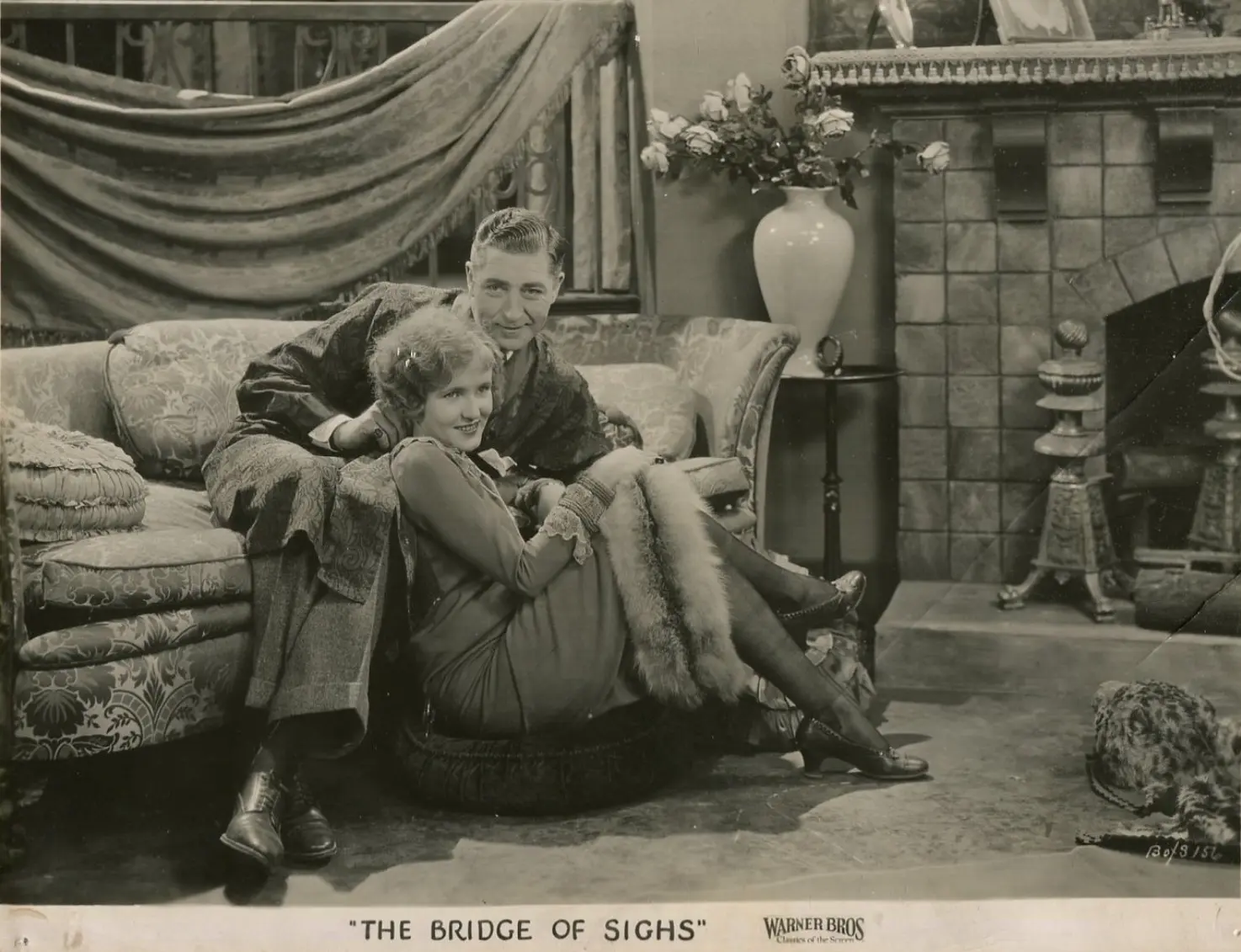
A definitive 6.2/10 rating for a film that redefined the boundaries of cult cinema. The Bridge of Sighs remains a cornerstone of transgressive art.
The Bridge of Sighs (1925) is a film that oscillates between the gilded decadence of pre-Collapse New York and the raw, unvarnished humanity of its characters, creating a dissonance that lingers like a minor chord. At its core, it’s a tale of a young man, the son of a titan of industry, whose life is a mosaic of inherited wealth and emotional atrophy. Played with a mix of entitlement and clueless charm by Creighton Hale, the protagonist is a man who mistakes his privilege for genius. His world is one of velvet drawing rooms and stock portfolios, until he encounters the daughter of his father’s business manager, portrayed by Dorothy Mackaill with a quiet ferocity that cuts through the film’s otherwise languid atmosphere.
The narrative’s first act is a masterclass in slow-burn tension. The tycoon’s son, a creature of excess with the intellect of a Mayfly, is initially drawn to the business manager’s daughter not for her substance but for the novelty of her world—a world that, ironically, is more grounded in reality than his own. Their romance unfolds like a series of chess moves, each partner testing the other’s resolve. The daughter, acutely aware of the class chasm between them, becomes a mirror held up to the protagonist’s soul, reflecting its emptiness. This dynamic is rendered with aching clarity in a scene where the pair share a clandestine meeting atop a Manhattan rooftop, the city’s skyline a silent witness to their doomed entanglement.
The film’s visual language reinforces this duality. Director Charles Harris and his team employ a palette of stark contrasts: the protagonist’s world is awash in gold-leaf textures and shadowy corners, while the daughter’s domain is bathed in the muted tones of practicality. The bridge that gives the film its title becomes a recurring motif—a liminal space between two worlds. In one striking sequence, the protagonist and the daughter cross the bridge under moonlight, their silhouettes dwarfed by the structure’s arches, a visual metaphor for the weight of their social constraints.
Dorothy Mackaill’s performance is a revelation. She imbues her character with a simmering intensity, her every gesture a study in restrained rebellion. Her scenes with Hale crackle with an undercurrent of tragedy, as if both actors intuit the futility of their roles. Hale, meanwhile, embodies the archetype of the golden boy gone sour, his delivery oscillating between affected charm and genuine bewilderment. The supporting cast, particularly Alec B. Francis as the business manager and Fanny Midgley as the protagonist’s disapproving mother, add layers of complexity. Francis’s portrayal of a man caught between loyalty and moral compromise is particularly nuanced, his quiet dignity a counterpoint to the chaos around him.
The screenplay, credited to Charles Harris, Louis D. Lighton, and Hope Loring, is a labyrinth of social critique and emotional shorthand. Dialogue is sparse but precise, often delivered in clipped, transactional tones that underscore the characters’ emotional detachment. One standout exchange occurs in a boardroom confrontation, where the protagonist’s father (Alec B. Francis) delivers a monologue on corporate ethics that doubles as a scathing indictment of capitalist greed. The line, “We build empires on sand, but we call it progress,” lingers like a curse, echoing the film’s central theme.
The Bridge of Sighs is a film that trusts its audience to read between the lines. The set design, a blend of Art Deco opulence and industrial grit, mirrors the characters’ internal conflicts. One of the film’s most memorable sequences involves a dinner party where the protagonist’s parents host the business manager’s family. The camera lingers on a chandelier, its light casting fractured patterns on the walls—a visual echo of the fractured alliances at the heart of the story. The use of negative space is telling; characters are often framed in doorways or windows, their bodies cut off as if by societal boundaries.
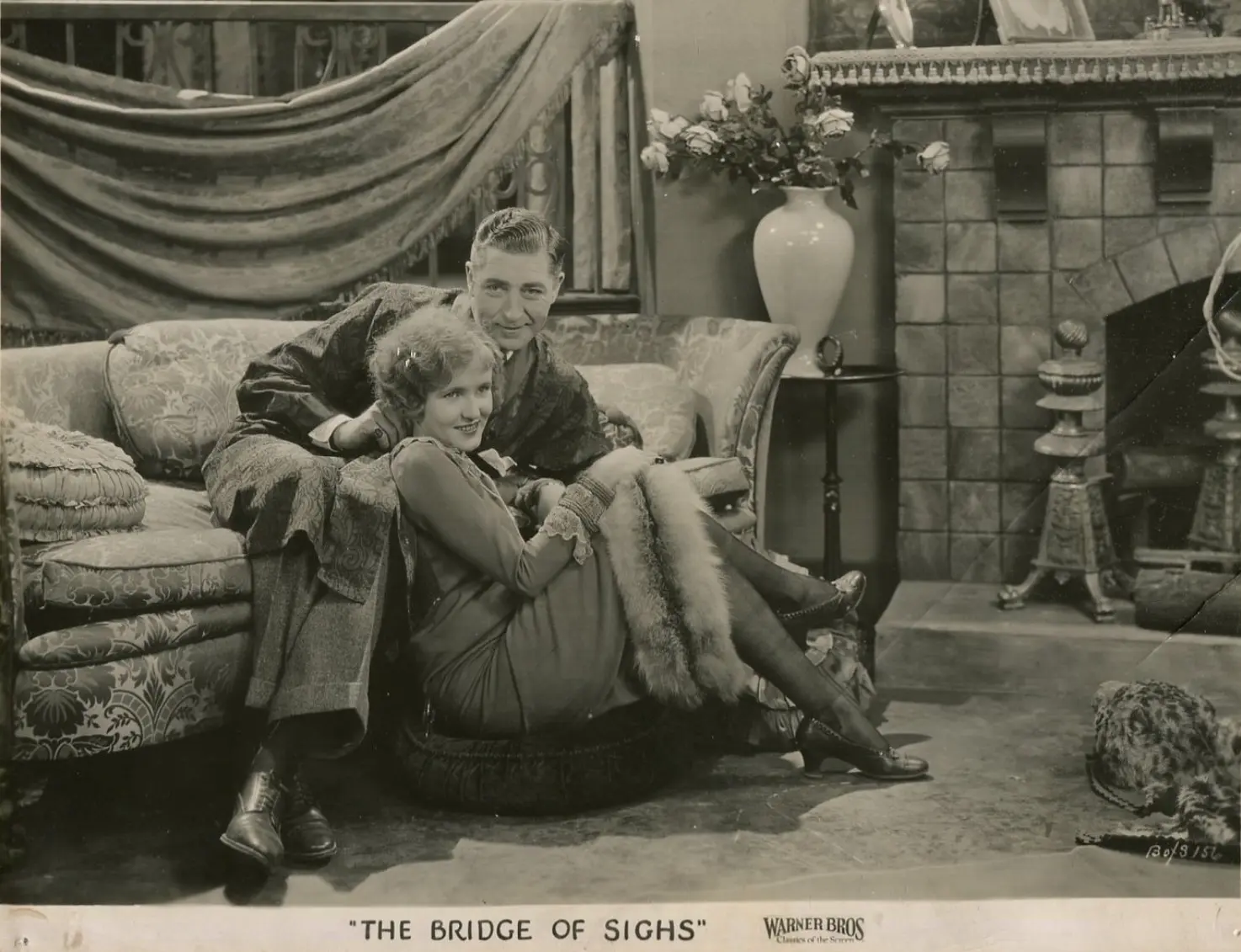
The film’s pacing is deliberate, each scene a calculated step toward the inevitable collapse of the protagonist’s illusions. A subplot involving a stock market scandal, while initially jarring, serves to ground the personal drama in a broader socio-economic context. This is where the film draws parallels with Days of Daring (1926), another era piece that juxtaposes individual ambition against institutional rot. However, The Bridge of Sighs distinguishes itself with its focus on the psychological toll of class disparity.
At its core, The Bridge of Sighs is a film about the impossibility of transcendence within a system designed to entrench inequality. The protagonist’s attempts to reform himself are met with societal resistance, a theme that resonates with A Woman of Pleasure (1927), which similarly explores the limits of personal agency in the face of systemic oppression. Yet where that film adopts a more overtly tragic tone, The Bridge of Sighs tempers its critique with moments of ironic humor, particularly in the protagonist’s futile attempts to mimic the "common man’s" lifestyle.
The final act is a masterstroke of narrative economy. Without a single line of dialogue, the film conveys the protagonist’s realization that he has nothing to offer the woman he loves. A single shot of him standing alone in a rain-soaked alley, his suit now threadbare, says more than pages of exposition could. This scene, reminiscent of the ending of Samhällets dom (1924), uses environmental storytelling to its fullest, the rain a cleansing but ultimately hollow gesture.
Though often overlooked in discussions of 1920s cinema, The Bridge of Sighs remains a vital artifact of the era. Its exploration of class and identity predates later works like The Crime of the Camora (1927) in its nuanced portrayal of institutional corruption. The film’s themes of disillusionment and social stratification are as pertinent today as they were nearly a century ago, offering a stark mirror to contemporary debates about wealth inequality and moral decay.
For modern viewers, The Bridge of Sighs is a challenging but rewarding experience. It demands patience for its deliberate pacing and rewards it with a narrative that transcends its time. The film’s refusal to offer easy resolutions—its willingness to let the characters grapple with their consequences—is a testament to its integrity. In an age of fast-cut, hyper-stylized cinema, this 1925 gem stands as a reminder of the power of restraint and subtlety.
The Bridge of Sighs is more than a period piece; it is a searing dissection of the human condition, wrapped in the trappings of a bygone era. Its exploration of love, class, and self-realization is as incisive today as it was in the roaring twenties. The film’s greatest strength lies in its ability to balance social commentary with intimate drama, creating a tapestry of emotion and intellect that lingers long after the credits roll. For those willing to engage with its complexities, it is a cinematic journey worth undertaking.
IMDb 6.1
1924
Community
Log in to comment.