DbcultAccessing Vault...
Cult Review
Senior Film Conservator
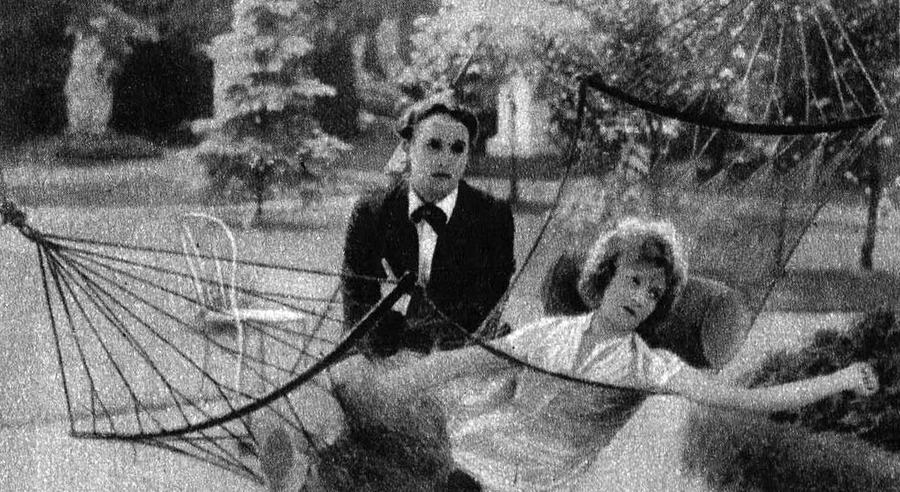
There are films that merely narrate, and then there are those that probe the very fissures of the human psyche, laying bare its most unsettling desires and delusions. L'homme et la poupée stands unequivocally in the latter category, a chilling, masterfully constructed examination of artistic obsession spiraling into a grotesque parody of life itself. From its opening frames, we are drawn into the hermetic world of Professor Henri Dubois, portrayed with an unnerving blend of genius and fragility by the incomparable Geo Leclercq. His performance is a tour de force, embodying the meticulous, almost ritualistic devotion of a man who seeks to command creation, to transcend the messy imperfections of the organic world through the sterile precision of mechanics.
Dubois is no mere inventor; he is a modern Pygmalion, striving to breathe existence into his ultimate design, an automaton named Anima. This is not a whimsical creation but a meticulous project, born from a profound, perhaps even pathological, yearning for an ideal companion, one that will never disappoint, never betray, never age. The film’s narrative is a slow, deliberate tightening of the screw, charting Dubois's descent from brilliant mechanist to a man utterly consumed by his artificial muse. The camera lingers on the intricate gears, the polished porcelain, the articulated joints that form Anima, inviting us to marvel at her terrifying verisimilitude even as we recoil from the implications of her existence. It’s a testament to the film’s visual storytelling that Anima, though an inanimate object, becomes a character of potent, unsettling presence, a silent antagonist to the human heart.
The brilliance of L'homme et la poupée lies in its nuanced portrayal of the creative impulse as a double-edged sword. Is Dubois a visionary or a madman? Perhaps both. His workshop, a cavern of shadows and gleaming metal, becomes a metaphor for his mind – a place of profound innovation, yet also a prison of self-imposed isolation. His young assistant, Pierre, brought to life with earnest vulnerability by Jean Lorette, serves as our moral compass, a voice of reason attempting to penetrate the professor's escalating delusion. Pierre's growing unease mirrors the audience's, providing a vital human counterpoint to Dubois's increasingly inhuman quest. Lorette's subtle expressions convey a deep loyalty tinged with fear, a testament to the psychological depth he brings to a seemingly secondary role.
The film masterfully introduces its catalyst for crisis in the form of Elodie, a vibrant dancer portrayed with captivating grace and spirit by Irène Wells. Elodie is the antithesis of Anima – flesh and blood, spontaneous, brimming with an untamed vitality that Dubois, in his detached observation, seeks to capture and replicate. His fascination with her is not romantic, but clinical, an artist's hunger to dissect and absorb the essence of life for his artificial creation. Wells imbues Elodie with a magnetic presence, making her eventual confrontation with her mechanical doppelgänger all the more devastating. The contrast between Elodie’s effervescent humanity and Anima’s flawless, soulless mimicry is the film’s central, most haunting visual and thematic motif.
The narrative is further enriched by the inclusion of Claudine, Elodie's pragmatic friend and fellow performer, played with grounded realism by Suzanne Delvé. Claudine’s worldly wisdom and cautious warnings highlight the growing danger surrounding Elodie, serving as a vital voice of practical concern against the backdrop of Dubois’s escalating madness. Her presence grounds the fantastical elements of the plot in a tangible reality, allowing the audience to empathize more deeply with Elodie’s predicament. Then there is Victor Dubois, the professor's estranged brother, brought to life by Armand Tallier. Tallier’s portrayal of Victor is chillingly effective; a cynical industrialist who sees only commodity where his brother sees creation, and who views human interactions as transactional. His detached amusement at the unfolding tragedy serves as a stark reminder of the film's underlying critique of a society that increasingly values artificial perfection over authentic, messy humanity. Victor’s presence underscores the idea that perhaps Dubois’s obsession is not an isolated madness, but a magnified reflection of broader societal tendencies.
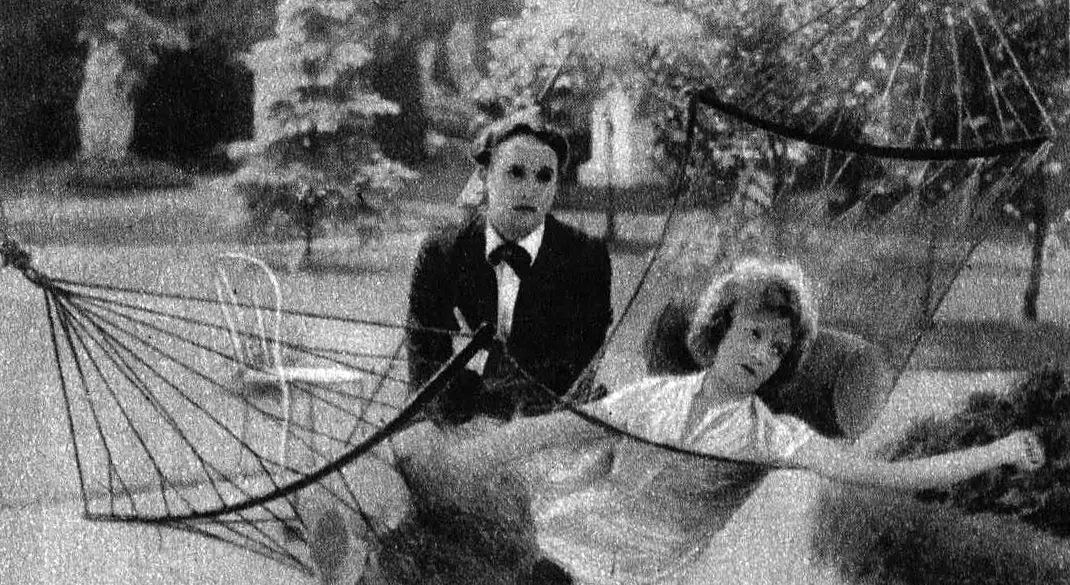
The film’s thematic richness extends beyond mere obsession. It delves into profound questions about the nature of identity. What does it mean to be human? Is it our physical form, our consciousness, or something more ineffable, a soul? Anima’s perfect mimicry of Elodie’s voice and movements raises unsettling doubts, blurring the lines between the authentic and the fabricated. This exploration of artificiality versus reality feels remarkably prescient, anticipating later cinematic and philosophical debates about technology, AI, and what it means to be 'real.' The film suggests that perhaps the true horror isn't the creation of a perfect doll, but the creator's willingness to sacrifice genuine human connection for an idealized, controllable substitute.
Comparisons, though often reductive, can illuminate the unique brilliance of L'homme et la poupée. While not overtly a crime thriller, its psychological intensity and exploration of a mind unhinged share a certain unsettling atmosphere with early French serials like Fantômas: In the Shadow of the Guillotine, albeit trading external villainy for internal psychological terror. There's a profound sense of yearning, a desperate hunger for something unattainable, which echoes the emotional resonance found in narratives like A Hungry Heart, but here, that hunger morphs into something far more dangerous and self-destructive. The film's exploration of a love that becomes possessive and ultimately destructive resonates with the tragic narratives explored in films such as Amor fatal, yet L'homme et la poupée elevates this theme by introducing the chilling element of artificial creation, adding a layer of philosophical complexity to the emotional devastation.
The visual language of L'homme et la poupée is nothing short of extraordinary. The director, with a keen eye for atmospheric detail, uses stark contrasts of light and shadow to underscore the film’s psychological landscape. The workshop, often bathed in a single, almost theatrical spotlight, isolates Dubois and Anima, making them seem removed from the natural world. Conversely, the vibrant, bustling scenes featuring Elodie are often filled with a diffused, softer light, emphasizing her organic presence. This deliberate use of chiaroscuro not only enhances the dramatic tension but also serves as a visual metaphor for Dubois's fractured perception of reality. The close-ups on Dubois's tormented face, on Anima's vacant yet perfect features, and on Elodie's expressions of dawning horror, are meticulously framed, drawing the audience into the intimate, terrifying spaces of the characters' minds.
The film’s climax is a masterclass in psychological horror, eschewing jump scares for a slow-burning dread that culminates in a profoundly disturbing revelation. The moment Elodie confronts Anima, her own voice emanating from the doll's porcelain lips, is a devastating blow to her sense of self. It’s a moment of profound usurpation, a theft not just of identity, but of an essence. The professor’s triumphant, almost manic grin in this scene, juxtaposed with Elodie’s utter devastation, creates a tableau of unbearable tension. Pierre’s desperate attempts to reach his mentor, to pull him back from the brink of his delusion, are heartbreaking, highlighting the human cost of such unbridled ambition. Tallier’s Victor, observing the scene with a chillingly detached amusement, underscores the film’s critique of a society that might, perhaps, inadvertently encourage such grotesque idealization.
In its exploration of the artist's responsibility, the film anticipates later discussions about the ethics of creation. Does the artist have the right to manipulate, to replicate, to control life, even in its artificial form? Dubois's journey is a cautionary tale, a stark warning against the hubris of believing one can improve upon nature, or indeed, upon humanity itself. The film doesn't offer easy answers, instead leaving the audience to grapple with the unsettling questions it raises long after the final frame. The lingering image of Anima, a perfect, yet ultimately hollow, reflection, is a powerful symbol of the emptiness that can accompany the pursuit of an artificial ideal.
The legacy of L'homme et la poupée is undeniable. It stands as a pivotal work in early cinema, not just for its technical ingenuity, but for its profound psychological depth and its willingness to confront uncomfortable truths about human nature. It influenced countless subsequent films exploring themes of artificial intelligence, doppelgängers, and the dark side of obsession. Its intricate plot, rich characterizations, and stunning visual artistry ensure its place as a timeless classic, a film that continues to resonate with audiences who dare to look beneath the surface of perfection. It is a testament to the power of cinema to explore the most complex and unsettling aspects of the human condition, reminding us that sometimes, the greatest monsters are not mythical beasts, but the creations of our own minds, born from our deepest desires and fears.
IMDb —
1916
Community
Log in to comment.