Summary
In the labyrinthine confines of a Parisian atelier, Professor Henri Dubois, a master mechanist of reclusive genius (Geo Leclercq), dedicates his life to a singular, consuming ambition: the creation of a sentient automaton. His magnum opus, christened "Anima," is a female figure of exquisite, unsettling verisimilitude, crafted from polished metals, articulated joints, and porcelain skin. Dubois, a man haunted by an unnamed past sorrow, pours his very soul into Anima, envisioning her as the perfect companion, unburdened by human capriciousness. His young, earnest assistant, Pierre (Jean Lorette), observes his mentor's escalating obsession with a mixture of awe and growing disquiet, sensing the dangerous precipice upon which Dubois teeters.
The world beyond the workshop's dust-motes and gears intrudes in the form of Elodie (Irène Wells), a vibrant, free-spirited dancer whose performances at a bohemian café captivate Dubois during one of his rare forays into the city. Elodie possesses an ethereal grace and a spark of untamed vitality that, to Dubois's fixated gaze, mirrors the nascent soul he strives to infuse into Anima. He begins a clandestine observation of Elodie, not out of romantic interest, but as an anatomical and spiritual study, meticulously transcribing her gestures, her fleeting expressions, her very essence, onto blueprints for Anima's final, most crucial mechanisms.
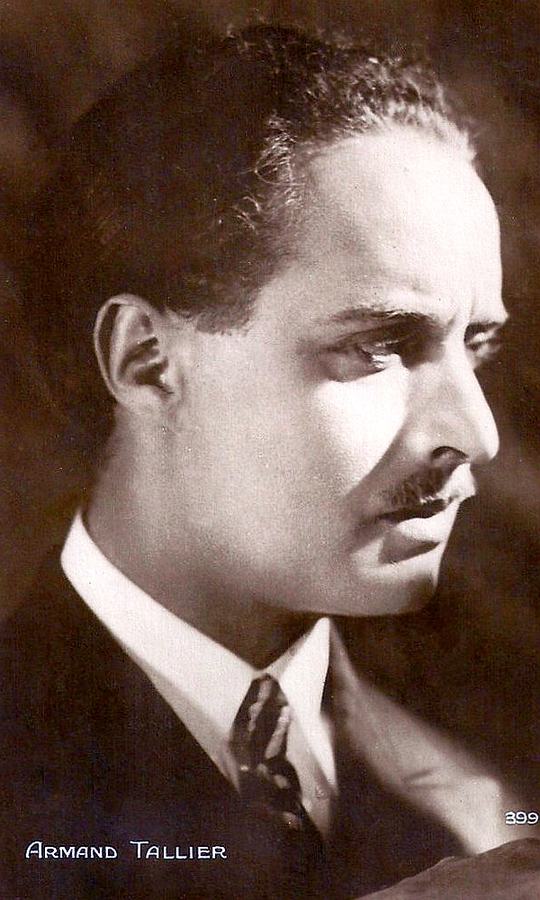
Elodie, though initially charmed by the enigmatic, intense man who appears at her shows, soon grows wary of his persistent, almost predatory scrutiny. Her friend and fellow performer, Claudine (Suzanne Delvé), a pragmatic and worldly woman, warns Elodie of Dubois's peculiar intensity. Unbeknownst to them, Dubois's estranged brother, Victor Dubois (Armand Tallier), a cynical industrialist who views art as mere commodity, has also taken an interest in Elodie, perhaps seeing her as a fleeting distraction or a means to subtly undermine his eccentric sibling.
The narrative spirals towards a chilling unveiling. Dubois, believing Anima to be complete, arranges a private demonstration, inviting Pierre, and, through a series of machinations, Elodie and Claudine. In a dimly lit salon, Anima is revealed, moving with an uncanny fluidity, speaking with a voice that is a perfect mimicry of Elodie's own, derived from Dubois's obsessive recordings. The air crackles with a terrible tension. Elodie is confronted with her own mechanical ghost, a flawless, soulless reflection that steals her identity. The professor, in his delusion, believes he has transcended human limitations, that Anima is the ultimate triumph of his will. The climax sees Elodie's horrified realization, Pierre's desperate plea for his mentor's sanity, and Victor's detached, almost amused observation of the unfolding tragedy. The true horror lies not in Anima's perfection, but in the human heart's capacity for grotesque idealization and the terrifying cost of an obsession that blurs the sacred boundary between creation and usurpation. The film culminates in a profound exploration of identity, artistry, and the perilous allure of artificial perfection, leaving the audience to ponder the very nature of humanity and the soul.
Review Excerpt
"
There are films that merely narrate, and then there are those that probe the very fissures of the human psyche, laying bare its most unsettling desires and delusions. L'homme et la poupée stands unequivocally in the latter category, a chilling, masterfully constructed examination of artistic obsession spiraling into a grotesque parody of life itself. From its opening frames, we are drawn into the hermetic world of Professor Henri Dubois, portrayed with an unnerving blend of genius and fragility..."