DbcultAccessing Vault...
Cult Review
Senior Film Conservator
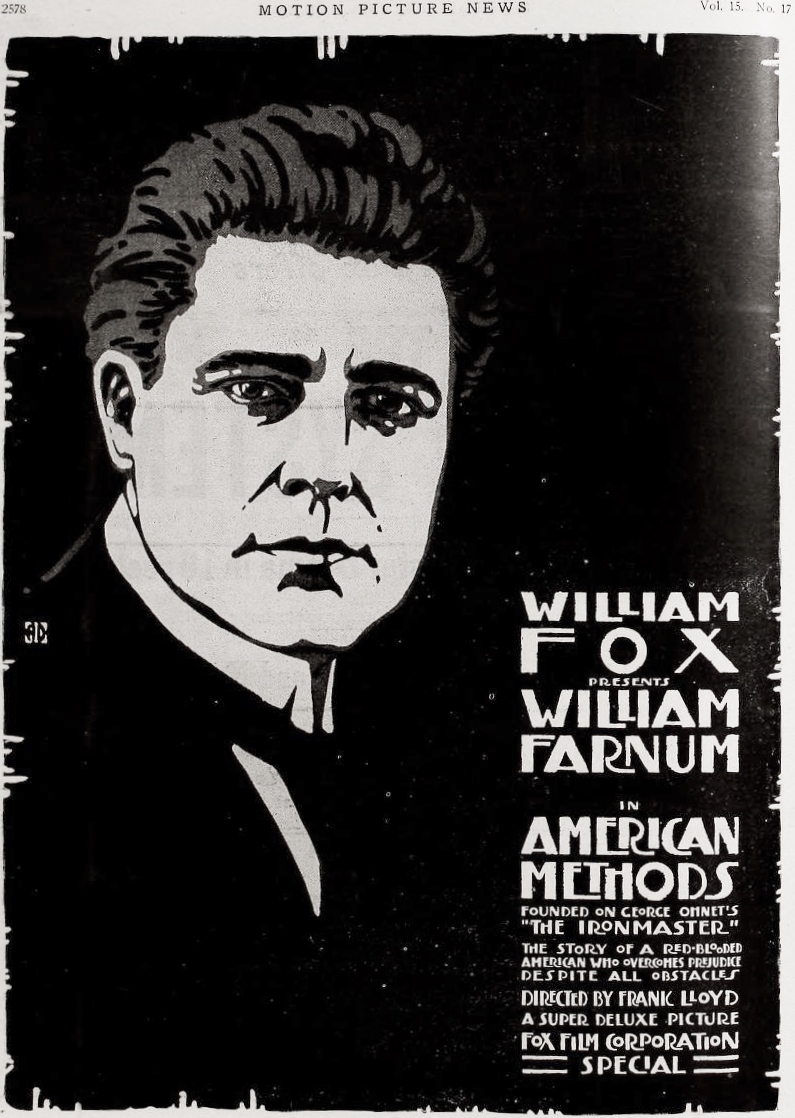
Stepping back into the cinematic past, one encounters a fascinating array of narratives that, despite their silent presentation, resonate with an emotional depth often overlooked in the clamor of modern blockbusters. Frank Lloyd's 1917 production, American Methods, stands as a compelling testament to this era, weaving a tale of cross-cultural encounter, financial intrigue, and the timeless pursuit of love. It's a film that, even a century later, offers a rich exploration of character and societal dynamics, proving that the silent screen was anything but quiet in its thematic ambitions. This isn't merely a historical artifact; it's a vibrant piece of storytelling that deftly navigates the complexities of human relationships against a backdrop of European aristocracy and burgeoning American industrialism.
At its core, American Methods unravels a narrative ignited by an unexpected inheritance. William Armstrong, portrayed with an earnest conviction by William Farnum, is an American whose ancestral roots stretch back to the verdant landscapes of France. He finds his life’s trajectory abruptly altered when he becomes the unlikely heir to an iron mine nestled deep within the French countryside. This isn't merely a transfer of property; it's a catalyst for a profound cultural collision. Accompanied by his perceptive sister, Betty, played by Genevieve Blinn, William embarks on a journey across the Atlantic, not just to claim his inheritance, but to confront a heritage that is both familiar and foreign. Their arrival in the quaint, tradition-bound village adjacent to the mine immediately sets them apart, two figures of American pragmatism amidst the entrenched customs of French provincial life.
The local societal fabric is soon revealed to be riddled with its own intricate tensions. Central to this is Claire, a young woman of noble lineage, brought to life with delicate grace by Jewel Carmen. She is betrothed to the Duc de Bligny, a character embodied by Bertram Grassby with a subtle villainy that speaks volumes without a single uttered word. The Duc is not merely a suitor; he is a schemer, a man whose affections are inextricably tied to financial gain. This becomes devastatingly clear when Claire’s family suffers a catastrophic loss of fortune. In a brutal display of his mercenary nature, the Duc swiftly abandons Claire, discarding their engagement for the more lucrative prospect of marrying the daughter of a wealthy manufacturer. This cynical pivot, driven purely by avarice, plunges Claire into a state of emotional turmoil and societal precarity. It is into this maelstrom of personal betrayal and economic upheaval that William and Betty Armstrong are unwittingly drawn. Their initial role as detached observers quickly dissolves as William finds himself increasingly captivated by Claire’s plight, and, inevitably, by Claire herself. The film masterfully builds the tension, exploring how the ‘American methods’ of directness and honest sentiment clash with the convoluted, often duplicitous, ways of the old European aristocracy. The burgeoning romance between William and Claire becomes the emotional fulcrum of the entire drama, a beacon of genuine connection amidst a sea of calculated self-interest.
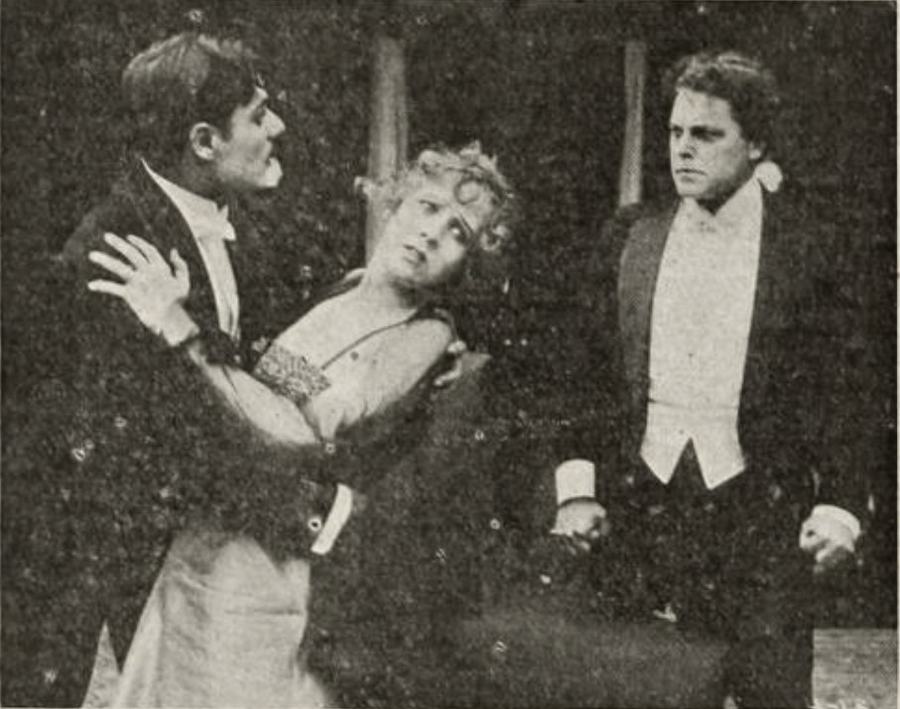
The strength of American Methods lies significantly in the nuanced performances delivered by its ensemble cast, a testament to the power of silent acting to convey profound emotion through gesture, expression, and physicality. William Farnum, a prominent star of the era, brings a rugged sincerity to William Armstrong. His portrayal captures the essence of an honest American businessman, initially bewildered by European social intricacies but ultimately guided by a strong moral compass and growing affection. Farnum’s expressive eyes and determined posture communicate a character who is both principled and capable of deep feeling. His performance anchors the film, making William’s journey from detached observer to passionate suitor entirely believable.
Jewel Carmen, as Claire, delivers a performance of remarkable pathos. Her vulnerability and quiet strength in the face of betrayal are palpable, drawing the audience into her emotional world. Her subtle facial expressions convey a spectrum of emotions – hope, despair, resilience – without ever resorting to exaggeration, a common pitfall in early cinema. The chemistry between Farnum and Carmen, though unspoken, is a compelling force, driving the romantic heart of the story. Genevieve Blinn, as Betty Armstrong, provides a wonderful counterpoint to her brother's earnestness. Her character is astute and practical, offering a grounded perspective on the unfolding drama. Blinn’s performance suggests a woman of intelligence and resolve, a fitting representative of the independent American spirit.
The antagonists are equally well-cast. Bertram Grassby's Duc de Bligny is a masterclass in silent villainy. His calculating demeanor and swift abandonment of Claire are conveyed through a precise physicality and cold gaze, making him a truly despicable, yet effective, character. Mortimer Jaffe and Willard Louis, though in supporting roles, contribute to the tapestry of village life and intrigue, each adding texture to the film’s rich social commentary. Josef Swickard, Marc B. Robbins, Lillian West, Florence Vidor, and Allan Forrest round out the cast, each delivering performances that, while perhaps less central, are crucial in building the immersive world of the film. Their collective efforts ensure that the French village feels populated by authentic individuals, each playing their part in the larger social drama. The collaborative nature of silent film acting, where every gesture and glance carries immense weight, is beautifully showcased here, making the emotional stakes clear without the need for dialogue.
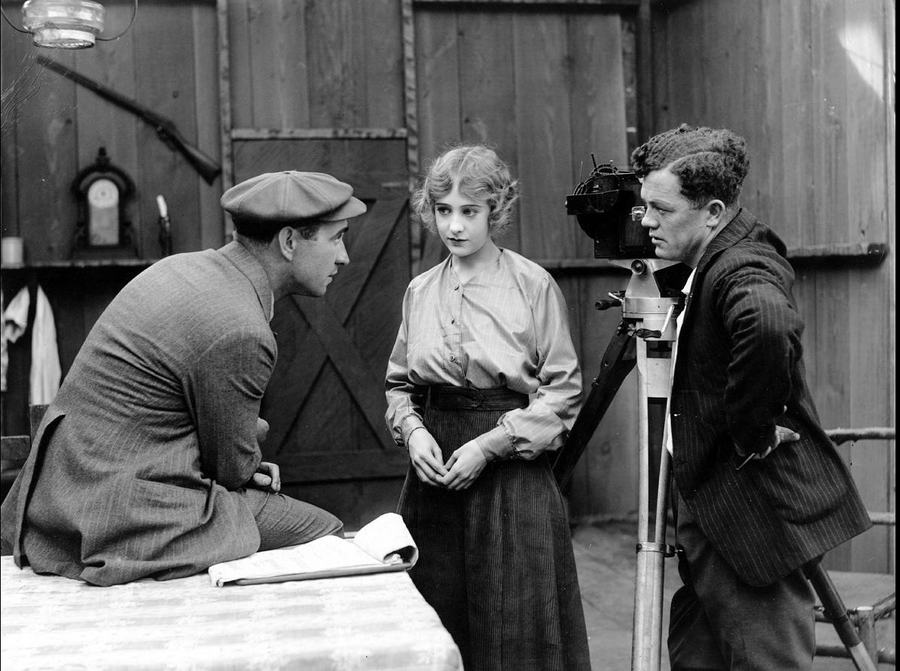
Frank Lloyd, a prolific and respected director of the silent era, demonstrates his masterful command of visual storytelling in American Methods. His direction is characterized by a clarity of narrative and an astute understanding of how to use mise-en-scène to convey meaning and emotion. Lloyd employs a measured pace, allowing scenes to breathe and characters' emotional arcs to develop organically. He understood the power of framing, using wide shots to establish the grandeur of the French landscape and the imposing structures of the mine, contrasting them with tighter compositions that emphasize the intimacy of personal drama.
The visual language of the film is remarkably sophisticated for its time. Lloyd’s use of intertitles is economical yet effective, providing crucial plot points and character insights without interrupting the visual flow. He relies heavily on the actors' abilities to express emotion, guiding them to deliver performances that are both dramatic and restrained. The cinematography, while perhaps lacking the elaborate camera movements of later eras, is precise and evocative, capturing the beauty of the French setting and the stark realities of the industrial mine. Lloyd’s keen eye for detail ensures that every element on screen contributes to the overall narrative, from the opulent interiors of aristocratic homes to the humble dwellings of the villagers.
One could draw parallels between Lloyd’s meticulous approach and the narrative precision seen in films like The Commuters, where character interactions and social commentary are carefully orchestrated. Lloyd’s ability to balance grand dramatic gestures with subtle human moments is a hallmark of his craft, making American Methods a compelling watch. His direction ensures that the film is not merely a series of events, but a cohesive and emotionally resonant experience. The way he stages scenes of conflict and tender romance speaks volumes about his understanding of human psychology and the dramatic potential of the silent medium.
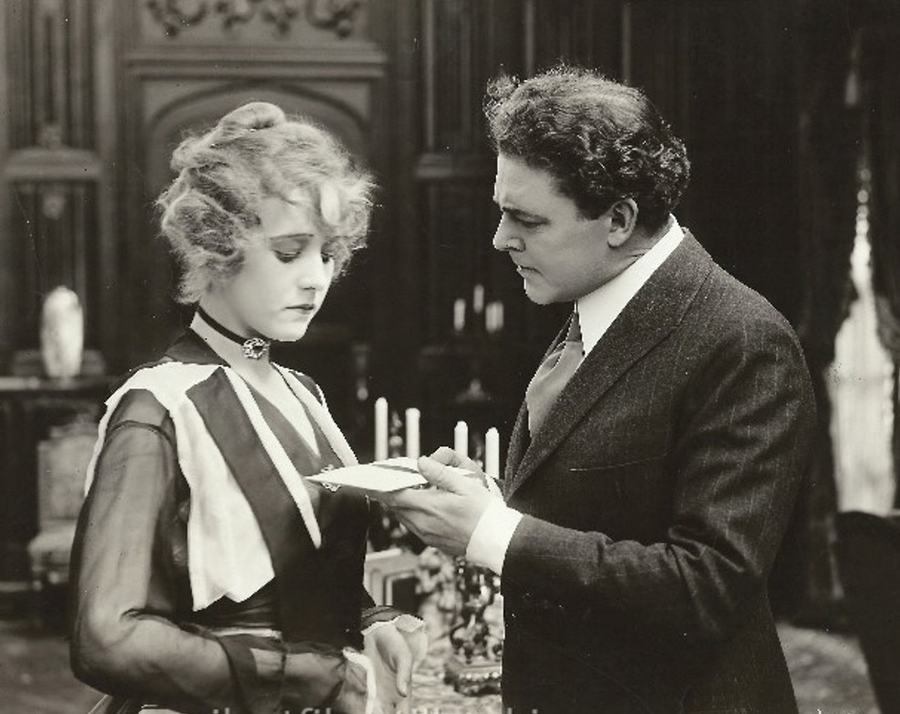
Beyond its engaging plot and strong performances, American Methods delves into a rich tapestry of themes that remain pertinent even today. The most overt is the clash of cultures: American pragmatism versus French tradition. William Armstrong embodies the forward-thinking, industrial spirit of America, seeking to modernize and efficiently manage his inherited mine. This stands in stark contrast to the old-world aristocratic values represented by the Duc de Bligny, whose focus is on inherited status and superficial wealth rather than productive enterprise. The film subtly critiques the decadent and often morally bankrupt aspects of the European aristocracy, portraying them as parasitic, living off inherited wealth and manipulating social structures for personal gain.
The theme of class disparity is also central. Claire’s precipitous fall from grace due to her family’s financial ruin highlights the precariousness of social standing when not underpinned by tangible assets. The Duc’s immediate abandonment of her for a wealthier bride underscores the transactional nature of marriage among the upper echelons of society. This cynical portrayal of love for sale finds echoes in other melodramas of the era, where material wealth often dictated personal destinies. The film suggests that genuine affection and integrity, exemplified by William Armstrong, offer a more stable and morally sound foundation for relationships than the calculating machinations of the elite.
Furthermore, American Methods explores the very definition of 'method.' Is it the traditional, perhaps inefficient, ways of the old world, or the innovative, direct approach of the new? The film ultimately champions the latter, suggesting that American values of hard work, honesty, and genuine emotion can overcome the entrenched deceit and superficiality of a decaying aristocracy. This thematic undercurrent would have resonated strongly with an American audience of 1917, at a time when the nation was asserting its growing influence on the global stage. It’s a compelling argument for meritocracy over inherited privilege.
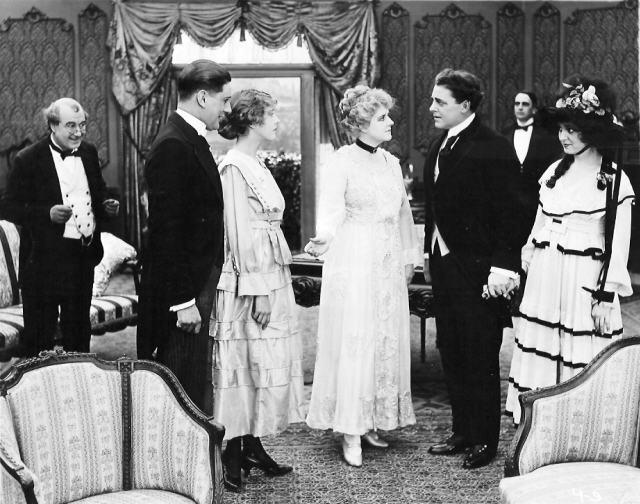
The narrative backbone of American Methods owes much to its literary origins. The film is based on a novel by Georges Ohnet, a French writer known for his popular romantic and social novels. Ohnet's work often explored themes of class, morality, and the complexities of Parisian society, making his novel a fertile ground for cinematic adaptation. Frank Lloyd himself, alongside F. McGrew Willis, took on the task of translating Ohnet's intricate plot and character dynamics to the silent screen. This required a keen understanding of visual storytelling, condensing narrative threads and emphasizing emotional beats that could be conveyed without dialogue.
The adaptation process for silent films was a unique art form, demanding that writers envision how actions, expressions, and carefully placed intertitles could replace spoken words. Lloyd and Willis skillfully distilled the essence of Ohnet's novel, preserving its dramatic core while making it accessible to a broader cinematic audience. Their work ensured that the motivations of characters like the opportunistic Duc de Bligny and the virtuous Claire were crystal clear, even in the absence of spoken exposition. This collaborative effort between a European literary source and American screenwriters and director highlights the cross-cultural exchange inherent in the film itself.
When viewed within the broader context of silent cinema, American Methods finds its place among a fascinating array of films that explored similar human dramas. The intricate dance of societal expectations and forbidden love, for instance, might remind contemporary viewers of the dramatic tensions found in films like The Woman Who Dared, where individual desires frequently collide with rigid social structures. The portrayal of a strong female character navigating adversity, much like Claire, is a recurring motif in the era, reflecting changing societal roles.
The theme of inheritance and its accompanying complications, a central tenet of American Methods, also appears in various forms throughout silent cinema. While not directly comparable in plot, the dramatic weight placed on family legacy and its impact on personal choices, much like in Her Father's Gold, underscores a common preoccupation of the era. The stark contrast between old money and new money, aristocracy and industry, is a narrative device that provided ample dramatic fodder for filmmakers, allowing them to explore social mobility and changing power dynamics.
Furthermore, the film's depiction of a villain driven by avarice and a hero guided by moral fortitude is a classic trope, one that finds its parallels in countless films of the period. The dramatic battles of good versus evil, often personified through distinct character archetypes, were fundamental to engaging silent audiences. The sense of being caught up in a larger intrigue, as William and Betty are, also brings to mind the episodic suspense of serials like Beatrice Fairfax Episode 15: Wristwatches, where characters frequently find themselves entangled in schemes beyond their initial comprehension. These comparisons serve to highlight not only the unique qualities of American Methods but also its connection to a rich tradition of early cinematic storytelling.
More than a century after its release, American Methods remains a compelling example of early American cinema's capacity for sophisticated storytelling. It offers a window into the social anxieties and romantic ideals of its time, presenting a clear moral compass and celebrating the virtues of honesty and genuine affection over superficial status and calculated self-interest. The film’s narrative, though rooted in the specific cultural context of 1917, explores universal themes of love, betrayal, and the clash between tradition and progress. Its characters, though silent, convey emotions that are deeply human and relatable, making their struggles and triumphs resonate across generations.
For enthusiasts of silent film, American Methods is a valuable discovery, showcasing the directorial finesse of Frank Lloyd and the expressive power of its cast, particularly William Farnum and Jewel Carmen. It stands as a reminder of an era when narrative was paramount, conveyed through careful staging, nuanced acting, and evocative cinematography. While it may not possess the grand scale of an epic like The Destruction of Carthage, its intimate drama feels equally monumental in its exploration of human nature. The film’s intricate plot, rich characterizations, and resonant themes ensure its place as a significant, albeit often overlooked, work in the annals of cinematic history. It's a testament to the enduring power of classic cinema to captivate and provoke thought, proving that some 'methods' truly are timeless.
IMDb —
1932
Community
Log in to comment.