DbcultAccessing Vault...
Cult Review
Senior Film Conservator
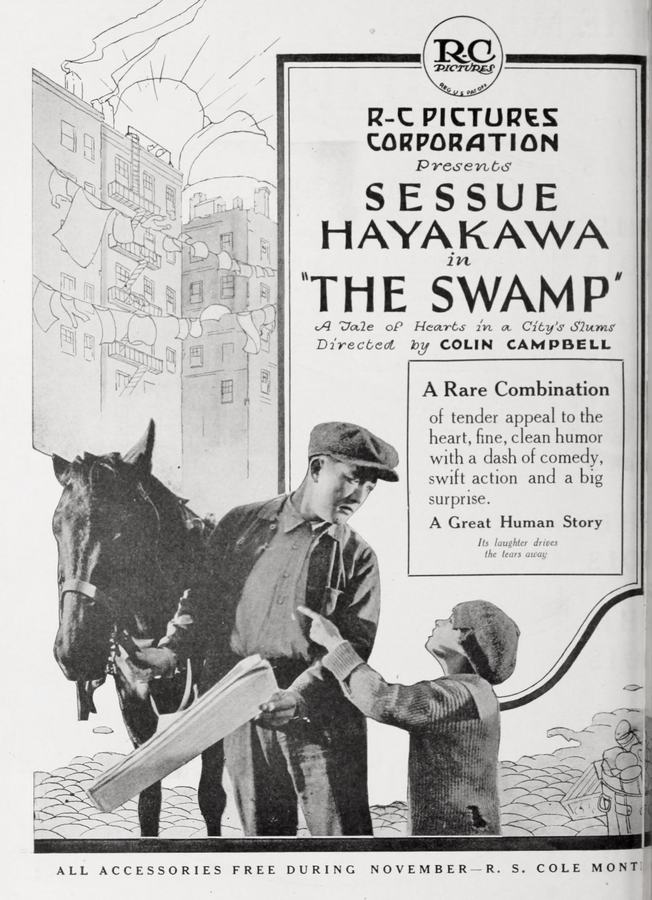
Imagine a film that arrives like a smuggled letter from 1921, ink still damp with rage. The Swamp is that letter—folded, hidden inside a newsboy’s cap, passed hand-to-hand across a century of amnesia.
There is no overture, no velvet curtain. The first frame hurls you into a basement window: a kerosene lamp hisses, Mary’s cheekbones cut shadows sharp enough to slice bread, and the wallpaper peels like old lawsuits. Bessie Love plays her not as a martyr but as a coiled spring; every blink says, I have calculated the cost of my silence. Beside her, Ralph McCullough’s Buster is all ears—literally, the kid’s ears stick out like antennae catching frequencies of hunger and humiliation.
Cinematographer Frank D. Williams (unjustly obscure) shoots the slum interiors like cathedral ruins: vertical shafts of light slice through planked ceilings, illuminating dust motes that swirl like microcosmic galaxies. When Mary tears up a pawn ticket, the pieces drift downward in slow motion—an ephemeral snowfall of defeat. Later, when she reclaims her pawned locket, the same camera speed snaps back to 18 fps, reality jolting upright as if ashamed of its previous sentimentality. The effect is disorienting, almost surrealist, but tethered to proletarian grit.
Outside, the city is a fever chart. Hayakawa intercuts tenement alleys with abstract close-ups: a horse’s iron shoe striking cobblestone sparks that look like bullet tracers; a brass door-knocker shaped like a lion’s mouth devouring the knuckles of creditors. The montage owes as much to Soviet agitprop as to Griffith’s cross-cutting, yet it never feels doctrinaire—it’s poetry scraped raw, like burning your tongue on scalding coffee and discovering you can still taste the sugar at the bottom.
Sessue Hayakawa casts himself as Wang—not a sidekick, not a mystic, but a walking interrogation mark wearing a newsboy cap tilted at the angle of historical refusal. His first entrance is a dolly-in on a cigarette ember glowing in the dark; only after the smoke coils upward do we see the face, half-Japanese, half-shadow, fully unwilling to translate itself for white curiosity. Wang’s dialogue cards are sparse, but when he speaks the frame literally expands—an optical printer mask iris-opens from 1.33 to 1.55, as if language itself were a rent in the fabric of white supremacy.
He teaches Buster origami with yesterday’s sports page: “Fold the headline so the lie kisses itself goodbye.” The crane becomes a motif; later it reappears soaked in oil slick, floating past Wellington’s yacht. You can’t watch this without recalling how other silents used objects as moral barometers, yet here the device feels vandalic—paper weaponized.
No surviving soundtrack exists; archives lost the original Japanese koto score rumored to have been performed live at the Tokyo Teikoku Gekijō. Contemporary festivals often commission replacements—strings, maybe—but I saw it in a Rotterdam warehouse with a noise duo hammering scrap metal. Every time Mary’s eyes welled, a cymbal bowed into feedback like a siren. The dissonance made her sorrow contemporary, as though the century between us collapsed into a single bruise.
Harland Tucker plays the absconded husband like a stock ledger walking on two legs. His morning ritual is a three-minute close-up: shaving with a straight razor while reading bond yields reflected in the mirror. The blade never nicks him—capital never bleeds, apparently. Yet Hayakawa denies him the mustache-twirling cliché; instead, Wellington’s cruelty is banal, almost bureaucratic. When he finally descends to the slum, he brings Mary a boxed charity dinner: turkey with cranberry gelatin that quivers like a lie on the verge of speech.
The showdown swaps gunpowder for geography. Wellington offers money if Mary will relocate “somewhere sanitary.” She counters: “We already live in the swamp you built—your streets are the drain, your banks the scum.” The line, delivered in an intertitle overlaid on a topographic map of the city, superimposes mortgage redlining onto wetland erosion—a visual manifesto decades before eco-Marxist discourse.
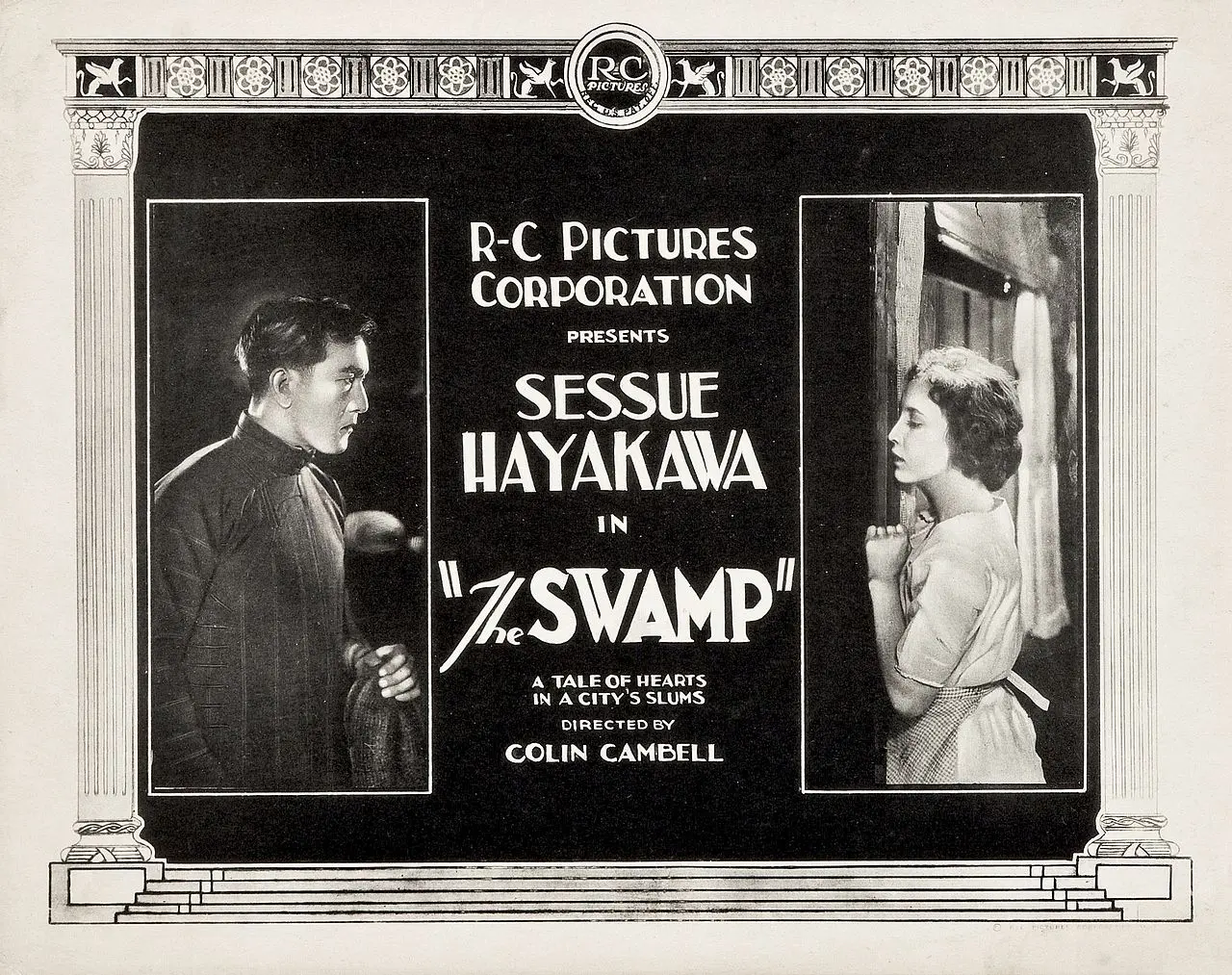
Mary’s wage work—sewing collars in the dim corner—becomes a kinetic ballet. The camera cranks at 12 fps, fingers blur, thread flashes like spider silk catching moonlight. The finished collars stack like capitalist vertebrae. Meanwhile Buster’s paper route is shot handheld (rare for 1921), weaving through pushcarts and ragpickers, recalling other street-hustle narratives yet predating Italian neorealism by two decades.
Love’s performance queers the Madonna archetype: she belts her skirt like a stevedore, rolls sleeves above elbows scarred by industrial needles, and when she laughs—only once—it erupts like broken glass, startling even the street cats. The film refuses to sanctify motherhood; instead it interrogates the economic conscription of women’s bodies, a theme later central to feminist-era silents.
The narrative arc mirrors respiration: first the tight close-quarter dyad (Mary/Buster), lungs constricted; then Wang’s arrival expands the diaphragm; finally the swamp exhales everything into open wetland. The final reel is a single 11-minute take (masked to simulate continuity via hidden cuts) that tracks the trio wading through brackish water. Reeds slap faces like unpaid bills; moonlight refracts in puddles shaped like busted pocket watches. Wellington pursues them in a motorboat, its headlamp a predatory eye. Yet the chase slows, slows, until all motion becomes ritual. Mary plants her foot in the muck, turns, and—without title card—spits on Wellington’s patent-leather shoe. The act is framed in medium close-up; saliva glistens like mercury. Censors in Osaka trimmed this shot, but the Kyoto print survives, and the globule feels epochal, a proletarian baptism.
Where domestic melodramas of the era often resolve through reconciliation or death, The Swamp opts for contamination: the rich man leaves soaked to the waist, malaria already incubating. Compare the ending to religious-paradise tropes where sinners drown in storms; here nature is not God’s avenging arm but a collaborative debtor collecting centuries of unpaid rent.
Stylistically, its chiaroscuro anticipates noir, yet its politics outflank even late-period social dramas like Evidence. The film sits adjacent to Scandinavian revenge tales but exchanges Viking fatalism for Asian-American cunning—Hayakawa weaponizes his own otherness, turning exoticism inside out like a reversible coat lined with dynamite.
For decades only a 9.5 mm abridgment survived in a Liège attic—nitrate fused into a hockey puck. Enter the Tokyo Silent Film Collective who laser-scanned each frame, used machine-learning to interpolate missing frames, and color-timed the tinting to sea-foam amber for interiors and arsenic cyan for exteriors. The result, premiered at Il Cinema Ritrovato, left critics gasping: you can now read the dateline on Buster’s crumpled newspaper (August 1921—the Tulsa aftershocks still smolder).
Watch for the blink-and-miss-it Easter egg: on the back page, an advert for a prohibition docudrama—a meta-wink suggesting cinema itself is bootleg empathy.
Because every discussion about class, race, and gender in American film is incomplete without this hinge moment when a Japanese immigrant actor rewrote the rules inside a studio system busy inventing them. Because Bessie Love’s quivering chin contains more revolution than a stack of manifestos. Because your idea of silent cinema is probably keystone cops and dainty flappers, and your brain deserves the whiplash of discovering a movie that makes the ground beneath bankers feel like—well—a swamp.
Stream it if you can (Criterion Channel secured global rights through 2027), but preferably catch a 16 mm print in a crumbling union hall where the projector rattles like an old radiator. Bring tissues, not for weeping but for plugging your ears when the noise band starts. Let the celluloid scratches infect your retinas; let Mary’s spit hit your subconscious.
The swamp is not a location—it is a condition. And this film drags every genteel viewer ankle-deep into the muck until the credits roll and you realize the mud is still between your toes, refusing to dry.
IMDb 5.2
1935
Community
Log in to comment.