DbcultAccessing Vault...
6.5/10
Senior Film Conservator

A definitive 6.5/10 rating for a film that redefined the boundaries of cult cinema. Wall Street Blues remains a cornerstone of transgressive art.
In an era when the silver screen often served as a moral compass, reflecting society's burgeoning anxieties and aspirations, Wall Street Blues emerges as a surprisingly prescient and potent commentary on the insidious allure of wealth and the often-corrupting influence of unchecked ambition. This isn't just another period piece; it's a timeless exploration of human frailty, the corrosive power of greed, and the unexpected emergence of heroism from the most unassuming corners of society. It paints a vivid, albeit disquieting, portrait of an age where financial machinations could dictate personal destinies, often with devastating consequences.
From its very inception, the film plunges us headfirst into a world where moral lines blur with alarming ease. We are introduced to a shady stockbroker, portrayed with a compelling blend of desperation and moral ambiguity by the venerable Leo Sulky. Sulky masterfully embodies a man caught in a perilous dance with ethical compromise, his initial missteps escalating into a full-blown entanglement with a truly formidable antagonist. This isn't a villain who brandishes a mustache; rather, John J. Richardson's wealthy scoundrel is a far more insidious threat, operating with the cold, calculated precision of a financial predator. His machinations are not merely about accumulating more wealth; they extend to the very fabric of human relationships, viewing people as assets to be acquired or liabilities to be managed. Richardson's portrayal is chilling, an embodiment of power untempered by conscience, reminiscent of the morally bankrupt figures often depicted in films like Betrayed, where trust is a weapon and loyalty a commodity.

The central conflict ignites when this avaricious scoundrel sets his sights on a prize far more personal than any stock certificate: the broker's beautiful daughter, played with an ethereal innocence by Natalie Kingston. Kingston's performance is crucial, as she represents the purity and vulnerability that stands in stark contrast to the grimy world of high finance. Her character is not merely a damsel in distress; she is the unwitting focal point of a grand, sinister design, a pawn in a game she doesn't even know is being played. The scoundrel's desire to marry her is not born of affection, but of a calculated strategy to consolidate power and further his social standing, effectively trapping her in a gilded cage. This narrative thread, where an innocent woman faces a perilous future at the hands of manipulative forces, echoes the thematic concerns found in films such as Oh Mary Be Careful or A Girl at Bay, though Wall Street Blues grounds its peril in the stark realities of economic power rather than romantic folly.
The tension builds with a slow, deliberate cadence, masterfully crafted by writers Pinto Colvig and John A. Waldron. Their screenplay doesn't rush the reveal; instead, it allows the audience to gradually piece together the sinister intentions lurking beneath the surface of polite society. The dialogue, sparse but impactful, and the visual storytelling work in concert to establish an atmosphere of encroaching dread. We witness Leo Sulky's character, initially perhaps a victim of circumstance, becoming increasingly complicit, his moral compass gradually eroding under the pressure of debt and desperation. The film excels at portraying the subtle ways in which good intentions can be twisted and compromised when faced with overwhelming financial pressure, a theme that remains disturbingly relevant in contemporary society.
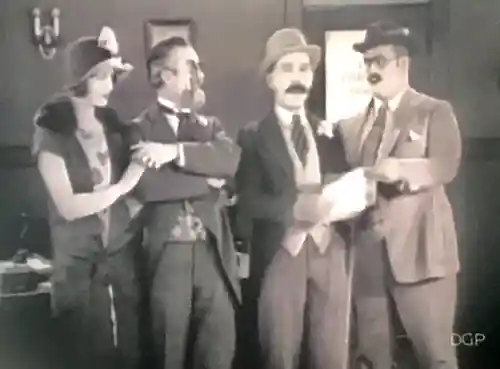
Just as the net seems to be tightening irrevocably around Natalie Kingston's character, an unexpected beacon of hope emerges from the shadows. Ernie Adams delivers a truly memorable performance as the janitor, the film's unlikely hero. Adams imbues his character with a quiet dignity and an acute sense of observation, making him far more than a mere background figure. He is the silent witness, the working-class individual whose proximity to the powerful allows him to see the cracks in their polished facades. His discovery of the nefarious scheme is not a dramatic, contrived plot point, but rather the logical outcome of a diligent man observing the subtle cues and hushed conversations that betray the true nature of the wealthy elite. This portrayal of the 'little guy' rising to challenge the powerful resonates deeply, providing a much-needed counterpoint to the pervasive corruption.
The janitor's decision to act is a pivotal moment, shifting the narrative from a tragedy of manipulation to a thrilling race against time. His rush to save the daughter is not driven by personal gain or romantic interest, but by a pure, unadulterated sense of justice and humanity. It's a powerful statement about intrinsic morality, suggesting that integrity can be found in the most unexpected places, often far removed from the boardrooms and opulent mansions. This stark moral clarity contrasts sharply with the ethical murkiness permeating the financial world depicted, offering a glimmer of redemption not just for the characters, but for the audience's faith in human decency. The film effectively uses this character to highlight the moral bankruptcy of the powerful, setting them against the simple, unwavering virtue of the working class.
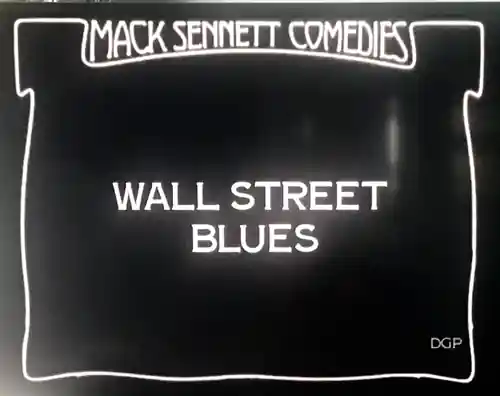
Beyond the central quartet, the film boasts a rich supporting cast who add texture and depth to its world. Gordon Lewis, Sidney Smith, Yorke Sherwood, Billy Bevan, Eli Stanton, Sunshine Hart, Andy Clyde, Vernon Dent, Edgar Kennedy, Art Rowlands, Elsie Tarron, Barbara Pierce, and Roger Moore each contribute to the bustling, often cutthroat, environment of early 20th-century finance and society. Their collective performances create a believable backdrop against which the central drama unfolds, preventing the narrative from feeling isolated or artificial. The sheer number of well-etched characters, even in smaller roles, speaks to the meticulous detail with which Colvig and Waldron constructed their world.
Thematically, Wall Street Blues is remarkably robust. It dissects the corrosive nature of greed, demonstrating how it can turn individuals into instruments of others' desires. It explores the class divide, showcasing the vulnerability of those without power against the machinations of the wealthy. The film also touches upon the idea of redemption, not necessarily for every character, but in the possibility of an individual choosing a path of righteousness despite personal risk. The moral struggle faced by Leo Sulky's broker, while not leading to a clear redemption for him, serves as a cautionary tale, a stark reminder of the slippery slope of compromise. This internal battle, the warfare of the flesh against the spirit, is a theme that has resonated through cinema for decades, finding parallels in films like The Warfare of the Flesh, which similarly delves into profound ethical dilemmas.
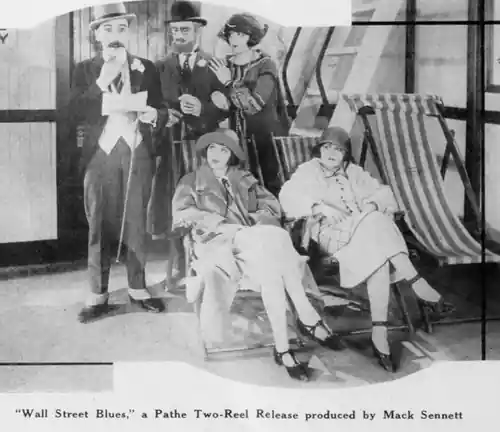
Furthermore, the film's commentary on the inherent dangers of unchecked capitalism and the potential for manipulation within financial systems feels startlingly contemporary. It suggests that the pursuit of profit, when unmoored from ethical considerations, can lead to devastating personal and societal consequences. This isn't just a story about a specific time; it's a parable for any era where financial power can be wielded without accountability. The narrative structure, while straightforward, is imbued with a sense of urgency that keeps the audience captivated, much like the gripping tension of Stranded, where characters face imminent peril and must act decisively.
The stylistic choices of the film, from its art direction to its cinematography, effectively transport the viewer to the bustling, sometimes opulent, sometimes gritty, world of early 20th-century urban life. The contrasts between the broker's increasingly desperate circumstances and the scoundrel's lavish lifestyle are visually striking, reinforcing the class disparities central to the plot. The pacing, though perhaps slower than modern audiences are accustomed to, allows for a more deliberate unfolding of character and motivation, building suspense organically rather than relying on rapid-fire edits. It's a testament to the filmmakers' skill that they could evoke such palpable tension and moral complexity without the more advanced cinematic techniques available today.
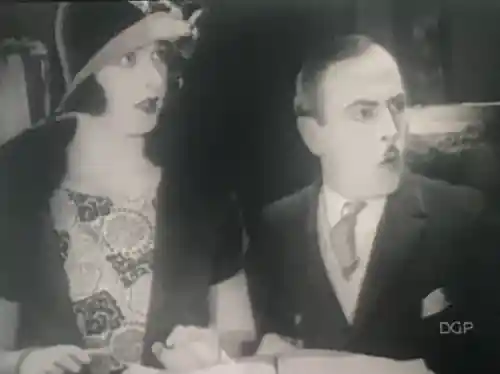
The writers, Pinto Colvig and John A. Waldron, deserve particular commendation for crafting a narrative that, while ostensibly simple, manages to weave together intricate character arcs and a compelling moral dilemma. Their work demonstrates a keen understanding of human psychology and the societal pressures of the time. They avoid simplistic portrayals of good versus evil, instead opting for characters with shades of gray, making the janitor's pure heroism all the more striking. This nuanced approach to character development elevates Wall Street Blues beyond a mere melodrama, positioning it as a thoughtful social commentary.
In an era where films like The Gates of Gladness might have offered a more straightforward, perhaps saccharine, narrative of virtue triumphant, Wall Street Blues dares to explore the darker undercurrents of society. It doesn't shy away from depicting the ugliness of human ambition, but it also celebrates the quiet courage of those who stand against it. The film's resolution, while satisfying, doesn't gloss over the difficulties endured, leaving a lasting impression of the fragility of justice in a world dominated by power and wealth. This blend of stark realism and hopeful defiance makes it a compelling watch even today.
Ultimately, Wall Street Blues serves as a poignant reminder that while the settings and specific financial instruments may change, the fundamental human drama of greed versus integrity, manipulation versus compassion, remains eternally relevant. It's a film that asks us to consider where true value lies – not in the ledger books of a powerful financier, but in the unwavering moral compass of an ordinary man. It's a must-see for anyone interested in the evolution of social commentary in cinema and the enduring power of a well-told story to reflect and critique the human condition. Its message about the dangers of unchecked power and the unexpected sources of heroism continues to resonate, proving that some tales are truly timeless, transcending their original context to speak to new generations. The film's ability to depict such profound moral and social struggles with clarity and emotional depth is a testament to its enduring power, making it a significant piece in the tapestry of early cinematic history.
IMDb 2.1
1933
Community
Log in to comment.