DbcultAccessing Vault...
Cult Review
Senior Film Conservator
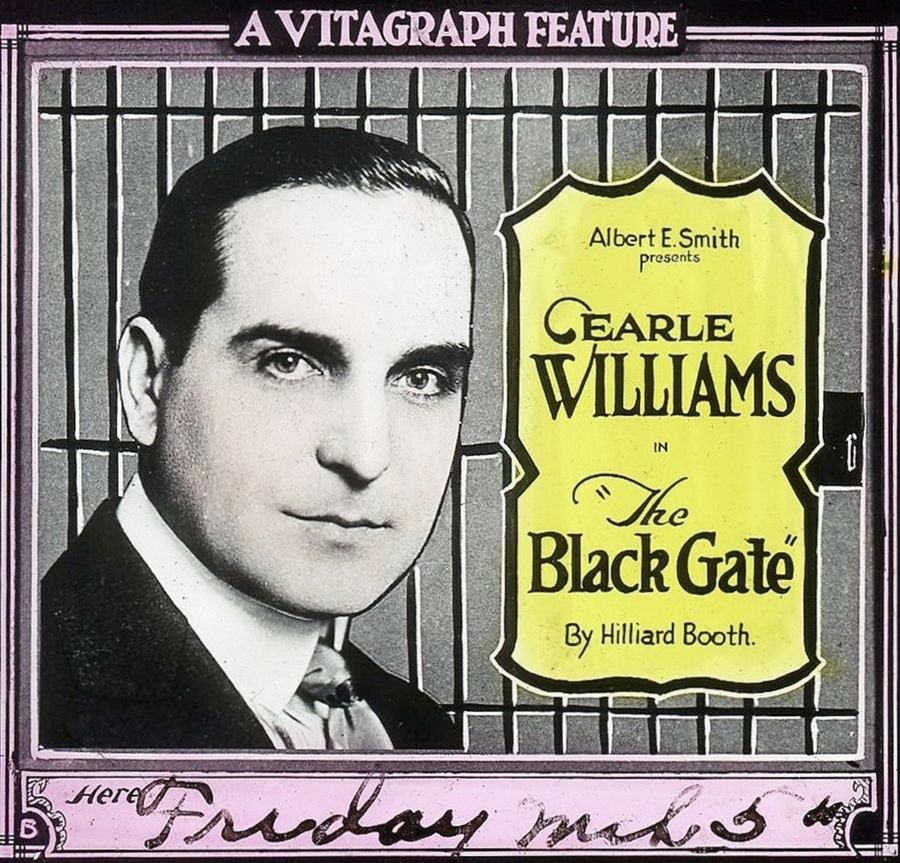
Stepping into the shadowy corridors of early cinema, one often encounters narratives that, despite their age, resonate with a raw human drama that feels startlingly contemporary. "The Black Gate", a film that deftly navigates the treacherous waters of moral compromise, sacrifice, and the labyrinthine twists of fate, stands as a testament to the enduring power of storytelling. From its very opening, we are plunged into a world where reputation is fragile, love is a dangerous game, and justice itself is a commodity to be bartered. This isn't merely a whodunit; it's a profound exploration of human frailty and the surprising strength found in desperation. The narrative unravels with a deliberate, almost poetic intensity, drawing the viewer into a web woven from ambition, lust, and the desperate yearning for absolution.
At its core, "The Black Gate" presents a chilling tableau: the lecherous theatrical manager Allan Bowen, a character whose moral depravity is etched into every scene, meets his untimely end while attempting to assault Vera Hampton. This precipitating event ignites a chain reaction that implicates Wade DeForrest, the entitled scion of a powerful family, as the prime suspect. But it is the character of Shaler Spencer, portrayed with a compelling blend of weariness and latent integrity by Harry Spingler, who truly anchors the film's emotional weight. Shaler, a man once celebrated in legal circles, now a shadow of his former self, having squandered his brother Rod's inheritance, is a figure ripe for a redemptive arc, or perhaps, a tragic fall. His offer to confess to Bowen's murder in exchange for a substantial sum for Rod, a sum to be paid upon his entry into the grim "black gate" – the portal to the death chamber – is a moment of stark, breathtaking self-sacrifice. It’s a gamble with life itself, a desperate attempt to rectify past wrongs through an ultimate, irreversible act. This kind of high-stakes moral dilemma echoes the profound choices faced by characters in other compelling dramas, reminding us of the human capacity for both profound self-interest and astonishing altruism.
The agreement struck with Mrs. DeForrest, played with a nuanced blend of desperation and maternal love by Clarissa Selwynne, sets the stage for a series of emotional reversals. The unexpected reunion between Shaler and Vera Hampton, compellingly brought to life by Ruth Clifford, adds another layer of complexity. Their past romance, now rekindled in the shadow of impending doom, introduces a powerful emotional current. Vera's visit, initially a gesture of concern, morphs into a catalyst for Shaler's initial declaration of innocence, a fleeting moment of hope. Yet, the sight of Mrs. DeForrest's profound anguish sways him back, a testament to the powerful, often irrational, pull of human empathy and the desire to alleviate suffering, even at one's own peril. This intricate dance of confession and retraction speaks volumes about the psychological burdens carried by these characters, far more than any overt exposition could.
The film’s strength lies not just in its intricate plot, but in its vividly drawn characters. Shaler Spencer is a masterclass in tragic heroism. His journey from a respected lawyer to a dissolute idler, and then to a man willing to face the ultimate penalty for another, is rendered with a depth that transcends the often-simplified archetypes of the era. Harry Spingler imbues Shaler with a quiet dignity, even in his lowest moments, making his ultimate sacrifice both believable and profoundly moving. His internal struggle, though conveyed without spoken dialogue (assuming it's a silent film, or with sparse dialogue if not), is palpable. One can see the echoes of similarly complex characters grappling with moral quandaries in films like The Mirror, where personal integrity is tested against societal expectations.
Vera Hampton, portrayed by Ruth Clifford, is far from a passive damsel. She is a woman caught in a maelstrom, first as the victim of Bowen's vile intentions, then as the unwitting fulcrum around which Shaler's sacrifice and Wade's jealousy revolve. Her past relationship with Shaler adds a layer of poignant regret and rekindled affection that feels authentic. Her presence is a constant reminder of the human cost of the central crime. Similarly, Wade DeForrest, played by J. Parks Jones, evolves from a privileged youth accused of murder to a man confessing his own dark secret driven by jealousy. His transformation, though sudden, is a crucial pivot point, highlighting the unpredictable nature of human emotion. The writers, Hilliard Booth and Lucien Hubbard, deserve commendation for crafting such a rich tapestry of interwoven lives, each character serving a vital purpose in the unfolding drama.
The true genius of "The Black Gate" lies in its meticulously constructed plot, which unfurls with the precision of a master clockmaker. Just when the audience settles into the grim certainty of Shaler's fate, a crucial discovery – that the bullet in Bowen could not have come from Shaler's gun – shatters the established reality. This revelation isn't merely a plot twist; it's a seismic shift that forces a re-evaluation of everything that has transpired. It's a testament to the screenwriting prowess of Hilliard Booth and Lucien Hubbard, whose narrative architecture keeps the viewer perpetually off balance, much like the best of classic mysteries. One might draw parallels to the intricate double-crosses and unexpected reveals in a film like The Devil's Prize, where moral ambiguity and hidden motives drive the entire narrative.
The subsequent confession by Wade DeForrest, admitting he killed Bowen out of a jealous rage after falling for Vera, is a stroke of narrative brilliance. It elevates the story beyond a simple crime drama into a complex psychological study of human desire and its destructive potential. Wade's jealousy, festering beneath the surface, provides a stark contrast to Shaler's selflessness, enriching the film's thematic depth. The interplay between these two men, one driven by love and sacrifice, the other by possessive passion, forms the dramatic core. The film masterfully demonstrates how seemingly disparate events are, in fact, inextricably linked by the tangled threads of human relationships. This complex interplay of motives and actions resonates with the kind of intricate storytelling found in narratives such as Northern Lights, where the harsh realities of life expose the true character of individuals.
Beyond the thrilling plot mechanics, "The Black Gate" delves into universal themes that resonate as strongly today as they did upon its release. The concept of sacrifice is central, explored through Shaler's willingness to forfeit his life for Wade, initially to secure his brother's future, and then, perhaps, out of a deeper sense of responsibility or even affection for Vera and Mrs. DeForrest. This act of profound selflessness is juxtaposed against the corrosive nature of jealousy, personified by Wade's ultimate confession. The film implicitly asks: what is the true cost of justice, and can one truly atone for past misdeeds through an act of ultimate self-denial?
The narrative also touches upon the insidious influence of class and privilege. Wade DeForrest's initial accusation, and his mother's desperation to protect him, underscore the societal inequalities that often dictate the course of justice. Shaler, once prominent but now fallen, represents a different kind of social mobility, one that is downward, highlighting the precariousness of reputation and fortune. The title itself, "The Black Gate," serves as a potent metaphor for the ultimate reckoning, the final, irreversible consequence, whether it be literal death or the metaphorical death of a former self. This exploration of societal stratification and personal downfall finds echoes in the dramatic struggles depicted in With Serb and Austrian, where characters are often defined by their circumstances and heritage.
The ensemble cast delivers performances that, even across the decades, speak volumes. J. Barney Sherry and Earle Williams, along with Brinsley Shaw, contribute solid supporting roles that flesh out the world, adding texture to the moral landscape. Each actor, through subtle gestures and expressions (again, assuming the film's likely silent or early talkie context), conveys a depth of emotion that is crucial for the film's impact. The chemistry between Harry Spingler and Ruth Clifford, in particular, is pivotal. Their reconciliation scene is imbued with a quiet power, suggesting years of shared history and rekindled affection that transcends the immediate crisis. This kind of nuanced emotional connection is difficult to achieve, especially in early cinema, and their success in portraying it elevates the film significantly. It’s a delicate balance, one that often distinguishes memorable performances from merely functional ones, much like the compelling duets seen in The Dancing Girl, where emotional depth defines the interaction.
The direction, while not explicitly detailed in the prompt, must have been adept at guiding these performances and orchestrating the intricate plot. The seamless transitions between suspense, emotional drama, and pivotal revelations speak to a confident hand behind the camera. The visual storytelling, whether through stark contrasts or carefully framed compositions, likely played a crucial role in conveying the underlying tension and the characters' internal states. This attention to detail in visual narrative is something that can be appreciated across cinematic eras, much like the careful composition in Mascamor, where every frame contributes to the overall mood.
"The Black Gate" culminates in a resolution that, while perhaps offering a glimmer of hope, doesn't shy away from the lingering consequences of the preceding events. Shaler and Vera's decision to marry, emerging from the crucible of murder and sacrifice, suggests a future built on honesty and mutual understanding, hard-won through immense suffering. It’s a testament to the idea that even in the darkest of circumstances, love and companionship can provide a path forward. This ending, rather than feeling overly simplistic, feels earned, a natural culmination of the emotional journeys undertaken by the characters. It leaves the audience contemplating the enduring power of forgiveness and the possibility of rebuilding shattered lives.
The film, meticulously crafted by writers Hilliard Booth and Lucien Hubbard, with its compelling performances and intricate plot, remains a powerful example of early cinematic storytelling. It reminds us that the fundamental questions of morality, justice, and love are perennial concerns, explored with varying degrees of nuance across different eras of filmmaking. For anyone interested in the evolution of the crime drama or the psychological thriller, "The Black Gate" offers a rich, rewarding experience, showcasing how a well-told story, regardless of its technological vintage, can captivate and provoke thought. It stands as a compelling entry in the cinematic canon, a narrative that, much like the enigmatic gate itself, invites us to look deeper into the human heart.
In an era of cinematic experimentation, "The Black Gate" demonstrates a sophisticated understanding of dramatic tension and character development. It doesn't rely on cheap thrills but rather on the slow, deliberate unmasking of truth and motive. The film's ability to maintain suspense while simultaneously exploring profound ethical dilemmas is a hallmark of its quality. It’s a journey through despair and hope, betrayal and loyalty, culminating in an ending that, while providing closure, also leaves an indelible impression of the complexities inherent in human relationships. This nuanced approach to storytelling ensures its place not just as a historical artifact, but as a vibrant piece of cinematic art that continues to engage and challenge its viewers. The intricate character dynamics and moral ambiguities are reminiscent of the depth found in films such as Miss Petticoats or even the dramatic intensity of McVeagh of the South Seas, where character arcs are as compelling as the plot itself.
IMDb 6
1932
Community
Log in to comment.