DbcultAccessing Vault...
Cult Review
Senior Film Conservator
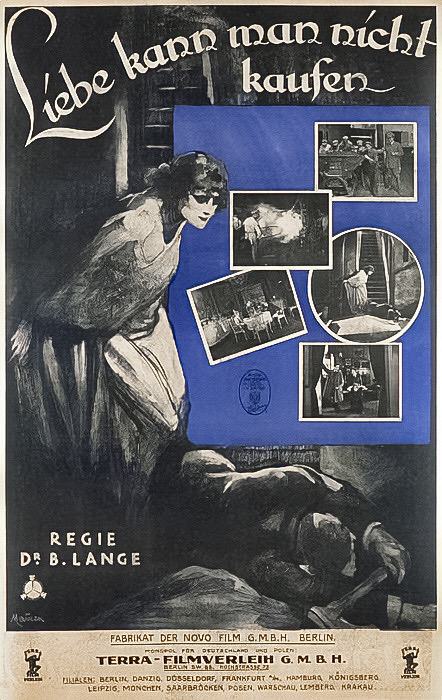
No champagne gushes, no violins crescendo—only the soft thud of a man’s dignity landing on the pawnshop scale.
The film begins inside a savings bank that smells of brass polish and licked fingertips. Vallentin’s clerk, named only Herr Sommer, counts coins with the devotional slowness of a monk illuminating manuscripts. Each clack of metal on wood is a heartbeat he can’t spend. Outside, inflation stalks the city like a famished dog; inside, Sommer’s salary shrinks while his longing swells. Director William Kahn—never celebrated enough—lets the camera linger on Vallentin’s Adam’s apple, a nervous metronome ticking beneath the starched collar. One senses the whole fragile republic is balanced on that bobbing cartilage.
Enter Fraulein Adele, milliner, her lashes powdered with stray ostrich-plume barbs. She is neither gold-digger nor angel; she is, more chillingly, a weather vane turning toward whoever can block the wind.
Deutsch’s Baron von Riedel arrives trailing the perfume of freshly printed banknotes. He wears gloves the color of bone marrow and never removes them; the message is clear—touch is permissible only when mediated by capital. In a cabaret scene that rivals Blazing Love’s burlesque frenzy, the Baron orders a magnum of Sekt merely to spill it across the marble table so Adele can see her reflection in the puddle. Sommer, seated nearby, watches his own reflection fractured by the effervescent spill; the editing rhymes his face with Adele’s, both broken by the same liquid mirror. Love, the film whispers, is always a cracked surface.
What follows is a procession of humiliations staged with surgical detachment. Sommer withdraws his life’s savings—bankbook crisp as a baptismal certificate—to purchase a single orchid corsage. He carries it through a torrent, petals bruising like eyelids after crying. Adele accepts it wearing the same smile she bestows on a child offering a daisy, then pins it to her coat only to let the tram’s door shear it away. Kahn cuts to the orchid under the wheel, its purple pulp oozing sap that looks alarmingly like blood. No intertitle is needed; the imagery indicts every transaction where affection is mortgaged against social ascent.
Weimar cinema specialized in close-ups of coins; few filmmakers understood that the most harrowing close-up is of a face realizing its own purchasability.
The film’s midpoint detours into a dream sequence that anticipates Surrealist shards yet to come. Sommer nods off over his ledger and imagines himself inside a giant cash register. Copper coins roll like millstones; his limbs are receipts curling under the metal press. Adele appears, but her skin is green as tarnished currency, her lips move yet emit only the ca-ching of a till. Expressionist sets—skewed windows, staircases descending into black voids—owe debts to The Iron Claw, yet Kahn’s nightmare is quieter, more insidious: the terror not of being murdered but of being discounted.
Back in waking life, Sommer attempts the ultimate romantic sacrifice: he withdraws his pension, pawns his grandfather’s watch chain, and rents a lakeside villa for a weekend tryst. The sequence is shot in stark whites—sunlight on stucco, sailcloth snapping—almost blinding after the prior gloom. But the brightness only sharpens the cruelty: Adele arrives accompanied by the Baron, plus a gramophone playing a jaunty foxtrot. The three of them picnic on champagne and despair. Adele reclines on a bearskin rug, her pupils dilated with either desire or calculation; Sommer sits cross-legged, trousers too short, exposing pale ankles that seem to plead for mercy. At dusk, the Baron casually tosses his cigarette into the lake; the ember hisses like a tiny, drowning heart.
Here the film pivots from pathos to ethnographic chill. Kahn stages a montage of Weimar leisure culture—rowing boats shaped like coffins, parasols striped like barber poles, women powdering their knees—each frame an anthropological artifact of bourgeois ennui. Sommer’s dowdy suit marks him as interloper; the camera adopts his point of view, and suddenly every laugh feels aimed at him. The weekend ends with a thunderstorm filmed so that rain ricochets off the Baron’s polished boots while soaking Sommer’s cardboard soles. Shoes, in this film, are the visible ledger of solvency.
Critics who dismiss silent cinema as mime and melodrama need to witness Vallentin’s final close-up: a slow dolly-in that lasts forty-three seconds, during which his expression transmutes from hope to self-disgust to a weird beatific resignation, all without a single tear.
Having exhausted his funds, Sommer returns to the city and to the bank, now privatized and tightening its corset. His supervisor, a thin man who clips his fingernails over the ledger, informs him his position is “redundant.” The word is delivered with the same neutrality one might announce a change in lunch menu. Sommer packs his inkwell and his dignity into a cardboard box whose flaps gape like broken jaws. Outside, Adele glides past in the Baron’s Hispano-Suiza, mink collar grazing her cheekbones. She does not see Sommer; or worse, she sees him and compresses him into a speck in her peripheral vision. Kahn holds the shot until the automobile’s gleam dissolves into the fog of streetlights, a visual vanishing act that prefigures the coming erasure of an entire class.
The final act is a masterclass in narrative ellipsis. Sommer descends into the U-Bahn tunnels where electric bulbs buzz like trapped wasps. He walks the platform edge, not to jump—this isn’t Life’s Shadows—but to feel the wind of oncoming trains slap his face, a surrogate for human contact. Meanwhile, Adele discovers the Baron has invested her dowry in a speculative copper mine that collapses overnight. The last time we see her, she is hocking her last pearl earring to a pawnbroker whose window displays Sommer’s grandfather’s watch. The film declines to stage their reunion; instead, Kahn crosscuts between the two pawn tickets fluttering onto separate piles, two butterflies pinned in the same collection. Love cannot be bought, but its residue can be sold for scrap.
Cinematographer Willy Hesse, later condemned as “too literary” by Goebbels’ henchmen, employs chiaroscuro worthy of The Face in the Dark. Notice how the brim of Vallentin’s bowler carves a crescent shadow across his cheek, a waning moon portending emotional bankruptcy. Interiors throb with sepia undertones, while night exteriors are drenched in cobalt nitrate blues that make Berlin resemble a submerged cathedral. Restoration efforts by the Deutsche Kinemathek reveal textures previously smothered: the nub of Adele’s velvet cloche, the calfskin cracks on Deutsch’s gloves, the cigarette smoke curling into question marks above Sommer’s head.
Intertitles—sparse, aphoristic—function like haiku of disillusionment. “A heart on credit accrues compound grief.” “Kisses depreciate fastest when displayed in shop windows.” Each card appears against a black background rimmed by a thin gold line, suggesting both gilt-edged securities and the frame of a coffin. The typography is deliberately modern, sans-serif, eschewing the frills that adorned Just Peggy. Form mirrors theme: love stripped of ornament is still love, but poverty stripped of ornament is merely destitution.
How revolutionary, this refusal to grant the pennile protagonist moral superiority. Sommer is no saint; he yearns upward, covets the Baron’s ease, would swap places in a heartbeat. The film’s radicalism lies in exposing how capitalism infects even the abject: the clerk despises the banker yet measures affection in banknotes.
Comparisons with Love’s Pilgrimage to America reveal divergent philosophies. Where the latter promises geographic escape as panacea, Liebe kann man nicht kaufen insists geography is merely another commodity: the Baron hires yachts to outrun consequence, yet finds the same reflection in every ocean. Likewise, Love and Lunch culinaryizes romance, suggesting hunger can be sated; Kahn counters that appetite merely mutates—starving for food, then for status, then for the very act of desiring.
The score, reconstructed by the Bundesarchiv from a 1926 cue sheet, calls for muted trumpet, celesta, and hand-pumped harmonium. The harmonium’s wheeze underscores Sommer’s asthmatic bankbook; the celesta’s brittle chimes trace Adele’s flirtations. When the Baron’s ruin is disclosed, the trumpet enters with a smeared glissando that slides downward into silence—an aural plunge from penthouse to pavement. Contemporary screenings with live ensembles reveal how the original dynamics amplify class tension: fortissimo during stock-ticker montages, pianissimo during fingertip brushes in the dark.
Performances remain scalpel-sharp a century on. Vallentin, primarily a stage actor, modulates his body as if it were a balance sheet: shoulders square when anticipating credit, spine curved like a spent spring after depletion. Deutsch, later immortalized as the spymaster in The Third Man, here perfects the soft sadism of the entitled. Watch how he removes a glove before petting a dog, as though even kindness must be filtered through cashmere. And the lesser-known actress Lilli Lehmann (not the opera diva) imbues Adele with mercurial opacity; her smile arrives a half-second after the joke, suggesting calculation rather than spontaneity.
Reception history itself reads like a subplot. Premiered at the Gloria-Palast am Potsdamer Platz, the film was lauded by Die Weltbühne as “a social X-ray,” yet Nazi critics condemned its “defeatist nihilism.” Prints vanished into storage vaults, requisitioned for silver recovery during the war. A surviving nitrate copy, mislabeled Liebeskäse (“Love Cheese”), surfaced in a Dresden basement in 1998, fused into a single caramelized reel. Digital restoration required frame-by-frame separation, a painstaking archaeology that mirrors the protagonist’s own disassembly. Today the movie streams in 4K, though some cinephiles prefer the 16mm dupes where emulsion cracks resemble lightning over Weimar—history written into the very fabric.
Modern resonance? Scroll any dating app and witness the Baron’s heirs brandishing crypto wallets instead of walking sticks. Sommer’s rented villa prefigures today’s “experience economy” where weekends are curated, photographed, monetized. The copper-mine swindle finds echo in meme-stock crashes; Adele’s pawned earring lives on in Depop listings. Kahn’s insight—that romance calcifies into transaction the moment insecurity enters—feels tweet-ready yet resists reduction. It is not Marxist propaganda; it is a melancholy sonnet on the impossibility of un-commodified intimacy under capital.
One leaves the screening both gutted and electrified, reminded that every flirtation carries invisible price tags, every caress accrues interest. The film refuses catharsis; it offers instead a bitter clarity as bracing as winter air on unpaid skin. Sommer’s last gesture—placing his pawn ticket between the pages of a library book and returning it to the shelf—implies that debt, like literature, awaits the next reader. Somewhere in the dark, another clerk checks his balance, another milliner calculates, and the violet under the tram wheel stains the asphalt a faint, defiant purple.
Verdict: essential viewing for anyone who has ever wondered why hearts arrive itemized.
IMDb 5
1930
Community
Log in to comment.