DbcultAccessing Vault...
6.2/10
Senior Film Conservator
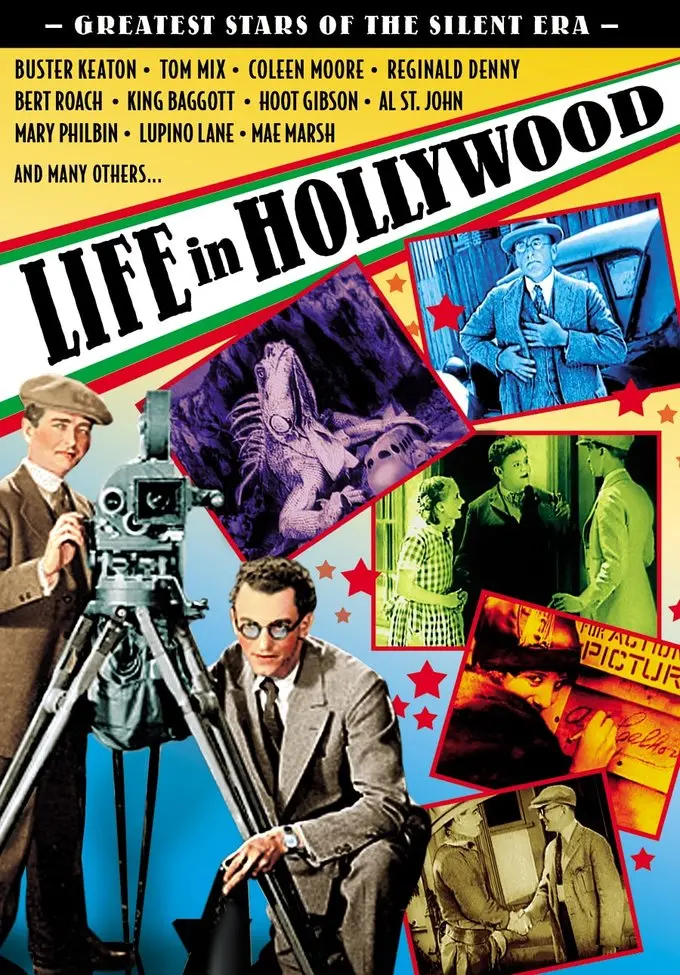
A definitive 6.2/10 rating for a film that redefined the boundaries of cult cinema. Life in Hollywood No. 3 remains a cornerstone of transgressive art.
Is Life in Hollywood No. 3 worth watching today? Short answer: yes, but only if you view it as a historical excavation rather than a night at the multiplex.
This film is specifically for the archival obsessive, the silent film enthusiast, and the student of the studio system; it is definitely not for the casual viewer seeking a cohesive plot or modern pacing.
To understand the current state of celebrity culture, one must look at where the curtain was first pulled back. Life in Hollywood No. 3 is that first tug on the velvet drape. It doesn't tell a story in the way Disraeli does; instead, it captures the heartbeat of a working city designed entirely for fiction.
1) This film works because it provides an unfiltered visual record of the Universal backlot before the sound era fundamentally changed studio architecture.
2) This film fails because it lacks any internal narrative momentum, functioning more as a high-budget home movie for the industry elite.
3) You should watch it if you want to see the human faces behind the legends, stripped of their dramatic personas and caught in the mundane reality of production.
In 1927, Universal Studios was a literal city, and this short film treats it as such. We see directors like King Baggot and Irving Cummings not as untouchable gods, but as foremen on a construction site. There is a specific moment where the camera lingers on the set construction—the sawdust and the scaffolding—that feels more honest than any polished feature of the time.
Contrast this with the staged comedy of Monkeys Prefer Blondes. While that film uses the medium to tell a joke, Life in Hollywood No. 3 uses it to document the joke-tellers. It is a meta-commentary on the industry's own self-importance. The pacing is frantic, jumping from a Western set featuring Hoot Gibson to a sophisticated drama stage with Mary Philbin. This isn't accidental; it’s a flex of Universal’s range.
The cast list reads like a 'who's who' of 1920s cinema. Seeing Mary Philbin, who had just stunned audiences in the 1925 Phantom of the Opera, appearing here as herself is jarring. She is no longer the damsel in distress; she is a working professional. This transition from character to person is the film’s greatest strength. It humanizes the icons.
We also see Hoot Gibson, the man who defined the early Western. In Life in Hollywood No. 3, we see the physicality required for his role. It’s not just about the acting; it’s about the horse, the dust, and the waiting. The film captures the 'waiting' perfectly. Hollywood is 90% waiting and 10% action. This short dares to show the 90%.
The cinematography here is utilitarian. It lacks the expressionistic shadows of Cheated Hearts or the experimental flair of European imports. However, its simplicity is its virtue. The cameraman (uncredited but likely a studio veteran) uses wide shots to establish the scale of the Universal lot, making the viewer feel small in the face of the 'Dream Factory.'
The lighting is mostly natural, taking advantage of the California sun that brought the industry west in the first place. There is a raw, overexposed quality to the outdoor scenes that feels authentic. It’s a stark contrast to the carefully controlled environments of films like So This is Eden. Here, the sun is the primary key light, and it reveals every wrinkle on the directors' faces.
Yes, if you are looking for a window into the past. Life in Hollywood No. 3 is a primary source document. It is the visual equivalent of reading a diary from 1927. It offers a perspective on the film industry that polished features simply cannot provide. It shows the labor, the ego, and the sheer scale of Universal Studios.
However, if you are looking for entertainment in the traditional sense, you will be disappointed. There is no conflict. There is no resolution. There is only the steady hum of the studio machine. It is a film for the head, not the heart.
Pros:
- Unrivaled historical value.
- Rare cameos from legendary directors.
- Excellent preservation of the 1920s backlot atmosphere.
- Short runtime makes it an easy watch for researchers.
Cons:
- Purely promotional in nature.
- No character development or story arc.
- Can feel like an extended advertisement for Universal.
One must address the inherent dishonesty of the film. It is a PR piece. Everything is a bit too clean; every director is a bit too focused. It lacks the grit of something like His Darker Self. Yet, in its attempt to show a 'perfect' studio, it accidentally reveals the artifice of the entire industry. The very fact that they are filming themselves filming is a loop of vanity that is fascinating to deconstruct.
The inclusion of Max Davidson and Bert Roach adds a touch of levity, but even their 'candid' moments feel rehearsed. It’s a performance of a reality. In that sense, it is the grandfather of the modern 'making-of' featurette. It sets the template for how Hollywood wants to be seen: busy, productive, and magical.
Life in Hollywood No. 3 is a fascinating, if somewhat hollow, journey into the past. It works. But it’s flawed. It is a film that demands you bring your own context to the table. Without a pre-existing love for the silent era, it is merely a collection of old men in hats standing near cameras. With that love, however, it becomes a vibrant, breathing ghost of a world that no longer exists. It is a necessary watch for anyone who wants to see the foundations upon which the modern cinematic empire was built. It’s propaganda, but it’s vital propaganda.
IMDb —
1935
Community
Log in to comment.