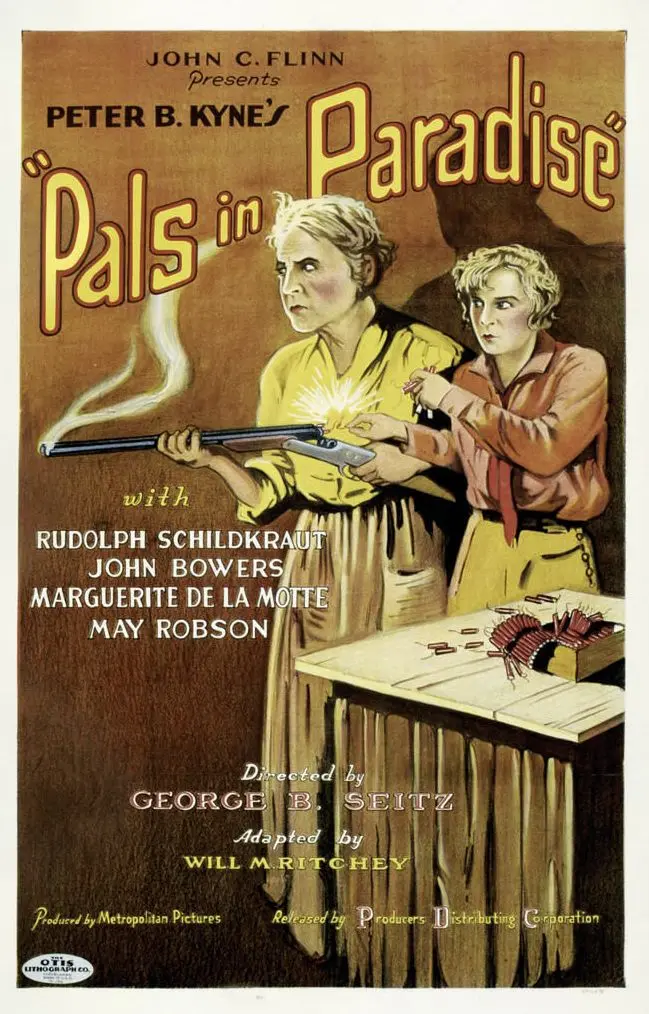
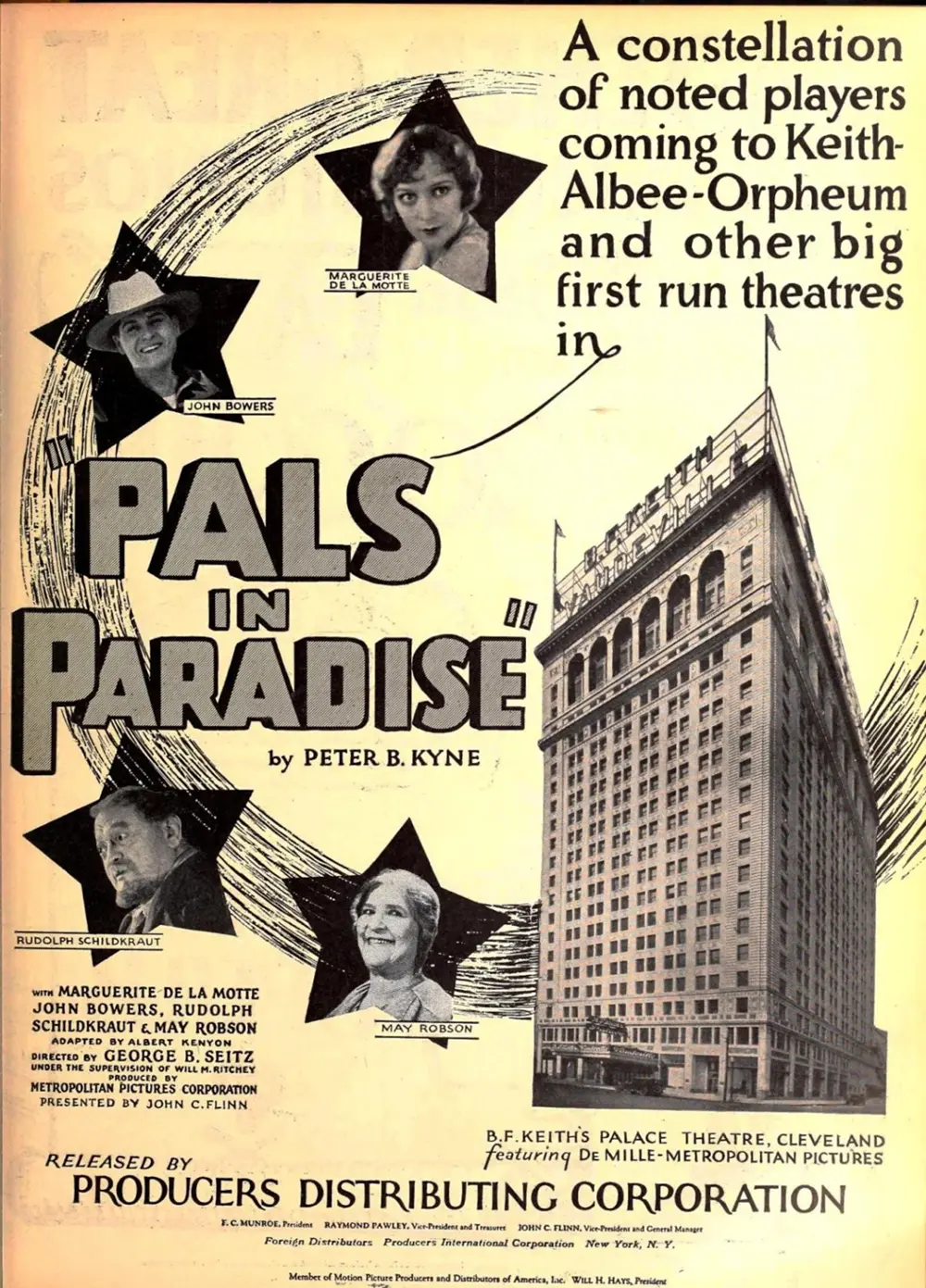
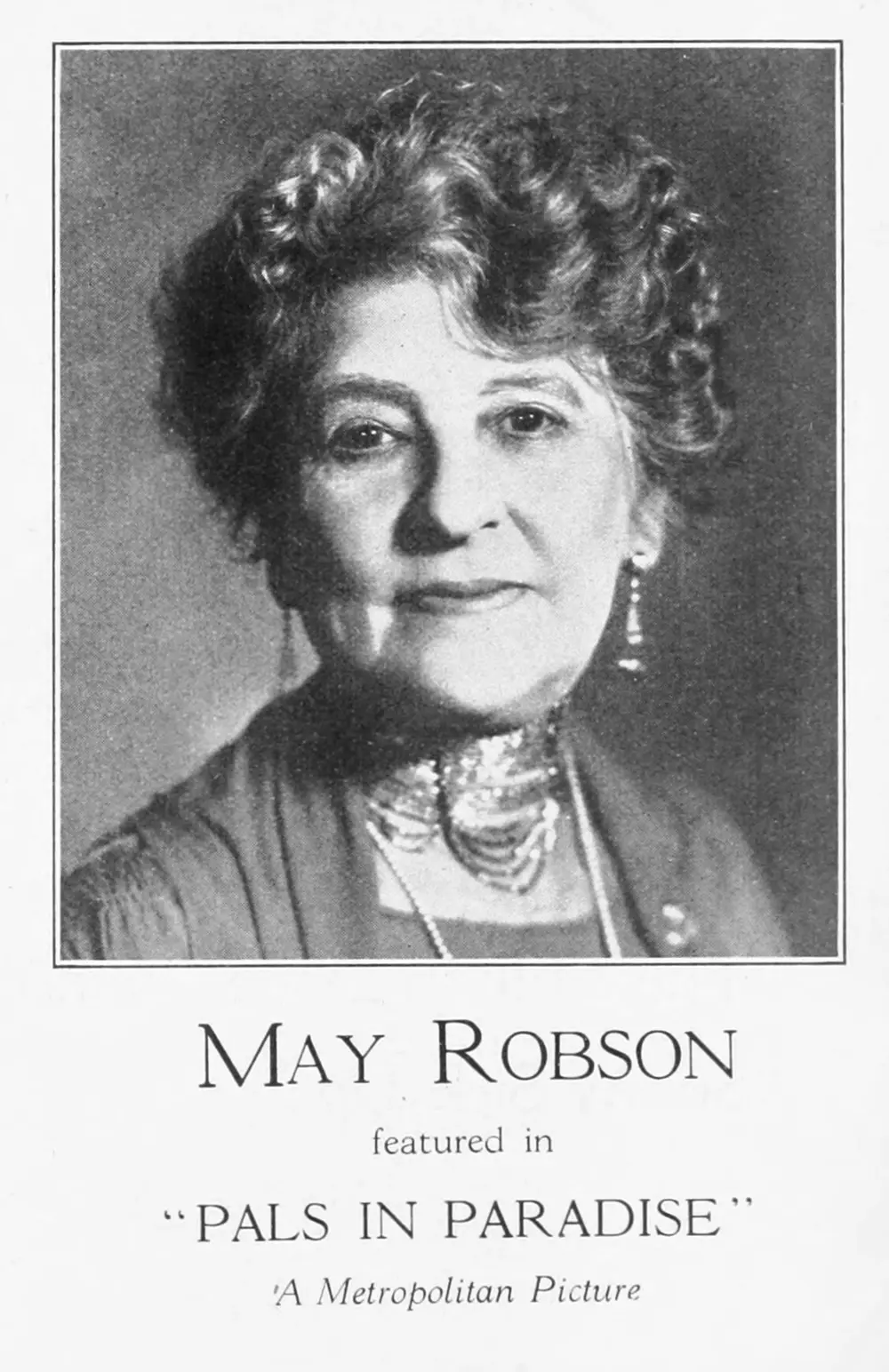
A definitive 5.9/10 rating for a film that redefined the boundaries of cult cinema. Pals in Paradise remains a cornerstone of transgressive art.
Is Pals in Paradise a film worth unearthing from the silent era's vast archives today? Short answer: yes, but with significant caveats that demand a specific kind of viewer engagement.
This is a film crafted for enthusiasts of early cinema, particularly those drawn to Westerns that prioritize narrative twists over grand spectacle, and who appreciate the foundational elements of cinematic storytelling. It is emphatically not for casual viewers seeking modern pacing or high-fidelity visuals.
This film works because of its surprisingly intricate plot, which, for its time, offers a compelling study of deception and moral ambiguity, driven by strong character motivations.
This film fails because its technical execution, while competent, often lacks the innovative flair seen in some of its contemporaries, leading to moments that feel more functional than inspired.
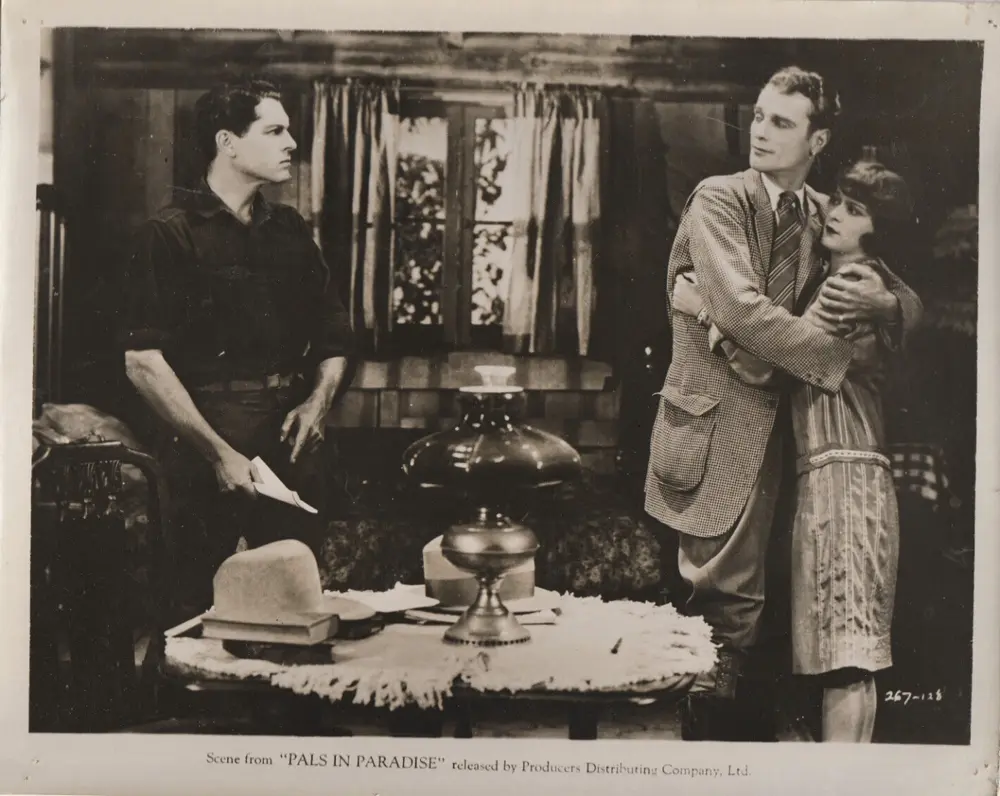
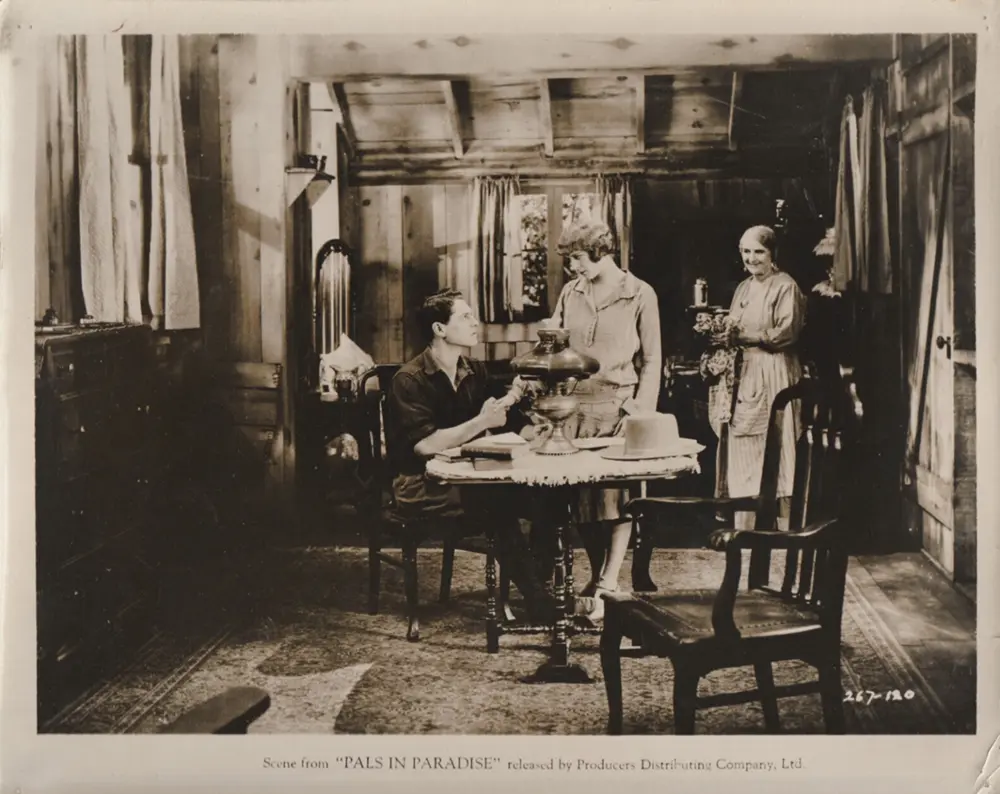
Scene from Pals in Paradise
Cinematic perspective: Exploring the visual vocabulary of Pals in Paradise (1926) through its definitive frames.
You should watch it if you have a keen interest in the evolution of the Western genre, appreciate the nuanced performances of silent film actors like Marguerite De La Motte, and are prepared to engage with a story that requires active interpretation of visual cues and intertitles.
Plot Refined: A Web of Deceit
The core narrative of Pals in Paradise, penned by Will M. Ritchey, Peter B. Kyne, and Albert Kenyon, is deceptively simple at first glance, yet it unfurls into a rather complex tapestry of greed, legal maneuvering, and outright villainy. At its heart is the classic Western trope of a gold discovery, but here, the immediate conflict isn't with outlaws or the elements, but with the very notion of ownership.
Bill Harvey, played with earnest resolve by John Bowers, stumbles upon a rich vein of gold. His discovery, however, is quickly overshadowed by the revelation that the claim belongs to Geraldine Howard, portrayed by Marguerite De La Motte. The initial spark of conflict ignites when Bill, with a stark honesty that borders on insensitivity, informs Geraldine that her father's death legally voids her claim. This pragmatic, if unchivalrous, pronouncement sets Geraldine on a path of fury, pushing her directly into the waiting, calculating arms of John Kenton.
Alan Brooks' Kenton is the quintessential silent film villain: charmingly insidious, with a gaze that promises help while plotting ruin. He sees Geraldine not as a wronged woman, but as a vessel for his own ambition. His plan to marry her for her inherited wealth is transparent to Bill, but entirely obscured from Geraldine by her own indignant pride. Bill's attempts to warn her only serve to further entrench her distrust, a frustrating, yet understandable, human flaw that drives much of the story's tension.
Scene from Pals in Paradise
Cinematic perspective: Exploring the visual vocabulary of Pals in Paradise (1926) through its definitive frames.
The climax of this moral chess match arrives with a flurry of action. While Bill leads a commendable, if somewhat tangential, raid on an 'immoral cabaret' – a common moralistic aside in films of the era – Kenton executes his grand scheme. The raid on the Paradise freight depot, culminating in a dramatic fire and Kenton's cold-blooded murder of his own henchman to save himself, is a pivotal moment. It’s a bold stroke of narrative irony that allows Kenton to emerge, phoenix-like, as the town's hero, cementing Geraldine's misguided faith in him. The stage is perfectly set for Bill to untangle this intricate web of deceit, a task that feels both urgent and daunting.
Performances: Silent Stars, Loud Actions
The challenge for silent film actors lies in conveying profound emotion and intricate motivation without the benefit of spoken dialogue. In Pals in Paradise, the principal cast navigates this landscape with varying degrees of success, delivering performances that, while occasionally broad, largely fulfill the demands of their archetypal roles.
Marguerite De La Motte as Geraldine Howard is tasked with embodying a woman whose primary emotional state, for much of the film, is 'infuriation.' It's a tricky tightrope walk. De La Motte employs a range of expressive gestures and facial contortions to convey her anger and pride. While effective in communicating her immediate emotional state, the repeated reliance on this singular emotion can, at times, make Geraldine feel less like a complex character and more like a plot device to be manipulated. Her transformation from indignant heiress to smitten admirer of Kenton feels less like a natural progression and more like a narrative necessity, a common issue in early cinema where character nuance often took a backseat to plot momentum.
John Bowers, as the stoic and honest Bill Harvey, provides a grounded counterpoint. His performance is less about grand gestures and more about a quiet determination. Bill's frustration with Geraldine's stubbornness is palpable, conveyed through subtle shifts in his posture and the intensity of his gaze. He embodies the classic Western hero – principled, albeit a bit rough around the edges – whose actions speak louder than any intertitle could. His presence lends a much-needed moral anchor to the film's swirling deceit.
Scene from Pals in Paradise
Cinematic perspective: Exploring the visual vocabulary of Pals in Paradise (1926) through its definitive frames.
However, the standout performance, for better or worse, belongs to Alan Brooks as the villainous John Kenton. Brooks fully embraces the theatricality of silent-era villainy. His smirks are wider, his eyes more calculating, and his gestures more pronounced. When he's manipulating Geraldine, there's an almost unctuous charm that is genuinely unsettling. The scene where he convinces Geraldine he's her savior, despite Bill's warnings, is a masterclass in silent deception, his subtle hand movements and knowing glances perfectly communicating his sinister intent. One could argue his villainy is almost too broad, risking caricature, yet it serves its purpose in making him a clear, undeniable antagonist. This unambiguous portrayal of evil makes the audience's investment in Bill's quest for justice all the more potent.
Direction and Cinematography: Capturing the Old West
The directorial hand in Pals in Paradise, while not revolutionary, is competent and ensures the story moves along with clarity. The film effectively establishes its Western setting, albeit through fairly conventional means for the period. Wide shots of dusty streets and rudimentary frontier buildings ground the narrative geographically, even if they don't always offer a sweeping vista akin to later, more ambitious Westerns.
Cinematography here is functional, focused primarily on serving the plot and highlighting character expressions. Close-ups are employed judiciously, often to emphasize a character's emotional state or a crucial plot point, such as a look of betrayal or a moment of realization. For instance, the tight framing on Geraldine's face as she processes Bill's initial claim dispute effectively communicates her mounting anger without a single word. The film’s visual language is direct, prioritizing storytelling efficiency over artistic flourish.
The action sequences, particularly the cabaret raid and the freight depot fire, are handled with a blend of practical effects and clever editing that was standard for the time. The depot fire, in particular, would have been a significant undertaking. While likely relying on miniatures and controlled burns, the sequence manages to convey a sense of genuine danger and chaos. The cross-cutting between the burning building, Kenton's escape, and the frantic townsfolk builds suspense, a technique that, while rudimentary by today's standards, was crucial in establishing dramatic tension in the silent era. It lacks the raw, visceral impact of, say, the train sequences in The Life Story of David Lloyd George, but it gets the job done.
Scene from Pals in Paradise
Cinematic perspective: Exploring the visual vocabulary of Pals in Paradise (1926) through its definitive frames.
One surprising observation is the film's occasional use of depth in its framing, allowing multiple layers of action to unfold within a single shot, even if briefly. This wasn't always a given in early cinema, which often favored flatter compositions. It suggests a nascent understanding of how to use the frame to convey more information and create a more dynamic visual experience.
Pacing and Tone: A Race Against Time and Treachery
The pacing of Pals in Paradise is largely dictated by its narrative structure, which builds from a simmering legal dispute to a full-blown dramatic confrontation. For a silent film, it maintains a relatively brisk pace, particularly in its second half. The initial setup, detailing the claim dispute and Geraldine's misguided trust in Kenton, can feel a touch deliberate, relying heavily on intertitles to convey the nuances of legal and emotional arguments.
However, once Kenton's villainy is fully unleashed, the film picks up considerable momentum. The parallel editing between Bill's posse raiding the cabaret and Kenton's depot heist is a classic tension-building technique, effectively creating a sense of urgency and impending doom. This rapid cross-cutting, while perhaps not as seamless as modern editing, was an innovative way to convey simultaneous action and heighten stakes, and it largely succeeds here. It’s a stark contrast to the more contemplative pacing seen in films like Driftwood.
The tone of the film shifts quite dramatically. It begins as a somewhat grounded, if emotionally charged, Western drama centered on property rights and personal honor. As Kenton's machinations take hold, it veers sharply into the territory of a moralistic thriller, with clear delineations between good and evil. The inclusion of the 'immoral cabaret' raid, while a common trope for the era, feels a little incongruous with the main plot's focus on gold and betrayal, momentarily disrupting the narrative flow for a quick burst of moral policing.
Scene from Pals in Paradise
Cinematic perspective: Exploring the visual vocabulary of Pals in Paradise (1926) through its definitive frames.
One could argue that the film’s reliance on Geraldine’s 'infuriation' as a primary catalyst for her decisions, bordering on repetitive, might strike a modern viewer as simplistic. Yet, within the context of early cinema, it serves as a clear and unambiguous emotional driver, ensuring the audience understands her motivations, however one-dimensional they might seem. This simplification allows the plot to move forward without getting bogged down in psychological complexity, which was often beyond the scope of silent storytelling.
Is This Film Worth Watching Today?
For silent film historians, absolutely. For a casual Friday night watch, probably not. Its strengths lie in its narrative ambition and a glimpse into early cinematic morality plays.
If you are a student of film history, particularly the Western genre or the evolution of narrative structure in silent cinema, Pals in Paradise offers valuable insights. It showcases the storytelling techniques and character archetypes that would become foundational for decades to come. Its exploration of a morally compromised hero and a cunning villain, even if broadly drawn, is compelling.
However, for the average contemporary viewer accustomed to sound, color, and rapid-fire editing, engaging with Pals in Paradise requires a significant adjustment. The reliance on intertitles, the occasionally deliberate pacing, and the theatrical acting styles can be barriers. It demands patience and an appreciation for a different kind of cinematic language.
It's a testament to the ingenuity of early filmmakers that a story this intricate could be told so clearly without dialogue. The film's ability to maintain suspense and deliver a satisfying resolution, despite its limitations, is commendable. It’s a snapshot of a particular moment in cinematic development, and for that alone, it holds historical significance.
Key Takeaways
Best for: Silent film aficionados and early Western scholars.
Not for: Viewers seeking modern action, or those unfamiliar with silent film conventions.
Standout element: The intricate web of deceit surrounding Kenton's villainy and his audacious plan.
Biggest flaw: Occasional uneven pacing and a somewhat simplistic portrayal of Geraldine's motivations.
Pros and Cons
Pros:
Engaging and surprisingly intricate plot for its era, driven by clear character motivations.
Strong, theatrical performance by Alan Brooks as the villainous John Kenton, providing a compelling antagonist.
Historical value as an example of early Western narrative cinema and silent film storytelling techniques.
Effective use of parallel editing during action sequences to build suspense.
Cons:
Technical aspects are dated, lacking the visual innovation of some contemporary silent films.
Geraldine's character can feel one-dimensional, heavily reliant on a single emotion ('infuriation') for motivation.
Pacing can be uneven, with slower exposition giving way to rapid action, which might test modern viewers' patience.
The 'immoral cabaret' subplot feels somewhat tacked on, detracting slightly from the main narrative.
Verdict
Pals in Paradise is more than just a relic; it's a sturdy, if unspectacular, example of early narrative cinema. It works. But it’s flawed. Its strengths lie in its ambitious plot and the clear, albeit broad, performances that bring its archetypal characters to life. Alan Brooks' portrayal of Kenton is particularly memorable, cementing him as a truly despicable, yet captivating, villain.
While it demands an audience willing to engage with the conventions of silent film, those who make the effort will find a surprisingly coherent and engaging story of deception and eventual justice. It offers a fascinating glimpse into a foundational period of filmmaking, demonstrating how compelling narratives were crafted before the advent of sound. It may not redefine the genre, but it certainly holds its own as a compelling piece of cinematic history.