DbcultAccessing Vault...
Cult Review
Senior Film Conservator
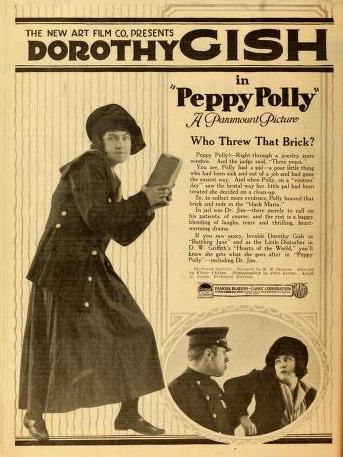
Stepping back into the silent era, one often encounters narratives that, despite their age, resonate with an astonishing contemporary relevance. Peppy Polly, a film from a bygone cinematic landscape, stands as a testament to this enduring power. It's not merely a historical artifact; it's a potent social commentary, a daring exposé wrapped in the compelling performance of one of the era's most captivating stars, Dorothy Gish. This film, penned by M.M. Stearns and Marjorie Raynale, plunges headfirst into the murky waters of institutional integrity, challenging viewers to confront uncomfortable truths about justice, oversight, and the often-fragile line between rehabilitation and retribution.
At its core, Peppy Polly is a story of radical empathy and audacious investigative journalism, long before such terms became commonplace. Our titular protagonist, Polly, embodies a fiery spirit of justice, a character driven by an unwavering moral compass that refuses to bend in the face of bureaucratic complacency. The inciting incident is deceptively simple yet profoundly impactful: an official committee, tasked with scrutinizing the conditions within a local reformatory, delivers a report that, to Polly’s discerning eye, is nothing short of a whitewash. This isn't just a minor oversight; it's a deliberate obfuscation of truth, a betrayal of public trust that ignites Polly's resolve. She doesn't merely lament the injustice; she actively engineers her own arrest and commitment to the very institution she suspects of wrongdoing. This act of self-imprisonment is a stroke of narrative brilliance, immediately elevating the stakes and immersing the audience in Polly’s perilous quest for veracity.
Dorothy Gish, in the role of Polly, delivers a performance that transcends the limitations of silent cinema. Her portrayal is a masterclass in nuanced expression, a complex tapestry woven with subtle gestures, piercing gazes, and a remarkable ability to convey profound emotional depth without a single spoken word. Gish, unlike her more overtly dramatic sister Lillian, often brought a vivacious, sometimes impish, quality to her roles, which serves her exceptionally well here. Polly isn't a demure victim; she's a woman of agency, courage, and an indomitable will. Gish imbues Polly with a believable blend of vulnerability and steeliness, allowing us to feel her fear as she navigates the harsh realities of the reformatory, yet never doubting her ultimate resolve. Her face, a canvas of shifting emotions, communicates volumes – the shock of discovery, the quiet determination, the simmering indignation. It’s a performance that truly anchors the film, making Polly’s extraordinary actions feel entirely credible.
The dynamic between Gish’s Polly and Richard Barthelmess’s character, often a figure of romantic interest or moral support in these dramas, adds another layer of complexity. Barthelmess, known for his earnest and often brooding portrayals, complements Gish’s vibrant energy. While the narrative primarily centers on Polly's solo mission, the interplay with supportive figures, whether romantic or platonic, often provides the necessary emotional respite or external motivation that propels the protagonist forward. His presence, though perhaps secondary to Gish's tour-de-force, is crucial in grounding Polly's journey in a world beyond the institution's walls, reminding us of the life and love she risks for her convictions. This kind of supportive male lead was a common trope, seen in other films of the era where strong female leads took center stage, though perhaps less overtly in films like The Spirit of the Poppy where the focus remained squarely on the female protagonist's internal struggles.
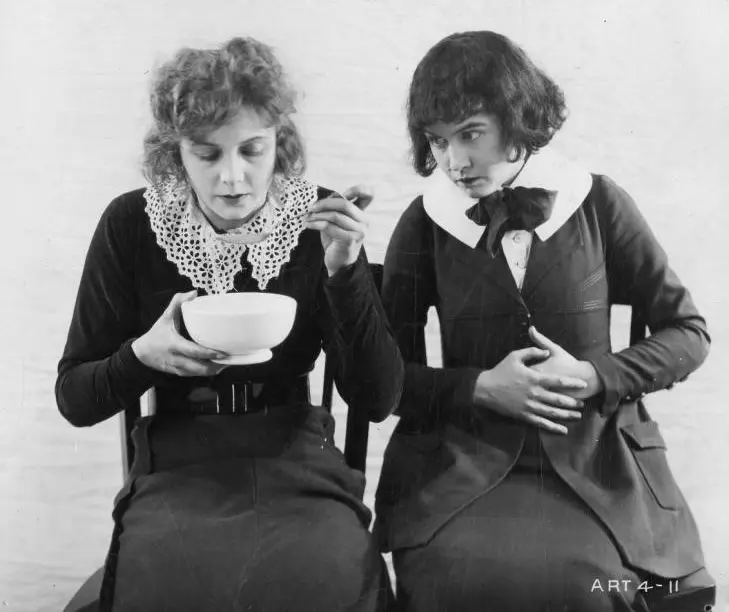
The reformatory itself is depicted not as a place of redemption, but as a crucible of systemic neglect and casual cruelty. The film doesn't shy away from portraying the dehumanizing aspects of institutional life: the lack of privacy, the rigid discipline, the arbitrary punishments, and the pervasive sense of hopelessness that can crush the human spirit. The supporting cast, including Emily Chichester, Kate Toncray, Edward Peil Sr., and Josephine Crowell, contribute significantly to creating this oppressive atmosphere. Their performances, whether as fellow inmates enduring the harshness or as staff members perpetuating it, lend a chilling authenticity to Polly’s experience. The director skillfully uses visual cues – stark sets, shadowed corridors, the downtrodden expressions of the inmates – to evoke a palpable sense of confinement and despair. This visual storytelling, a hallmark of silent cinema, is particularly effective in conveying the oppressive nature of the environment without relying on lengthy intertitles.
The film’s portrayal of the institution draws parallels to other social dramas of the period that sought to expose the darker underbelly of society. While not as explicitly focused on the prison system as a film like The Honor System, which delved into judicial reform and inmate treatment, Peppy Polly shares a common thematic thread: the scrutiny of established systems and the call for accountability. Both films, in their own ways, are cinematic crusades, using the medium to advocate for a more humane and just society. The writers, M.M. Stearns and Marjorie Raynale, craft a narrative that carefully builds tension, allowing Polly's initial observations to escalate into concrete evidence of malfeasance, culminating in a dramatic confrontation with the powers that be.
What makes Peppy Polly truly remarkable is its prescient social commentary. It critiques not just the specific conditions of one reformatory, but the broader societal tendency to ignore or rationalize suffering, especially when it occurs behind closed doors. The film speaks to the importance of independent oversight, the courage required to challenge authority, and the fundamental right of every individual, regardless of their circumstances, to be treated with dignity. In an era where journalism was increasingly seen as a powerful tool for social change, Polly's actions can be viewed as a proto-investigative journalism, a daring act of whistleblowing that predates the modern concept by decades.
The writers, Stearns and Raynale, were clearly attuned to the social issues of their time. The early 20th century was a period of significant social reform movements, including those advocating for better conditions in prisons, asylums, and reformatories. Films like Peppy Polly served not only as entertainment but also as a mirror, reflecting societal anxieties and catalyzing discussions. The very existence of a committee charged with investigation, even if flawed, points to an underlying public concern. Polly's story taps into this collective consciousness, giving voice to the voiceless and agency to those who felt powerless. This progressive viewpoint is a refreshing aspect of the film, distinguishing it from more purely escapist fare like New York Luck or even romantic comedies such as Love and Lavallieres, which, while charming, didn't often tackle such weighty subjects with the same directness.
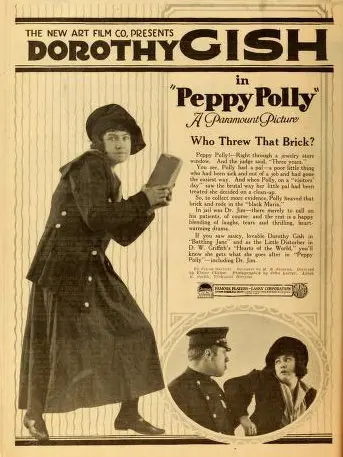
Beyond its thematic depth, Peppy Polly demonstrates a sophisticated understanding of cinematic storytelling for its time. The pacing, crucial in silent films where intertitles must carry significant narrative weight, is expertly handled. The film balances moments of quiet observation with bursts of dramatic tension, ensuring that the audience remains engaged. The use of close-ups on Gish’s face effectively draws viewers into her emotional state, amplifying the impact of her discoveries. The set design, though perhaps modest by today's standards, is effective in conveying the stark, institutional environment, contrasting sharply with any glimpses of the outside world that Polly sacrifices.
The direction, while not attributed in the provided details, orchestrates these elements with a clear vision. The camera often acts as Polly’s own investigative eye, lingering on details that reveal the truth behind the polished facade. This active camera work, combined with thoughtful editing, ensures that the audience is privy to Polly's revelations as she uncovers them, fostering a sense of shared discovery and mounting indignation. The narrative avoids overly simplistic resolutions, instead focusing on the arduous process of exposing corruption and the personal cost of such endeavors. This realistic approach lends the film an gravitas that elevates it beyond mere melodrama, even if some silent film conventions might seem exaggerated to modern viewers.
Considering the constraints of silent film production, the ambition of Peppy Polly is truly commendable. It speaks to a period when cinema was rapidly evolving, not just as a form of mass entertainment but as a powerful medium for social commentary and artistic expression. Films like this laid the groundwork for future investigative dramas and social realism in cinema, demonstrating that powerful messages could be conveyed without synchronized sound. It’s a historical precursor to the docu-dramas and exposé films that would become more prevalent in later decades, proving that the medium's capacity for impact was recognized and utilized early on.
The themes explored in Peppy Polly remain startlingly relevant. The struggle against institutional indifference, the fight for transparency, and the courage of individuals who dare to speak truth to power are timeless concerns. In an age saturated with information, the need for individuals to critically assess official narratives and seek out unvarnished truths is more crucial than ever. Polly's story serves as a potent reminder that vigilance is a constant requirement for a just society. Her willingness to put her own freedom and well-being on the line for the sake of others is a heroic act, one that resonates across generations.
Looking at other films of the era, one can see a spectrum of approaches to narrative. While films like Beautiful Lake Como, Italy offered pure scenic escapism, and The Secret of the Submarine provided thrilling adventure, Peppy Polly chose a path of stark realism and social critique. It's this willingness to engage with the grittier aspects of human experience that distinguishes it and grants it a lasting impact. It doesn't offer easy answers or saccharine resolutions, but rather a hard-won victory for truth, achieved through immense personal sacrifice.
Ultimately, Peppy Polly is more than just a silent film; it's a powerful cinematic statement. It champions the individual's capacity to effect change, even against overwhelming odds. Dorothy Gish's performance is a beacon, illuminating the human spirit's resilience and unwavering commitment to justice. For anyone interested in the social conscience of early cinema, the evolution of acting, or simply a compelling story of daring and determination, this film is an essential viewing. It reminds us that sometimes, the most effective way to expose the darkness is to step directly into it, armed with nothing but courage and an unshakeable belief in the truth. Its message, echoing through the decades, remains as clear and vital today as it was upon its original release: scrutinize, question, and never cease to fight for what is right.
IMDb 4.5
1935
Community
Log in to comment.