DbcultAccessing Vault...
6.9/10
Senior Film Conservator
A definitive 6.9/10 rating for a film that redefined the boundaries of cult cinema. Life Is Beautiful remains a cornerstone of transgressive art.
If you came here looking for a tear-jerker about a dad in a camp, you are about sixty-seven years too early. This is the 1930 Soviet film directed by Boris Barnet, and honestly, it’s a whole different kind of stress.
Is it worth watching today? Only if you actually like seeing how movies learned to talk. If you want a smooth story with a clear ending, you are going to absolutely hate this.
It is for the people who find themselves staring at the background of old black-and-white shots just to see how the buildings looked. Or people who like seeing actors who haven't quite figured out that they don't need to shout to the back of the theater anymore.
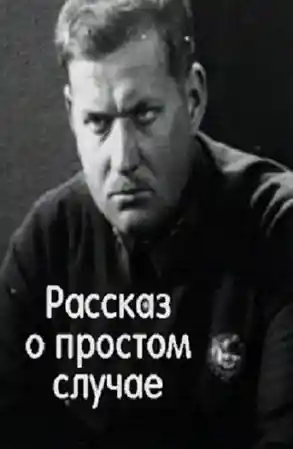
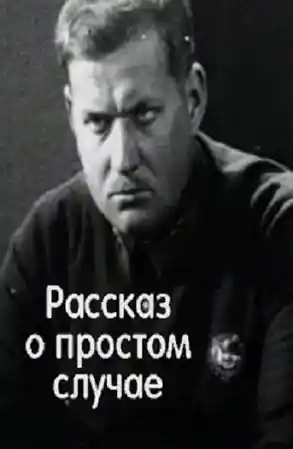
The plot is kind of a loose pile of things happening. It’s mostly about a woman named Masha and her husband, and how their marriage is basically a train wreck because the world around them is changing too fast. Fyodor Ivanov plays the lead and he has this incredibly square head. Like, his jawline is basically a 90-degree angle.
He spends a lot of the movie looking confused or angry, which I guess was the vibe in 1930 Russia. The movie is loud. Not because the people are loud, but because the recording technology was still so new and terrible.
There is this constant hiss in the background that sounds like someone is frying bacon in the next room. You get used to it after ten minutes, but it makes the quiet moments feel accidentally spooky. There is a scene where they are just sitting at a table, and the silence is so heavy it feels like a character in the room.
I noticed that Andrei Gorchilin has this weird habit of leaning into the camera. It’s like he’s trying to whisper a secret to the audience but forgets he’s in a movie. It’s those little things that make these old films feel alive, even if the acting is a bit stiff.
One thing that really stuck out to me was how they filmed the factories. Early Soviet cinema loved a good factory shot. But here, it doesn't feel like a “visually stunning cinematic experience.” It feels dirty and loud. You can almost smell the grease and the old wool coats.
The editing is really choppy. One second they are talking, and the next, it cuts to a shot of a horse or a machine for no obvious reason. It reminded me a bit of the pacing in The Violinist of Florence, where the rhythm just feels slightly off to a modern brain.
There’s a moment with a character played by Aleksandr Chistyakov where he just stares at a piece of paper for what feels like three minutes. I actually checked to see if my player had frozen. It hadn't. He was just really thinking about that paper.
It’s funny how much of the movie is just people being annoyed at each other. Masha wants to do things, and the men in her life are basically just in the way. It’s not a profound exploration of anything; it’s just a messy look at how annoying life was back then.
I liked the scenes that took place outside more than the indoor ones. The lighting inside feels very harsh, probably because they needed so many lamps to get anything on the film. But the outdoor scenes have this natural, dusty look that feels very real.
It reminds me of the energy in His Private Life, where everything feels like it’s being figured out on the fly. There is no polish here. It’s all rough edges and people shouting over the hiss of the soundtrack.
The script by Aleksandr Rzheshevsky is... well, it’s fine. It’s a lot of people talking about the "new life" and how things have to change. Blah blah blah. You’ve heard it all before if you’ve seen more than two movies from this era.
But the way they say it matters. You can see the spit flying when they get excited. You can see the actual sweat on their foreheads because those studio lights must have been insanely hot.
I found myself wondering about the extras in the crowd scenes. There’s one guy in the background of a street scene who is just staring directly at the camera with this "what is happening" look on his face. He’s my favorite part of the movie. He’s probably been dead for sixty years, but for that one second, he’s the most relatable person on screen.
The film doesn't really end so much as it just stops. It’s like they ran out of film or the actors got tired of arguing. It’s not satisfying in a traditional way. But it feels honest, in a weird way.
If you’ve seen Two Timid Souls, you might find the acting here a bit more aggressive. Everyone is very physical. They don't just sit; they sit. They don't just walk; they march.
Is it a masterpiece? Probably not. It’s a bit of a disaster in terms of structure. But it’s a fascinating disaster. It’s like watching a building being built while the architects are still arguing over the blueprints.
I’d say give it a watch if you’re stuck at home on a rainy Tuesday and want to feel like you’ve traveled back in time. Just don't expect it to make much sense. It’s more of a mood than a story. 🚂
One last thing—the way they use music is totally bizarre. It just cuts in and out whenever it feels like it. It’s like someone was playing a radio in the background and occasionally turning the volume up. It’s distracting, but also kind of charming.
Anyway, it’s a weird one. Watch it for the faces. Stay for the accidental 1930s ASMR of the grainy audio track. 🎞️
IMDb 4.6
1935
Community
Log in to comment.