DbcultAccessing Vault...
Cult Review
Senior Film Conservator
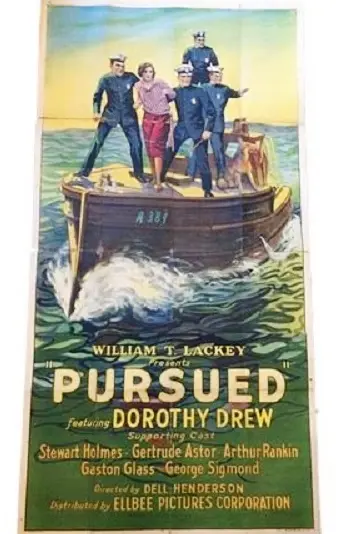
Stepping back into the roaring twenties, the cinematic landscape was a vibrant tapestry of evolving narratives, and amidst the burgeoning genres, crime dramas carved out a formidable niche. One such gem, often overlooked in the grander tapestry of silent film history, is the 1925 picture Pursued. This isn't just another forgotten relic; it's a pulsating testament to the era's storytelling prowess, boasting a premise that, even today, feels remarkably audacious and a central performance that commands attention. It's a film that, perhaps more than many of its contemporaries, encapsulates the sheer grit and ingenuity required to captivate audiences without a single spoken word, relying instead on the kinetic energy of its visuals and the compelling physicality of its cast.
The core of Pursued revolves around a narrative hook so potent it could easily underpin a modern thriller. We’re introduced to Dick Manning, an assistant district attorney, whose unwavering commitment to justice has put him squarely on the trail of a particularly vicious gang of murderers. His dedication, however, comes at a steep price. During a seemingly innocuous visit with his sweetheart, Helen Grant, Manning is violently abducted, snatched from safety and plunged into the murky depths of the criminal underworld. The immediate aftermath of this shocking event doesn't leave Helen a damsel in distress; quite the contrary. This is where the film truly begins to distinguish itself, pivoting from a conventional abduction plot to something far more intriguing and progressive for its time. Helen, portrayed with a compelling blend of vulnerability and steely resolve by Gertrude Astor, isn't content to wait for fate or the slow wheels of justice. Her beloved is in peril, and she's ready to bend, if not break, societal norms to retrieve him.
What truly elevates Pursued beyond mere genre fare is Helen’s extraordinary decision to infiltrate the gang herself. This isn't a passive act; it's a full-throttle dive into danger, orchestrated with a cunning that belies her seemingly demure exterior. Her trusty police dog, a silent but effective companion, tracks the abductors to their clandestine den, providing Helen with the intelligence she needs. But mere knowledge isn't enough; she needs access. And so, Helen Grant, the sweetheart of an assistant district attorney, undergoes a breathtaking metamorphosis, emerging as 'Chicago Ann,' a notorious female gangster. What makes this transformation particularly striking, and undoubtedly provocative for audiences of the era, is Ann’s choice of attire: she dresses in men’s clothing. This sartorial subversion isn't just a disguise; it's a statement, a bold rejection of gendered expectations, allowing her to move with a certain fluidity and menace within the masculine-dominated criminal milieu. It’s a narrative flourish that resonates with the spirit of the flapper era, where women were increasingly challenging traditional roles, though perhaps not usually by infiltrating murder gangs in drag.
Gertrude Astor, a veteran of the silent screen, brings 'Chicago Ann' to life with a captivating intensity. She doesn't just wear the clothes; she embodies the swagger, the hardened gaze, the dangerous allure of a woman who has seen too much. Her performance here is a masterclass in silent acting, conveying layers of deception and inner turmoil through subtle gestures and piercing glances. The tension is palpable as she navigates the treacherous waters of the gang’s lair, constantly on edge, knowing that a single misstep could expose her and seal her fate, along with Dick's. The film expertly builds suspense as Helen, in her Ann persona, manages to attract the attention of the gang's leader. This development adds another layer of complexity to her already perilous mission, forcing her to play a dangerous game of seduction and manipulation, all while maintaining her cover and searching for her captive love. It’s a high-stakes psychological ballet, where every interaction is fraught with potential exposure.
Of course, such a daring deception cannot last indefinitely, especially in the volatile world of hardened criminals. The film introduces a classic noir trope: the jealous sweetheart of the gang leader. This woman, sensing a rival and perhaps an impostor, becomes Helen’s undoing. Her suspicions, fueled by possessiveness and a keen eye for discrepancy, lead her to expose 'Chicago Ann' as a fraud. The moment of revelation is chilling, plunging Helen from a precarious position of control into the cold reality of capture. She is made prisoner, her mission seemingly failed, her life now hanging by a thread. The film, at this juncture, could easily have succumbed to despair, but Pursued is not one to let its heroine languish. It introduces another compelling character: a friendly gangster. This trope, while familiar, is executed with a surprising degree of nuance, providing a much-needed glimmer of hope in Helen’s darkest hour. The motivations of this gangster are left somewhat ambiguous, adding to the intrigue – perhaps a spark of conscience, a dislike for the leader, or even a grudging respect for Helen’s audacity.
With the aid of this unexpected ally, Helen orchestrates a desperate escape, a sequence undoubtedly filled with the kind of heart-pounding action that silent films excelled at conveying through kinetic editing and dynamic cinematography. Her flight from the den of thieves is not merely a personal victory; it’s a race against time. Knowing Dick's life hangs in the balance, Helen wastes no time, alerting the police to the gang’s location. The film culminates in a dramatic raid, a chaotic flurry of law enforcement descending upon the criminal stronghold, just in the nick of time to save Dick Manning from certain death. It’s a triumphant conclusion, not just for the characters, but for the narrative itself, affirming the power of courage, quick thinking, and the unbreakable bond of love.
Gertrude Astor, with her striking presence and remarkable versatility, is truly the beating heart of Pursued. Her career spanned decades, transitioning from silent films to sound, and her performance here is a clear indication of why she endured. She doesn't just play a character; she inhabits Helen Grant/Chicago Ann with an intensity that transcends the limitations of silent cinema. Her eyes, often described as expressive, convey a spectrum of emotions – fear, determination, cunning, and ultimately, relief – without the need for intertitles to explain her inner world. The physicality required for silent acting, especially in a role that demands both feminine grace and masculine swagger, is immense, and Astor delivers it with aplomb. She navigates the dual identity with such conviction that the audience genuinely believes in her transformation, making her eventual unmasking all the more impactful.
Comparing Astor's daring portrayal to other heroines of the era, one might draw parallels with the strong-willed women found in films like The Spitfire, where female characters often defied conventions. However, Helen's explicit cross-dressing and infiltration into a murder gang elevate her actions to a particularly bold level, even for the progressive 1920s. She's not just a feisty love interest; she's an active agent of her own destiny, a prototype for the action heroines that would become more common in later decades. Her performance is a testament to the power of non-verbal communication, showcasing how a skilled actor could convey complex emotional arcs and intricate plot points through mime, expression, and movement. J. Benson Stafford's writing provides the robust framework, but it's Astor who breathes life into this extraordinary character, making Helen's journey feel both harrowing and exhilarating.
The craft of silent filmmaking, particularly in a genre as dependent on tension as the crime thriller, is a fascinating study. Pursued, though perhaps not a blockbuster of its time, demonstrates an acute understanding of how to build and sustain suspense. The visual storytelling is paramount. Close-ups on Helen’s face during moments of intense danger, rapid cuts during the escape and raid sequences, and the evocative use of shadows to depict the grim reality of the criminal lair all contribute to a heightened sense of drama. The uncredited director, working from J. Benson Stafford's compelling scenario, understands the language of cinema. There’s a dynamic rhythm to the editing that propels the narrative forward, ensuring that the audience remains on the edge of their seats, even without the benefit of a spoken word or a synchronized score (though live orchestral accompaniment would have undoubtedly amplified its impact).
The depiction of the criminal underworld in Pursued, while perhaps stylized, carries a certain gritty authenticity for its time. It’s a world of smoky backrooms, desperate characters, and the constant threat of violence. This portrayal aligns with other silent crime dramas of the era, like The Black Circle or even the more sensationalized narratives found in films such as The Yellow Traffic, which explored the darker undercurrents of society. However, Pursued distinguishes itself by placing a civilian, and a woman at that, directly into the heart of this dangerous world, rather than observing it from a distance. The stakes feel incredibly personal, making the dangers Helen faces all the more visceral. The film leans into the inherent drama of mistaken identity and infiltration, a narrative device also skillfully employed in films like Bluff or The Prodigal Liar, though often with comedic or moralistic undertones rather than the sheer life-or-death stakes presented here.
Beyond the thrilling plot, Pursued touches upon several enduring themes. Courage, of course, is at its forefront, but it’s courage born not of bravado, but of love and desperation. There’s also the fascinating exploration of identity and deception, as Helen sheds her societal role to adopt a dangerous new persona. The film subtly questions gender roles, showcasing a woman who is not only capable of, but driven to perform, acts traditionally reserved for male heroes. This progressive portrayal, albeit within a specific narrative context, is a testament to the evolving social landscape of the 1920s, a decade of significant change for women. The stark contrast between Helen Grant, the respectable sweetheart, and 'Chicago Ann,' the hardened gangster, offers a compelling duality that speaks to the hidden strengths and untapped potential within individuals.
The film also serves as a potent reminder of the fragility of justice and the constant battle against the forces of criminality. Dick Manning, representing the law, finds himself helpless, underscoring the idea that sometimes, unconventional methods are required to right wrongs. This narrative thread, where a civilian takes matters into their own hands, resonates with a certain populist appeal, even if it skirts the edges of vigilantism. The resolution, with the police ultimately intervening, ensures that the film adheres to a sense of order, but it’s Helen’s initial, daring action that sets everything in motion. It's a film that, despite its age, still manages to engage and excite, proving that well-crafted storytelling and powerful performances can truly transcend the limitations of time and technology.
For those with an appreciation for silent cinema, Pursued is a compelling watch. It’s a film that demands engagement, asking its audience to lean in, to interpret, to feel the emotions conveyed through movement and expression. It lacks the polish and grandiosity of some of the era's better-known epics, but it compensates with raw energy and a tightly wound plot. The film, in its modest way, contributes to the rich tapestry of early Hollywood, showcasing the ingenuity of filmmakers and actors working within nascent conventions. It's a testament to the enduring power of a good story, well told, regardless of the technological advancements that have followed. It reminds us that fundamental human dramas—love, loss, courage, and the fight against injustice—are timeless, and can be communicated effectively through any medium, even one without spoken dialogue.
In an age where cinematic experiences are often defined by special effects and bombastic soundtracks, revisiting a film like Pursued offers a refreshing perspective. It forces us to appreciate the foundational elements of storytelling: character development, plot construction, and the sheer communicative power of the human face and body. Gertrude Astor, Lafe McKee, Stuart Holmes, Gaston Glass, George Siegmann, Arthur Rankin, and Marcella Daly, under the guiding hand of J. Benson Stafford's screenplay, deliver a performance ensemble that, while perhaps not universally remembered today, certainly leaves an impression. Pursued is more than just a historical artifact; it's a vibrant, thrilling piece of cinematic history that still holds its own as a gripping crime drama. Seek it out, and let yourself be captivated by Helen Grant’s audacious journey into the heart of darkness and back again.
IMDb 6
1934
Community
Log in to comment.