DbcultAccessing Vault...
6.9/10
Senior Film Conservator
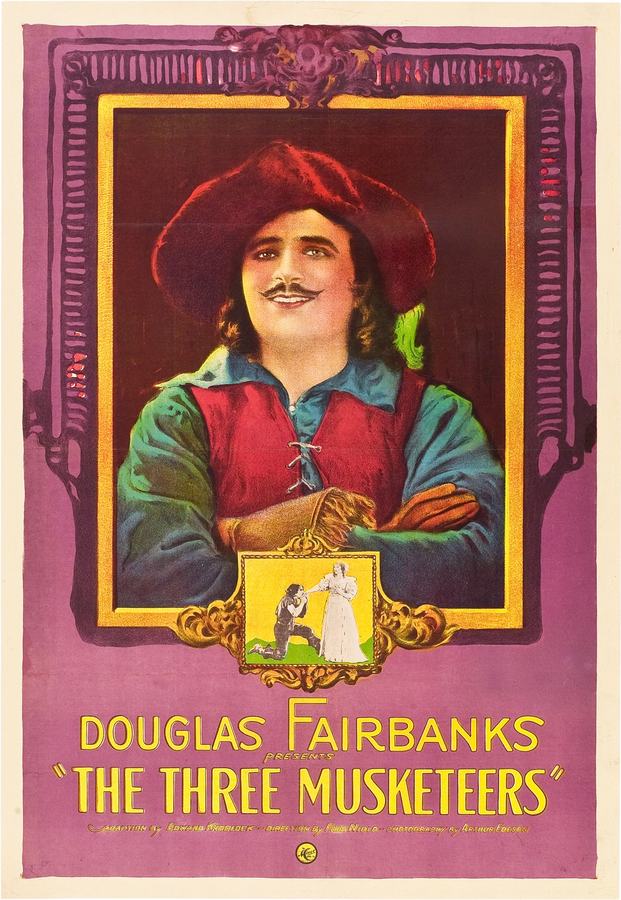
A definitive 6.9/10 rating for a film that redefined the boundaries of cult cinema. The Three Musketeers remains a cornerstone of transgressive art.
There are films that merely recount adventures, and then there is Fred Niblo’s The Three Musketeers (1921)—a celluloid carnival that distills Alexandre Dumas’ swaggering prose into pure kinetic incandescence. Nearly a century after its premiere, the movie still feels like a rapier flicker across the retina: black-and-white yet ablaze with colorized imagination, silent yet roaring with orchestral bravado.
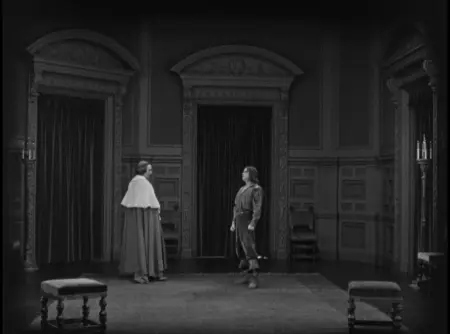
Shot during the twilight of the silent era, the picture luxuriates in tapers, torches, and moon-glow that sculpt faces out of obsidian and ivory. Cinematographer Charles Van Enger understands that shadows are not absence but presence in disguise; they pool like conspirators beneath staircases, slither across banquettes, and braid themselves into lace collars. Notice the sequence where D’Artagnan first spies the Queen’s carriage—lantern light ricochets off harness brass, turning ordinary metal into constellations. Fairbanks, ever the kinetic poet, leaps into frame with a flourish so electrically arrogant you half expect the film itself to blush.
The production design, supervised by William Cameron Menzies before he became the wizard of The Thief of Bagdad, recreates seventeenth-century Paris on back-lots that breathe with damp cobblestones and mist-slick slate. You can practically smell the river rot and hear the clatter of iron-rimmed wheels. Compare this tactile authenticity to the cardboard pageantry of Who's Your Servant? or the pastoral artifice of Ramona (both also 1921), and Niblo’s film emerges as a baroque cathedral amid garden sheds.
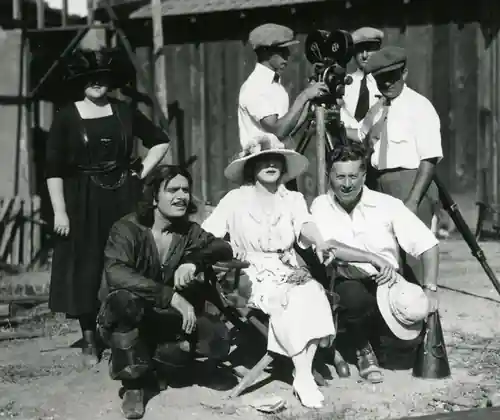
If modern superhero cinema owes its DNA to any mortal, it is Douglas Fairbanks. His D’Artagnan is a coiled spring in thigh-high boots, grinning like a man who has swallowed the moon and found it effervescent. Watch him vault tables, somersault off balconies, or fence with a loaf of bread as effortlessly as with Toledo steel—each gag timed to the microsecond, yet breathing with improvisational glee. Fairbanks never winks at the audience; instead he widens his eyes as if to say, “Can you believe this exuberance?” and we answer by leaning forward, helpless.
But swashbuckle is only half the equation. In quieter beats—when Athos recounts the tragedy of Milady’s branded shoulder—Fairbanks listens with the humility of a pilgrim before relics. His stillness magnifies the surrounding storm; pathos ricochets off his mute sympathy.
Léon Bary’s Athos is a study in aristocratic corrosion: velvet sleeves hiding a heart flayed by betrayal. He delivers lines through posture alone—shoulders weighted with ancestral guilt, gaze haunted by ancestral wine. George Siegmann’s Porthos inflates every frame with Falstaffian gusto; his doublet strains like a sail in gale, his guffaw could dislodge gargoyles. Meanwhile Eugene Pallette—decades before his gravel-voiced Friar Tuck—offers Aramis as a sardonic theologian who kisses his crucifix then kisses death, sometimes in the same breath.
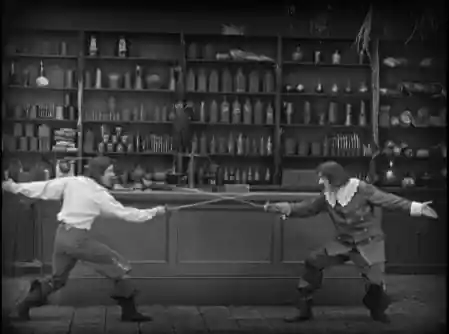
Together they form a kinetic sculpture of fraternity: blades crossed in a sun-flare of solidarity that cinema, even a hundred years later, struggles to replicate. Modern ensembles rely on snarky quips; Niblo’s trio swears by steel and silence sharper than dialogue.
Nigel De Brulier’s Richelieu glides rather than walks; cadaverous fingers orchestrate kingdoms like a maestro of marionettes. His crimson cardinal’s robe pools like spilled blood, a sartorial promise of impending doom. Yet the screenplay, co-written by Fairbanks and Edward Knoblock, refuses to flatten him into mustache-twirling caricature. In a haunting intertitle he muses, “I serve France; my soul is merely on lease to expedience.” One detects the metallic echo of Die Stimme des Toten’s existential dread, though filtered through royal politics rather than supernatural fog.
Equally mesmerizing is Barbara La Marr as Milady de Winter—serpentine grace wrapped in ermine. She enters the narrative like a perfumed dagger: every smile a petition for mercy, every glance a death sentence. La Marr, dubbed the “girl too beautiful to live” by fan magazines, tragically died three years later at 29; her performance here shimmers with fatal premonition.
Pacing gallops rather than trots. The first act compresses Dumas’ hundred pages into a caffeinated montage: duel, camaraderie, court intrigue, and the Queen’s compromised brooch all within twenty-three minutes. Editors Edward M. McDermott and William Nolan splice chase atop chase, cross-cutting between midnight couriers and Fairbanks’ dervish grin until narrative becomes helix.
Yet the movie pauses for lyrical respites: Aramis reciting psalms amid moonlit cloisters; Porthos devouring a banquet while footmen gape; Athos brooding into a goblet that reflects candle-flames like dying galaxies. These breaths humanize the spectacle, much as Unge hjerter tempers youthful ardor with Nordic melancholy.
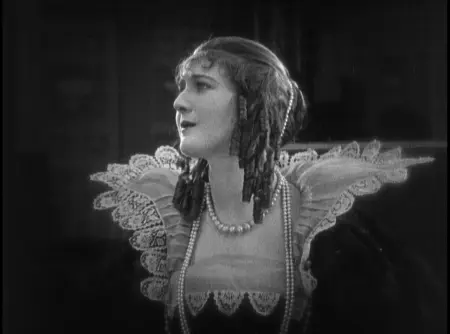
Female characters occupy traditional roles—queen, confidante, temptress—but Niblo grants them ocular sovereignty. Note the moment Constance (a luminous Mary MacLaren) threads a needle while eavesdropping on courtiers; the camera isolates her eyes in a halo of box-light, suggesting surveillance as matriarchal weapon. When she ultimately delivers the brooch to D’Artagnan, her trembling fingers belie strategic steel. One glimpses proto-feminist stirrings that would bloom more overtly in Beatrice Fairfax’s serial adventures.
Though originally accompanied by live orchestras varying per venue, contemporary restorations often pair the film with Adrian Johnston’s 2008 score—lutes, timpani, and whispered chorus that surge in lockstep with Fairbanks’ calf muscles. Johnston quotes Marche des Gardes then fractures it into jazz-time dissonance whenever Milady slinks onscreen. The result: history waltzes with modernity, akin to Auf den Trümmern des Paradieses’s anachronistic electronica, yet less jarring, more symbiotic.
For decades the sole surviving prints resembled bruised parchment—scratched, nitrate-eaten, sprocket-holed. Enter LoC/Park Circus 4K restoration (2020): a 35mm duplicate negative unearthed in Paris’ Cinémathèque, wet-gate scrubbed, then grain-managed without waxen over-smoothing. Blacks sink to obsidian; whites flare like magnesium. The Blu-ray offers two viewing paths: sepia-tinted homage to 1921 roadshow palettes, or grayscale chill. Pick sepia—those honey-gold washes make candlelight palpably radioactive.
Streamers beware: many online rips derive from 1990s VHS dubs. Seek the Cohen Media release, region-free and brimming with a commentary by Silent London’s Pamela Hutchinson whose erudition sparkles brighter than Fairbanks’ smile.

Place Musketeers beside its birth-year siblings: Who Cares? traffics in flapper ennui; The Love Girl flirts with rural melodrama; Strathmore essays pastoral fatalism. All are flecks within a broader societal palette—post-WWI jitters transmuted into escapism. Fairbanks’ film alone weaponizes joy, asserting that bodies unbroken by trenches can somersault across history.
Contrast later Fairbanks vehicles: Sinbad, the Sailor (1924) inflates Orientalist fantasy; The Three Musketeers remains rooted in European literary pedigree, thereby granting star-producer Fairbanks artistic legitimacy hedged against highbrow critics who equated acrobatics with juvenilia.
Beneath the skirmishes lies a meditation on loyalty as antidote to entropy. The film premiered months after the Sacco and Vanzetti trial fanned distrust in institutions. Audiences craved assurance that camaraderie could still counteract Machiavellian calculus. Niblo’s answer? A fraternity bound not by blood but by mutual recognition of each other’s broken places—Athos’ alcoholism, Porthos’ vanity, Aramis’ vacillation. Their oath transcends monarchs; it is existential life-raft.
“All for one, and one for all!” reads the intertitle, letters quivering like heartbeats. The phrase risks cliché, yet context reforges it into manifesto: individual survival hinges on collective audacity.
Richard Lester’s 1973 diptych spices Dumas with splintered meta-humor; Disney’s 1993 romp injects skateboard anachronism; BBC’s 2014 series dark-washes intrigue into Game-of-Thrones-lite. None capture the textural innocence of 1921: the belief that a smile and sword can redraw destiny sans irony. Watch all versions, then return to Fairbanks; you’ll feel like exhaling after years of cigarette smoke.
I have sat through this print at three a.m., insomnia nipping my cortex, and emerged baptized by flicker. Its flaws—intertitles occasionally glutinous, a few day-for-night shots murkier than Richelieu’s morals—melt beneath the furnace of its gallantry. The movie persuades you that cinema can still be a hand-drawn promise rather than algorithmic product.
Ratings are reductive, but for algorithm appeasement: 9.5/10. Half-point deducted solely because the missing fourth reel (lost until 1968) necessitates explanatory title cards that rupture momentum. Yet even that lacuna testifies to celluloid fragility—an unintended metaphor for heroism itself: perpetually incomplete, forever worth chasing.
Great art either cauterizes or cautions. The Three Musketeers chooses the former: it cauterizes modern despair with the brand of buoyant resolve. When the end card declares “Finis—yet their friendship never ends,” you may find yourself reaching for a sword you never knew you owned. And that, mes amis, is the most delirious magic Niblo and Fairbanks ever smuggled across time.
IMDb —
1935
Community
Log in to comment.