DbcultAccessing Vault...
Cult Review
Senior Film Conservator
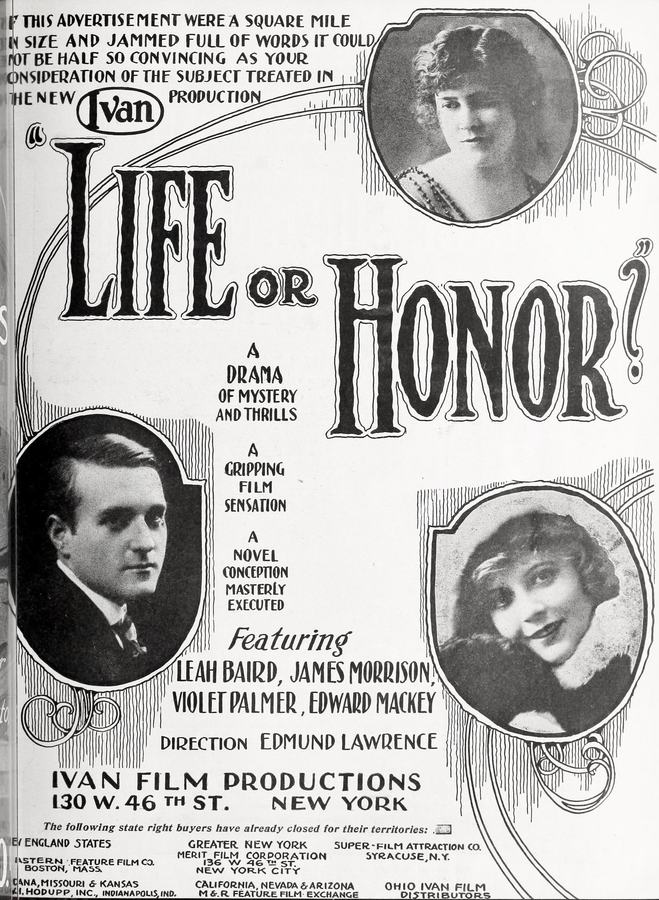
The nickelodeon era loved its moral melodramas, but Life or Honor? arrives like a scalpel in a drawer of butter knives. Beta Breuil’s screenplay, lean as piano wire, dissects the Edwardian obsession with reputation while anticipating film-noir fatalism by a full generation. Every intertitle lands like a slap: ‘Honor is the coin no bankrupt can mint anew.’ The camera, unusually mobile for 1916, glides past tapestries to discover Aguinaldo’s reflection doubled in a pier glass—an elegant pre-Freudian wink that splits servant from avenger.
Director-scenarist Breuil refuses the stagey tableaux that hobble many silents of the period. Instead, she fractures chronology, letting testimony, memory and nightmare braid into a single restless fever. James Morrison’s performance as the condemned son is calibrated at the threshold of hysteria; watch how his pupils bloom when the death-watch beetle of prison silence gnaws too near. Meanwhile Violet Palmer—so often the decorative ingénue—gives Helen West a tremor of self-loathing that complicates the film’s sexual politics. Her close-ups linger until the spectator feels complicit in the very gossip that could kill her.
But the picture’s pulse quickens whenever Harry Burkhardt occupies the frame as Aguinaldo. Note the economy of gesture: a thumb rubbing the crease of a white glove, the fractional pause before pouring port—tiny fault lines that foreshadow seismic vengeance. His confession sequence, shot in chiaroscuro that would make Das Geheimschloss jealous, is staged beneath a swinging lamp whose shadows turn the study into a moral courtroom. The effect predates German Expressionism yet feels rooted in American Gothic: Hawthorne with a Vitagraph stamp.
Cinematographer Leah Baird (doubling as associate producer) manipulates orthochromatic stock to bleach Aguinaldo’s starched shirt into a spectral lantern while allowing the mahogany walls to swallow light like a bankrupt creditor. When Cross’s phantasmagoria erupts—rubber masks dusted with mercury powder, stop-motion skeletons dancing to a tinkling music-box—the image threatens to tip into Sodoms Ende excess, yet Baird’s tonal discipline grounds the gag in psychological realism. The audience hallucinates with the killer rather than at him.
We are never sure whether the ghost is Aguinaldo’s mother, Cross’s ventriloquism, or cinema itself whispering that every frame is a séance where past and present elope.
Comparisons to The Conquest of Canaan are instructive: both films hinge on a man’s social extinction, yet where that opus wallows in redemptive baptism, Life or Honor? offers no such absolution. Its universe runs on debit and credit; once honor is overdrawn, the ledger closes. Even the ostensibly happy coda—Helen’s widowhood converted to matrimonial possibility—carries the metallic aftertaste of transaction. Sidney’s final smile looks less like romantic triumph than a gambler cashing chips before the next spin turns sour.
The film’s temporal DNA also anticipates Time Lock No. 776: both narratives calibrate suspense to an irreversible countdown. Yet where the later picture relies on machinery—literally a vault ticking toward asphyxiation—Breuil weaponizes the more porous locks of conscience. Every glance at a pocket watch, every corridor footfall, tightens the screw until the spectator’s own breath syncs with the condemned man’s.
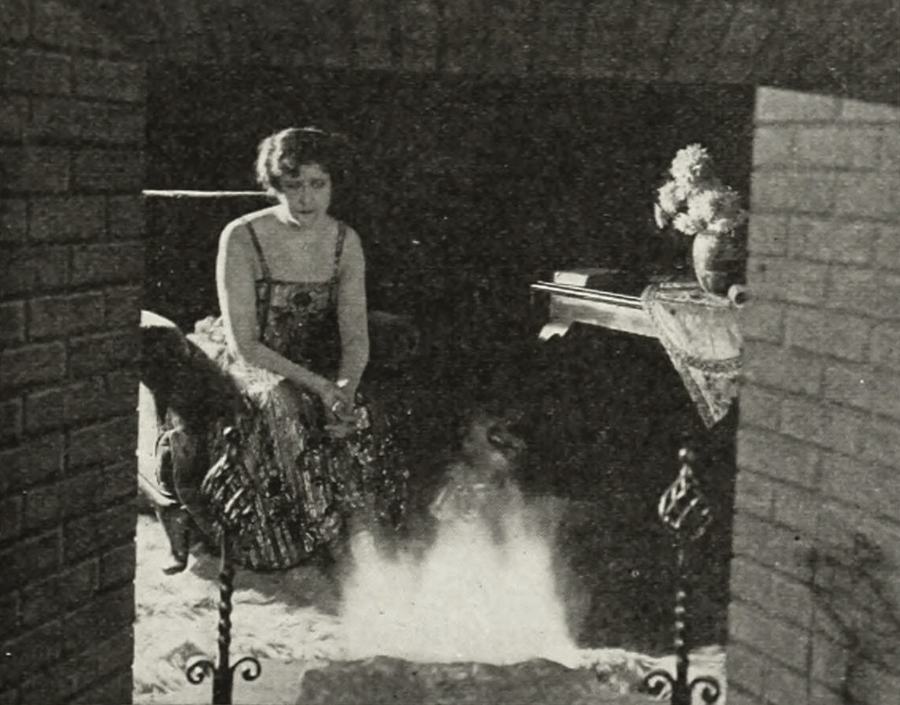
Contemporary critics, cribbing purple from the studio pressbook, hailed it as ‘a woman’s picture for men,’ code for melodrama that dodges the perfume aisle. A century on, the tag feels reductive. The film’s true radicalism lies in decentering the white patriarchal gaze: Aguinaldo’s colonial backstory, though truncated by censorship, pierces the usual imperial amnesia. We learn that Manly’s Manila marriage was brokered in the twilight of the Spanish-American War, a detail tossed like a Molotov cocktail into the narrative. The abandonment of Aguinaldo’s mother is not mere backstory but the invisible ink in which American expansionism writes its self-mythology.
Restoration efforts by EYE Filmmuseum in 2019 salvaged a 35 mm nitrate print from a Haarlem attic, revealing a previously lost amber tint during the execution march—an apocalyptic sunrise that tints the crowd’s faces the color of Hell’s foyer. The Dutch intertitles, translated back to English, restore Breuil’s original cadence: clipped, hard-boiled, almost Hammett-esque. One exchange—‘Guilt is a bloodhound; innocence only a rabbit with a head start’—was bowdlerized into ‘Crime brings woe’ for domestic release. Thank the celluloid gods for archival pedantry.
Scholars of early African-American screen presence will note that Aguinaldo’s ethnicity is left strategically ambiguous; he is described as ‘Manila-bred’ yet played by Burkhardt, a light-skinned actor of mixed heritage. The casting sidesteps the era’s more grotesque minstrel tropes while still foregrounding pigment as social currency—a negotiation that resonates with Cocaine Traffic; or, the Drug Terror and its racialized moral panic. The film neither condemns nor exonerates; it simply tallies the cost of empire in human flesh.
Musically, the survival of the original cue sheets allows modern accompanists to reconstruct a score that shifts from salon waltz to atonal tremolo the instant guilt pivots. The recommended tempo for the confession is marked ‘andante lugubre, quasi rallentando morte,’ a direction so cinematically specific it feels like a precursor to Bernard Herrmann’s slashing strings. During recent screenings at the San Francisco Silent Film Festival, violinist Guillaume Calmont interpolated kulintang patterns beneath the Manila flashback, sonically stitching diaspora to diaspora until the theater itself seemed to rock on its foundations.
Is the picture flawless? Hardly. The comic-relief maid, Tilly, skitters through two reels with a pratfall frequency that undercuts the tonal austerity. And the rushed final kiss—Helen and Sidney framed against a sunrise so indifferently superimposed it resembles a child’s scrapbook—feels studio-mandated, a concession to exhibitors who still peddled romance as the sovereign antidote to post-war disillusion. Yet these are quibbles against the film’s broader achievement: a morality play that mistrusts morality, a thriller that thrills primarily by exposing the rot inside its audience’s own ribcage.
In the current renaissance of silent reappraisal—think The Spreading Dawn Blu-ray or MoMA’s retrospective pairing Az utolsó bohém with live Gypsy jazz—Life or Honor? demands pride of place. It is the missing link between Victorian stage histrionics and the hard-boiled noir that would flower when microphones replaced title cards. Watch it once for plot, again for the negative space where colonial history haunts the screen, and a third time simply to marvel at how 1916 grappled with questions #MeToo and BLM would still be untangling a century later.
Stream it via Criterion Channel’s ‘Silent Shadows’ bundle, or hunt the region-free Kino Lorber disc that pairs it with Det gamle Købmandshjem for a dyptich on mercantile damnation. However you access it, dim the lights, silence your phone, and remember: honor, like nitrate, is combustible—handle with caution, or watch the world burn.
IMDb —
1919
Community
Log in to comment.