DbcultAccessing Vault...
4.1/10
Senior Film Conservator
A definitive 4.1/10 rating for a film that redefined the boundaries of cult cinema. Ship Shape remains a cornerstone of transgressive art.
Is 'Ship Shape' worth your time in an age of high-definition spectacle and nuanced storytelling? Short answer: yes, but with significant caveats that speak directly to its era and comedic ambitions. This film is primarily for aficionados of early cinema, those intrigued by the nascent stages of comedic filmmaking, and viewers who appreciate the broad strokes of silent-era farce. It is decidedly NOT for audiences seeking modern pacing, deep character development, or sophisticated humor, nor for those who struggle with the technical limitations of films from the 1920s.
This film works because: Its foundational premise is genuinely funny, and the physical comedy, however rudimentary, lands effectively for its time, showcasing the enduring appeal of slapstick.
This film fails because: The pacing can feel uneven by contemporary standards, character depth is non-existent beyond archetypes, and some gags, while historically interesting, feel undeniably dated in their execution.
You should watch it if: You enjoy silent comedies, appreciate historical film context, and are willing to overlook technical imperfections for a glimpse into early cinematic humor and a surprisingly bold premise for its time.
Stepping aboard 'Ship Shape' is akin to opening a time capsule, a delightful, if occasionally creaky, relic from an era when cinema was still finding its sea legs. This early silent comedy, featuring the talents of Virginia Vance, Leo Willis, and Cliff Bowes, presents a narrative so steeped in misunderstanding and farcical escalation that it remains a fascinating case study in the origins of screen humor. It’s a film that demands a certain generosity from its modern audience, a willingness to appreciate its charms through the lens of history, rather than judging it by contemporary standards of cinematic polish.
The film’s central conceit, a cascade of misinformed decisions and desperate measures, is wonderfully absurd. Cliff's immediate, dramatic enlistment into the navy upon witnessing what he believes to be his wife's infidelity is a masterclass in comedic overreaction. It sets a tone of heightened reality, where emotions dictate actions with little room for logical thought, a hallmark of effective farce.
What follows is a series of escalating complications, with Virginia's cross-dressing disguise being the narrative's boldest stroke. This element, while played for laughs, subtly pushes against societal norms of the period, adding an unexpected layer of subversion to the slapstick. It’s a simple premise, executed with the directness characteristic of early filmmaking, yet it carries an undeniable spark of comedic ingenuity.
The narrative engine of 'Ship Shape' is powered by a singular, catastrophic misinterpretation. Cliff, the unsuspecting husband, observes his wife, Virginia, in an embrace with another man. The audience, privy to the twist that this man is merely Virginia's brother, immediately understands the dramatic irony at play. Cliff, however, does not, and his response is swift and utterly irrational: he joins the navy, effectively severing ties with his perceived betrayal.
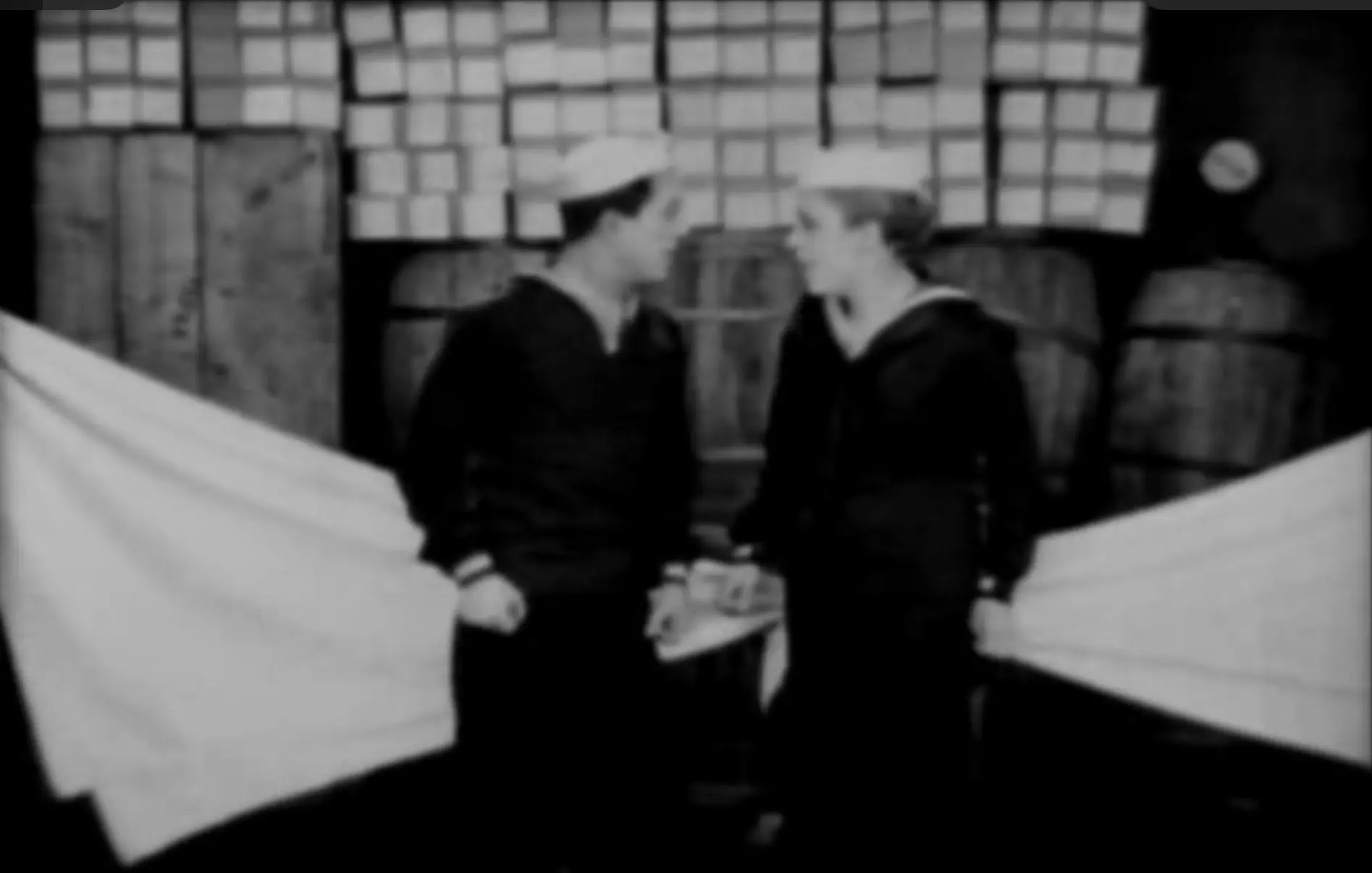
This initial blunder is quickly compounded. Upon discovering his error, Cliff attempts to 'resign' from the navy, a notion as ludicrous as his initial enlistment, and is promptly arrested and taken aboard a naval vessel. The film then pivots to Virginia, who, desperate to rectify the situation and be near her husband, dons a sailor's uniform and sneaks aboard the same ship.
This setup, while thin, is remarkably effective for a silent comedy. It provides ample opportunities for physical comedy, close calls, and the inherent humor of gender role reversal within the rigid confines of a military ship. The plot, therefore, isn't just a sequence of events; it's a carefully constructed comedic trap, sprung by human folly and maintained by sheer stubbornness.
One might argue that 'Ship Shape' inadvertently critiques the fragility of male ego, where a simple misunderstanding sends a man spiraling into a dramatic, irreversible life change. It’s a surprisingly profound undercurrent beneath the slapstick exterior.
In silent cinema, acting is a language of the body, and the cast of 'Ship Shape' speaks it fluently. Cliff Bowes, as the perpetually bewildered Cliff, embodies the everyman whose world has been turned upside down. His reactions are broad, his gestures exaggerated, perfectly conveying the shock, despair, and later, the frantic urgency of his predicament without a single spoken word. His performance relies heavily on facial contortions and expressive movements, a style that might seem over-the-top today but was essential for conveying emotion to a silent audience.
Virginia Vance, as his resourceful wife Virginia, truly stands out. Her transformation into a male sailor is the comedic lynchpin, and Vance commits to the bit with admirable conviction. She navigates the physical demands of playing a woman disguised as a man in a confined, masculine environment, often relying on subtle mannerisms or clumsy attempts at 'manliness' to generate laughs. Her ability to convey both her character's desperation and her comedic resolve is commendable, making her perhaps the most engaging presence on screen.
Leo Willis, in his role, contributes to the ensemble with the kind of solid, reliable support that underpins many silent comedies. While his character might not have the same dramatic arc as Cliff or Virginia, his presence helps ground the more outlandish elements of the plot. The synergy between the leads, particularly in scenes of near-discovery, demonstrates a strong understanding of comedic timing, even if the execution feels raw compared to later, more refined works.
The directorial choices in 'Ship Shape' are very much a product of its era. The cinematography is functional, prioritizing clarity and the staging of physical gags over elaborate visual flair. Shots tend to be static, often resembling a proscenium arch, allowing the actors' movements and expressions to drive the narrative. There's a charming simplicity to the visual storytelling, a directness that modern audiences, accustomed to rapid cuts and dynamic camera work, might initially find jarring.
Editing is straightforward, primarily serving to advance the plot and punctuate comedic beats. There are no fancy transitions or complex montages; instead, the film relies on the inherent humor of the situation and the physical performances. This direct approach, while lacking the sophistication of later films like The Folly of Desire or the visual grandeur of Yorktown, allows the comedic premise to shine without distraction.
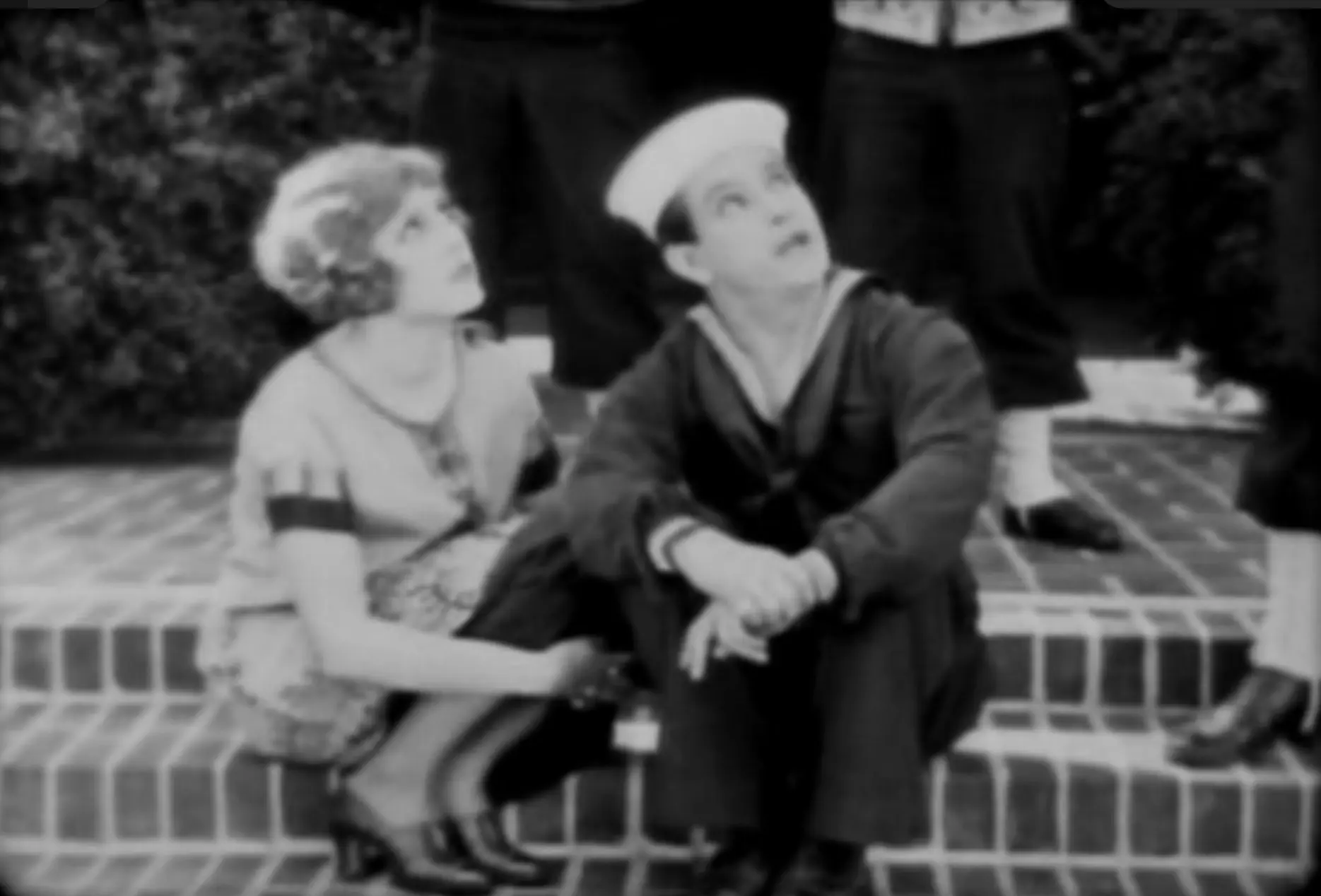
The use of practical sets, particularly the shipboard environment, is rudimentary but effective. It creates a sense of confinement and shared space that enhances the comedic tension, especially as Virginia tries to maintain her disguise. The limitations of early filmmaking, rather than hindering the film, often force creative solutions that result in unexpected charm. This era also saw the rise of varied cinematic expressions, from the documentary-like L'Ascension Des Aiguilles Ravanel Et Mummery to the social dramas of Bits of Life, showcasing a nascent industry exploring its boundaries.
The pacing of 'Ship Shape' is characteristic of many silent comedies: it starts with a clear setup, builds momentum through a series of escalating complications, and rushes towards a resolution. However, by modern standards, certain sequences might feel protracted, while others, particularly the initial setup, feel almost jarringly quick. The film relies on sustained gags and visual bits, which can sometimes lead to a slightly uneven rhythm.
The tone is undeniably lighthearted and farcical. Even with the dramatic stakes of Cliff's enlistment and Virginia's dangerous deception, the film never veers into genuine peril or emotional depth. The humor is broad, relying on physical comedy, mistaken identity, and the absurdity of the situation. It’s a world where problems are meant to be laughed at, not deeply felt.
Compared to the more dramatic narratives of its time, such as Lucrezia Borgia or The Hidden Truth, 'Ship Shape' offers a refreshing, if light, counterpoint. Its comedic style is a direct ancestor to later, more refined slapstick, and understanding this lineage adds to its appeal. The film's tone is consistently playful, a testament to the era's desire for pure entertainment.
Yes, 'Ship Shape' is absolutely worth watching today, especially for those with an interest in film history or the evolution of cinematic comedy. It offers a clear window into the comedic sensibilities and filmmaking techniques of the early 20th century. While it may not resonate with every modern viewer, its historical value and foundational humor are undeniable. It's a key piece in understanding how visual storytelling developed.
The film’s simple yet effective premise, combined with the energetic performances, provides genuine moments of amusement. It serves as a reminder that the core elements of comedy—misunderstanding, physical humor, and subversion—are timeless, even if their presentation evolves. One could draw parallels to the adventurous spirit found in films like The Adventures of Robert Macaire, though 'Ship Shape' trades grand escapades for domestic farce.
For those who appreciate the quirks and charms of early cinema, 'Ship Shape' is a delightful diversion. It works. But it’s flawed. Its runtime is brief enough that it doesn't overstay its welcome, leaving a lasting impression of charming, if unsophisticated, fun. It’s a film that asks for a little patience and offers a unique comedic experience in return.
'Ship Shape' is more than just a forgotten film; it's a testament to the enduring power of simple, effective comedy. It’s a vibrant, if unpolished, snapshot of early cinema, full of the raw energy and experimental spirit that defined the era. While it won't appeal to everyone, particularly those unfamiliar with silent film conventions, its historical significance and genuine moments of humor make it a worthwhile watch for the right audience. It’s a charming, if slightly wobbly, vessel sailing through the comedic currents of yesteryear, and it largely succeeds in reaching its destination: a good laugh.
For those willing to adjust their expectations and embrace its historical context, 'Ship Shape' offers a delightful, unpretentious experience. It serves as a valuable reminder that even in cinema’s infancy, the art of making people laugh was already finding its footing, proving that a good misunderstanding, a dash of physical comedy, and a bold disguise can go a long way. It's not a masterpiece, but it’s undeniably a piece of history that still holds water.

IMDb 5.2
1927
Community
Log in to comment.