DbcultAccessing Vault...
Cult Review
Senior Film Conservator
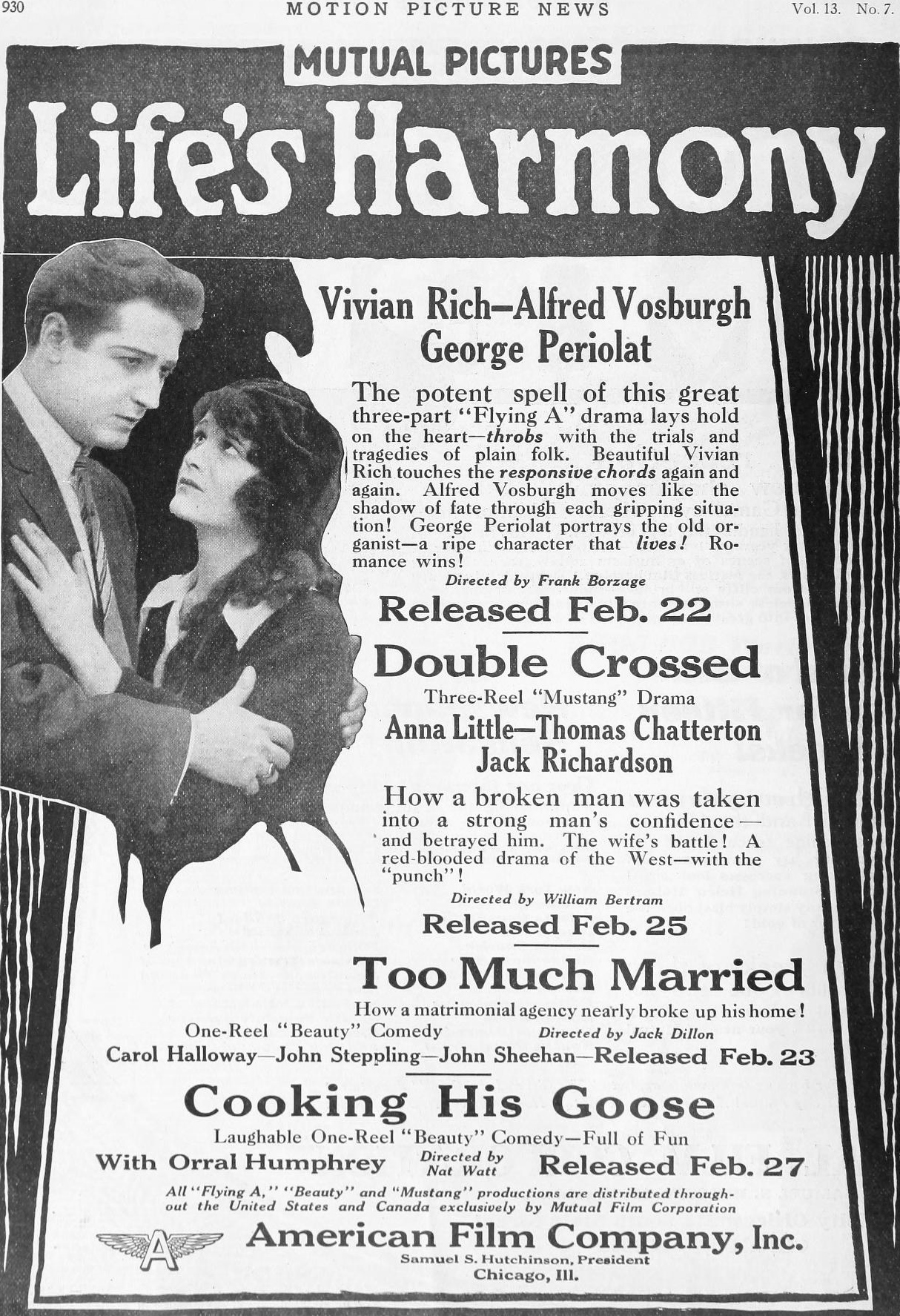
Stepping into the world of Life's Harmony, one is immediately struck by its profound yet understated exploration of human resilience and the delicate interplay of fate and character. This cinematic offering, a poignant relic from an era when storytelling relied solely on visual poetry and the evocative power of music, masterfully weaves a narrative that feels both deeply personal and universally resonant. It's a film that eschews grandiosity for genuine sentiment, building its emotional architecture brick by painstaking brick, revealing the quiet dignity of a soul tested by unforeseen circumstances. From the very first frames, we are invited to ponder the true cost of progress and the enduring value of integrity in the face of change.
At the narrative's core lies Josiah Pringle, portrayed with a remarkable tenderness by George Periolat. Pringle isn't merely an organist; he is the melodic soul of his New England hamlet, a benevolent patriarch whose life is intrinsically tied to the grand organ of the local church. For two decades, his fingers have danced across its keys, his music a comforting constant in the community's rhythm. His livelihood, humble but honest, comes from imparting his musical wisdom to a handful of pupils. Thus, the abrupt arrival of Gordon Howard, a younger, more urbane musician from Boston, isn't just a change in personnel; it's a seismic shift in Pringle's very existence. To be replaced, after dedicating twenty years of one's life to a sacred duty, by a fresh face is a bitter pill. Yet, what truly sets Pringle apart is his utter lack of bitterness. This isn't a tale of rivalry fueled by envy, but rather a testament to an almost saintly magnanimity.
The repercussions ripple outward. Faith Pringle, Josiah's spirited adopted daughter, and the choir's natural leader, reacts with the understandable indignation of youth. Her initial refusal to sing, a silent protest against the perceived injustice, speaks volumes about her loyalty and the deep affection she holds for Josiah. But even here, Pringle's gentle wisdom prevails, guiding her back to her duties, underscoring his belief in harmony, both musical and interpersonal, above all else. When his own pupils, drawn by the allure of the new, flock to Howard, the elder musician remains unperturbed, even offering genuine compliments on Howard's playing. This scene, devoid of dialogue, speaks volumes about Pringle's character – a man who finds his worth not in external validation or professional status, but in the pure love of music and the inherent goodness of his spirit.
The narrative, however, is not content to merely explore quiet resignation. A sudden, dramatic turn injects a necessary jolt of suspense. Faith finds herself in peril, accosted by a local ruffian, a character who serves as a convenient, if somewhat archetypal, antagonist. It is Gordon Howard, portrayed by Gayne Whitman, who emerges as her rescuer, a moment that deftly shifts audience perception of the new organist from a mere replacement to a figure of nascent heroism. This act of bravery, a clear-cut demonstration of his moral fiber, earns him Josiah's profound gratitude and an invitation into the Pringle home. It is within these humble walls that Howard discovers Josiah's true passion: a lifetime's work dedicated to perfecting the organ.
For ten arduous years, Pringle has toiled over an intricate model, a testament to his inventive spirit, yet one crucial detail has eluded him. It is Howard, with his fresh perspective and perhaps a more contemporary understanding of mechanics, who, in a flash of insight, identifies the missing piece. This moment of collaborative triumph, where youthful ingenuity complements seasoned experience, is a beautiful symbol of reconciliation and shared purpose. The potential of Pringle's invention, now complete, promises not just artistic advancement but financial security, a lifeline for the aging musician and his family.
But the shadows of the past, or rather, the machinations of a vengeful individual, refuse to dissipate. The very ruffian Howard thwarted earlier resurfaces, seeking a twisted form of retribution. He presents Pringle with a newspaper bearing the image of a man strikingly similar to Howard, sought for embezzlement. It's a classic cinematic device, designed to sow seeds of doubt and test the protagonist's convictions. Yet, Pringle's response is nothing short of extraordinary. His kindly wisdom cuts through the potential for prejudice: "If Howard has reformed," he posits, "I will not be the first to persecute him." This line, delivered without a single spoken word but conveyed through the powerful visual language of silent film, encapsulates the very essence of Pringle's character – a man whose compassion transcends judgment, whose belief in redemption is absolute. Such a profound moral stance echoes the quiet strength seen in characters grappling with societal judgment in films like The Dishonored Medal, where reputations are fragile and integrity is paramount.
With the invention complete and patenting underway, Pringle places his trust, and indeed his family's future, entirely in Howard's hands. Howard departs, promising to secure the patent and an advance of $20,000 in royalties – a princely sum that could alleviate all of Pringle's financial woes. Then, silence. Weeks stretch into an agonizing eternity. The initial hope gives way to gnawing anxiety as Pringle's small store of money dwindles, day by day. The specter of poverty, a pervasive and often cruel antagonist in many period dramas, looms large. The heartbreaking decision must be made: Faith, the vibrant young woman who has brought so much light into their lives, must be returned to the orphanage from whence she came. This impending separation, a stark testament to their destitution, is the film's most emotionally potent crucible, reminiscent of the raw struggles for survival depicted in Germinal; or, The Toll of Labor, where economic hardship dictates the most wrenching personal sacrifices.
The day of Faith's departure arrives, heavy with unspoken grief and the quiet despair of shattered dreams. Just as hope seems extinguished, just as the Pringles prepare to bid a final, sorrowful farewell, Howard returns. His entrance is a dramatic crescendo, a narrative deus ex machina that, while convenient, feels earned after the emotional rollercoaster preceding it. His explanation, delivered with the urgency of one who has truly suffered, unravels the mystery of his absence. After securing the substantial royalties, he had, prudently, placed the money in a safe. A cruel twist of fate saw him injured in a construction accident, leading to hospitalization, memory loss, and a complete lack of identification. The period of amnesia, a common but effective plot device, accounts for his disappearance. As soon as his memory returned, his first priority was to return to the Pringles, the family that had shown him such kindness.
The final piece of the puzzle, the cloud hanging over his antecedents, is also cleared. Confronted with the old newspaper clipping, Howard identifies the embezzler not as himself, but as his now-deceased brother. This revelation deftly ties up loose ends, cementing Howard's integrity and confirming Pringle's unwavering faith in him. It’s a moment of profound relief, a narrative exhale that allows the audience to fully embrace the burgeoning romance between Faith and Howard, a relationship forged in adversity and sealed by mutual respect and affection.
Life's Harmony excels not just in its plot mechanics, but in its rich tapestry of character. Josiah Pringle stands as a towering figure of quiet grace, his benevolence a guiding light. He embodies the wisdom of age, the dignity of labor, and the boundless capacity for forgiveness. His journey is one of profound resilience, demonstrating that true strength lies not in resisting change with anger, but in adapting with grace and maintaining one's moral compass. George Periolat's performance, relying entirely on subtle gestures and expressive eyes, conveys this depth with remarkable clarity, ensuring Pringle remains the emotional anchor of the film.
Gordon Howard, initially presented as a potential threat to Pringle's way of life, evolves into a multifaceted hero. His talent is undeniable, his bravery commendable, and his ultimate integrity unassailable. Gayne Whitman navigates this arc with a nuanced performance, portraying both the confident young musician and the man humbled by misfortune, ultimately proving himself worthy of the trust placed in him. His character represents the reconciliation of old and new, the idea that progress need not obliterate tradition but can instead enrich it.
Faith Pringle, brought to life by Vivian Rich, is more than just a romantic interest; she is the embodiment of youthful vitality and unwavering loyalty. Her initial defiance, tempered by Josiah's wisdom, and her eventual blossoming love with Howard, signify hope for the future. She is the thread that binds the generations, a symbol of the enduring power of family, whether by blood or by bond. Letitia, Josiah's aged sister, while a smaller role, provides a grounding presence, a quiet witness to the unfolding drama, adding to the film's authentic portrayal of a close-knit household.
Thematically, Life's Harmony is a rich tapestry. It delves into the generational shift, not as a destructive force, but as an opportunity for synergy. It champions the profound power of forgiveness and compassion over judgment and resentment. The story is a powerful argument for the inherent goodness of humanity, even when faced with suspicion and betrayal. The theme of artistic integrity and innovation is central, with Pringle's organ invention symbolizing the pursuit of excellence and the collaborative spirit required to achieve it. Ultimately, it is a testament to the resilience of the human spirit, the unexpected ways in which love can blossom amidst adversity, and the enduring truth that kindness, like a well-played melody, resonates long after the notes have faded.
As a silent film, Life's Harmony relies entirely on its visual narrative and the expressive capabilities of its cast, a challenge that Lorimer Johnston's writing and the direction overcome with admirable skill. The pacing is deliberate, allowing moments of quiet reflection to breathe before propelling the plot forward with dramatic urgency. Close-ups on faces, particularly George Periolat's, are used effectively to convey the inner turmoil and profound emotions that dialogue would typically articulate. The use of intertitles is judicious, providing necessary exposition without interrupting the visual flow, ensuring that the audience remains immersed in the unfolding drama.
The film’s aesthetic, while constrained by the technology of its time, skillfully evokes the quaint charm of a New England village, contrasting it with the sophisticated urban backdrop implied by Howard’s origins. The visual representation of Pringle’s organ model, though perhaps rudimentary by modern standards, effectively communicates its symbolic importance as a beacon of hope and a testament to his life’s dedication. The confrontation with the ruffian, though brief, is staged to maximize tension, highlighting Howard's protective instincts and setting the stage for the later conflict of reputation. In its construction, the film exhibits a clarity of purpose and a directness of emotional appeal that many more verbose productions sometimes miss.
Comparing Life's Harmony to other films of its era, one finds it shares thematic DNA with works that explore moral rectitude and societal pressures. While not as overtly political as The Battles of a Nation or as starkly realist as Germinal; or, The Toll of Labor, its portrayal of an individual's struggle against hardship and the importance of community support places it firmly within a tradition of socially conscious storytelling. The narrative's dramatic twists, particularly Howard’s mysterious disappearance and eventual return, carry echoes of the intricate plots found in serials or melodramas like The Strangler's Grip, albeit filtered through a more grounded, character-driven lens. The film’s focus on personal integrity and the overcoming of false accusations also resonates with the ethical quandaries presented in Graft, where the lines between innocence and culpability are often blurred.
In its quiet brilliance, Life's Harmony leaves an indelible impression. It is a film that reminds us that true wealth lies not in material possessions, but in the richness of human connection, the steadfastness of character, and the capacity for boundless empathy. The resolution, while undeniably optimistic, feels genuinely earned through the trials and tribulations endured by its characters. Pringle's reinstatement as organist, orchestrated by Howard, is more than just a return to a job; it is a restoration of dignity, a recognition of his invaluable contribution to the community. And the blossoming romance between Faith and Howard, a tender coda to their shared journey, symbolizes the promise of a future built on understanding, trust, and, indeed, harmony.
This film, though decades old, speaks with a clear, resonant voice to contemporary audiences. Its themes of navigating change, the power of forgiveness, and the triumph of integrity are timeless. It’s a testament to the enduring power of simple, honest storytelling, proving that a film doesn't need elaborate special effects or rapid-fire dialogue to move, inspire, and entertain. Life's Harmony is not just a film; it is a beautifully composed symphony of human experience, a gentle masterpiece that continues to play its melodious tune in the annals of cinematic history. It is a work that, much like Pringle's perfected organ, resonates with a pure, clear tone, reminding us of the profound beauty that can emerge from life's most challenging movements.
IMDb —
1918
Community
Log in to comment.