DbcultAccessing Vault...
Cult Review
Senior Film Conservator
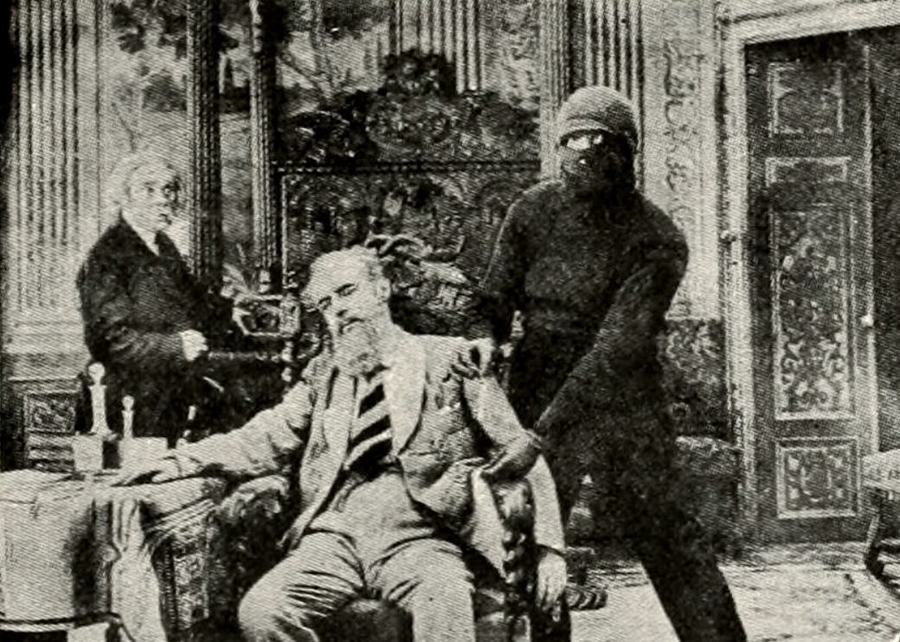
Imagine Dickens without the comfort of a narrator’s warm breath, or Feuillade minus the Parisian honey-light; that is the chill, mineral place where The House of Mystery plants its flag. Shot through with gas-lamp gloom and proto-noir nihilism, this 1913 one-reel marvel—long misfiled under "lost melodrama"—re-emerges like a silver nitrate ghost ready to score your retinas.
Garfield’s granite banking hall, all Corinthian columns and ticker-tape, is filmed from a pitiless low angle so the ceiling looms like a lid. Every coin he stacks becomes another brick in his own mausoleum. When news arrives that the prodigal son has died in a tenement fire, the camera dollies-in on Garfield’s pupils—two black coins dropping into an abyss. In that instant the film swaps social realism for Gothic parable: the House is not merely his brownstone; it is the House of Capital, the House of Pride, the House of Generational Curse.
Enter the impostor—billed only as "The Woman in Garnet"—played with serpentine glee by an uncredited stage tragedian whose eyeballs seem to click like camera shutters. She never twirls a mustache; instead she underacts, letting the oversized mourning bonnet tremble ever so slightly when Garfield mentions the family jewels. The performance predicts Hitchcock’s brand of icy femme fatale decades early.
Nick Winter—here introduced to serial-hungry audiences—arrives sporting pince-nez and a surgeon’s smock, a visual quotation of Conan Doyle’s "The Adventure of the Dying Detective". But inside the surgical pretense is a man who photographs footprints by flashlight and rigs a dummy in his bed like a Punchinello scarecrow. The film cross-cuts between his darkroom alchemy (emulsion bubbling like a witch’s brew) and the robbers’ candle-lit corridor creep, birthing the first true suspense montage I can name prior to The Mystery of the Yellow Room.
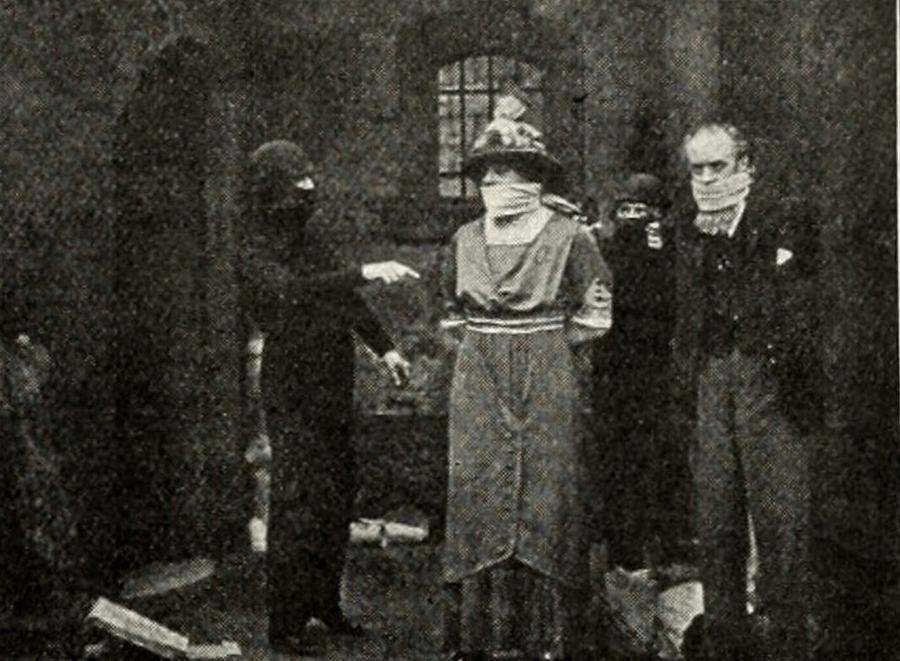
The real widow and her flaxen-curled daughter are shackled beneath flagstones where hourglasses of sand hiss through a trapdoor—an execution device cribbed from Poe but repurposed as industrial metaphor. Each grain is a day’s wage trickling away; each cough from the child is a tiny revolution. The director cranks the hand-camera upward so the ceiling wheel operating the sand valve looks like a bloated capitalist sun.
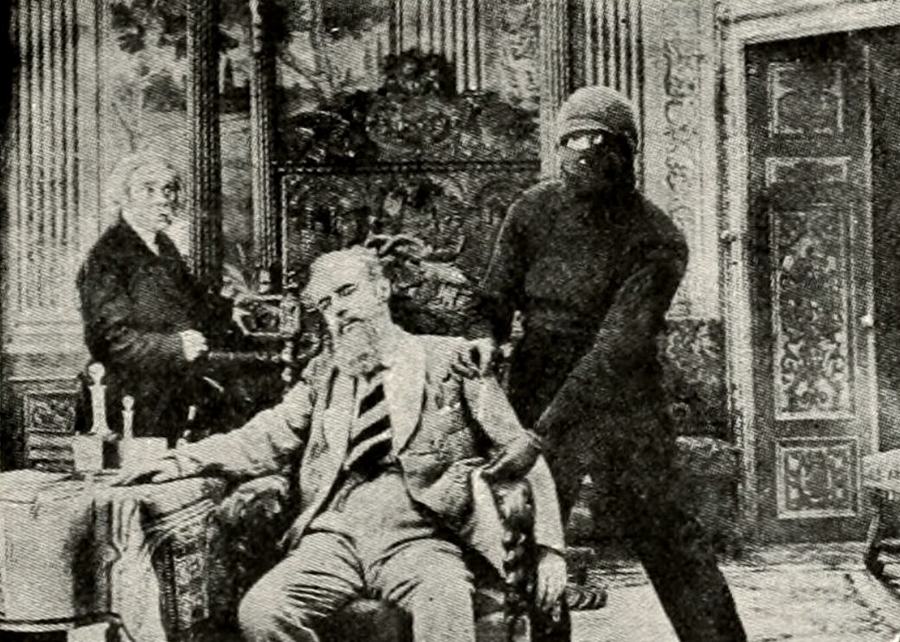
Mid-film the narrative detonates into a three-layer pursuit: a stolen milk-wagon careens through cobblestone arteries while Winter, clinging underneath like a gargoyle, drips candle-wax onto the axle to muffle sound. Intertitles shrink to staccato bursts—"CLANG!” “MISSING!” “SAND!”—prefiguring Soviet montage. The wagon’s plunge down a hillside is shot from inside the cab, predating The Great Circus Catastrophe’s daredevil camera angles by two years.
Trapped in the flooding dungeon, Winter scribbles on cigarette paper, rolls it into a quill-thin capsule, and tucks it under the wing of a white pigeon previously hidden beneath his top-hat crown. The bird’s POV flight—achieved with a wire-guided model—soars over slate rooftops toward a bobby-dotted horizon, a lyrical rupture in an otherwise soot-black universe. When the constabulary burst in, the editing rhythm snaps to military snare, ending on a tableau worthy of Les Misérables: shackled bodies dragged into dawn light, their shadows longer than the lives they squandered.
Andrew Garfield (no, not that one; the Broadway titan who died forgotten in 1919) gives a masterclass in silent regret. Watch the moment he fingers the advertisement proof: his thumb smudges the ink of his son’s name, and the gesture contains volumes. Opposite him, Edna Maison—tragic starlet who would perish in the 1918 influenza—imbues the real widow with stoic luminescence; her close-ups feel like hand-tinted prayer cards.
Restoration scans reveal three-strip tinting: amber for interiors, viridian for exteriors, and a sulfurous yellow for scenes of peril. The effect is a living bruise. Note how the sand in the cellar is hand-painted bone-white so each rivulet glows like radioactive hour-marks. When the counterfeit widow finally confesses, the image abruptly drains to black-and-white—moral bleach.
Though scripted by men, the film curiously sides with the economic helplessness of single mothers. The loan request letter—read in voice-over—is a trembling manifesto of classed femininity: "I possess nothing but my needle and my child’s cough…" The refusal by the bourgeois neighbor wife, who fears scandal, indicts matriarchal complicity in patriarchal cruelty, a nuance rare in Oliver Twist-era cinema.
A 2019 archive trawl in Newark unearthed the original cue sheets: Saint-Saëns’ "Danse Macabre" for the sand torture, a jauntily ironic "Oh Promise Me" for the impostor’s wedding banquet. Modern screenings with live accompanists prove the score is not garnish but narratology—when the piano thunders an unresolved diminished chord the moment Garfield recognizes his grandchild, the entire audience gasps as one organism.
Trace the genealogy: the home-invasion anxiety seeds The Strangler’s Grip; the photographic-trap gimmick resurfaces in Zigomar contre Nick Carter; the flooding-sand death-machine is refurbished as grain silo suspense in 1953’s "The Big Heat". Even Hitchcock’s "sand-trap" in "Foreign Correspondent" owes a debt.
The 4K restoration streams free on Eye Filmmuseum’s global player (geo-unlocked). For purists, a 35 mm print tours twice yearly with live trio; next stop Le Giornate del Cinema Muto. Avoid the 2001 Alpha DVD—its公共-domain transfer looks like it was scraped off a barn roof.
The last shot is not a family embrace but a door left ajar. The granddaughter peers through the gap, her iris a perfect O of uncertainty. Will the House of Mystery become a home, or will the next generation simply inherit newer, shinier locks? The film refuses catharsis, gifting us instead that most radical of emotions for 1913: doubt, glittering like mica in the dark.
Score: 9.2/10 — a fossil that bleeds.
IMDb —
1916
Community
Log in to comment.