DbcultAccessing Vault...
Cult Review
Senior Film Conservator
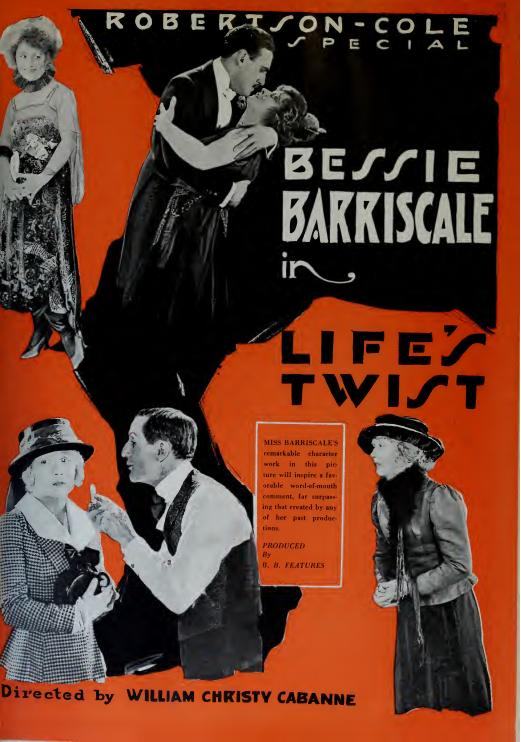
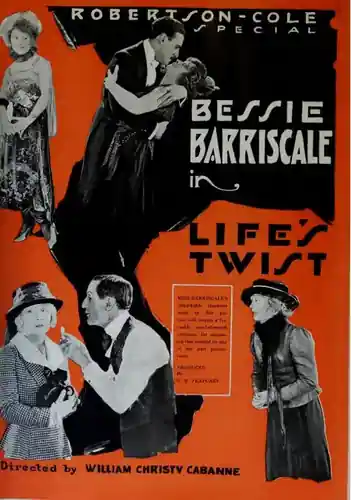
Stephen De Koven’s dilemma arrives dressed in white tie and tails yet reeks of the pawnshop: how to remain splendid while the coffers echo. Bessie Barriscale, all clavicle and candlelit resolve, plays Muriel as a daguerreotype come scaldingly alive—her hurt is never the vapors-and-hand-to-forehead variety but a quiet, almost surgical extraction of self. Barriscale lets the camera gorge on micro-tremors: a blink held half a second too long, the way her throat slides when she swallows a sob. The result is a heroine who weaponizes etiquette; every "If you’ll excuse me, Stephen" lands like a thrown gauntlet.
George Periolat’s Stephen is a splendid ruin, equal parts boulevardier and busted ledger. Periolat never begs for sympathy—he earns it in the hush that follows Muriel’s rebuke, a hush so absolute the orchestra seems afraid to breathe. Notice how his shoulders square when he first spots Tina: not lust’s lurch but the sudden, vertiginous relief of a man who believes he has found a mirror that will forgive him.
Tina Pierce, incandescently rouged by Claire Du Brey, is no guttersnipe cliché. She swaggers through tenement doorways as though she owns the stench, and when Stephen’s limousine curtains part for her, she doesn’t gape—she calculates. Du Brey gives Tina the feral savvy of a child who has learned that beauty is barter but never quite learned the exchange rate. The apartment Stephen bestows—gilded birdcage complete with a white piano she cannot play—becomes a mise en abyme of class tourism. Observe the montage of satin slippers discarded like shed snakeskin; each pair marks another failed attempt to pound Muriel’s patrician grace into a body that knows hunger too intimately.
King Baggot’s direction favors the tableau vivant, but with a twist: he lets foreground objects drift slightly out of focus so that emotions, rather than décor, obtain topographical authority. In one devastating shot, Muriel and Tina occupy opposite halves of the same frame, separated only by a diaphanous curtain; the camera lingers until their silhouettes appear to merge—beauty and its doppelgänger sharing one lung.
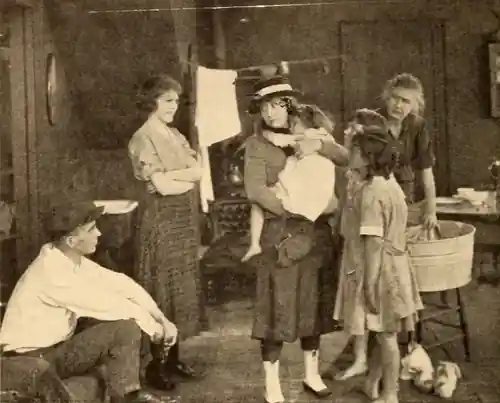
Writers Thomas Edgelow and Harvey Gates lace the intertitles with strychnine. "A wedding ring is a circlet of debt—payable on demand," reads one card, flashed right after Stephen’s giddy kiss at the altar. Another, delivered by Tina while she toys with a rope of pearls: "Funny how pretty things choke better than ugly ones." Each line is a shiv wrapped in velvet, and the film’s moral cortex throbs from these paper cuts.
Comparative glances prove illuminating. Where Die Landstraße wanders a nocturnal Europe of spiritual detours, Life’s Twist stays home, convinced hell is a drawing-room you can’t afford to redecorate. Down Home romanticizes pastoral redemption; this picture jeers at the notion that geography can heal cupidity. Likewise, The Argonauts of California – 1849 chases gold nuggets, while Stephen discovers the most elusive ore is a conscience free of sediment.
The third-act reversal—Muriel discovering Stephen’s fiscal restraint—could have played as cornball coincidence. Yet Barriscale sells it with a tremor of the lower lip that swells into something akin to religious revelation. She rushes not to Stephen but to her father’s ledger, running a gloved finger down columns of figures as though they are Braille through which she can finally read her husband’s heart. When the numbers tally, the film cuts to an iris-in on her eyes: two wells suddenly brimming with unspent tenderness.
Tina’s final act—shepherding the couple toward reconciliation—risks angel-in-the-gutter sentimentality, but Du Brey sidesteps precocity by letting avarice flicker behind the altruism. Her eyes track the departing lovers with the hollow hunger of one who knows she has traded a possible future for the fleeting grandeur of being useful. It’s a performance that refuses sainthood, and the film is truer for it.
Cinematographer William Beck, no stranger to the sun-dappled pastorals of Sis Hopkins, here embraces chiaroscuro like a guilty Catholic. Interiors throb with tungsten pools; exteriors blaze with over-exposed noon that seems to bleach pretense from skin. The shift from Muriel’s candlelit boudoir to Tina’s rooftop garret—where moonlight carves the chimney pots into a row of broken teeth—renders class disparity without a single speech.
The score, reconstructed by the Mont Alto Motion Picture Orchestra for the 2019 Blu-ray, interpolates a 1907 waltz called "Twilight Tendrils"—a piece Stephen would recognize as the first tune he danced to while courting Muriel. Hearing its reprise during their rapprochement cues a physiological reaction: palms sweat, throats catch. Such is the associative power of melody when grafted onto narrative scar tissue.
Some viewers fault the picture’s epilogue—a steamship gangway, a final embrace—as too brisk. Yet brevity is the point. After years of emotional trench warfare, the couple’s concord arrives not as trumpet-blast catharsis but as a quiet cessation of hostilities. The frame fades on their clasped hands, not on a kiss, intimating that trust, not passion, is the scarce resource they’ve mined.
Contemporary resonance? Swap railroad stock for crypto, swap slum tenement for gig-economy couch-surf, and the story’s marrow remains: transactional intimacy corrodes. In an age where follower counts stand in for character references, Stephen’s gambit—trading beauty for solvency—feels ripped from an influencer’s DM. Meanwhile, Muriel’s self-quarantine inside matrimonial marble anticipates the pandemic-era revelation that shared oxygen does not guarantee shared truth.
Availability: Restored 4K print streams on Classix+ and plays quarterly at the George Eastman Museum. The tinted nitrate elements—amber for interiors, cerulean for exteriors—glow like cathedral glass. If you can, see it on 35 mm; the projector’s mechanical chatter approximates the sound of time gnawing its own tail.
Bottom line: Life’s Twist is less a relic than a dare—an insistence that every era’s courtship rituals mask the same raw bargain. Watch it for Barriscale’s porcelain fury, for Du Brey’s gutter-starlight poise, for the way silence, when properly framed, detonates louder than dialogue. Then look at your own relationships and ask: which of us is the slum-girl double, and which the heiress, and how much of what we offer in love is merely a cosplay of what we think the market will bear?
IMDb 5.1
1920
Community
Log in to comment.