DbcultAccessing Vault...
7.5/10
Senior Film Conservator
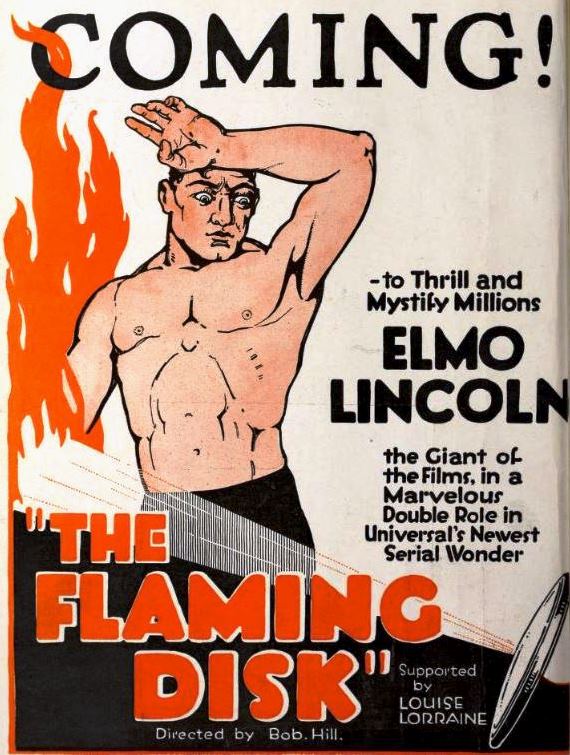
A definitive 7.5/10 rating for a film that redefined the boundaries of cult cinema. The Flaming Disc remains a cornerstone of transgressive art.
Stepping into the flickering glow of a silent film serial from 1920, one is immediately transported to an era brimming with unbridled technological optimism and an equally potent fear of its darker applications. Arthur Henry Goodson's 'The Flaming Disc' stands as a captivating relic of this period, a testament to the nascent film industry's ability to conjure grand narratives of scientific marvel and thrilling adventure without the benefit of spoken dialogue. This isn't merely a historical curiosity; it's a vibrant, pulse-pounding escapade that, even a century later, manages to ignite the imagination with its audacious premise and relentless pacing. It's a journey into the heart of early cinematic ingenuity, where the very concept of a 'death ray' powered by concentrated sunlight felt both fantastical and chillingly plausible.
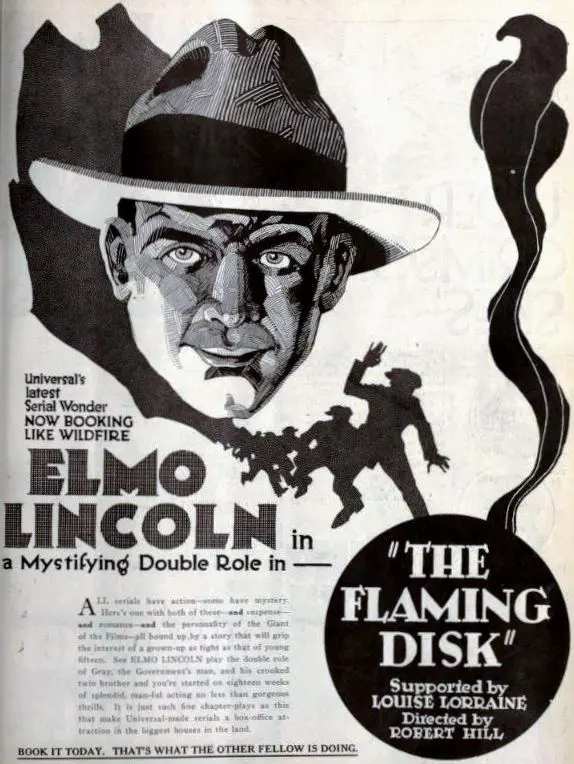
At the core of 'The Flaming Disc' lies a concept so potent it continues to resonate in modern science fiction: a device capable of harnessing the sun's energy for destructive purposes. Dr. J.C. Lee's invention, the titular 'Flaming Disc,' is not just a plot device; it's a character in itself, embodying both humanity's boundless potential for creation and its terrifying capacity for destruction. The theft of this device by a shadowy criminal organization instantly elevates the narrative beyond simple larceny, transforming it into a global crisis. The implications are staggering: imagine the concentrated power of a thousand suns, wielded by malicious hands, capable of leveling cities or incinerating entire landscapes. This MacGuffin, unlike many of its cinematic counterparts, isn't just a trinket to be recovered; it's an existential threat that demands immediate and decisive action. The film brilliantly establishes this peril through visual storytelling, hinting at the device's destructive capabilities without needing complex special effects, relying instead on the audience's understanding of the sun's power.
While many silent serials relegated their female leads to the role of the perpetual damsel in distress, Fay Holderness, as Alice Lee, often transcends this trope with remarkable vigor. She is not merely the inventor's daughter; she is an active participant in the pursuit, demonstrating intelligence, courage, and a surprising degree of agency. Her character is a refreshing departure, showcasing a woman who is not afraid to confront danger head-on, driven by a fierce loyalty to her father and a profound understanding of the threat his invention poses. Holderness imbues Alice with a spirited determination that makes her a compelling figure, her expressive acting conveying a wide range of emotions from fear to defiance without uttering a single word. Her presence adds a crucial human element to the high-concept sci-fi narrative, grounding the fantastical elements in a relatable struggle for family and justice. It's a performance that, in its subtle strength, might even draw parallels to the spirited independence seen in characters from films like Eyes of Youth, though Alice's journey is far more overtly action-oriented.

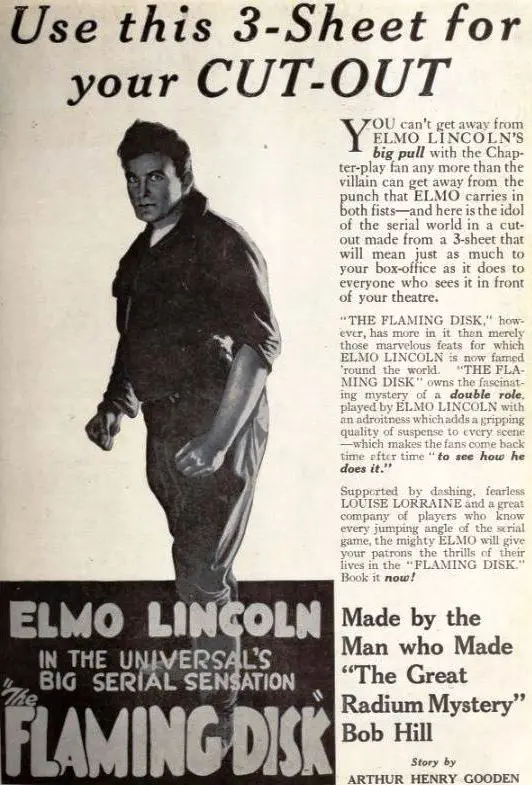
Opposite Holderness, Elmo Lincoln portrays the government agent tasked with retrieving the stolen 'Flaming Disc' with a stoic resolve that was characteristic of many silent-era action heroes. Lincoln, known for his imposing physique and earlier portrayal of Tarzan, brings a physical gravitas to the role, his actions speaking louder than any dialogue ever could. He is the archetypal strong, silent type, a man of unwavering moral compass and relentless pursuit. His interactions with Alice, while often brief and functional, hint at a burgeoning partnership built on mutual respect and shared purpose. The agent's unwavering commitment to his mission provides the narrative with its driving force, propelling the story forward through numerous perilous situations. His physical prowess is often showcased in daring escapes and confrontations, a hallmark of the serial format designed to leave audiences on the edge of their seats, eager for the next installment. This kind of unwavering heroism, albeit in a different genre, echoes the dedicated pursuit of justice found in early detective thrillers like The Argyle Case, where the protagonist's tenacity is key.
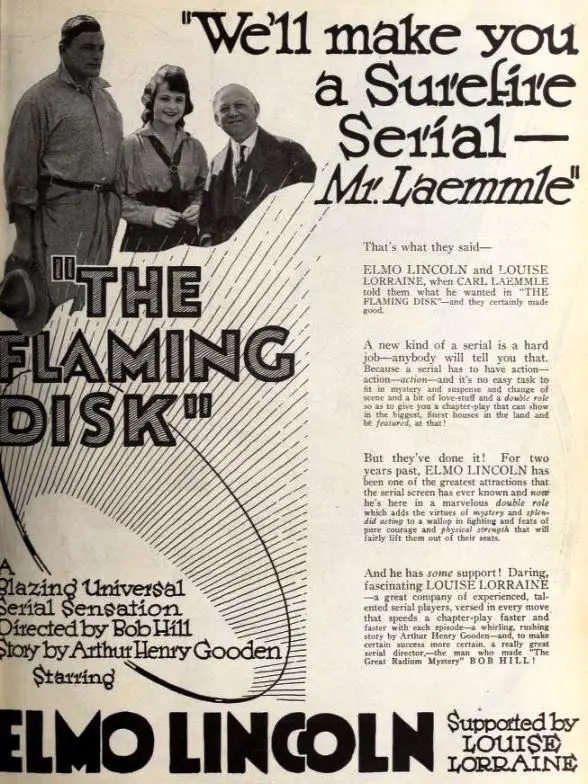
The success of any serial often hinges on its robust supporting cast, and 'The Flaming Disc' is no exception. Lee Kohlmar, as the inventor Dr. J.C. Lee, provides the initial impetus for the entire saga, his genius both a blessing and a curse. His distress and the weight of his creation's misuse are palpable, even in limited screen time. The villains, portrayed by actors like Roy Watson and Monte Montague, embody the classic archetypes of cinematic villainy: shadowy, ruthless, and driven by avarice. They are less nuanced characters and more forces of chaos, serving as formidable obstacles for our heroes. Their presence ensures that every chapter ends on a precarious note, with our protagonists frequently caught in elaborate traps or facing imminent peril. This straightforward depiction of good versus evil is a cornerstone of serial storytelling, allowing for clear stakes and easily identifiable antagonists. Frederic Hamen, Louise Lorraine, George B. Williams, Jenks Harris, and Bob Reeves round out the cast, each contributing to the rich tapestry of the film's world, whether as allies, henchmen, or unfortunate bystanders caught in the crossfire.

Arthur Henry Goodson's writing is particularly noteworthy for its mastery of the serial format. Each episode of 'The Flaming Disc' is meticulously crafted to build tension, introduce new threats, and culminate in a breathtaking cliffhanger, leaving audiences clamoring for the next installment. This episodic structure, a precursor to modern television dramas, demands a specific kind of narrative ingenuity, where mini-plots must resolve within each chapter while contributing to a larger overarching mystery. Goodson excels at this, weaving a complex web of chases, disguises, betrayals, and daring rescues. The plot never stagnates, constantly introducing new twists and turns that keep the audience guessing. While the overarching premise is relatively simple, its execution is anything but, demonstrating a sophisticated understanding of pacing and audience engagement. This relentless forward momentum is a hallmark of the genre, designed to keep patrons returning week after week, much like the compelling, if more dramatically focused, narratives of films such as The Last Dance, which also relied on strong sequential storytelling.
The challenge of directing a silent film, particularly a serial, lies in conveying complex emotions, intricate plot points, and thrilling action sequences solely through visual means. The filmmakers behind 'The Flaming Disc' employed a range of techniques to achieve this, from expressive acting and dramatic staging to inventive camera work (for its time) and the strategic use of intertitles. The visual grammar of silent cinema, with its exaggerated gestures and often stark contrasts, is fully on display here. Close-ups emphasize characters' reactions, while wider shots establish the grandeur or peril of a scene. The very design of the 'Flaming Disc' itself, though likely rudimentary by today's standards, would have been a marvel to contemporary audiences, representing the cutting edge of cinematic imagination. The pacing, while occasionally feeling deliberate to modern viewers accustomed to rapid-fire editing, was designed to build suspense incrementally, allowing the tension to simmer before erupting into a dramatic climax. The use of practical effects for explosions, crashes, and various stunts, while sometimes charmingly quaint, also speaks to the ingenuity of early filmmakers working with limited resources. The visual storytelling, though different from a film like Passion (1919) with its more dramatic and artistic aspirations, is effective in its genre-specific goal: to entertain and thrill.
'The Flaming Disc' is more than just an individual film; it's an important piece of cinematic history, representative of a genre that captivated millions and laid foundational groundwork for future storytelling. Silent serials were the blockbusters of their day, drawing audiences back week after week, fostering a communal viewing experience unlike anything before. They pioneered many narrative conventions still in use today, from the relentless pursuit of a MacGuffin to the creation of compelling heroes and dastardly villains. The film's blend of science fiction, adventure, and espionage elements prefigures countless thrillers that would follow in subsequent decades. While some elements might appear simplistic or melodramatic through a contemporary lens, it's crucial to appreciate these films within their historical context. They were pure escapism, offering a fantastical break from the realities of post-World War I life, and their influence on popular culture is undeniable. The sheer audacity of its premise—a weaponized sun—speaks to an era where technological innovation was both revered and feared, a societal tension that continues to manifest in our own time. In a way, the film's uncomplicated morality and clear-cut stakes offer a refreshing contrast to the often ambiguous narratives of modern cinema. Its enduring charm lies in its earnest embrace of adventure and its commitment to delivering thrills, chapter after chapter. It's a reminder of cinema's power to transport and enchant, even in its earliest, most formative years.
Watching 'The Flaming Disc' today is akin to opening a time capsule, revealing the raw energy and pioneering spirit of early Hollywood. It's a journey back to a time when cinematic language was still being invented, and every new trick of the camera or daring stunt was met with gasps of awe. The film serves as an excellent entry point for those curious about the silent era, offering a compelling blend of action and imaginative storytelling that transcends its lack of sound. It may not possess the artistic gravitas of a European masterpiece like Passion (1919) or the nuanced character study of A Doll's House (1918), but its unpretentious commitment to thrilling entertainment makes it a vital and enjoyable piece of cinematic heritage. The sheer audacity of its plot, the relentless drive of its heroes, and the looming threat of the 'Flaming Disc' itself ensure that this serial, despite its age, still possesses a certain incandescent glow.
For anyone with an appreciation for the foundational works of cinematic science fiction and adventure, or simply a desire to experience the unique charm of a silent serial, 'The Flaming Disc' offers a richly rewarding experience. It's a vibrant reminder that long before elaborate CGI and surround sound, filmmakers were already pushing the boundaries of imagination, crafting worlds of peril and wonder with nothing but light, shadow, and a compelling story. Its legacy is etched not just in the annals of film history, but in the very DNA of every subsequent action-adventure and sci-fi narrative that dares to dream big. The disc may be flaming, but the film's spirit burns brightly, a testament to enduring storytelling.

IMDb —
1924
Community
Log in to comment.