DbcultAccessing Vault...
Cult Review
Senior Film Conservator
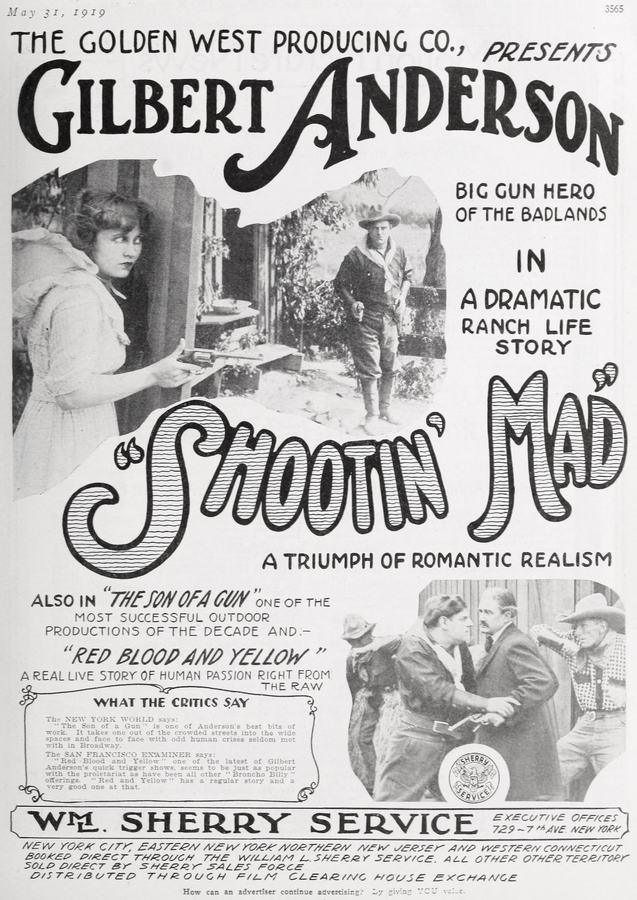
In the annals of early cinematic history, few genres captured the American spirit quite like the Western. These nascent narratives, often steeped in rugged landscapes and tales of moral fortitude, laid the groundwork for countless stories to follow. Among these trailblazers stands 'Red Blood and Yellow', a compelling entry from the prolific mind of Gilbert M. 'Broncho Billy' Anderson. More than just a simple horse opera, this film plunges viewers into a stark world where the allure of wealth clashes violently with the nascent ideals of justice and community. It’s a testament to the raw power of silent storytelling, a vivid tableau painted with broad strokes of human ambition and resilience.
The film unfolds against the breathtaking yet unforgiving backdrop of the American frontier, a setting that is as much a character as any of its human inhabitants. Here, the pursuit of prosperity, symbolized by the shimmering 'Yellow' of gold, often leads to the spilling of 'Red Blood' – a brutal reality of expansion and conquest. Anderson, who not only penned the narrative but also stars as the titular Broncho Billy, crafts a tale that is both archetypal and deeply personal. We are introduced to a community of homesteaders, tenacious individuals striving to carve out a life from the wilderness. Their dreams, however, are threatened by the ruthless machinations of Fred Church’s character, a land baron whose insatiable greed knows no bounds. Church’s portrayal is a masterclass in silent villainy, conveying menace through subtle gestures and piercing stares, a stark contrast to the more overtly theatrical antagonists of some contemporary productions like Wrath, where the villainy often bordered on the melodramatic. Here, the threat feels more insidious, more systemic.
At the heart of the settlers’ plight is Joy Lewis, whose performance as a resolute pioneer woman anchors the film’s emotional core. Lewis embodies the spirit of frontier resilience, her character a beacon of defiance against the encroaching darkness. She is not merely a damsel in distress, but a woman of agency, fighting tooth and nail for her home and her community. This nuanced depiction of a female lead was progressive for its time, moving beyond the more conventional roles often seen in films like The Prince Chap, which leaned heavily into romantic ideals. Her struggle becomes a microcosm of the larger battle for justice in a lawless land, making her character immediately relatable and profoundly sympathetic.
Broncho Billy, ever the stoic lawman, finds himself caught in a moral maelstrom. His character is a study in quiet strength, a man burdened by the responsibility of upholding a fragile sense of order in a world teetering on chaos. The conflict isn't just external, between good and evil, but internal, as Billy grapples with the limitations of the law in the face of rampant injustice. His journey from reluctant observer to decisive protector forms the narrative arc, culminating in a confrontation that is both inevitable and intensely satisfying. Florence Lee’s supporting role, though perhaps less central, provides a crucial emotional anchor, her character’s suffering amplifying the stakes and further solidifying Billy’s resolve. Her silent pleas, conveyed through expressive eyes and subtle body language, speak volumes, adding another layer of pathos to the unfolding drama.
The acting in 'Red Blood and Yellow', while adhering to the conventions of the silent era, transcends mere pantomime. Gilbert M. 'Broncho Billy' Anderson, a true pioneer of the Western genre, brings his signature blend of gravitas and understated heroism to the role. His presence is commanding, his movements economical, conveying a deep inner turmoil and unwavering moral compass without uttering a single word. He doesn't rely on exaggerated gestures; instead, his performance is imbued with a quiet intensity, a testament to his understanding of the medium. Compare this to the more effusive, often theatrical performances found in some European imports of the era, such as Ruslan i Lyudmila, and Anderson’s unique American style becomes even more apparent. His portrayal of a man torn between duty and the raw call for justice is particularly poignant, making the eventual showdown not just a physical conflict but a moral triumph.
Joy Lewis delivers a performance that is both spirited and deeply moving. Her character’s defiance in the face of overwhelming odds is palpable, her expressions of fear, anger, and hope resonating powerfully with the audience. Lewis manages to imbue her pioneer woman with a strength that feels authentic, a far cry from the more passive female archetypes often seen in early cinema. Her ability to convey complex emotions through facial expressions and body language is remarkable, making her character a truly memorable figure. Fred Church, on the other hand, masterfully crafts a villain who is both menacing and chillingly realistic. His subtle sneers and calculating glares are enough to convey a profound sense of malevolence, making his character a truly formidable adversary. He avoids the pitfalls of cartoonish villainy, instead opting for a portrayal that suggests a deeper, more insidious evil driven by pure avarice. His character’s ruthless pursuit of land and gold, much like the relentless search for a bounty in 500 Pounds Reward, underscores the brutal realities of a nascent capitalist frontier.
Florence Lee, in her supporting capacity, provides crucial emotional depth. Her character’s vulnerability and suffering are conveyed with a quiet dignity, serving as a powerful reminder of the human cost of the conflict. Her performance, though perhaps less prominent than Lewis’s or Anderson’s, is vital in grounding the narrative in human experience, preventing it from becoming a mere spectacle of action. The ensemble, under Anderson’s direction, works in concert to create a believable and engaging world, where every glance and gesture contributes to the overarching narrative.
As both writer and likely director/producer, Gilbert M. 'Broncho Billy' Anderson demonstrates a keen understanding of cinematic language, even in its nascent stages. The film’s visual storytelling is remarkably effective, using the vastness of the Western landscape to emphasize both the isolation and the grandeur of the frontier experience. Anderson’s framing often places his characters against sprawling vistas, highlighting their struggle against an untamed environment. The cinematography, while basic by modern standards, is surprisingly evocative, capturing the harsh beauty of the natural world and the stark realities of life within it. The use of natural light, the dynamic compositions during action sequences, and the careful staging of dramatic moments all contribute to a film that is visually engaging.
The pacing is deliberate, allowing moments of tension to build organically, punctuated by bursts of action that are both thrilling and impactful. Anderson avoids gratuitous violence, instead focusing on the emotional and moral weight of the conflict. The editing, while straightforward, is effective in maintaining narrative clarity and propelling the story forward. He understood that in silent film, every frame had to convey meaning, every cut had to serve the story. This meticulous approach to visual narrative sets 'Red Blood and Yellow' apart from many of its contemporaries, which sometimes struggled with narrative coherence. It’s a testament to the fact that even in the early days of cinema, a strong directorial vision could elevate a simple story into something more profound, much like the careful composition evident in historical dramas such as The Heart of Maryland, where visual elements were crucial for setting the tone and conveying historical context.
Beyond its engaging plot and compelling performances, 'Red Blood and Yellow' delves into profound thematic territory. The central conflict between the 'Red Blood' of human struggle and the 'Yellow' of gold-fueled avarice serves as a powerful allegory for the challenges faced during America's westward expansion. It explores the darker side of ambition, where the pursuit of wealth can lead to moral decay and ruthless exploitation. This theme resonates even today, highlighting the timeless struggle between personal gain and collective well-being. The film interrogates the very nature of justice in a land where law and order are still nascent, often dependent on the courage of individuals rather than established institutions. Broncho Billy’s character embodies this struggle, representing the nascent moral compass of a society in formation.
The resilience of the homesteaders, particularly Joy Lewis’s character, speaks to the enduring human spirit in the face of adversity. Their determination to protect their homes and their way of life is a powerful testament to the value of community and self-reliance. The film also touches upon the moral ambiguity inherent in frontier life. While Church is clearly the antagonist, the harsh realities of survival often blur the lines between right and wrong, forcing characters to make difficult choices. This complexity elevates the film beyond a simple morality play, inviting viewers to consider the broader implications of westward expansion and the price paid for progress. It’s a far cry from the often simplistic moral clarity of some early melodramas like My Old Dutch, which tended to paint characters in broad strokes of good or evil. Instead, 'Red Blood and Yellow' offers a more nuanced, albeit still dramatic, portrayal of human nature under duress.
'Red Blood and Yellow' is not merely a forgotten relic; it is a vital piece of cinematic history, offering a window into the formative years of American filmmaking. Gilbert M. 'Broncho Billy' Anderson’s contributions to the Western genre are immeasurable, and this film stands as a prime example of his pioneering work. It helped to define the visual language and narrative tropes that would become synonymous with the Western, influencing generations of filmmakers and storytellers. The film’s focus on a morally upright, if conflicted, hero, a ruthless villain, and the struggle for justice in a lawless land, established a template that would be revisited time and again, from the epic scope of The Seekers to the more intimate dramas of later Westerns.
Its impact extends beyond the genre itself, contributing to the broader development of narrative cinema. The film demonstrates an increasing sophistication in storytelling, character development, and visual technique that was crucial for the evolution of the medium. For enthusiasts of early cinema, 'Red Blood and Yellow' offers a compelling glimpse into the roots of American popular culture, showcasing the nascent power of film to entertain, educate, and provoke thought. It reminds us that even in its infancy, cinema was capable of tackling complex themes and delivering powerful emotional experiences. The film's depiction of community building and the fight against oppression shares a thematic kinship with other early social commentaries, such as The Dawn of Understanding, which explored societal conflicts and the path towards resolution, albeit often in a less overtly violent context.
In conclusion, 'Red Blood and Yellow' is far more than a historical curiosity; it is a vibrant, engaging piece of cinema that continues to resonate with its exploration of timeless themes. Through the compelling performances of Joy Lewis, Gilbert M. 'Broncho Billy' Anderson, Fred Church, and Florence Lee, and Anderson’s astute direction, the film captures the raw spirit of the American frontier. It’s a story of courage, greed, and the relentless pursuit of justice in a world still finding its footing. While silent films may require a different kind of engagement from modern audiences, the power of its narrative and the emotional depth of its characters remain undeniable. This film serves as a potent reminder of the foundational artistry that shaped the medium, a bold brushstroke in the expansive canvas of cinematic history, proving that the struggle for what’s right, against overwhelming odds, is a story that never truly fades. It’s a film that deserves to be rediscovered and appreciated for its significant contributions to the art form and its enduring narrative strength, much like appreciating the foundational literary works such as Little Women for their timeless appeal, despite the passage of time and evolving artistic styles.
IMDb —
1920
Community
Log in to comment.