DbcultAccessing Vault...
Cult Review
Senior Film Conservator
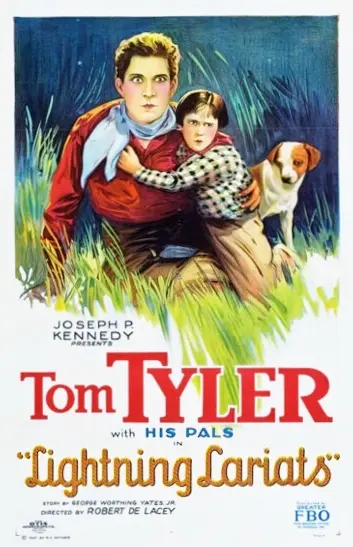
Is 'Lightning Lariats' worth saddling up for today? Short answer: yes, but with a significant caveat. This early Western, a peculiar concoction of Balkan political intrigue and American frontier action, offers a fascinating glimpse into a bygone era of filmmaking that will undeniably appeal to niche audiences – primarily classic film historians, dedicated Western aficionados, and those with a keen interest in the curiosities of pre-code cinema. However, it is decidedly NOT for viewers seeking modern pacing, complex character development, or high-budget spectacle. Expect a charmingly earnest, if somewhat clunky, experience.
This film works because of its audacious premise, blending European royalty with the Wild West, and the earnest, physical performance of its lead, Tom Tyler. It fails because of its often simplistic narrative resolutions, a reliance on convenient plot devices, and a supporting character whose motivations strain credulity. You should watch it if you appreciate the raw, unpolished charm of early sound Westerns and are willing to overlook narrative imperfections for a unique genre mashup.
The conceit of 'Lightning Lariats' is, without question, its most compelling feature. The notion of a deposed European monarch, King Alexis, and his American governess, Janet Holbrooke, seeking refuge in the rugged American West after a political coup in the fictional Roxenburg, feels like something out of a pulp novel – and indeed, it likely was. This genre-bending premise immediately sets it apart from the more straightforward cowboy narratives of its time. The film posits a world where Old World troubles literally follow royalty across oceans, landing them smack dab in the middle of cattle country, pursued by nefarious agents who seem comically out of place in their formal attire amidst dusty plains.
The film’s tone deftly, if somewhat unintentionally, navigates between adventure and lighthearted absurdity. There’s a genuine sense of peril for young Alexis, particularly during the kidnapping sequences, yet these moments are often undercut by the sheer earnestness of the execution. The film doesn't wink at its audience; it plays its premise with admirable sincerity, which ironically enhances its charm for a modern viewer. It’s a bold narrative swing, and while it doesn't always land gracefully, the ambition itself is noteworthy for a film of its modest scale and era.
The central conflict, initially about Alexis's safety, quickly expands to encompass the fate of Tom Potter's ranch, held under mortgage by the seemingly benevolent Henry Storne. This intertwining of royal destiny with the everyday struggles of a Western rancher provides an interesting, if somewhat forced, layer to the narrative. It grounds the fantastical elements in a relatable struggle for survival, though the motivations of Storne's daughter, Cynthia, in complicating matters feel particularly contrived, driven by a jealous pique that seems disproportionate to the stakes.
The film's strength lies in its willingness to throw disparate elements into the same pot, creating a flavor that is undeniably unique, even if not perfectly balanced.
The cast of 'Lightning Lariats' delivers performances largely typical of early sound Westerns: earnest, occasionally stiff, but often imbued with a raw authenticity that resonates. Tom Tyler, as the rancher Tom Potter, embodies the stoic, capable Western hero with an understated charisma. Tyler’s physicality is his greatest asset; whether he’s riding furiously to rescue Alexis or squaring off against the Roxenburgian officers, his movements convey a natural authority. There’s a memorable scene where he calmly disarms one of the pursuing officers with nothing more than a well-placed lariat, demonstrating a proficiency that feels genuinely cinematic, even if the stunt work is less polished than modern equivalents.
Frankie Darro, portraying the young King Alexis, carries the weight of his character with a surprising degree of gravitas for a child actor of his time. He manages to convey both the vulnerability of a displaced boy and the inherent dignity of his royal lineage. His interactions with Janet Holbrooke (Dorothy Dunbar) feel genuine, establishing a believable bond that drives much of the film's emotional core. Dunbar, as the governess, projects a strong, protective presence, a refreshing departure from damsel-in-distress tropes often found in genre films of this period. Her resolve to protect Alexis is palpable, making her a formidable, if sometimes underutilized, figure.
The antagonists, the two Roxenburg officers (Ervin Renard and Karl Silvera), are largely one-dimensional, serving primarily as plot devices rather than nuanced villains. Their relentless pursuit, while a necessary driver for the action, lacks any deeper motivation beyond their duty to a shadowy political faction. This simplifies the conflict, perhaps to its detriment, preventing any real moral ambiguity. However, this simplicity allows the audience to fully invest in Tom and Janet's struggle without distraction.
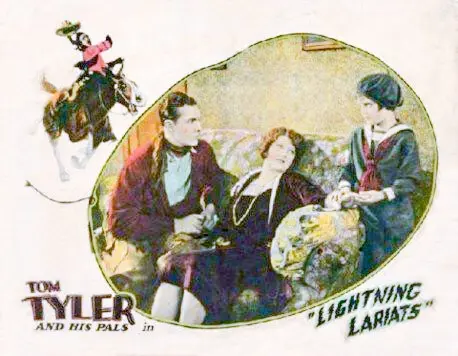
Perhaps the most problematic performance, or rather character arc, comes from Ruby Blaine as Cynthia Storne. Her sudden, almost cartoonish shift from a woman with a mild romantic interest in Tom to a spiteful informant driven by jealousy feels jarring. It’s a narrative shortcut that undermines the film’s attempts at grounding its more fantastical elements. While Blaine does her best with the material, the character's motivations are thin, making her actions difficult to reconcile with a believable human psychology. Even Beans the Dog, the loyal canine companion, arguably delivers a more consistent and impactful performance, providing moments of levity and genuine assistance in key scenes, proving that sometimes, the simplest characters are the most effective.
The direction in 'Lightning Lariats,' helmed by George Worthing Yates (who also contributed to the script), is functional and straightforward, prioritizing narrative progression over stylistic flourishes. This is a film that gets straight to the point, propelled by a series of escalating conflicts and resolutions. The pacing is brisk, a common characteristic of B-Westerns, which often packed maximum action into minimal runtimes. The film rarely lingers, moving from one chase sequence or confrontation to the next with commendable efficiency. This relentless forward momentum is both a strength and a weakness; it keeps the audience engaged but sometimes sacrifices character development or thematic depth for the sake of plot expediency.
Yates demonstrates a solid grasp of action staging, particularly in the numerous horse and car chase sequences. While the technical limitations of the era are evident – rear projection is occasionally noticeable, and some stunts are clearly performed by doubles – the energy is undeniable. The climactic chase, where Tom single-handedly overcomes the officers in a desperate ride to rescue Alexis and Janet, is a highlight, showcasing practical stunts and a palpable sense of urgency. The camera work during these moments, while not groundbreaking, effectively captures the speed and danger.
However, the film’s directorial choices sometimes lean into convenience. Resolutions to seemingly insurmountable problems often arrive swiftly and cleanly, almost as if the script is eager to move on. Henry Storne’s sudden change of heart regarding the ranch foreclosure, for instance, feels less like an earned emotional shift and more like a necessary plot device to ensure a happy ending. This reflects a common practice in early cinema, where clear-cut morality and tidy conclusions were often prioritized. It works. But it’s flawed.
The visual language of 'Lightning Lariats' is rooted in the practicalities of early sound filmmaking, yet it manages to capture the expansive beauty of the American West with a raw, unvarnished quality. Cinematographer Fred Holmes, working within the constraints of the period, relies heavily on natural light for exterior shots, which lends an authentic feel to the ranch and wilderness settings. The wide-open spaces are utilized to emphasize the isolation of Tom's ranch and the vastness over which Alexis and Janet are pursued. While not overtly artistic, the framing often serves the narrative well, particularly in establishing the scale of the chases.
Interior scenes, as was typical, are more static, relying on conventional lighting setups. There's a noticeable difference in visual quality between the sun-drenched exteriors and the more stage-bound interiors, which can sometimes break the illusion. However, moments like the initial confrontation in Tom’s modest cabin or the tense interactions at Storne’s house feel appropriately intimate, even if the camera remains largely stationary. The film avoids overly dramatic camera angles, opting for a clear, observational style that allows the action to unfold without unnecessary embellishment.
Sound design, still in its infancy during this period, is straightforward. Dialogue is clear, and sound effects, particularly the thundering of hooves and the crack of lariats, are functional. There’s no complex layering or atmospheric soundscapes, but the basic audio elements effectively support the visual action. This simplicity, while a limitation, also contributes to the film's historical charm, offering a direct window into the early days of synchronized sound in cinema. It’s a testament to the era’s filmmakers that they managed to create such dynamic sequences with relatively primitive tools.
Yes, 'Lightning Lariats' is worth watching, but with specific expectations. It's an important piece for understanding the evolution of the Western genre and early sound cinema. It provides a unique blend of genres not often seen. The film's historical value is undeniable. Its straightforward narrative makes it easy to follow. The performances, while not always polished, are earnest and engaging. It's a charming, if imperfect, relic. It's a testament to early Hollywood's creativity. You should approach it as a historical artifact with entertainment value. It's a curiosity worth exploring for those interested in film history.
'Lightning Lariats' is not a film that will redefine your understanding of cinema, nor is it a forgotten masterpiece. What it is, however, is a genuinely charming and historically significant piece of early American filmmaking. Its quirky premise, combining Balkan royalty with cowboy heroics, makes it stand out from the scores of Westerns produced in the era. While its narrative shortcuts and occasional dips into simplistic characterization prevent it from achieving greatness, the film’s sheer earnestness and the magnetic screen presence of Tom Tyler make it an engaging watch for the right audience.
If you approach 'Lightning Lariats' with an appreciation for the historical context and a willingness to overlook its flaws, you'll find a delightful, if somewhat peculiar, adventure. It's a testament to the creative spirit of early Hollywood, proving that even with limited resources, a compelling story and a dash of genre-bending ingenuity could produce something truly memorable. Don't expect a profound cinematic experience, but do expect a unique journey back to a time when anything was possible on the silver screen, even a king with a cowboy's help.
IMDb —
1916
Community
Log in to comment.