DbcultAccessing Vault...
Cult Review
Senior Film Conservator
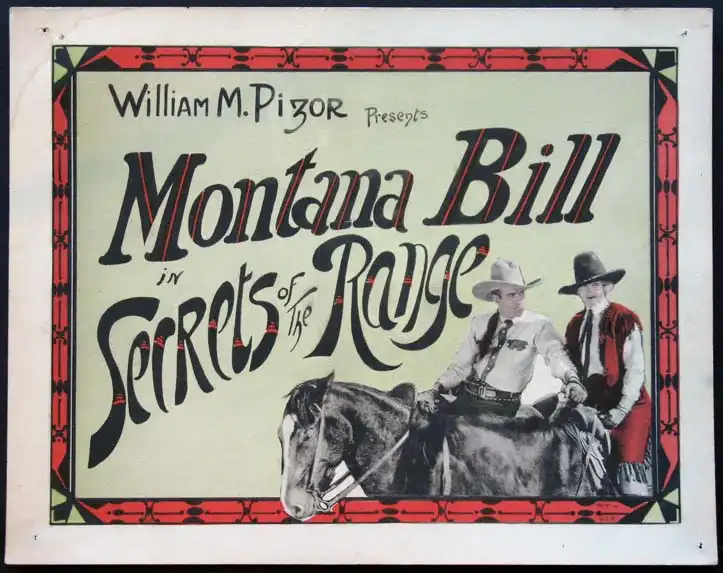
If you have a high tolerance for movies that feel like they were filmed during someone's lunch break, you might get something out of Secrets of the Range. Otherwise, stay far away. This is strictly for the people who want to see every surviving scrap of the 1920s, regardless of how frayed the edges are. Most people will find it repetitive and technically falling apart, but there is a specific kind of charm in watching a movie that is this unpretentious about its own cheapness.
Fred Church plays the lead, and he has this way of sitting on a horse that suggests he’s been doing it since he could walk, which is the only thing that makes him believable as a hero. He doesn’t have the polish of the stars you’d see in something like The Canyon of Light. Church looks tired. His eyes are heavy, and he spends a lot of the movie staring off-camera at things we never get to see. There’s a scene early on where he’s reading a letter, and he holds it so close to his face for so long that I started wondering if he actually forgot his lines—even though it’s a silent movie.
The director, Robert J. Horner, was known for these "Poverty Row" Westerns. You can tell. The interior sets are basically two wooden flats pushed together at a right angle. In one scene, a character leans against a wall and the whole thing visibly wobbles. It’s not the kind of thing that ruins a movie, but it reminds you that you’re watching a production that probably didn't have a second take for anything.
Bud Osborne shows up as the villain, and honestly, he’s the best part. He has a great, craggy face that looks like it was carved out of a canyon wall. He does this thing with his eyebrows when he's plotting that is way more entertaining than the actual plot. The "secrets" mentioned in the title are barely secrets at all—it’s the standard rustling business—but Osborne plays it like he’s hiding the location of the Holy Grail.
The editing is where things get truly weird. There are cuts that happen mid-action that make it look like characters are teleporting across the yard. One moment a guy is getting off his horse, and the next frame he’s already inside the house with a drink in his hand. It’s jarring. It lacks the smooth flow you find in more professional outfits like Stage Struck. It feels like the film was spliced together with a pair of dull scissors.
There’s a fight scene near the end that is unintentionally funny. The choreography is nonexistent; it’s just two grown men kind of hugging each other and falling into the dirt. They roll around for a while, and the camera stays at this awkward medium distance, making the whole thing look like a scuffle outside a bar rather than a climactic showdown. You can see the dust kicking up so thick that the actors start squinting and coughing, but they just keep rolling because the camera is still turning.
Betty Gates is the female lead, but the movie doesn't give her much to do besides look worried. Her costumes are oddly clean compared to everyone else. While the men are covered in actual trail dust, she looks like she just stepped out of a department store. It creates this strange visual disconnect, like she’s in a completely different movie than the guys she’s talking to.
The horses look exhausted. That’s something I always notice in these cheap Westerns. In a big-budget production, the animals are groomed and spirited. Here, they just look like they want to go stand in the shade. There’s a long sequence of riding through the brush that goes on for about three minutes too long. It’s just people riding. No dialogue, no action, just the sound of the projector (if you’re watching it right) and the sight of tired horses walking through scrubland. It’s the kind of padding that makes a 50-minute movie feel like two hours.
I don’t hate it, but I can’t exactly recommend it. It’s a document of a time when the demand for Westerns was so high that as long as you had a hat, a horse, and a camera, you could sell a picture. It’s much rougher than something like The Wild Woman, which at least feels like it has a pulse. Secrets of the Range is just... there. It exists. It’s a dusty, wobbly, slightly boring piece of history that is only interesting because of how much it reveals about the bottom of the Hollywood barrel in 1928.
IMDb —
1929
Community
Log in to comment.