DbcultAccessing Vault...
Cult Review
Senior Film Conservator
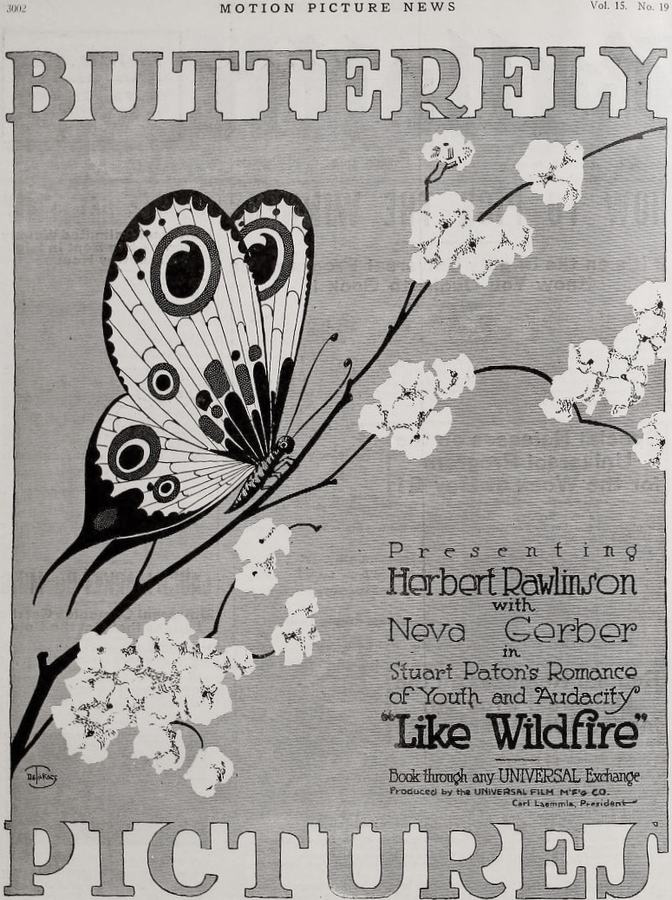
There is a moment—halfway through Like Wildfire—when the camera lingers on Tommy Buckman’s ink-stained fingers as they flick a roll of pennies across the scarred mahogany of the Potter store counter. The coins spin, blur, collapse. That microscopic vortex feels like the film’s true heart: a kinetic meditation on value, worth, and the vertigo of second chances. Directed with scalpel-sharp economy by an unheralded team trading under the moniker of "Like Wildfire", this 1924 programmer arrives today as a molotov cocktail of celluloid, its fuse hissing louder than most prestige revivals.
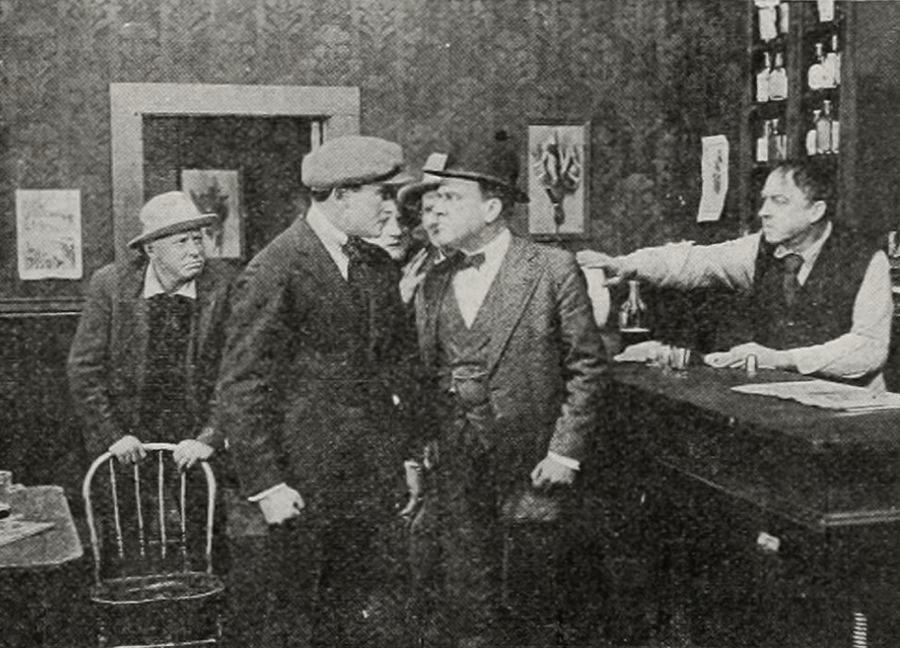
The first reel is a chiaroscuro fever dream: iron bars slant across Tommy’s immaculate tuxedo like black piano keys; the jailer’s lantern paints his cheekbones with bile-green halos. Neva Gerber’s Nina materializes from the shadows, a silhouette first, a covenant second. Their meet-cute is a bail transaction—no violins, only the clank of coins into a tin dish. Burton Law plays Tommy with the elastic physicality of a man reinventing his skeleton in real time: shoulders that once lounged in speakeasies now snap into the alert poise of a shop clerk who hears the footfall of every customer as either salvation or saber. The film’s silence is not absence but amplifier—the creak of floorboards, the hush of brooms, the pneumatic exhale of a cash drawer become a percussive libretto.
Once absorbed into the Potter emporium, the narrative trades three-act solemnity for a galloping montage that feels like urban tabloid meets pastoral parable. We watch Tommy master the hieroglyphics of inventory: a dissolve shows him juggling canned peaches, next he pirouettes with a pricing gun; a superimposed receipt unfurls like ticker tape across the screen, figures blooming into flowers—profit as botanical miracle. Cinematographer L.M. Wells favors low angles so that the aisles become cathedrals, neon chalk signs glow like stained glass, and every cash sale resembles a minor liturgy. The film grasps what later corporate sagamas—The Merchant of Venice included—rarely clock: commerce is choreography.
John Cook’s patriarch Buckman arrives by locomotive trailing plumes of soot and paternal absolutism. His corporate behemoth looms across the street—plate-glass windows, chrome pillars, a cornucopia of standardized desire. The battle that erupts is less military than psychological trench warfare. Tommy slashes margins; Buckman airlifts premium stock. Tommy stages moonlit deliveries for factory girls on night shift; Buckman installs searchlights that bleach the cobblestones like interrogation lamps. Each maneuver is scored by the town’s collective gasp—intertitles shrink, letters jitter closer to the edge of the card as if even typography fears annihilation.
Nina is no mere romantic foil; she is the film’s moral auditor. Gerber plays her with flinty tenderness: when she teaches Tommy to balance books, her pencil taps echo like Morse code against destiny. In one ravishing close-up, the camera studies her pupils dilating while she watches Tommy charm a throng of bargain hunters—love multiplied by the square foot. Yet her vulnerability never calcifies into sainthood; she demands receipts for affection, timestamps for loyalty. Their courtship transpires in the margins of ledgers, amid the rustle of brown paper, under the sulfur glow of streetlamps reflected in store windows—courtship as cost-benefit analysis turned rhapsody.
Though monochromatic, the film’s palette feels polychromatic in memory. Contemporary restorers have opted for digital tinting: candle-amber interiors, slate-blue exteriors, and a final amber-red surge during the reconciliatory embrace. The effect is less nostalgia than neural—colors arrive like synesthetic aftershocks. Notice how Tommy’s signature necktie, glimpsed only in grayscale yet referenced repeatedly, becomes a talismanic slash—dagger or lifeline depending on who wields interpretation.
Karl R. Coolidge and Louis Weitzenkorn lace the scenario with ironies so deft they twang. When Tommy finally bests the old man, he does not crow; he offers Buckman Sr. a chair, a cigar, a glass of water—gestures so banal they ache. The intertitle reads: "Success tasted of copper and wet paper—he longed for jailhouse soup." It’s a line that anticipates the disillusionment of post-war cinema by two decades. Meanwhile, the writers seed tertiary characters with novella-depth: a spinster who steals spools of ribbon to sew a wedding dress she’ll never wear; a boy who counts tin soldiers in the toy aisle because his father died in a stormy march to Verdun. These micro-narratives detonate quietly, leaving shrapnel in your periphery.
Burton Law’s physical vocabulary deserves textbooks. Watch how his gait evolves: Act I—liquor-soaked swagger, soles kissing pavement like he’s dancing to muted jazz; Act II—military briskness learned from crates of canned goods; Act III—measured gravity, each footstep a ledger entry. Opposite him, Gerber offers micro-expressions: the quiver of a nostril when Tommy underprices her father’s heirloom stock, the fractional tilt of her hat brim when sealing a deal. In ensemble scenes, Howard Crampton as the town banker and Willard Wayne as the union foreman orbit the central couple like moons of fiduciary tension, their brows arithmetic slates.
The picture runs a mere 66 minutes yet feels Tolstoyan. Credit editor Herbert Rawlinson who wields ellipsis like a stiletto. A dissolve transports us from winter’s first snow to spring’s first bloom; a match-cut transmutes a ringing store bell into a church congregation’s hymn. Time breathes, contracts, accelerates—mirroring the very capitalist velocity the film critiques. One could program a double feature with Liberty Hall or The Rosary and emerge convinced the silent era invented montage as moral inquiry.
The closing sequence stages the Buckman confrontation inside the Potter store after hours. Shelves stand like petrified soldiers; shadows grid the floor. Father and son circle, not cowboys but accountants of the spirit. When the elder extends his hand, the gesture feels both benediction and surrender—yet the intertitle withholds easy absolution: "A kingdom measured in pennies buys no peace, only tomorrow’s rent." Behind them, Nina clicks the shop lights off one by one until only a single bulb burns above the cash register, spotlighting the till as if it were holy relic. Fade-out. No kiss, no confetti, just the hush of an unpaid bill fluttering in an unseen draft. The austerity guts you.
Like Wildfire is a pocket epic that scalds the retina long after the projector’s flutter dims. It anticipates the corporate carnage of The Highest Bid and the domestic cost audits of Her Second Husband, yet it predates them all. Seek it out in the digital twilight, preferably at 2 a.m. when your own bank statement glowers from the other tab. You will finish the film poorer in illusion, richer in caution, and weirdly elated—like cashing in a jar of pennies to find a single mercury dime glinting at the bottom, slick with history and worth more than face value.
IMDb 7.3
1923
Community
Log in to comment.