DbcultAccessing Vault...
Cult Review
Senior Film Conservator
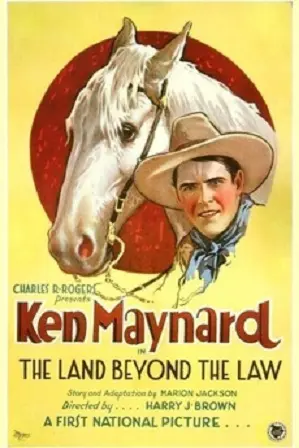
Is The Land Beyond the Law a relic that should remain buried in the archives of silent cinema? Short answer: Yes, but only if you view it as a masterclass in physical performance rather than a narrative powerhouse.
This film is specifically for those who appreciate the raw, unrefined energy of the 1920s Western and for historians of stunt-work. It is absolutely not for modern audiences who require snappy dialogue or complex character arcs to stay engaged.
In a word: occasionally. If you are looking for the roots of the modern action hero, you will find them here in Ken Maynard’s saddle. However, if you are looking for a story that challenges the tropes of the genre, you will be disappointed by its adherence to 1927 standards.
This film works because Ken Maynard’s sheer athleticism transforms a standard B-movie plot into a visceral, high-stakes spectacle of movement.
This film fails because the connective tissue between the action sequences is often paper-thin, relying on melodramatic intertitles that haven't aged well.
You should watch it if you want to see the exact moment the Western hero evolved from a stoic lawman into a kinetic, death-defying superstar.
Ken Maynard was not just an actor; he was a phenomenon of the silent era. In The Land Beyond the Law, he displays a level of comfort in the saddle that puts many modern CGI-assisted actors to shame. There is a specific sequence where Maynard’s character, Jerry, must escape a pursuing posse by navigating a treacherous rocky ravine. The camera stays wide, capturing the genuine danger of the terrain. Unlike the more static compositions found in A Social Sleuth, this film uses the environment as a secondary antagonist.
Maynard’s performance is built on a foundation of movement. He doesn't just ride a horse; he flows with it. This physical charisma compensates for the lack of spoken dialogue. When he faces off against the imposing Tom Santschi, the tension is communicated through stance and gaze. It’s a primitive form of storytelling, but in the hands of a performer like Maynard, it remains strangely effective. He brings a lightheartedness to the role that contrasts sharply with the grimness of the setting.
Compare this to the more somber tone of The Place Beyond the Winds. While that film dwells on the psychological weight of the frontier, The Land Beyond the Law is content to let its lead actor’s stunts do the heavy lifting. It is a film of action, not reflection. The pacing in the first half is brisk, almost frantic, as it establishes the lawless nature of the territory. It works. But it’s flawed.
Marion Jackson’s screenplay is a study in efficiency, though it lacks the nuance found in her later works. The plot is a series of obstacles designed to showcase Maynard’s skills. The villainy is broad, and the stakes are clear. Tom Santschi and Noah Young play their roles with a scenery-chewing intensity that was the hallmark of the era. They aren't characters so much as they are forces of nature that Jerry must overcome.
The inclusion of Dorothy Dwan as the love interest provides the necessary emotional stakes, but her character is largely sidelined. She exists to be rescued or to provide a reason for Jerry to stay in town. This is a common pitfall of the genre, seen similarly in Maid of the West. However, Dwan manages to inject a bit of personality into her limited screen time, particularly in a scene where she confronts the town's corrupt leadership.
One surprising observation is how the film handles the concept of 'law.' It isn't presented as a moral absolute but as a tool that can be wielded by anyone with enough firepower. This cynical edge prevents the movie from feeling like a simple morality play. It feels more grounded in the reality of the 1880s than many of the polished Westerns that would follow in the 1940s. The 'land beyond the law' is a literal place where the social contract has been shredded.
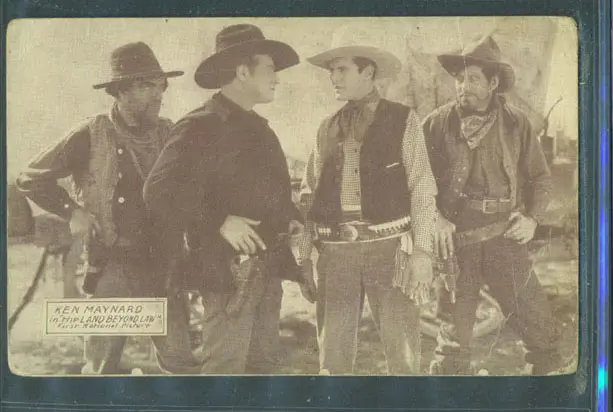
The cinematography in The Land Beyond the Law is surprisingly sophisticated for its budget. The use of natural light in the outdoor sequences creates a sense of vastness that is often lost in studio-bound productions. There is a specific shot of the posse silhouetted against a ridge that is genuinely striking. It evokes the same sense of isolation found in Posledniy vystrel, though with a distinctly American flavor.
The editing, however, is where the film shows its age. The transitions between scenes can be jarring, and some of the intertitles are poorly timed. There are moments where the action stops dead for a lengthy explanation of a plot point that could have been shown visually. Despite these hiccups, the film maintains a consistent tone. It knows it is an entertainment piece, and it doesn't try to be anything else. It avoids the heavy-handedness of The Return of Peter Grimm, opting instead for a populist appeal.
The stunt work deserves its own paragraph. In the final act, there is a sequence involving a runaway wagon that is terrifyingly real. You can see the dust, the strain on the horses, and the genuine danger to the performers. There are no safety nets here. This authenticity is what keeps the film watchable nearly a century later. It’s a visceral experience that modern digital effects struggle to replicate.
Pros:
Cons:
To understand The Land Beyond the Law, one must understand the transition of the Western hero. In the early 1920s, heroes were often grim and stoic. Maynard changed that. He brought a sense of fun and athleticism that would later influence everyone from Roy Rogers to Gene Autry. This film is a bridge between the gritty realism of the early silents and the 'singing cowboy' era that followed. It lacks the comedic touch of Bowled Over, but it shares that film’s commitment to entertaining the masses.
The film also reflects the growing sophistication of First National Pictures. They were moving away from simple shorts and into feature-length epics. While this isn't on the scale of The Napoleonic Epics, it shows a clear ambition to elevate the Western genre. The production values are high, and the casting of established stars like Tom Santschi shows a commitment to quality. It is a polished product for its time.
However, it also carries the baggage of its era. The portrayal of the 'lawless' territory is filtered through a very specific lens of American exceptionalism. The settlers are all virtuous, and the villains are irredeemably evil. There is no middle ground, no shades of gray. This binary worldview is what makes it feel most like a relic today. It lacks the moral complexity of a film like The Right of Way.
The Land Beyond the Law is a fascinating artifact. It is a film that relies entirely on the charisma and physical ability of its lead actor. If you remove Ken Maynard, the movie collapses under the weight of its own cliches. But Maynard is there, and he is spectacular. He turns a routine story into something that feels alive and dangerous.
Is it a masterpiece? No. Is it a cinematic journey? Not really. It is a high-octane (for 1927) Western that knows exactly what its audience wants: horses, fights, and a hero who can do it all. It is better than His Jonah Day but falls short of the emotional resonance found in God of Little Children. It sits comfortably in the middle—a solid, professional piece of filmmaking that served its purpose and still offers a few thrills for the modern viewer.
Ultimately, the film is a testament to a lost art form. Before CGI and green screens, there were men like Ken Maynard who actually did the things we see on screen. For that reason alone, The Land Beyond the Law deserves a look. It’s a reminder of a time when the West was still wild, and the cinema was just learning how to capture it. Just don't expect it to change your life.
The Land Beyond the Law is a sturdy, if unremarkable, entry into the silent Western canon. It is saved from obscurity by its lead actor's bravura performance and some truly impressive stunt work. It is a film of its time, for better and for worse.
IMDb 4.3
1929
Community
Log in to comment.