DbcultAccessing Vault...
Cult Review
Senior Film Conservator
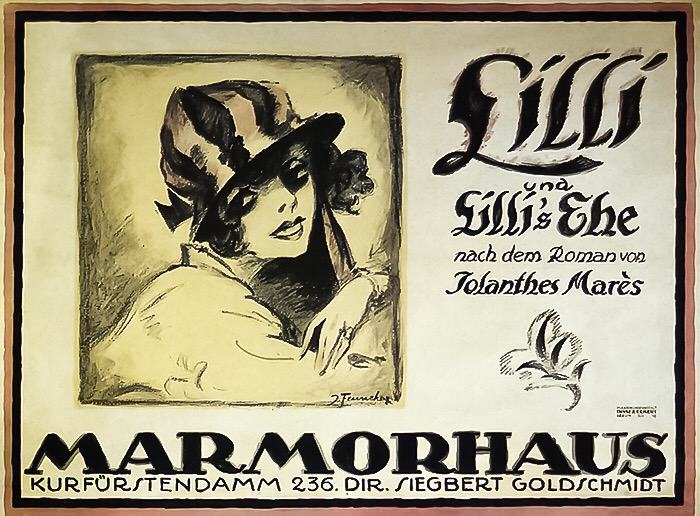
The year 1919 stands as a pivotal monolith in the history of global cinema, particularly within the bruised and burgeoning landscape of the Weimar Republic. It was a time of radical aesthetic shifts, where the remnants of pre-war romanticism collided violently with the nascent tremors of Expressionism. In this crucible of artistic evolution, Lilli emerges as a fascinating, if somewhat ephemeral, artifact that captures the zeitgeist of a society in flux. To watch this film today is to engage in a form of cinematic archaeology, brushing away the dust of a century to find a narrative that pulsates with surprisingly modern anxieties regarding identity and social performance.
The screenplay, crafted by the insightful Jolanthe Marés, represents a sophisticated departure from the broad strokes of earlier silent dramas. Marés, a writer often overlooked in the patriarchal annals of film history, imbues the script with a psychological density that demands much from its audience. Unlike the more linear moral fables found in films like The Reward of Patience, Lilli operates within a gray scale of morality. It doesn't offer easy redemptions or clear-cut villains; instead, it presents a world where every character is trapped by the gravity of their own social station.
The narrative structure of Lilli is built upon the tension of the 'unspoken.' In an era before synchronized sound, the film relies heavily on the visual grammar of the frame to convey the weight of secrets. While one might compare its thematic scope to the multi-character dynamics of The Seven Sisters, Lilli is far more claustrophobic and focused. It is an intimate study of a woman attempting to rewrite her own history in a world that refuses to forget the ink with which it was first written. This thematic resonance links it to the tragic undercurrents of Whom the Gods Destroy, though Marés replaces divine intervention with the far more cold and calculated hand of societal judgment.
The cast of Lilli is a veritable who's who of early German cinema, featuring actors who would go on to shape the industry for decades. Reinhold Schünzel, a titan of the screen, brings a magnetic complexity to his role. Schünzel’s ability to oscillate between charming sophistication and a subtle, underlying menace is on full display here. His presence provides a stark contrast to the more theatrical, yet equally compelling, performance of Leopoldine Konstantin. Konstantin, a graduate of the Max Reinhardt school of acting, brings a level of nuance to her gestures that transcends the typical pantomime of the period.
Supporting players like Ernst Stahl-Nachbaur and Arnold Czempin anchor the film in a gritty reality. Stahl-Nachbaur, in particular, possesses a face that seems etched with the weariness of the era, providing a grounded counterpoint to the more ethereal qualities of the protagonist. When we compare the ensemble work here to the character-driven depth of The Painted World, it becomes clear that Lilli was at the forefront of a movement toward more naturalistic, albeit stylistically elevated, screen acting. The chemistry between Mia Pankau and Charles Willy Kayser further enriches the film's emotional tapestry, creating a sense of a lived-in world rather than a mere set.
Visually, Lilli is a triumph of lighting and composition. While it lacks the extreme distortions that would later define Expressionist masterpieces, it utilizes a sophisticated chiaroscuro to mirror the internal states of its characters. The cinematography captures the opulence of the wealthy interiors with a sharpness that feels almost predatory, highlighting the coldness inherent in such luxury. Conversely, the more humble settings are bathed in a softer, more forgiving light, suggesting a warmth that the upper classes have long since traded for status.
This visual dichotomy is essential to understanding the film’s central conflict. Lilli herself is often framed in doorways or through windows, emphasizing her status as an outsider looking in, or a prisoner looking out. This use of framing to indicate social entrapment is a technique that would be refined in later years, but its effective use here shows a high level of cinematic literacy. It is far more visually ambitious than the documentary-style approach of the Willard-Dempsey Boxing Contest or the somewhat static staging found in The Iron Woman. Instead, Lilli anticipates the fluid, psychological camerawork of the mid-1920s.
When situating Lilli within the broader context of 1910s cinema, its preoccupation with class and consequence becomes its defining trait. If we look at The Price of Happiness, we see a similar interest in the cost of social mobility, but Lilli handles the subject with a far more cynical edge. There is no easy happiness to be bought here; there is only the temporary reprieve from exposure. This cynicism is perhaps a reflection of the post-war German psyche, a stark contrast to the more rugged individualism seen in American imports like Laughing Bill Hyde.
Furthermore, the film’s exploration of moral 'stains'—both literal and metaphorical—invites comparison to The Stain. However, where The Stain focuses on the corruption of an individual, Lilli suggests a corruption that is systemic. The film posits that the very structures of society are designed to exclude and punish those who do not fit the prescribed mold. This critique is even more pointed than the historical allegories of Wolfe; or, the Conquest of Quebec, as it deals with the immediate, lived reality of its contemporary audience.
In the grand tapestry of film history, Lilli is often overshadowed by the more overtly stylistic 'Caligaris' and 'Metropolises' of the world. Yet, its value lies in its restraint and its unflinching look at the human condition. It occupies a space between the old world of theatrical melodrama and the new world of psychological realism. The film’s pacing, while deliberate, allows for a slow-burn tension that is often missing from modern cinema’s frantic editing. It shares a certain melancholic DNA with Enken and the eerie atmosphere of The Governor's Ghost, yet it remains firmly rooted in the tangible world of social politics.
The contributions of Emil Rameau and Toni Tetzlaff should not go unmentioned. Their performances add layers of domestic realism that prevent the film from drifting into abstract allegory. They provide the 'gravity' that keeps Lilli's world spinning, even as she attempts to fly above it. This sense of groundedness is what separates the film from more whimsical or genre-focused works like Mortmain or the lighter fare of The Rummy. Lilli is a serious film for a serious time, and its echoes can be heard in the works of Douglas Sirk and even Fassbinder decades later.
Ultimately, Lilli is a testament to the power of silent cinema to communicate complex human truths. It is a film that rewards the patient viewer, offering a rich subtext that reveals itself through the subtle flicker of an eyelid or the slight slump of a shoulder. While it may not have the bombast of ME, der Kaiser!, its impact is perhaps more lasting because it is so deeply human. It reminds us that even in 1919, the struggle for self-definition in an indifferent world was as potent and painful as it is today. To ignore Lilli is to ignore a vital link in the chain of cinematic evolution—a link that connects the Victorian past to the modern psychological landscape. It is a work of quiet brilliance, a shadow-play of the soul that deserves a place in the pantheon of early 20th-century art.
IMDb —
1927
Community
Log in to comment.