DbcultAccessing Vault...
Cult Review
Senior Film Conservator
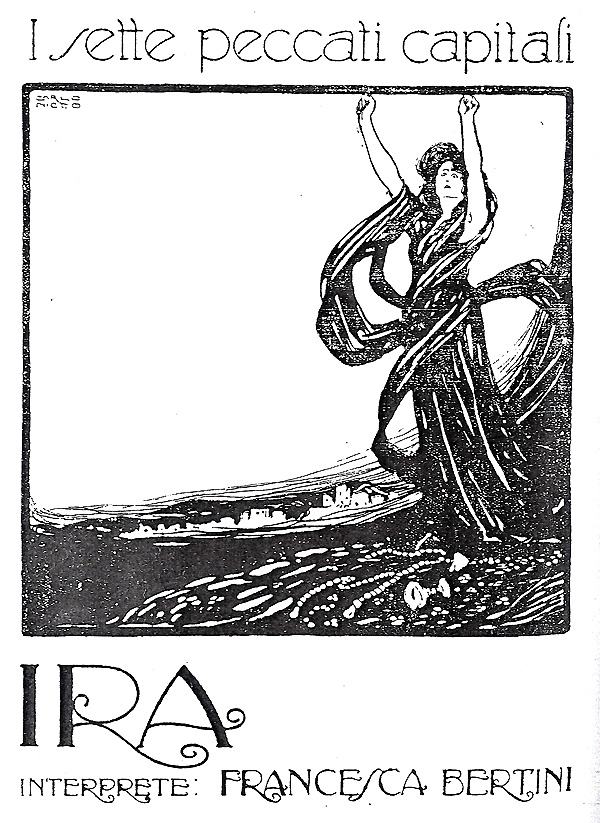
Stepping back into the cinematic past, particularly to the tumultuous landscape of early 20th-century Italian silent film, often feels like unearthing a forgotten relic. Yet, some works, like Giuseppe Paolo Pacchierotti’s 1917 drama L'ira (The Wrath), possess an enduring, almost visceral power that transcends the limitations of their era. This isn't just a film; it's a raw, pulsating slice of melodrama, a testament to the passionate storytelling that defined Italian cinema's golden age of divas and grand narratives. It thrusts us into a 'wild country' where the rule of law is a whisper, replaced by the guttural shouts of smugglers and the unforgiving dictates of survival. Here, human emotions are stripped bare, exposed to the harsh glare of a world perpetually teetering on the brink of chaos.
The narrative of L'ira unfolds in a setting that is as much a character as any of its human inhabitants: a desolate, lawless land where smuggling is not merely an illicit activity but the very lifeblood of its people. This harsh environment breeds a certain kind of resilience, a desperate beauty born of necessity. We are introduced to Elena and Zefor, siblings bound by blood and circumstance, living with their mother in a modest home that serves as a fragile sanctuary, yet also a stage. Their existence is a delicate dance with danger, a constant negotiation with the shadowy figures who dominate their world. In this precarious setting, Zefor, portrayed with a poignant sensitivity, finds solace and perhaps a means of expression in his violin, his melodies a melancholic counterpoint to the surrounding brutality. Elena, brought to life with astonishing intensity by Francesca Bertini, uses her captivating presence to entertain these very bandits, her dances a perilous performance of allure and survival. It’s a fascinating dynamic, reminiscent of the complex social tapestries woven in films like The Hunted Woman, where female characters often navigate treacherous social landscapes with a blend of vulnerability and fierce independence.
The genius of Pacchierotti’s storytelling, even in its silent form, lies in its ability to convey the moral ambiguities of this world. The bandits are not mere caricatures; they are men shaped by their environment, capable of both brutality and, in Arturo’s case, a dangerous kind of charm. Arturo, played by Alberto Albertini, is the catalyst for much of the film’s emotional turmoil. His presence, a blend of rugged charisma and inherent menace, ignites a passionate, yet profoundly perilous, flame within Elena’s heart. This isn't the saccharine romance of more conventional narratives; it's a love born of desperation and proximity to danger, a bond forged in the crucible of a world that offers few soft choices. The film masterfully explores the intoxicating pull of forbidden love, a theme that resonates across cinematic history, but here it is imbued with a raw, almost primal energy that distinguishes it from its contemporaries. The very title, L'ira, hints at the explosive consequences of these simmering passions.
No discussion of L'ira would be complete without reverent acknowledgement of Francesca Bertini. A true icon of the Italian silent screen, Bertini was the quintessential diva, her performances a captivating blend of theatricality and profound emotional depth. In L'ira, she is nothing short of magnificent. Her Elena is a woman of fierce spirit, her eyes conveying volumes of unspoken desire, fear, and defiance. Bertini's mastery of gesture and facial expression, crucial in silent cinema, allows her to communicate Elena’s complex inner world with breathtaking clarity. She doesn't just play Elena; she embodies her, becoming a conduit for the character’s burgeoning passion and the inevitable wrath that follows. Her portrayal elevates what could have been a simple melodramatic archetype into a figure of tragic grandeur. One might draw parallels to Asta Nielsen's compelling, often tormented heroines in films like Teufelchen, though Bertini brings a distinctly Italianate fire to her roles, a more overt, operatic intensity.
The chemistry between Bertini's Elena and Albertini's Arturo is palpable, a dangerous dance of attraction that forms the emotional core of the film. Albertini, while perhaps less of a towering presence than Bertini, delivers a performance that perfectly complements her intensity. He imbues Arturo with a rough-hewn charm, a magnetic quality that makes Elena’s falling for him entirely believable, despite the obvious perils. The supporting cast, including Gustavo Serena, Guido Trento, and Cia Fornaroli, skillfully flesh out this dangerous world, each contributing to the oppressive atmosphere and the unfolding drama. Their performances, though often in the background, provide a crucial context for the central conflict, grounding the more flamboyant performances in a believable, if brutal, reality. The ensemble work here is a testament to the strong directorial hand of Pacchierotti, ensuring that every character, no matter how minor, serves the overarching narrative and thematic thrust.
Giuseppe Paolo Pacchierotti, as the film's writer and director, crafts a narrative that is both expansive in its emotional scope and intimate in its focus on the central characters. His vision for L'ira is one of stark contrasts: moments of tender vulnerability are juxtaposed against bursts of sudden violence, and the beauty of human connection struggles against the harshness of an unforgiving landscape. Pacchierotti understands the power of the visual medium, particularly in an era devoid of spoken dialogue. He relies heavily on expressive performances, evocative mise-en-scène, and dynamic editing to convey the story's complexities. The cinematography, while constrained by the technology of the time, effectively captures the rugged beauty and inherent menace of the 'wild country,' using natural light and thoughtful framing to enhance the narrative's emotional impact. One can observe a similar dedication to visual storytelling in films like Sylvi, where the environment often mirrors the internal struggles of the characters, adding layers of meaning to their plight.
The pacing of L'ira is deliberate, allowing moments of tension to build gradually, culminating in bursts of dramatic confrontation. This measured approach ensures that the audience is fully immersed in the characters' emotional journeys, feeling the weight of their choices and the intensity of their passions. The film's title, 'The Wrath,' is not merely a descriptive tag but a thematic promise, fulfilled through a series of escalating conflicts that explore the destructive power of unchecked emotions and the tragic consequences of living outside societal norms. This intense focus on human emotion and its consequences sets L'ira apart, making it a powerful example of the melodramatic tradition that thrived in Italian silent cinema. It's a far cry from the lighthearted antics of a film like The Adventurer, showcasing the vast spectrum of cinematic output during this fertile period.
To truly appreciate L'ira, one must consider its historical context. Released in 1917, amidst the throes of World War I, the film reflects a society grappling with upheaval, moral ambiguities, and a profound sense of uncertainty. The 'wild country' depicted in the film can be seen as a metaphor for the broader societal landscape, where traditional structures were crumbling, and new, often dangerous, forces were emerging. Italian silent cinema, particularly during its 'golden age' from the mid-1910s to the early 1920s, was renowned for its melodramatic flair, its larger-than-life divas, and its elaborate productions. L'ira stands as a proud example of this tradition, showcasing the strengths of a cinematic style that prioritized emotional impact and visual spectacle. Comparing it to another contemporary melodrama, such as Eternal Love, one can discern the distinctive flavor of Italian storytelling—often more passionate, less restrained, and deeply rooted in operatic sensibilities.
The fascination with 'outlaws' and 'bandits' was also a recurring motif in cinema of this period, tapping into a public imagination that often romanticized figures living beyond the confines of conventional society. This fascination can be seen in various forms, from the adventure tales to the more dramatic explorations of moral ambiguity. However, L'ira transcends mere romanticization; it delves into the psychological toll of such a life, the constant threat, and the corrosive effect it has on personal relationships. The film's exploration of wrath—be it the wrath of society, the wrath of a scorned lover, or the internal wrath of moral conflict—is a testament to Pacchierotti's nuanced understanding of human nature. It's a more grounded, visceral portrayal of human desperation than, say, the fantastical elements found in A Message from Mars or the supernatural thrills of The Ghost Breaker, highlighting the diverse storytelling approaches of the era.
Watching L'ira today, one is struck by the timelessness of its themes. Love, betrayal, survival, and the fierce pursuit of freedom against oppressive circumstances are universal human experiences that resonate regardless of the technological advancements in filmmaking. The absence of spoken dialogue, far from being a hindrance, often heightens the emotional impact, forcing the viewer to engage more deeply with the visual storytelling and the actors' expressive performances. The film relies on the audience's willingness to interpret, to feel, to connect with the raw emotions laid bare on screen. This active engagement makes silent cinema a uniquely immersive experience, a powerful reminder of the fundamental elements of cinematic art.
Pacchierotti and his cast, particularly Bertini, understood this implicitly. They crafted a film that speaks directly to the soul, bypassing the intellect to tap into deeper, more primal feelings. The film's climax, imbued with a sense of tragic inevitability, leaves a lasting impression, a testament to the power of a well-told story, regardless of its vintage. While films like 99 or Parasites of Life might offer different perspectives on societal struggles or human frailty, L'ira carves its own niche with its intense focus on personal, passionate conflict set against a backdrop of lawlessness. It's a film that demands to be seen, not just as a historical artifact, but as a vibrant, emotionally charged work of art that continues to resonate with audiences who appreciate the profound beauty and raw power of early cinema.
In conclusion, L'ira is more than just a forgotten gem from the silent era; it is a fiery testament to the enduring power of human drama. With Francesca Bertini's incandescent performance at its heart, supported by a compelling narrative and evocative direction, it offers a window into a cinematic past that was as bold and passionate as the characters it portrayed. For anyone seeking to understand the roots of cinematic melodrama, the allure of the silent film diva, or simply desiring a powerful, emotionally charged story, L'ira remains an essential viewing experience. Its wrath, though silent, still echoes with remarkable force.
— The Film Critic's Scroll
IMDb 7.4
1923
Community
Log in to comment.