DbcultAccessing Vault...
Cult Review
Senior Film Conservator
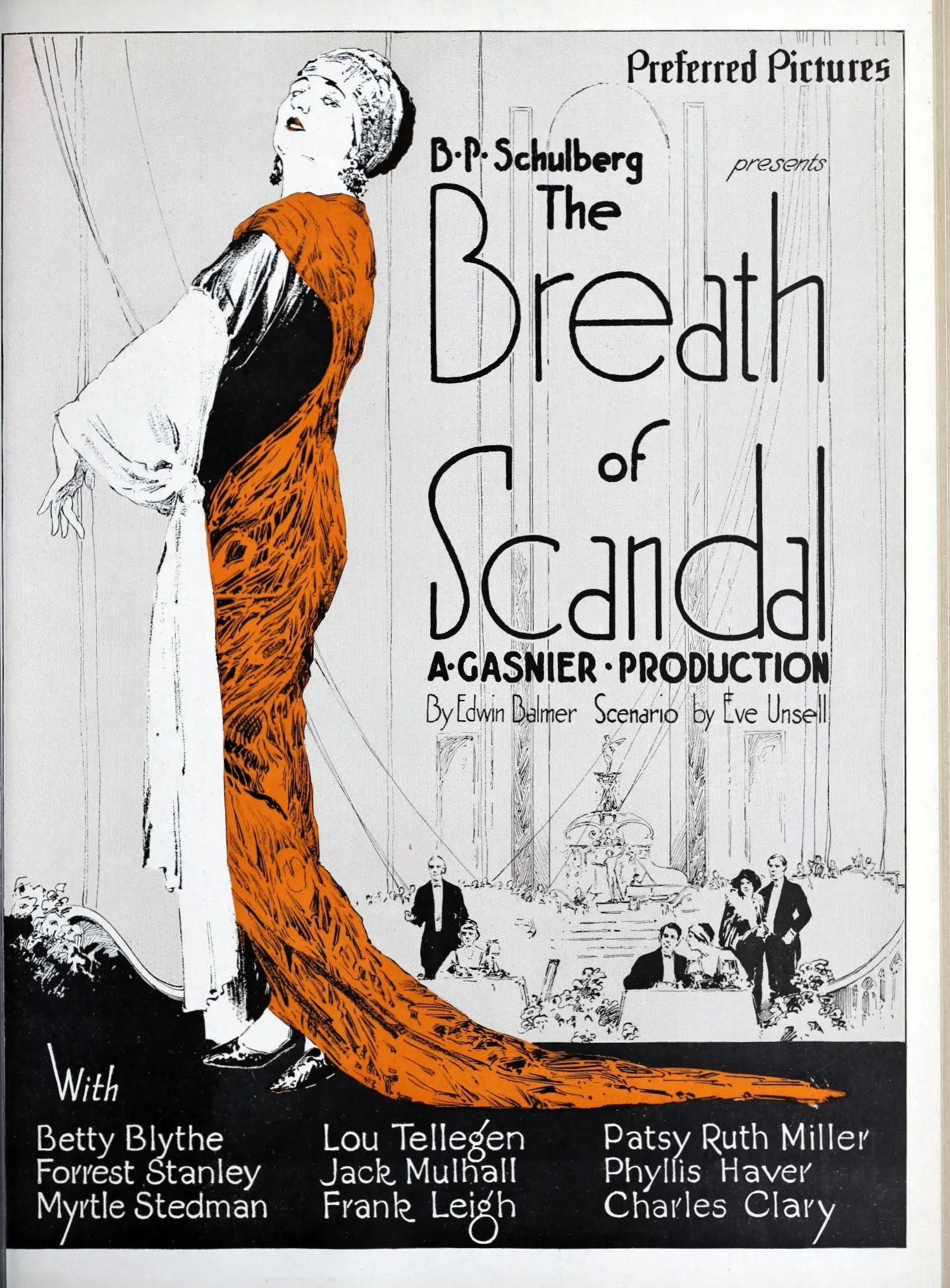
The silent era was frequently criticized for its penchant for histrionics, yet The Breath of Scandal (1924) emerges as a sophisticated, if not entirely cynical, exploration of the bourgeois condition. Directed with a keen eye for the spatial dynamics of class, this film operates as a precursor to the modern domestic thriller. It avoids the simplistic morality often found in contemporary works like The Evil Thereof, opting instead for a more nuanced interrogation of how reputation functions as a currency in the early 20th century. The story isn't just about an affair; it’s about the structural collapse of a family when the load-bearing wall of 'decency' is kicked in by a single, violent act of jealousy.
Charles Clary portrays Charles Hale with a weary sense of entitlement that feels remarkably modern. He is not a mustache-twirling villain, but a man of high standing who treats his infidelity as a private luxury. When the bullet strikes his arm, it doesn't just wound his flesh; it hemorrhages the family’s social standing. The brilliance of the screenplay by Eve Unsell and Edwin Balmer lies in how it shifts the focus from the sinner to the observers. Marjorie Hale, played with a luminous, wide-eyed fragility by Patsy Ruth Miller, becomes the emotional crucible of the film. Her transition from a pampered socialite to a settlement worker in the slums is a trope we see echoed in films like The Girl of My Dreams, yet here it feels less like a whimsical adventure and more like a desperate attempt at spiritual exfoliation.
The antagonist, Frank Leigh’s Russell, is a fascinating study in scorched-earth vengeance. He is a man who has lost his wife, Sybil (the enigmatic Betty Blythe), and intends to ensure that if he cannot have a home, no one else shall either. His campaign against Marjorie is particularly insidious. It’s not enough to ruin the father; he must poison the well of the next generation. This psychological depth elevates the film above the standard 'fallen woman' narratives like Her Reckoning. Russell’s manipulation of Marjorie’s reputation is a chilling reminder of how easily a woman’s agency could be dismantled by the mere suggestion of impropriety.
Visually, the film utilizes light and shadow to articulate the divide between Marjorie’s two worlds. The Hale estate is bathed in a soft, diffused glow—a dreamscape of wealth—while the urban environments where Marjorie seeks her penance are rendered with sharp, unforgiving contrasts. This visual language reminds me of the pioneering work in The Birth of a Nation, though applied here to a much more intimate, domestic sphere. The cinematography captures the claustrophobia of scandal; the camera often lingers on faces, catching the flicker of doubt or the sudden chill of social ostracization. It’s a far cry from the more theatrical staging of The Man from Mexico.

Let’s talk about the supporting cast, which is a veritable 'who’s who' of silent cinema royalty. Anna Q. Nilsson and Phyllis Haver provide a texture to the social milieu that grounds the melodrama. Haver, in particular, brings a spark that prevents the film from descending into pure pathos. The presence of Lou Tellegen adds an extra layer of gravitas. These actors understood the economy of movement required in an era without synchronized sound. Every tilt of the head, every tightening of the jaw, serves to communicate the 'breath' of the title—that invisible, whispering force of public opinion that can topple empires.
The District Attorney, played by Forrest Stanley, represents the rigid, unyielding arm of the law and social order. His immediate rejection of Marjorie upon her framing is a stinging critique of the 'justice' he supposedly serves. He is a man of evidence, yet he is easily swayed by the optics of scandal. This character arc is a direct contrast to the more fluid moralities explored in The Misleading Lady. In The Breath of Scandal, the law is not a shield for the innocent but a blunt instrument used to enforce conformity. The eventual reconciliation between him and Marjorie feels less like a romantic triumph and more like a weary acceptance of the only path back to societal relevance.
Comparing this film to The Wolf Man (1923), one can see a burgeoning interest in the darker recesses of the human psyche. While The Breath of Scandal stays firmly within the realm of the social drama, it touches upon the same themes of the 'beast within'—the hidden impulses that, when brought to light, destroy the civilized self. The film also shares a certain satirical edge with Lombardi, Ltd., though it trades that film’s humor for a more somber, reflective tone. It asks the audience: is a family held together by love, or by the mutual agreement to ignore each other’s sins?
The settlement work subplot is perhaps the most historically significant element of the film. It reflects the real-world 'Settlement Movement' of the early 20th century, where young, affluent individuals moved into impoverished areas to provide social services. In the context of the film, it serves as Marjorie’s monastery. It is here that she encounters the raw reality of life, far removed from the choreographed tea parties of her youth. This immersion in the 'real world' is a common trope for character growth, seen in everything from The Border Legion to more contemporary tales of redemption. However, the film subverts this by showing that even in the slums, one cannot escape the reach of a determined enemy.
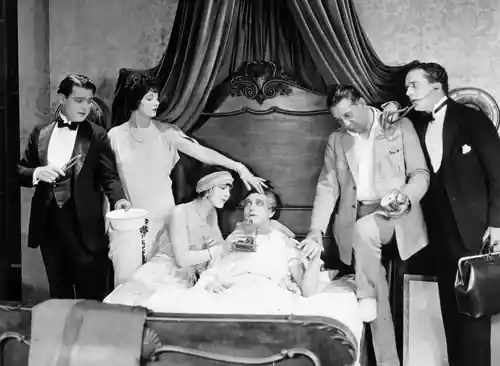
The resolution of the film is a fascinating exercise in narrative tidiness. Mrs. Hale (Myrtle Stedman) returns from her convention, blissfully or perhaps willfully ignorant of the chaos that transpired in her absence. The family’s reunification is presented as a 'happy ending,' but to a modern viewer, it feels profoundly hollow. The father has 'given up' his mistress, the daughter has 'cleared' her name, and the DA has 'forgiven' his fiancée. It is a restoration of the patriarchal order. Unlike the more tragic undertones of The Volcano or the stark reality of Life Story of John Lee, The Breath of Scandal chooses to mend the fence rather than burn the house down. This choice reflects the conservative pressures of 1920s Hollywood, yet the film leaves enough of a bitter aftertaste to suggest that the writers knew exactly what kind of compromise they were making.
Technically, the film is a marvel of its time. The editing is crisp, maintaining a tension that keeps the viewer engaged despite the lack of dialogue. The intertitles are used sparingly and effectively, allowing the actors’ expressions to carry the weight of the narrative. This is a far more sophisticated approach than the heavy-handedness found in Chains of Evidence. The pacing is deliberate, building the sense of impending doom as Russell’s plan unfolds. It’s a masterclass in how to build a 'slow burn' within the constraints of a silent feature.
In the broader landscape of 1924 cinema, The Breath of Scandal stands as a testament to the era’s ability to handle complex social themes. It doesn't have the experimental flair of Revelj or the slapstick energy of A Studio Rube, but it possesses a gravitas that remains impressive. It is a film about the weight of names and the fragility of the pedestals we build for ourselves. It serves as a precursor to the 'women’s pictures' of the 30s and 40s, providing a blueprint for how to dramatize the intersection of the personal and the political.
Ultimately, the film is a mirror held up to its audience. It asks us to consider our own complicity in the 'breath of scandal.' How quickly do we judge? How easily do we discard those who have been tainted by association? The film may end with a 're-plighting of troth,' but the scars remain visible. Like the bullet wound in Charles Hale’s arm, the memory of the scandal is something that can be covered by a sleeve, but never truly erased. It is this lingering sense of unease that makes The Breath of Scandal a vital piece of cinematic history, far more than just a dusty relic of the silent screen. It is a sharp, biting, and ultimately deeply human story that resonates long after the final iris-out.
If you are looking for a film that captures the anxiety of a changing world, where the old Victorian values were clashing with the burgeoning modernity of the Jazz Age, look no further. This is a film that understands that the most dangerous thing in the world isn't a gun—it's a whisper. It’s a theme that remains as relevant in the age of social media as it was in the age of the telegraph. The Hale family may have survived their ordeal, but they were forever changed by it, much like the audience of 1924 who were beginning to see the cracks in the American Dream. This is cinema at its most observant, a quiet riot of social commentary wrapped in the velvet of a high-society melodrama.
IMDb —
1934
Community
Log in to comment.