DbcultAccessing Vault...
Cult Review
Senior Film Conservator
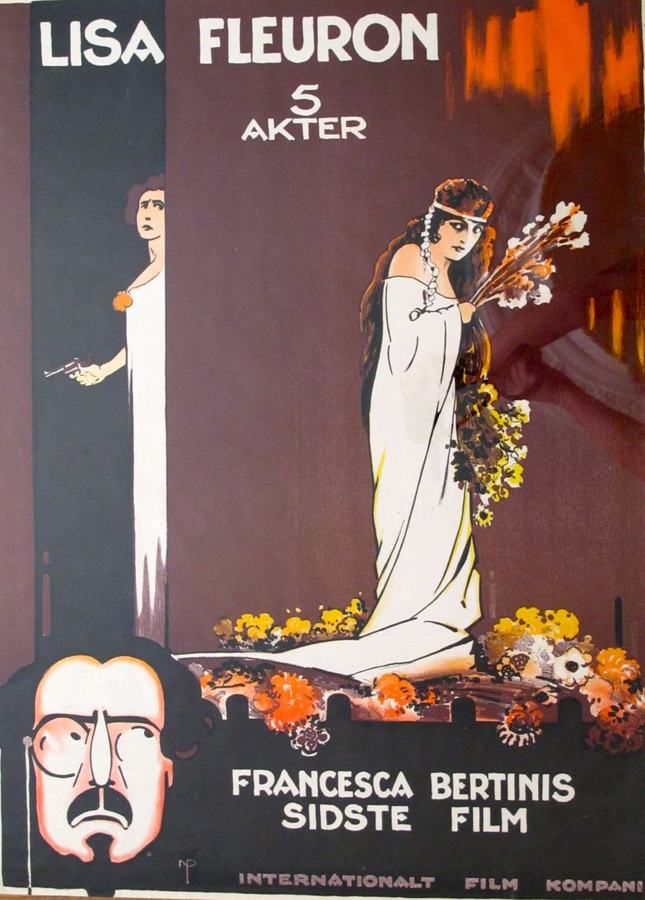
To witness Lisa Fleuron is to step into a sepia-toned fever dream where the gestures are grander than life and the stakes are etched in the very grain of the nitrate film. This isn't merely a piece of archival curiosity; it is a pulsating, breathing artifact of the divismo era, a period when the screen was dominated by goddesses who could convey an entire lifetime of grief with a single tilt of the chin. Francesca Bertini, the undisputed sovereign of this cinematic language, delivers a performance that oscillates between ethereal grace and devastating vulnerability. Unlike the lighter, almost satirical tones found in The Misleading Widow, this work dives headlong into the murky waters of social stratification and the high cost of artistic immortality.
Georges Ohnet, a writer often dismissed by his contemporaries for his populist sensibilities, provides the skeletal structure for a drama that is surprisingly robust. The adaptation captures that specific Parisian tension—the friction between the old guard of the aristocracy and the rising stars of the proscenium. While The Neglected Wife dealt with the domestic claustrophobia of the era, Lisa Fleuron expands the canvas to the public eye. The film explores how a woman’s identity is fractured when she becomes public property. Every scene is a tableau, a carefully composed painting where the shadows are as meaningful as the light. The direction utilizes the depth of field to place Lisa in a constant state of surveillance, whether by her admirers or her detractors.
Francesca Bertini’s portrayal of Lisa is a masterclass in physical storytelling. There is a specific kinetic energy she brings to the screen that differs wildly from the more grounded performances seen in American imports like Ruggles of Red Gap. Bertini doesn't just act; she inhabits the space with a theatricality that feels authentic to the character’s profession. Her Lisa is a woman of dualities—powerful on the stage yet remarkably fragile in the private chambers of her heart. The way she handles the romantic entanglements with characters played by Augusto Poggioli and Raoul Maillard reveals a nuanced understanding of power dynamics. She isn't just a victim of circumstance; she is a participant in her own myth-making, a theme that resonates even in contemporary cinema.
The cinematography, though limited by the technology of the 1910s, exhibits a sophisticated grasp of mood. The lighting in the theater sequences creates a sharp contrast with the more naturalistic, albeit somber, lighting of the tragic third act. It reminds one of the atmospheric density found in Black Orchids, where the environment itself seems to conspire against the protagonists. The set design is lavish, dripping with the decadent trimmings of a world unaware of the impending Great War. Every velvet curtain and gilded frame serves as a reminder of the artifice Lisa is trying to transcend. The film manages to avoid the slapstick pitfalls of the Keystone Comedies, opting instead for a sustained, operatic tone that demands the viewer's full emotional investment.
Beneath the surface of this romantic tragedy lies a biting critique of the class system. Lisa’s tragedy is not just that she loves the wrong man, but that she exists in a social stratum that views her as an interloper. This thematic thread is much more pronounced here than in works like Please Help Emily or the more whimsical Aladdin from Broadway. The film asks: can talent truly bridge the gap of birthright? The answer provided is a cynical, heart-wrenching 'no.' The writers have managed to distill Ohnet’s prose into a visual language that speaks of the cruelty of the elite. Even in moments of apparent triumph, there is a lingering sense of dread, a premonition that the clock will eventually strike midnight for our Cinderella of the stage.
When comparing this to other films of the era, such as Love Never Dies, one notices a distinct lack of sentimentality in Lisa Fleuron. While both deal with the endurance of affection, Lisa Fleuron is far more concerned with the erosion of the self. It shares some DNA with The Land of Promise in its depiction of a woman struggling against a harsh, unforgiving environment—though here, the wilderness is the high society of Paris rather than the physical frontier. The film’s pacing is deliberate, allowing the audience to feel the weight of every decision, a stark contrast to the rapid-fire editing of All Night.
While Bertini is the gravitational center, the supporting cast provides essential friction. Luigi Cigoli and Sandro Salvini offer portrayals of masculinity that are both possessive and protective, illustrating the limited roles available to men in Lisa’s orbit. They are the architects of her gilded cage. Mina D'Orvella and Isabel De Lizaso provide the necessary social backdrop, their performances highlighting the cold indifference of the world Lisa inhabits. This ensemble work is reminiscent of the tight-knit character studies found in The Food Gamblers or The Governor's Lady, where every character, no matter how small, contributes to the overarching thematic resonance.
Lisa Fleuron remains a towering achievement of silent cinema. It transcends the limitations of its time through sheer emotional honesty and visual bravura. It doesn't rely on the mystery elements of Secret Strings or the pastoral charm of Audrey; instead, it leans into the raw, unadulterated power of the human face. The film’s legacy is found in every modern drama that dares to look at the cost of fame and the fragility of the human spirit. It is a haunting reminder that while the lights of the stage may eventually dim, the shadows they cast are eternal. In the pantheon of early cinema, Lisa Fleuron stands as a testament to the fact that some stories are too visceral to be silenced by time.
A masterpiece of light, shadow, and the agonizing beauty of the human condition.
IMDb —
1913
Community
Log in to comment.