DbcultAccessing Vault...
Cult Review
Senior Film Conservator
I. Overture in Ochre and Incense
The film unfurls like a Book of Hours whose margins swarm with skulls and columbines. Director Hay Plumb treats each frame as a miniature: gilded, cramped, luminous. We open on a guildhall where Gerard—played by Jamie Darling with the porcelain intensity of a Dürer youth—sketches cherubs on a slate while his father’s voice cracks like a beadle’s staff: “The cassock, boy, not the crayon!” The clash between chromatic yearning and clerical destiny is rendered in chiaroscuro so sharp you fear the celluloid might slit itself.
II. Pigments of Passion
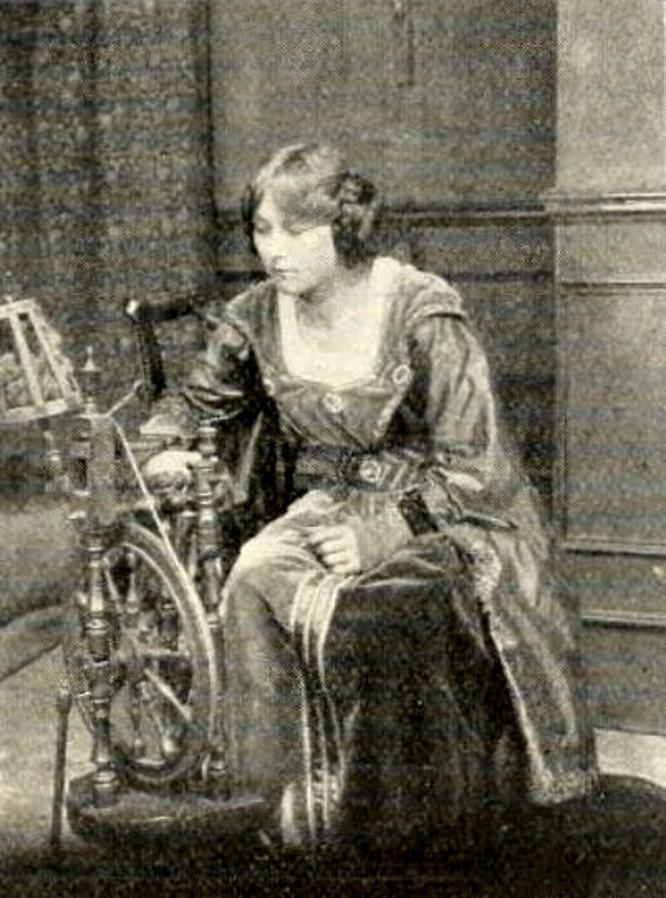
Margaret, incarnated by Alma Taylor with eyes like flooded crypts, enters beneath a canopy of winter branches. Their first conversation—conducted through a lattice of candlelight and breath-fog—feels less like courtship than illumination; each glance is a brushstroke laid upon the soul. When Gerard wins the competition with a triptych of St. Cecilia, the camera lingers on the judges’ gloved hands trembling above the prize coins, as if money itself were embarrassed to outshine art.
III. The Burgomaster’s Ledger of Lies
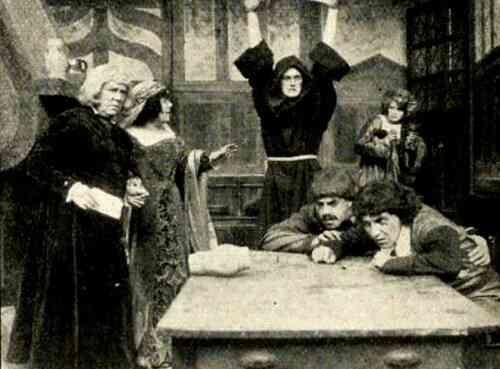
Civic corruption is never merely sketched; it is etched with acid. The burgomaster’s study, wallpapered in maritime maps, becomes a topographical diagram of rot: every continent a bribe, every coastline a forged signature. The theft of Margaret’s deed is staged as a shadow-play; parchment slips from drawer to sleeve like contraband moonlight. Modern viewers will detect pre-echoes of Oliver Twist’s workhouse ledgers or the baroque cruelty in The Count of Monte Cristo.
IV. Flight, Fraternity, and the Knife-Edge of Friendship
Denys of Burgundy—Alec Worcester channeling a roisterous Falstaff—bursts onto the road like a tavern door flung wide. His camaraderie with Gerard is painted in slapstick brawls and shared crusts, yet beneath the bawdiness lurks an elegy for masculine tenderness. Their skirmish with cutthroat innkeepers borrows kinetic grammar from The Three Musketeers, but the stakes feel bloodier because the camera refuses to flinch from cracked ribs and wine-dark bruises.
V. Roman Interlude: Frescoes and Femme Fatales
Rome is not marble but weather-beaten stucco under pewter skies. Princess Cloelia’s seduction unfolds in a subterranean bathhouse where steam coils like incense around pagan mosaics. Her offer—carnality in exchange for Gerard’s brush at her private chapel—breathes the same heady musk as Cleopatra’s barges. When Gerard demurs, the assassin’s dagger does not descend; instead, remorse ricochets through stone corridors, a psychological pivot that anticipates post-war noir guilt.
VI. The Cloistered Corpse of Love
The false death notice arrives on vellum singed at the edges, as though grief itself had scorched it. Gerard’s ordination is shot in a candle-lit catacomb where each syllable of the rite—“Thou art a priest forever”—lands like a nail into his own coffin. The film’s most shattering cut juxtaposes the raising of the Host with Margaret alone in a Dutch barn cradling their newborn: sacred and secular sacraments split by a splice.
VII. Recognition in the Cave of Echoes
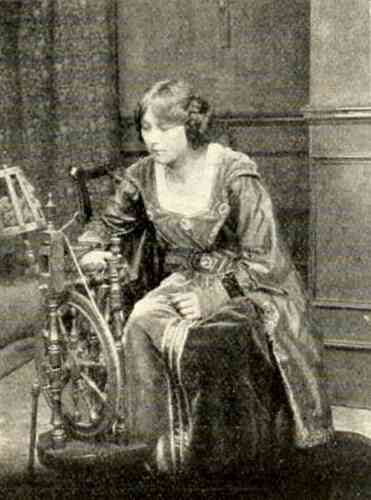
Years later, the hermit’s grotto is staged as a womb of tenebrous rock where torchlight licks faces like memory. The birthmark reveal—an ink-stain on parchment-flesh—unleashes a silent scream that seems to reverberate through the very nitrate. Taylor’s Margaret collapses not into her husband’s arms but against the cold sacramental barrier of his cassock; the fabric becomes a wall thicker than any stone in The Prisoner of Zenda.
VIII. Reckoning and Restitution
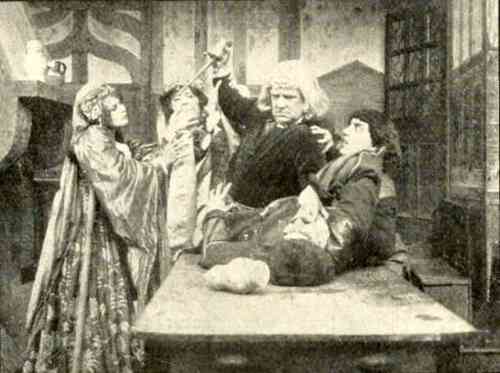
The final confrontation in the burgomaster’s parlour plays like a Dutch masterwork: umber shadows, ochre candlelight, a ledger slammed shut like a mausoleum door. Gerard waves the incriminating parchment not as a sword but as a shroud, reclaiming Margaret’s fortune while forfeiting forever the right to reclaim her nights. The father’s apoplectic fury—an Old Testament tempest—recalls King Charles’ regal wrath, yet the camera denies us catharsis; the elder Eliason’s hand is stayed not by wisdom but by the impossibility of unscrolling ordained fate.
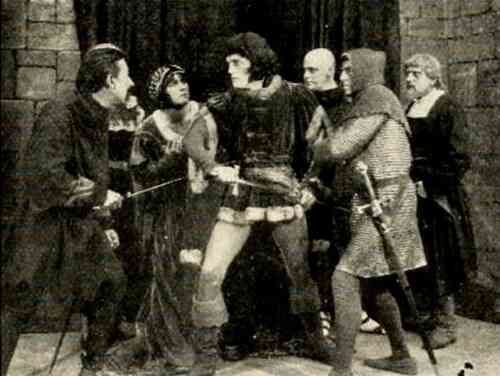
IX. Visual Syntax: Tinted Truth and Celluloid Candlepower
Surviving prints employ a palette of bruise-purple nights, sea-blue twilights, and sulphur-yellow dawns. The tinting is not decorative but hermeneutic: every chromatic shift signals a moral tremor. Gerard’s Roman sojourn glows amber like a reliquary; Dutch sequences are drained to pewter, as though the very country were a tarnished medal. Compare this chromatic conscience to the monochrome austerity of From the Manger to the Cross or the carnival hues of The Adventures of Kathlyn.
X. Performances: Faces as Palimpsests
Jamie Darling’s visage is a battleground where appetite wrestles asceticism; watch how his pupils dilate when he first touches brush to vellum, then contract to pinpricks when the priest’s hand seals his future. Alma Taylor achieves transcendence without histrionics—her final close-up, eyes glistening yet unbroken, rivals Falconetti’s later Joan for naked sanctity. Alec Worcester’s Denys supplies ribald counterpoint, a reminder that even in Reade’s pious century the flesh persisted in laughter.
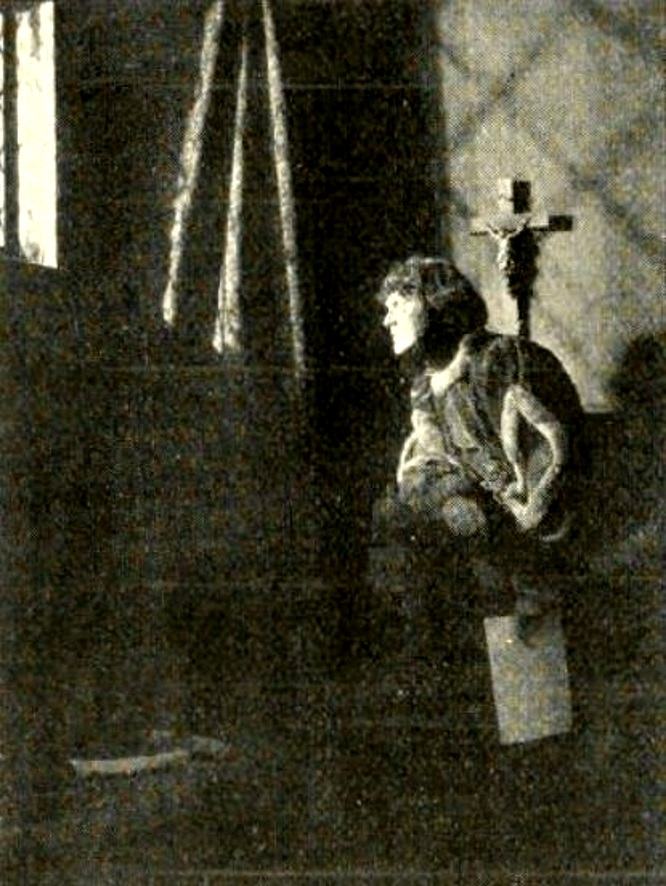
XI. Theological Aftertaste: Grace versus Guild
The film’s thorniest triumph is its refusal to absolve. Gerard’s restitution of worldly goods cannot annul the sacramental character impressed upon his soul; the camera lingers on his empty ring finger as though it too were a relic. In an era when melodrama customarily stitched tidy denouements, The Cloister and the Hearth proffers a wound that will not close—an antecedent to the existential lacerations later explored in Hamlet, Prince of Denmark.
XII. Legacy: Ashes on the Altar of Modernity
Today the film survives only in fragmentary reels, yet its DNA coils through later romances of renunciation—from Tess of the D’Urbervilles to Les Misérables, Part 1: Jean Valjean. Its meditation on vocation versus desire feels fiercely contemporary in an age when identity is still forged between altar and easel, collar and canvas. Stream it—if you can locate the archival 2K restoration—on a night when rain smears your window into pewter; let its candle-pale images remind you that some choices, once pigment or prayer has dried, can never be scraped clean.
IMDb —
1917
Community
Log in to comment.