DbcultAccessing Vault...
Cult Review
Senior Film Conservator

Stepping back into the flickering glow of the silent era, one occasionally unearths a cinematic gem that, despite its age, resonates with an astonishingly contemporary spirit. "The Redhead" (1919), directed by Charles Maigne and penned by Henry Payson Dowst, is precisely such a discovery. Far from being a mere historical curiosity, this film, starring the magnetic Alice Brady and the dashing Conrad Nagel, delivers a surprisingly potent narrative exploring themes of love, redemption, and the often-uncomfortable crucible of self-discovery. It’s a testament to the enduring power of storytelling, even without spoken dialogue, to capture the intricate dance of human relationships and societal expectations.
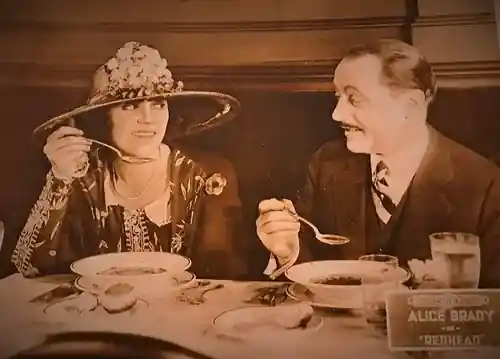
At its heart, "The Redhead" unfurls the tale of Matthew Thurlow, portrayed with a languid charm by Conrad Nagel. Matthew is, to put it mildly, a creature of leisure, a gilded youth whose nights are a blur of cabarets and frivolous pursuits. His existence is cushioned by inherited wealth and a "soft" bank job, a sinecure secured by the influence of his formidable uncle. Matthew's world revolves around the intoxicating allure of the stage, specifically the vibrant performances of Dazie, a leading dancer whose fiery locks earn her the moniker "Redhead." Alice Brady imbues Dazie with an exceptional blend of grace, resilience, and an underlying wisdom that belies her profession. She is not merely an object of Matthew's fleeting admiration; she is a woman of substance, and her affection for Matthew is genuine, though tinged with a profound disappointment at his aimless dissipation. The film immediately establishes a stark contrast between Matthew's superficiality and Dazie's grounded reality, setting the stage for a clash of worlds that is both dramatic and deeply human.
The narrative takes an abrupt, yet utterly compelling, turn when Matthew, in a fit of drunken bravado, weds Dazie on a whim, a mere pawn in a foolish wager. What begins as a lark, however, is swiftly transformed into a binding commitment by Dazie's unexpected resolve. She refuses to dismiss the impromptu nuptials as a drunken mistake, insisting instead on the sanctity and permanence of their union. This audacious move is the catalyst for Matthew's rude awakening. His uncle, a figure of stern pragmatism, has reached the limits of his patience with his nephew's profligacy. He cuts off Matthew's allowance and, more significantly, strips him of his comfortable, undemanding position at the bank. Suddenly, the world Matthew knew, a world of effortless luxury, crumbles beneath his feet, forcing him to confront the stark realities of a life unburdened by inherited privilege. The swiftness of this financial and social upheaval is a masterstroke in the screenplay, immediately ratcheting up the stakes for both characters.
This pivotal moment sets the stage for Dazie's remarkable transformation from admired dancer to architect of her husband's redemption. Faced with Matthew's scorn and his continued indolence, Dazie, with an unwavering spirit, takes matters into her own hands. Her goal is clear: to "make a man" out of Matthew. This phrase, though perhaps sounding patriarchal by modern standards, in the context of the film, speaks to Dazie's desire to instill responsibility and purpose in her husband. She rents a modest apartment, a stark contrast to the opulence Matthew had always known, forcing him to confront the harsh realities of life without inherited privilege. The visual contrast between Matthew's former haunts and their new, humble abode is subtly yet powerfully conveyed through the film's production design, speaking volumes about their changed circumstances and the journey Matthew is forced to undertake. This shift from grandeur to grit is a recurring motif in silent cinema, often used to symbolize a character's moral or spiritual awakening, much like the journey of self-discovery seen in The Empty Cab, where characters are forced to reckon with their past choices.

Matthew, stripped of his comforts, finds himself compelled to seek work, eventually landing a physically demanding job in an automotive factory. This segment of the film is crucial, illustrating Matthew's arduous journey from pampered dilettante to a man grappling with honest labor. Conrad Nagel, through his subtle expressions and body language, effectively conveys Matthew's initial resentment, his physical exhaustion, and the slow, grudging acceptance of his new reality. We witness his hands, once accustomed only to holding champagne flutes, now calloused and stained with grease. This visual narrative of physical transformation is deeply effective. Even when Dazie's unassuming parents visit, Matthew maintains a facade of geniality, yet his emotional distance from Dazie remains palpable, a quiet storm brewing beneath the surface of their enforced domesticity. The tension in these domestic scenes is masterfully handled, demonstrating that true conflict doesn't always require grand gestures, but can simmer in unspoken glances and strained courtesies.
The tension escalates when Matthew's uncle, ever the manipulator and a firm believer in the power of money, attempts to engineer a divorce, offering Dazie a substantial sum to dissolve the marriage. Her refusal is not born of stubbornness or greed, but of a deeper understanding of her husband's potential and her own commitment to their unlikely union. She steadfastly states she will only agree if Matthew himself genuinely desires the separation, a bold assertion of her agency and a profound challenge to Matthew to truly examine his feelings and his conscience. This moment underscores Dazie's profound character; she is not merely seeking financial security or social standing, but a true partnership forged in respect and mutual growth. Her strength here is reminiscent of the tenacious spirit seen in characters facing societal pressures, perhaps even echoing the quiet defiance of protagonists in films like Upstairs and Down or Believe Me, Xantippe, where women navigate complex social landscapes with surprising resilience and an unwavering sense of self.
It is through the crucible of his newfound responsibilities and a poignant misunderstanding that Matthew finally undergoes his profound metamorphosis. A spark of jealousy, ignited by a false impression of Dazie's affections being elsewhere, forces him to confront the depth of his feelings for her. This realization is a turning point, awakening within him not only a genuine zest for life but, more importantly, an ardent and undeniable love for his wife. The film beautifully captures this internal shift without a single spoken word, relying on Nagel's nuanced performance to convey Matthew's dawning awareness and emotional awakening. It's a classic cinematic device, but handled here with a delicate touch that makes Matthew's transformation feel earned rather than forced. His journey from indifference to passionate commitment is the emotional anchor of the latter half of the film, providing a satisfying arc for a character who initially seemed beyond redemption.
The uncle, witnessing firsthand Dazie's transformative influence on Matthew, experiences his own change of heart. Far from wanting them apart, he now threatens Matthew with permanent disinheritance should he dare to divorce Dazie. This reversal of fortune, though somewhat convenient for the narrative, serves to underscore the profound positive impact Dazie has had. It's a concession from the patriarchal establishment that true worth can be cultivated, not just inherited. In a cathartic and emotionally charged climax, Matthew finally, unequivocally, confesses his love, sealing their improbable bond and completing his journey from aimless wastrel to a man deeply in love and committed to his wife. This final declaration feels like the culmination of a long, arduous journey, a testament to the power of perseverance and the unexpected blossoming of genuine affection.
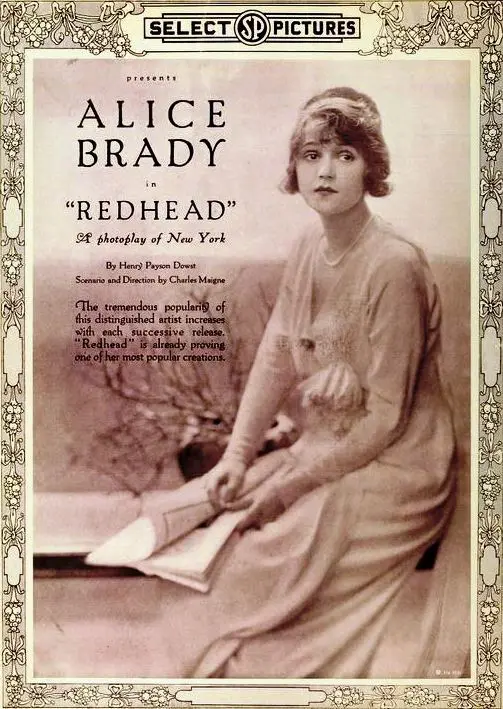
Alice Brady's performance as Dazie is nothing short of captivating. She portrays a woman of remarkable strength, intelligence, and unwavering resolve. Her Dazie is not a victim of circumstance but an active agent in her own destiny and, crucially, in Matthew's. Brady conveys a multitude of emotions—love, disappointment, determination, quiet joy—through subtle gestures, expressive eyes, and a commanding screen presence. Her ability to communicate complex internal states without dialogue is a masterclass in silent film acting. She is the anchor of the film, the driving force behind the narrative's emotional core, a character whose moral compass remains true even amidst personal turmoil. Her portrayal stands as a powerful example of early cinematic female agency, a character who takes charge and steers her own course, much like the resolute women in films such as The Loves of Letty or The Studio Girl, who navigate complex emotional landscapes with an inner fortitude that defies the conventions of their era.
Conrad Nagel, as Matthew, delivers a nuanced performance that evolves compellingly throughout the film. His initial portrayal of Matthew as a superficial playboy is convincing, capturing the ennui and self-absorption of his class. But it is his gradual transformation, his struggle with manual labor, his burgeoning self-awareness, and his eventual surrender to love that truly shines. Nagel masterfully uses silent film acting techniques, from carefully calibrated gestures to subtle facial expressions, to communicate Matthew's internal world. We see the shift in his posture, the hardening of his jaw, the dawning of understanding in his eyes. The chemistry between Brady and Nagel is palpable, evolving from a casual admiration to a deep, abiding affection that feels earned and authentic, making their eventual connection profoundly satisfying.
The direction by Charles Maigne, while perhaps not as stylistically flamboyant as some of his contemporaries, is nonetheless effective and clear. Maigne focuses on narrative clarity and character development, ensuring that the emotional beats land with precision. The cinematography, typical of the era, prioritizes storytelling, though there are moments of striking visual composition that elevate certain scenes, particularly those contrasting Matthew's previous life with his new, more humble existence. The use of intertitles is skillful, providing necessary exposition without interrupting the flow of the visual narrative, allowing the actors' performances to carry the emotional weight. The film's visual language, though restrained, speaks volumes, using settings and character placement to underscore thematic elements.
Thematic depth is where "The Redhead" truly distinguishes itself. The film delves into the perennial themes of class distinction, the corrupting influence of idleness, and the redemptive power of love and honest labor. Matthew's journey from a life of unearned privilege to one of self-made dignity is a classic narrative arc, yet it feels fresh and engaging here, largely due to Dazie's active role in his transformation. She is not merely a prize to be won or a passive recipient of his eventual affection; she is the catalyst, the driving force, the unwavering hand that guides him towards a better version of himself. This aspect of the film feels remarkably progressive for its time, challenging traditional gender roles where women were often depicted as secondary to male protagonists' arcs. It champions the idea that true partnership involves mutual growth, even if one partner initially needs more guidance than the other.
The film also subtly critiques the societal structures that enable figures like Matthew to exist in a state of perpetual adolescence. His uncle, initially an antagonist, serves as a representation of the old guard, the established order that eventually recognizes the value of true character over inherited status. The shift in his perspective, from seeking to dissolve the marriage to threatening disinheritance if it is dissolved, speaks volumes about the transformative power Dazie embodies. It's a nuanced exploration of how personal growth can ripple outwards, affecting even the most entrenched familial expectations and challenging the very definitions of success and worth. This dynamic echoes the struggle for personal authenticity against societal pressures seen in films like Fides, where characters grapple with their place in a rigid social hierarchy.
While "The Redhead" might not boast the grand historical sweep of a Joan of Arc or the complex psychological layers of a Kreutzer Sonata, its strength lies in its intimate portrayal of human connection and personal growth. It's a domestic drama writ large, a story of two individuals from vastly different worlds finding common ground and building a life together against the odds. The film's pacing is deliberate, allowing the audience to fully immerse themselves in the characters' emotional journeys, watching Matthew's slow, often painful, awakening. This careful pacing allows for a deeper appreciation of the subtle shifts in character, a hallmark of effective silent film storytelling.
The enduring appeal of "The Redhead" lies in its universal themes. Who among us hasn't witnessed or experienced the struggle for self-improvement, the desire to rise above one's circumstances, or the transformative power of a truly committed relationship? The film speaks to the idea that true wealth lies not in inherited fortunes but in character, integrity, and genuine affection. It reminds us that love, in its purest form, can be a powerful force for change, capable of reshaping even the most recalcitrant of hearts. It's a narrative that champions the dignity of labor and the profound satisfaction that comes from earning one's place in the world, rather than simply inheriting it.
In an era dominated by lavish productions and often melodramatic narratives, "The Redhead" offers a refreshing blend of romance, social commentary, and character-driven drama. Alice Brady and Conrad Nagel deliver performances that transcend the limitations of silent film, conveying a depth of emotion that feels remarkably modern. For anyone interested in the evolution of cinematic storytelling, or simply in search of a compelling human drama, this film is an absolute must-see. It's a vibrant portrait of love's unexpected paths and the profound journey of becoming one's best self, proving that some stories, like true love, are indeed timeless. Its gentle yet firm exploration of personal responsibility and the forging of character makes it a quietly powerful statement, a narrative that, despite its century of existence, feels as relevant and engaging today as it surely did upon its initial release. The film leaves one pondering the true cost of idleness and the invaluable reward of earned contentment, a message that resonates just as strongly in our contemporary world as it did in 1919.

IMDb 5.4
1932
Community
Log in to comment.