DbcultAccessing Vault...
Cult Review
Senior Film Conservator
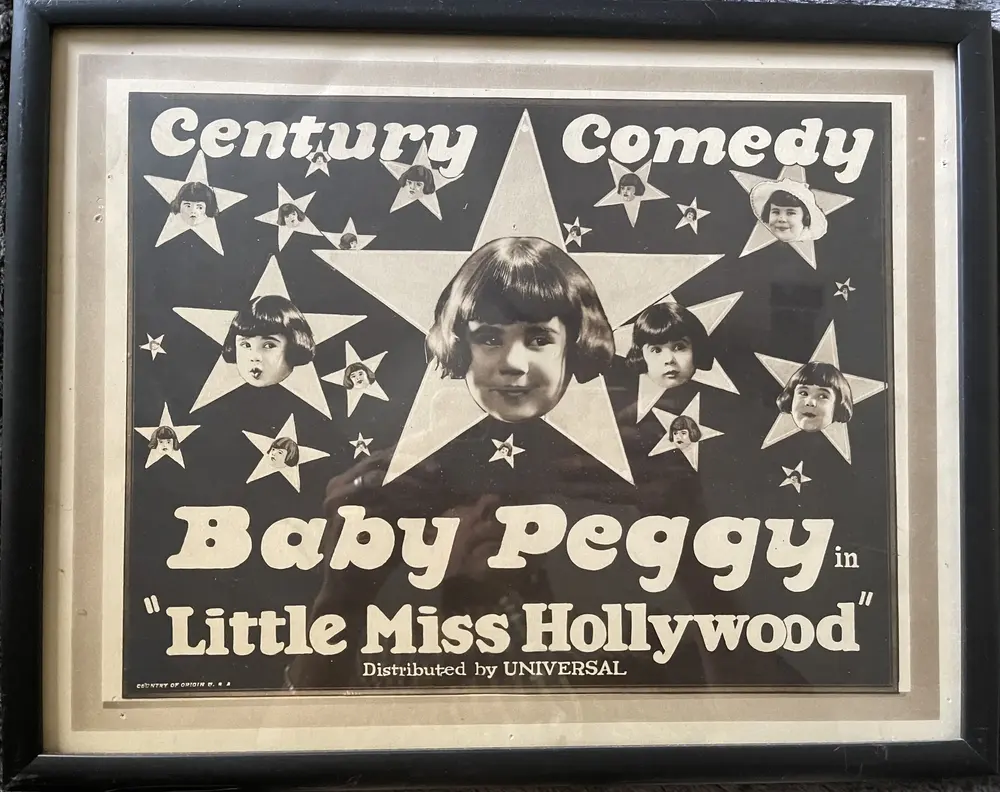
The opening frames of Little Miss Hollywood are a kaleidoscopic montage of bustling streets, neon‑lit marquees, and the relentless clatter of typewriters, establishing a city that throbs with ambition. Al Herman’s script does not merely set a scene; it sketches a metropolis where every sidewalk crack could conceal a future star. The camera, guided by Billy Condon’s nascent eye, lingers on the dust‑caked shoes of a child dancing for spare change, an image that becomes the film’s visual thesis.
Baby Peggy, credited as Molly, delivers a performance that oscillates between precocious mischief and haunting vulnerability. Her ability to command the frame without uttering a word is reminiscent of the silent‑era virtuosity seen in The Desert Man, yet her charisma is uniquely her own. Fred Spencer, portraying the beleaguered producer, balances desperation with a sly humor that never lapses into caricature. Florence Lee’s maternal gravitas anchors the film’s emotional core, providing a counterpoint to Spencer’s manic scheming.
Fairbanks’ cameo is a masterstroke of self‑reflexivity. He appears as a flamboyant stuntman who coaches Molly through a series of exaggerated, gravity‑defying feats. The sequence, shot in high‑contrast chiaroscuro, mirrors the kinetic energy of his own 1920s swashbucklers while simultaneously satirizing the industry’s penchant for spectacle over substance. This meta‑layer invites viewers to contemplate the cyclical nature of fame, a theme later explored in The Spirit of Good.
Cinematographer Billy Condon employs a palette that juxtaposes the stark whites of studio back‑drops against the bruised blues of the city’s nightscape, a visual metaphor for the duality of illusion and reality. His use of deep focus during the climactic studio showdown allows the audience to simultaneously track Spencer’s frantic negotiations, the accountant Joe Bonner’s sly ledger manipulations, and Molly’s innocent bewilderment. The editing, brisk yet unhurried, respects the silent medium’s reliance on visual rhythm, echoing the pacing found in The Outcast.
Although devoid of synchronized dialogue, the film’s accompaniment—originally performed live by a jazz ensemble—infuses each scene with an auditory subtext. The jaunty ragtime that underscores Molly’s street performances contrasts sharply with the mournful piano that accompanies her moments of introspection, reinforcing the narrative’s emotional oscillations. This interplay of diegetic and non‑diegetic music anticipates the sophisticated sound design of later classics such as Twilight.
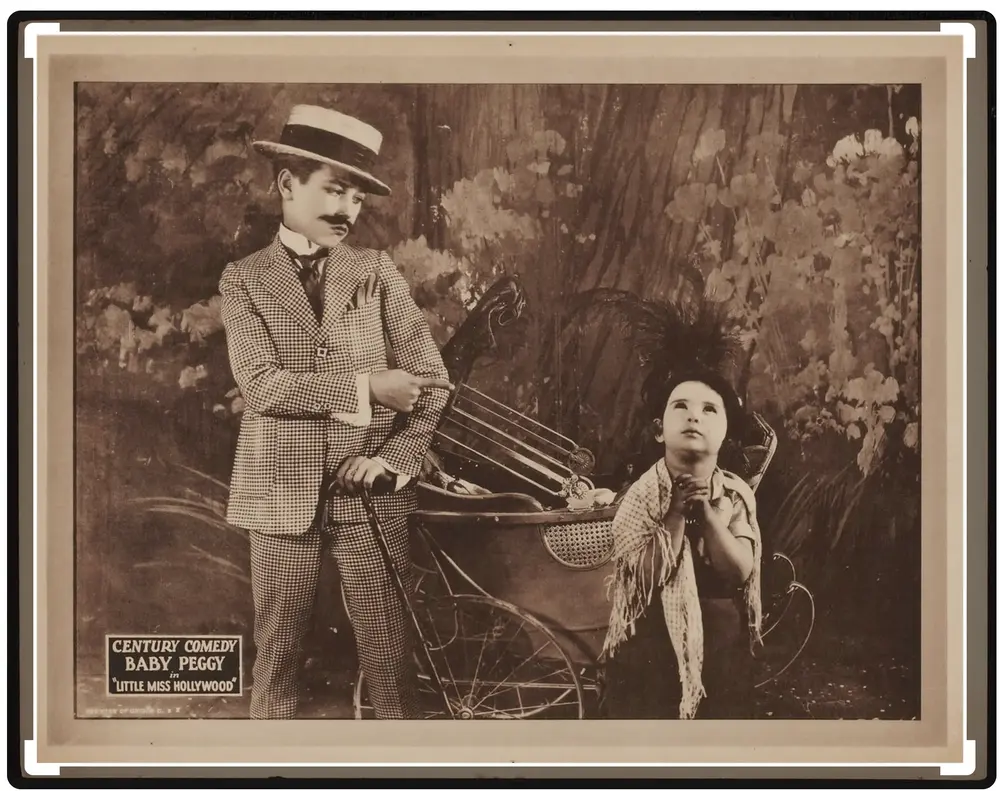
At its heart, Little Miss Hollywood is a meditation on the commodification of childhood. Molly’s ascent from street performer to studio darling mirrors the real‑life trajectory of Baby Peggy herself, blurring the line between character and actress. The film critiques the exploitative mechanisms of early Hollywood, as seen when Spencer arranges a series of contrived auditions that reduce Molly to a series of marketable vignettes. This critique aligns with the social commentary in The Girl Who Couldn't Grow Up, where youthful agency is similarly contested.
The screenplay unfolds in three distinct acts: discovery, exploitation, and emancipation. Each act is demarcated by visual motifs—a bustling market, the sterile studio lot, and finally a quiet seaside vista that signals Molly’s return to simplicity. Herman’s dialogue‑free script relies heavily on intertitles, which are sparingly used, allowing the visual storytelling to dominate. The pacing accelerates during the studio sequences, employing rapid cuts that convey the frenetic energy of production, then decelerates in the final act, granting space for reflective silence.
When placed alongside contemporaneous works like Billy's Fortune or Rosie O'Grady, Little Miss Hollywood distinguishes itself through its meta‑narrative and its willingness to interrogate the very machinery that birthed it. While Rosie O'Grady celebrates the aspirational mythos of stardom, Herman’s film pulls back the curtain, exposing the transactional nature of fame.
The film’s legacy endures in its subtle foreshadowing of later Hollywood self‑reflexivity, a trait later perfected in works such as Pinning It On. Its portrayal of a child star’s exploitation prefigures the modern discourse surrounding child labor in entertainment, rendering it eerily prescient. Moreover, the visual motifs—particularly the interplay of light and shadow in studio settings—have been echoed in the cinematography of post‑war noir.
In sum, Little Miss Hollywood stands as a richly layered artifact of its era, marrying comedic exuberance with a sobering critique of the industry’s appetite for fresh faces. Its performances, especially Baby Peggy’s luminous presence, remain compelling; its visual composition, a study in contrast and texture; its thematic ambition, a daring foray into meta‑cinema. For scholars of silent film, aficionados of early Hollywood, and anyone intrigued by the paradox of innocence sold to the masses, this film offers a rewarding, if bittersweet, viewing experience.
IMDb 5.5
1935
Community
Log in to comment.