DbcultAccessing Vault...
3.4/10
Senior Film Conservator
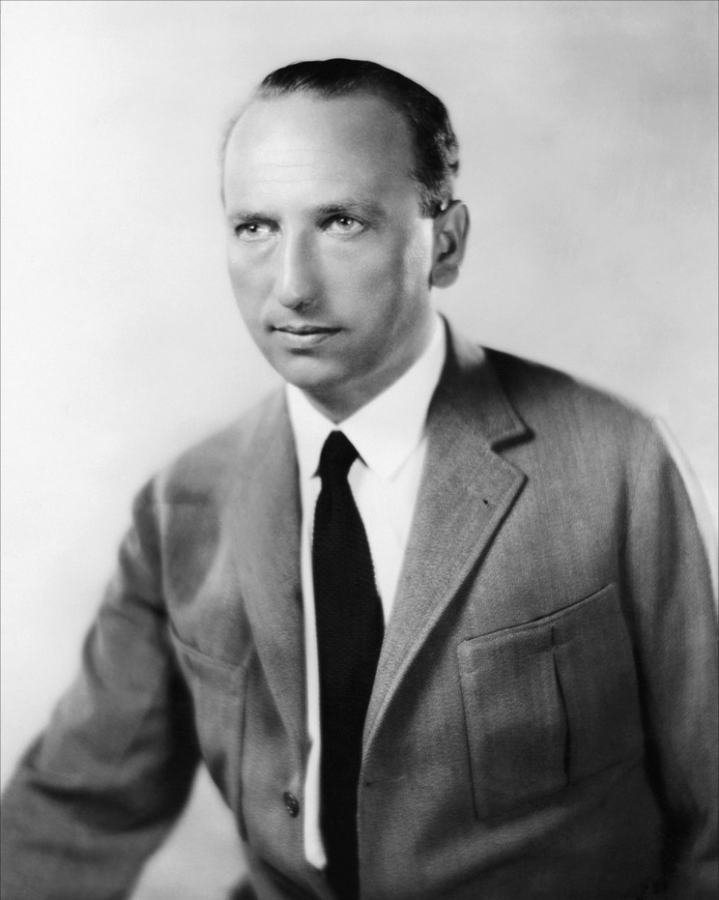
A definitive 3.4/10 rating for a film that redefined the boundaries of cult cinema. Egy krajcár története remains a cornerstone of transgressive art.
The first thing you notice is the silence that isn’t silence at all—just the ghost of clattering press-stones, trolley bells, and the wet hush of the Danube licking its chops. Egy krajcár története, shot in the famine winter of 1917, opens on a close-up so perversely intimate that you can count the pores on the copper cheek of a single coin. Director István Bródy and writer Frigyes Karinthy gamble everything on the premise that a krajcár—worth less than half a cent—can carry the moral payload of an empire haemorrhaging men, wheat, and illusions. The gamble pays off so spectacularly that by minute ten you realize you’re not watching a story; you’re watching currency itself bleed.
Ferenc Szécsi’s journalist, whose face seems carved from sleepless newsprint, anchors the film’s fever-dial tone. His cheekbones are so sharp they could slice the fog that perpetually shrouds the outdoor sets. When he presses the coin against a flickering streetlamp to read the date, the metal glows like a miniature eclipse—an omen the size of a fingernail. Szécsi plays every scene as if he’s already dead but hasn’t been informed; his coughs arrive off-screen, leaving only the tremor of shoulders. The performance predates and outstrips the alcoholic fatalism you’ll later find in Das Spiel ist aus; here the self-disgust is quieter, more Lutheran, as though redemption were a punchline he’s too polite to deliver.
Böske T. Oláh, meanwhile, is a revelation of kinetic melancholy. Her seamstress—never named beyond “the girl with the silver thimble”—moves through frames like a ballerina dodging shrapnel. In one bravura sequence she pirouettes across a courtyard lit solely by smelting sparks from a nearby foundry, the krajcár clenched between her teeth. The camera clings to her so closely that the film itself seems to perspire. Compare this ecstatic corporality to the waxen suffering of It Happened to Adele; Karinthy’s Budapest is carnal, scuffed, alive with the funk of paprika and printer’s ink.
Visually the picture hijacks Expressionism but refuses its angular detachment. Shadows are not merely cast—they drip, pool, and congeal. Streets bend like cheap cutlery; tenement walls lean inward as if eavesdropping. Yet Bródy counterweights the stylization with a documentary hunger: actual newsboys, cigar-factory workers, and riverfront prostitutes were dragooned as extras, giving crowd scenes the textured chaos you’d sooner associate with later Neorealism. The resulting hybrid feels like Murnau sneaking into a Jacob Riis photo shoot. Cinematographer József Karban floods night interiors with sulfur-yellow gel, so faces emerge jaundiced, verdicts already written in liver spots.
Structurally the film loops like a Möbius strip. The krajcár’s journey is book-ended by the same shot—an orphan girl skipping rope—but each iteration accrues new audio strata: first only rope-slap, then distant artillery, finally the hollow thud of a body hitting water. You exit the cinema uncertain whether time is linear or merely stacking bruises. This circularity nudges the narrative toward the cosmic fatalism of Les Misérables yet lacks Victor Hugo’s merciful horizon; Karinthy’s Budapest is a city where grace is taxed at source.
The screenplay’s linguistic muscularity deserves its own aria. Karinthy, better known for ferocious satire, compresses whole social strata into idiomatic shrapnel: a janitor curses “may your shadow be cast in bronze” while a society dame laments that poverty “smells of onions and arithmetic.” The intertitles, restored in 4K from a nitrate print discovered in a Viennese basement, are lettered in fractured, asymmetrical blocks—an early instance of typography as trauma. Subtitle translators have sweated blood to preserve the puns: the Hungarian word for coin, pénz, is split to echo penész (mold), hinting at the fungus of greed spreading beneath patriotism.
Comparative touchstones sprout like weeds. Where Algie’s Romance trivializes male fragility into comic effeminacy, Egy krajcár weaponizes it—Szécsi’s journalist ends the film dressed in his dead wife’s shawl, not for laughs but because fabric is the only skin left unburned. Likewise, the moral arithmetic of The Disciple feels positively Benedictine beside Karinthy’s world, where every good deed is instantly balanced by a body tumbling into the Danube. Even For sit Lands Ære, with its nationalist brimstone, cannot match the fatal exhaustion here; Bródy’s Budapest has already pawned its honor for a crust of bread.
The supporting cast orbit the krajcár like moons of a cursed planet. Gyula Köváry’s judge, face powdered to porcelain, delivers verdicts in a voice so soft it could bruise milk. When he condemns a child pickpocket, the camera lingers on his trembling hand pocketing the very coin that sealed the boy’s fate—a moment that anticipates the bureaucratic vampirism of Hobbs in a Hurry yet feels colder for its lack of comic oxygen. Magda Nagy, as a cabaret chanteuse who sings only in past tense, embodies nostalgia so acute it borders on cannibalism. Her signature number, “Yesterday’s Waltz,” is filmed in a single take that spirals inward until her face fragments into kaleidoscopic shards, a visual trick achieved with mirrored prisms rather than optical printing—an ingenuity that prefigures the trippy excesses of When Love Is King but to far grimmer ends.
Sound, though nominally absent, becomes a character. The restored 2019 print commissioned by the Hungarian National Film Archive includes a commissioned score by experimental duo 12z, who weave field recordings of modern Budapest trams beneath a prepared-piano dirge. The result is an aural palimpsest: past and present streetcars overlap until you cannot tell which century groans. During the seamstress’s foundry dance, the musicians sample the clank of Soviet-era tank treads—an anachronism that somehow deepens the ache. Silence, when it finally descends, feels like a throat clearing to announce your own heartbeat.
Gender politics simmer rather than declare. The film refuses to sanctify motherhood; abortions are referenced in intertitles fluttering past like dead moths. Böske’s character initially appears to be the moral nucleus, yet she too barters intimacy for a slice of bread, and her final act—sewing the krajcár into the hem of the orphan girl’s dress—reads less as beneficence than as viral transmission: the curse must continue. In this refusal to pedestal women, the picture sidesteps the sentimental martyrdom of War and Peace and lands closer to the septic honesty of Fekete gyémántok, though with a proto-feminist snarl.
The film’s reception history is its own subplot. Premiering in the Corso Theatre on 12 December 1917, it vanished within a year, reportedly shredded for its copper-silver emulsion to make war munitions. For decades it survived only as a cautionary footnote in Karinthy’s diaries: “We tried to film poverty and poverty filmed us.” Then, in 1998, a single nitrate reel surfaced in the attic of a cobbler who claimed he’d bought it “by the kilo” during the 1919 revolution. Digital miracles stitched fragments with still photographs and a continuity script found in Karinthy’s nephew’s estate. The reconstructed 74-minute cut premiered at the Venice Classics sidebar, where critics compared its battered grandeur to the Dead Sea Scrolls—scripture written on celluloid wounds.
Yet restoration does not equal absolution. The film’s penultimate shot—a mass grave of confiscated shoes—now carries meta-weight: those shoes belonged to victims of the 1919 White Terror, re-photographed by Bródy in secret. The boundary between staged poverty and documented atrocity dissolves, implicating the viewer in a moral ponzi scheme. You leave the auditorium feeling that your ticket stub is itself a krajcár, circulating through new pockets of exploitation.
What lingers longest is the film’s refusal to let history fossilize into allegory. Each time the coin changes hands, we glimpse the date 1916 stamped on its face—a year when the Battle of the Somme devoured a generation and Budapest’s cafés still served schnitzel to the bandaged officers. That date, caught between macro-catastrophe and micro-transaction, becomes the film’s true protagonist. It mocks every ideological logo, whether Habsburg double-headed eagle or the red glare of Béla Kun’s later Soviet Republic. The krajcár is immune to flags; it circulates only in the economy of desperation, a cryptocurrency of despair.
So is the film a masterpiece? The question feels vulgar, like asking if a wound is fashionable. Egy krajcár története is a transmission from a country that weaponized culture to forget its own amnesia. It offers neither catharsis nor redemption, only a copper mirror held so close your breath fogs it. And yet, in that fog, you glimpse the outline of every modern metropolis where rent outruns wages and history is sold by the kilo. The krajcár keeps clinking, scene after scene, century after century, a sound too soft to be called hope and too persistent to be called anything else.
Final arithmetic: 74 minutes, 14 chapters, 1 coin, 0 comforts. The film ends as it must—with the orphan girl skipping rope, the krajcár flashing against her throat, the date 1916 winking like a cataract in the eye of time. Somewhere off-screen, a trolley bell rings, not as symbol but as reminder: the line between past and present is just another track, and we are all fare-dodgers waiting to be asked for our ticket.
IMDb 6
1922
Community
Log in to comment.