DbcultAccessing Vault...
Cult Review
Senior Film Conservator
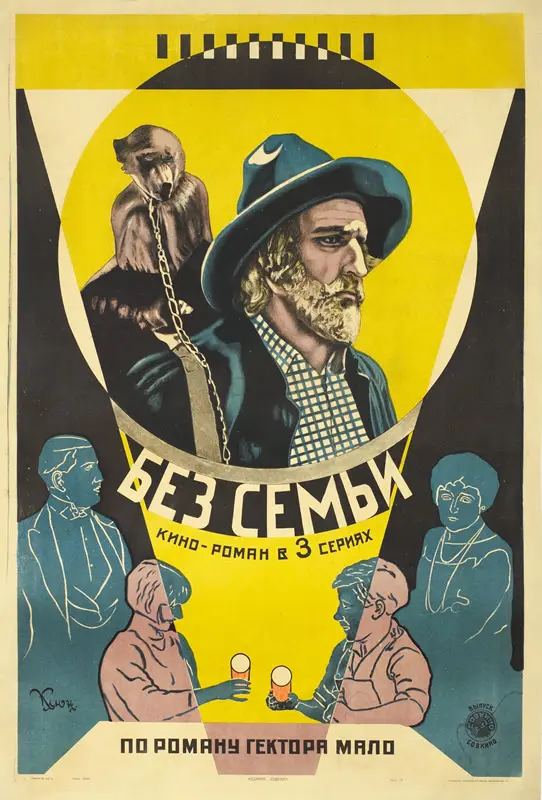
To witness the 1925 cinematic rendition of Sans famille is to confront the unvarnished soul of French naturalism as it transitioned from the printed page to the silver screen. While the story has been sanitized and simplified in subsequent decades—most notably in the recent "Rémi sans famille"—this silent-era monolith directed by Georges Monca and Maurice Kéroul remains the definitive aesthetic translation of Hector Malot’s sprawling epic. It is a work of profound melancholy, a visual dirge that captures the fragility of existence in a world where the destitute are often treated with less regard than the beasts of the field.
The narrative architecture of Sans famille is built upon the foundation of loss. We begin not with a hero, but with a victim of circumstance. Rémi, played with a hauntingly expressive vulnerability, is the quintessential foundling. Unlike the domestic sentimentality found in The Cricket on the Hearth, which seeks comfort in the hearth and home, Monca’s film immediately ruptures the domestic sphere. When the cruel Barberin sells Rémi to the itinerant street performer Vitalis, the film shifts from a pastoral drama into a grueling road movie that predates the genre by decades.
The performance of Henri Baudin as Vitalis is a masterclass in silent-era nuance. He avoids the caricatured villainy often associated with early cinema, presenting instead a man of hidden depth, a fallen aristocrat of the spirit who finds dignity in the dust of the highway. His relationship with Rémi is the film's emotional anchor, a bond forged not by blood, but by the shared necessity of survival. This dynamic provides a stark contrast to the more traditional morality plays of the era, such as The Challenge of the Law, where the lines between the protector and the protégé are often more rigidly defined.
Technically, the film is a marvel of its time. The cinematography utilizes the natural landscapes of France to evoke a sense of overwhelming scale. Rémi and his animal companions—the noble dog Capi and the mischievous monkey Joli-Cœur—are frequently framed against vast, indifferent horizons. This visual strategy emphasizes their isolation, a technique also employed to great effect in The Red Inn, where the environment itself feels predatory. The use of natural light, often harsh and unforgiving, strips away the artifice of the studio, grounding the fantasy of the novel in a gritty, tangible reality.
The lighting in the interior scenes, particularly the hovels of London and the cramped quarters of the Milligan houseboat, creates a claustrophobic atmosphere that mirrors the characters' socioeconomic entrapment. The deep shadows and flickering candlelight aren't merely stylistic choices; they are metaphors for the precariousness of life. In these moments, Sans famille approaches the atmospheric dread of The Face at the Window, though it replaces the supernatural with the far more terrifying specter of starvation.
One cannot discuss Sans famille without addressing the animal performers. In modern cinema, animals are often relegated to comic relief or digital constructs. Here, they are central dramatic agents. The death of the dogs in the winter storm is perhaps one of the most harrowing sequences in silent cinema. It is a scene that rivals the emotional weight of The Fly Ball in its depiction of loyalty under pressure. The animals are not just pets; they are fellow workers, members of a proletarian troupe whose lives are as expendable as the humans they serve.
The monkey, Joli-Cœur, serves as a tragic mirror to Rémi himself—a creature dressed in the finery of a soldier, forced to perform for coins, yet ultimately fragile and susceptible to the biting cold. When he succumbs to pneumonia, the loss is felt not as the death of a mascot, but as the passing of a colleague. This unsentimental treatment of death is a hallmark of Monca’s direction, ensuring that the film never devolves into mere melodrama.
As the narrative shifts to London, the film takes on a Dickensian fervor. The introduction of the Driscoll family—a den of thieves and opportunists—highlights the systemic corruption that awaits the unprotected foundling. This segment of the film functions as a critique of the industrial city, a theme explored with varying degrees of intensity in No Parking. However, Sans famille goes deeper, illustrating how poverty can twist the familial bond into something transactional and abusive.
The contrast between the Driscoll's squalor and the refined elegance of the Milligan family—who unknowingly search for Rémi—is handled with a sophisticated sense of irony. The film doesn't just ask where Rémi belongs; it asks if a child can ever truly belong in a society so stratified by wealth. The search for his mother, Madame Milligan, is less about a return to status and more about a desperate need for a witness to his existence. This search for identity and provenance is a recurring motif in the era's dramas, often seen in works like Lady Godiva, though here it is stripped of its mythological trappings and presented as a raw, human necessity.
The ensemble cast, featuring names like Madame Reynier, Simone Guy, and Germaine Albert, provides a rich texture of supporting performances. Each character, no matter how brief their appearance, feels lived-in. The Barberins, the Milligans, and the various peasants Rémi encounters are not merely plot points; they are representative of a society in flux. The performance of Max Houyez as Rémi is particularly noteworthy for its restraint. In an era where overacting was the norm, Houyez uses his eyes to convey a depth of fatigue and hope that is genuinely moving.
The interaction between the diverse cast members creates a sense of a world that exists beyond the frame. Unlike the more focused, almost claustrophobic character studies like Boomerang Bill, Sans famille is a panoramic view of humanity. We see the best and worst of the human condition reflected in the faces of those Rémi meets on his journey. This breadth of characterization is what gives the film its enduring power; it is a story about a boy, but it is also a story about the world he is forced to inhabit.
At its substantial runtime, the film demands a level of patience from the modern viewer that is richly rewarded. The pacing is deliberate, allowing the audience to feel the passage of the seasons and the physical toll of the journey. This isn't the frenetic energy of A Joy Ride; this is a slow-burn exploration of endurance. The intertitles are used sparingly, allowing the visual storytelling to carry the emotional weight. This reliance on the image forces the viewer to engage with the film on a more visceral level, interpreting the subtext of a gesture or the flicker of a shadow.
The film’s structure, divided into chapters that mirror the novel’s serialization, provides a sense of inevitability. We follow Rémi through his various "families"—the Barberins, the troupe of Vitalis, the Milligans, and the Driscolls—each representing a different facet of social existence. This episodic nature allows for a variety of tones, from the pastoral beauty of the early scenes to the noir-ish tension of the London slums, much like the tonal shifts found in The House of Temperley.
Ultimately, the 1925 Sans famille stands as a testament to the power of silent cinema to tackle complex, socially relevant themes without the need for spoken dialogue. It is a film that understands the inherent tragedy of its source material and refuses to look away. While other adaptations might focus on the adventure, Monca and Kéroul focus on the cost. They capture the "sans" in the title—the state of being "without"—not just as a lack of family, but as a lack of agency, safety, and belonging.
In comparison to other historical or period pieces like When Knighthood Was in Tower or the colonial drama of The Boer War, Sans famille feels remarkably modern in its empathy. It does not seek to glorify or romanticize the past; it seeks to humanize those who were forgotten by it. It is a grueling, beautiful, and ultimately transcendent experience that reminds us why Hector Malot’s story continues to resonate across generations. It is a masterpiece of the itinerant spirit, a journey that ends not just with a reunion, but with the hard-won realization of one's own worth in a world that tried its best to ignore it.
For the cinephile, this version is an essential artifact. It bridges the gap between the theatricality of early shorts and the sophisticated visual language of the late silent era. It is a film that breathes, sighs, and occasionally screams, all without making a sound. It remains a towering achievement in French cinema, a poignant reminder that even in the darkest of winters, the human spirit, much like Rémi, continues to walk forward.
IMDb —
1924
Community
Log in to comment.