DbcultAccessing Vault...
Cult Review
Senior Film Conservator
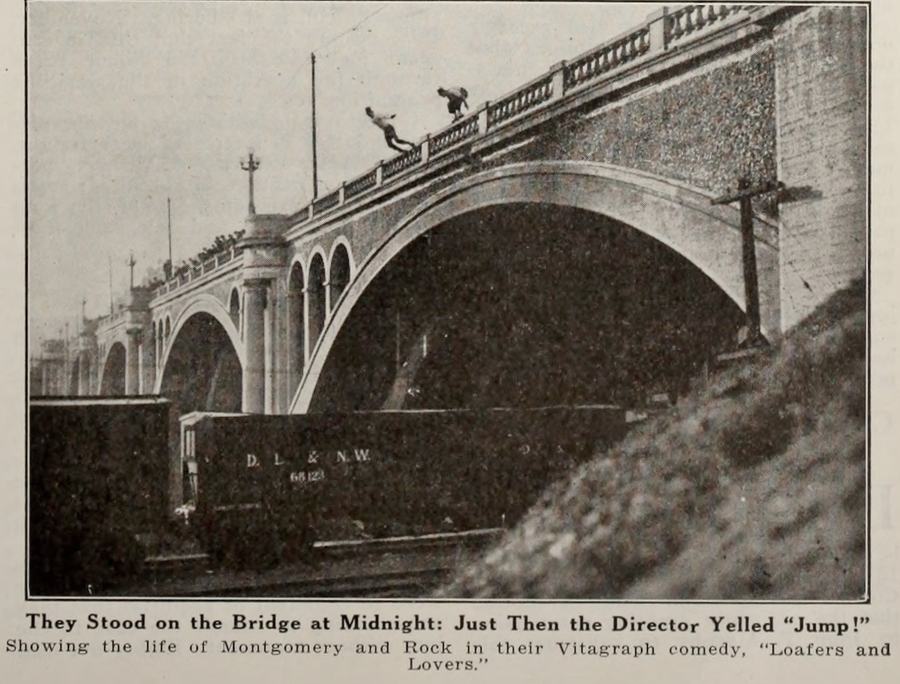
The first thing you notice is the clack—not the expected piano tintinnabulation of 1924, but the obstinate percussion of leather soles on varnished pine. That sound, looped and syncopated, becomes the unofficial score for Loafers and Lovers, a one-reel riot that distills the entire Jazz-Age neurosis into a pair of shoes that refuse to stay owned. Joe Rock, face like a bruised peach left too long in the speakeasy ice-bucket, enters frame left with the swagger of a man who has already pawned his future. Earl Montgomery slides in right, all dental work and dubious ethics, pockets rattling with nickels that used to belong to somebody’s grandmother. Between them, the loafers gleam like obsidian promises—size nines that somehow accommodate every foot, every fantasy, every lie.
Director-writer [uncredited] refuses to name the seaside town; it’s every boardwalk from Coney Island to Venice, a liminal strip where ferris-wheel lights strobe against the dark like interrogation lamps. The camera, drunk on Dutch tilts, ogles the heiress—credited only as Miss L—whose flapper dress is stitched from the same silk as the pennants snapping above the carousel. She is introduced via an iris shot that opens like a greedy pupil, devouring her anklet: a circlet of sapphires that will later migrate into the shoe’s insole, turning footwear into evidence. The plot, if one insists on Euclidean geometry, is a Möbius strip: obtain shoes, lose shoes, chase shoes, discard shoes—yet each iteration salts the wound of class aspiration a little deeper.
Rock’s tramp is a study in elastic desperation. Watch him inflate inside a borrowed tuxedo, shoulders popping seams as though dignity were a balloon gasping for its last breath of hydrogen. Montgomery, by contrast, shrinks when forced into a bellboy uniform; his limbs retract like a box turtle sensing the culinary intentions of a French chef. Their comic polarity recalls An Amateur Devil’s mismatched demons, but stripped of supernatural padding: here the only hell is economic, and the brimstone smells of cheap shoe polish.
The chase sequences—there are three, each escalating like movements in a punk-cabaret symphony—weaponize every prop the midway offers. A coconut shy becomes a clay-pigeon range; the air is thick with fiberboard shrapnel. In the ghost-house ride, silhouettes of fake specters eclipse the lovers’ faces, prefiguring the moment when social masks slip. Most delirious is the laundry-chute descent: the camera plunges after the loafers, linen sheets billowing like parachutes designed by a sadist, until the screen itself seems to wring out its own pixels. Intertitles, sparse as haiku, flash “Feet don’t fail me now” in type that jitters like a guilty conscience.
Yet the film’s savage heart beats in its quieter larcenies. Mid-film, Rock cadges a shoeshine from a street urchin whose own boots are holed like sieves. The boy’s gaze—half envy, half premonition—lingers longer than the gag requires, and for four seconds the comedy’s sugar-coating cracks to reveal the arsenic underneath. Similarly, when Miss L finally reclaims her sapphire, she does so by sliding the ring onto her toe, a gesture so intimate it feels like assault. The loafers, now split along the vamp, get tossed to the urchin, who cradles them as if they were holy relics. The circular cruelty is complete: yesterday’s fetish becomes tomorrow’s necessity, and nobody gets to keep the girl, the shoes, or the illusion.
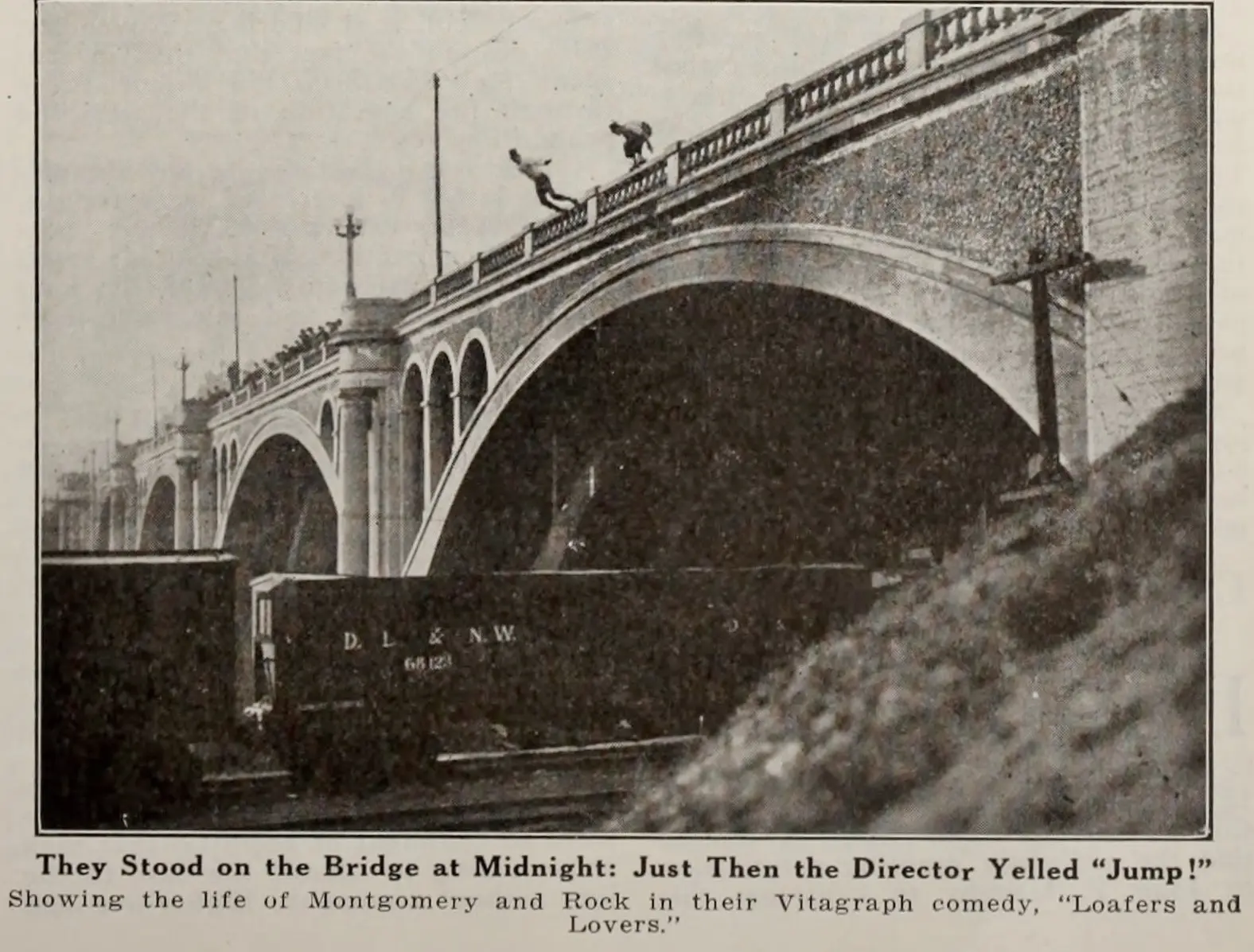
Visually, the picture pirouettes between German-expressionist shadow and American-vaudeville kinesis. Note the rooftop finale: smoke from a steamer stacks the horizon into jagged battlements, while a single searchlight—courtesy of the local constabulary—slashes across the frame like a breadknife. Rock and Montgomery balance on the gutter, arms windmilling, their silhouettes fused into a two-headed beggar. The shoes, held aloft, become a perverse Eucharist; then the gutter buckles, the screen irises out on two pairs of bare feet, black with soot, twitching like landed trout. No moral, no kiss, no iris-in on a wedding. Just the sound of gulls, and the faint clack-clack of the loafers drifting below, carried by a tide too tired to applaud.
Restoration-wise, the 2023 4K scan from EYE Filmmuseum is a revelation: grain structure intact, yet the sea-blue intertitles now glow with the aquamarine of a bruise healing. The Dutch electronic duo Troubled Shoes supplies a new score—ukulele plucks processed through tape-delay, analog synths that moan like foghorns. Synced to the flicker, the music underscores how modern the film feels: its DNA coils through Heads Win’s nihilistic coin-tosses, through Social Hypocrites’ exposé of respectability theater, even through the bureaucratic cruelty of El Verdugo. The loafers are the original MacGuffin—pre-Hitchcock, pre-everything—yet they carry existential ballast heavier than any briefcase in noir.
Comparative footnote: cinephiles often trace the DNA of shoe-centric slapstick back to Sennett, but Loafers and Lovers predates the more famous The Climbers by five years, and its socio-economic bite is sharper. Where A Little Brother of the Rich merely titters at nouveau-riche pretensions, this film gnaws the bone: it understands that in 1924 America, mobility itself is currency, and footwear is the most literal vehicle. When the loafers disintegrate, so does the national myth of self-reinvention.
Performances? Rock’s eyebrows deserve separate billing—two hairy caterpillars wrestling over the last leaf of dignity. Montgomery’s grin is a switchblade: snap, and the scene bleeds. Miss L, played by an uncredited actress whose only other surviving role is a blink-and-miss cameo in Unknown Switzerland, exudes the pallid luminescence of a woman who has read too many fashion magazines and decided the world owes her better lighting. Together they form a triangulation of appetite: who can scam whom fastest before the next reel runs out.
Legacy then: the film vanished for decades, misfiled under Laffing Lovers in a Moldovan cellar. Its rediscovery skews the canon, proving that American silent comedy could weaponize poverty without the sentimental safety net of Chaplin’s Tramp. Modern rom-coms, those pastel amoebas, recoil from its abrasions; even the grim satire of La tragica fine di Caligula imperatore feels operatic by comparison. Here, tragedy arrives barefoot, comedy dies with socks half-on, and the audience—us, a century later—realizes we are still running in circles, waiting for a pair of shoes that will never quite fit.
Final tally: see it for the kinetic wit, revisit it for the chill that arrives when the laughter subsides and you recognize your own footprints in the sand, already eroding under the next tide. The loafers are gone; the lovers remain nameless; the film itself is a cracked mirror held up to anybody who ever believed that love—or capitalism—could be a comfortable walk.
IMDb —
1920
Community
Log in to comment.