DbcultAccessing Vault...
6.3/10
Senior Film Conservator
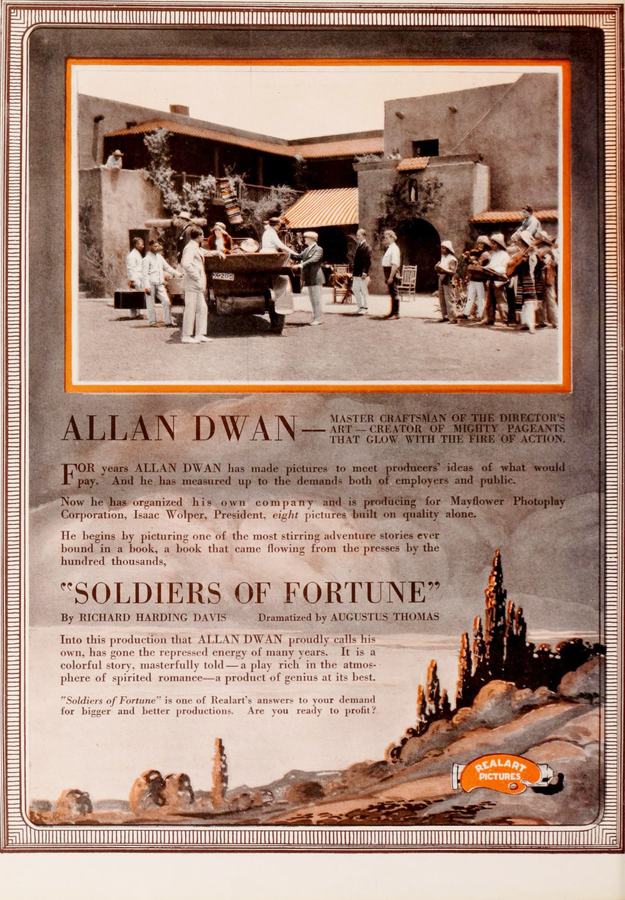
A definitive 6.3/10 rating for a film that redefined the boundaries of cult cinema. Soldiers of Fortune remains a cornerstone of transgressive art.
Allan Dwan's Soldiers of Fortune operates like a precisely wound pocket watch from its era—elegant in craftsmanship yet unafraid of visible gears. Adapted from Richard Harding Davis' novel, this 1919 adventure drops us into Olancho's fictional South American turmoil, where industrialist ambitions and revolutionary fervor collide like machetes against rifle stocks. Norman Kerry's Robert Clay embodies the archetypal American engineer—part frontiersman, part corporate emissary—whose technical prowess masks romantic vulnerability. Watch how Kerry physically transforms when Hope Langham (Pauline Starke) enters the frame: shoulders soften, jaw unclenches, eyes flicker with something beyond blueprints and profit margins.
Wallace Beery's General Mendoza remains a masterclass in cinematic villainy, predating his later comedic turns. His performance simmers with corpulent menace—notice how he strokes his uniform braids while offering treason, fingers lingering like spiders on a web. The revolutionary sequences showcase Dwan's economical genius: rather than sprawling battle scenes (a budgetary impossibility), he isolates violence in stark vignettes. A rebel's silhouette crumpling against moonlit adobe. Sparks ricocheting off mine carts repurposed as armored vehicles. These choices feel less like limitations than artistic intensifiers.
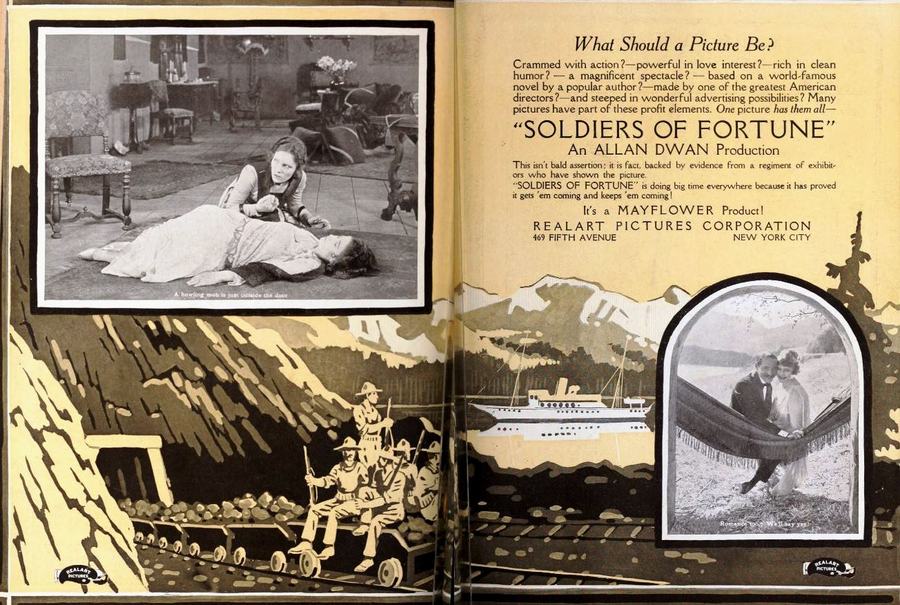
Starke's Hope Langham constitutes the film's most radical element. When she snatches a rifle to dispatch Mendoza's charging guerrillas, the sequence avoids damsel-to-warrior clichés through sheer matter-of-factness. Her sharpshooting isn't framed as erotic spectacle (unlike the bathing scenes in contemporaneous films like Youth's Endearing Charm) but as pragmatic survivalism. Contrast this with Anna Q. Nilsson's Alice, whose glacial beauty masks profound passivity—she’s essentially decorative cargo aboard Reginald King's yacht. The sisters form a fascinating diptych of pre-suffrage femininities: one defined by action, the other by acquisition.
Modern eyes will discern troubling imperialist undertones—the white savior narrative looms large as Clay's mercenaries impose order with Gatling guns. Yet Dwan complicates this through President Alvarez's dignified resignation, a leader aware his sovereignty exists at Washington's whim. The climactic arrival of the U.S. battleship Oregon carries ambiguous weight: salvation for our protagonists, yes, but also a blunt reminder that Olancho's destiny remains tethered to foreign interests. This duality resonates with other era examinations of power like The Boss, though without that film's class-conscious nuance.
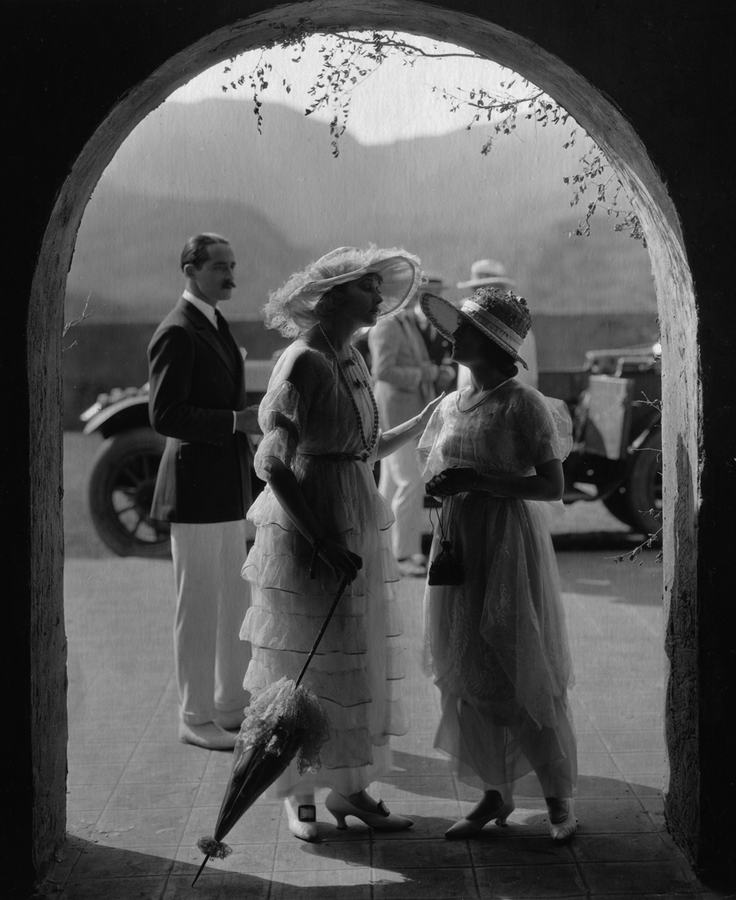
Cinematographer H. Lyman Broening sculpts light with astonishing subtlety. Observe the hacienda interiors where candlelight licks at Beery's conspiratorial grin, or dawn sequences where mist coils around rebel camps like spectral serpents. The jungle isn't some backlot folly but a character itself—vines strangle abandoned machinery, waterfalls swallow gunfire echoes, a constant reminder of nature reclaiming man's transient ambitions. This environmental consciousness feels decades ahead of its time, predating the ecological anxieties in later works like Life's Shadows.
Clay and Hope's courtship bypasses typical silent-era melodrama. Their connection sparks not through lingering glances or stolen kisses, but shared tactical efficiency during the siege of the mining camp. When she reloads his Colt revolver mid-skirmish, fingers moving with unhurried precision, the moment carries more intimacy than any parlor-room embrace. This pragmatic eroticism anticipates the screwball partnerships of the 1930s, particularly in how danger functions as their aphrodisiac. Pauline Starke communicates volumes through posture alone—watch how her spine straightens when handling weapons, contrasting with the deliberate languor she employs aboard her sister's yacht.
While not as formally innovative as Ave Maria's experimental cinematography, Soldiers of Fortune exemplifies the narrative efficiency of pre-1920s features. Subplots resolve through visual shorthand—Alice's engagement to Reginald King conveyed through a single shot of his ring glinting on her glove. The film’s legacy surfaces unexpectedly in later works: Mendoza’s sweaty cupidity foreshadows The Strangler’s Grip's capitalist villains, while the resource-war backdrop anticipates Bulling the Bolshevik by half a decade.
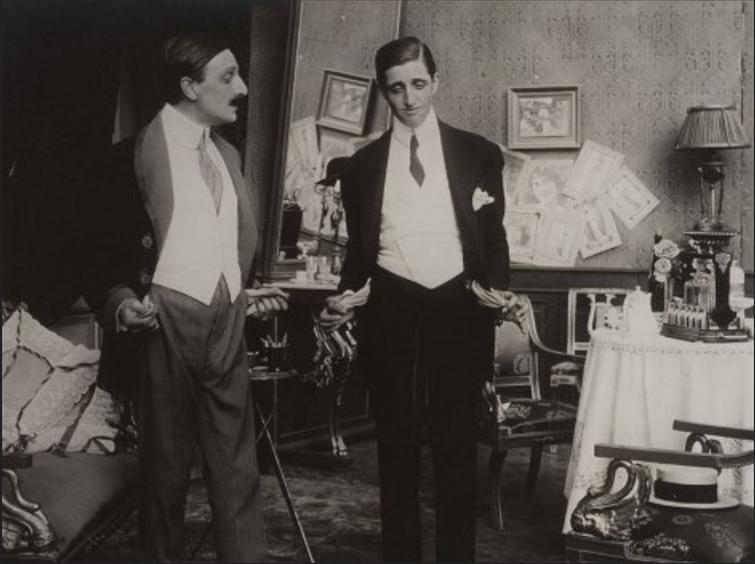
Beery’s Mendoza deserves reappraisal beyond cartoonish villainy. Notice his meticulous grooming—the waxed mustache points, the braided epaulets polished to obsidian shine. This fastidiousness reveals his psychology: a man clawing from peasantry into aristocracy through performative refinement. His rage when Clay rejects corruption stems less from greed than wounded class insecurity. Beery layers the performance with unsettling charm; watch him offer champagne to prisoners before executions. This complexity sets him apart from contemporaneous antagonists like the mustache-twirlers in A Pigskin Hero.
Dwan constructs suspense through sonic suggestion since synchronized sound remained years away. When rebels prepare to dynamite the mine, intertitles fall silent. We read lips against explosions we cannot hear, the missing audio amplifying dread. Similarly, the yacht's arrival plays out through telescope lenses and signal flags—communication stripped to pure visual semaphore. Such techniques surpass the suspense mechanics in earlier shorts like Volunteer Organist, showcasing Dwan’s maturation as a visual storyteller.
Beneath the adventure tropes lies a savvy critique of American resource extraction. Langham’s initial scenes unfold in a Manhattan office where Olancho appears solely as profit projections on ledger sheets. Clay’s moral compromise—defending a regime he doesn’t respect to protect investments he didn’t make—echoes real-life interventions like United Fruit Company’s influence in Honduras. The film’s title acquires ironic heft: these “soldiers” fight not for patriotism but contracts, their fortune measured in stock dividends. This capitalist realism aligns with grittier social examinations like Damaged Goods, though without that film’s public health urgency.
Amidst betrayal and bombardment, Clyde Cook’s vignette as ‘Mac’ delivers unexpected warmth. His comic relief—trying to brew tea during a firefight, courting a local girl with fractured Spanish—avoids minstrelsy through sheer earnestness. In his hands, a harmonica becomes both comic prop and emotional conduit during night watches. These grace notes prevent the film from collapsing under its own machismo, offering breathing room much like the organist’s interludes in The Ninety and Nine.
Soldiers of Fortune remains vital viewing not as flawless cinema (its racial politics frequently jar modern sensibilities) but as a cultural artifact revealing America’s embryonic global identity. Dwan captures the transition from Teddy Roosevelt’s “big stick” diplomacy to corporate neo-colonialism—all disguised as swashbuckling romance. Pauline Starke’s performance alone justifies excavation; her Hope Langham is less a character than an argument for female agency years before flappers claimed the spotlight. The nitrate may be fragile, but its questions about intervention, exploitation, and the true cost of fortune remain unnervingly durable.
IMDb —
1923
Community
Log in to comment.