DbcultAccessing Vault...
5.8/10
Senior Film Conservator
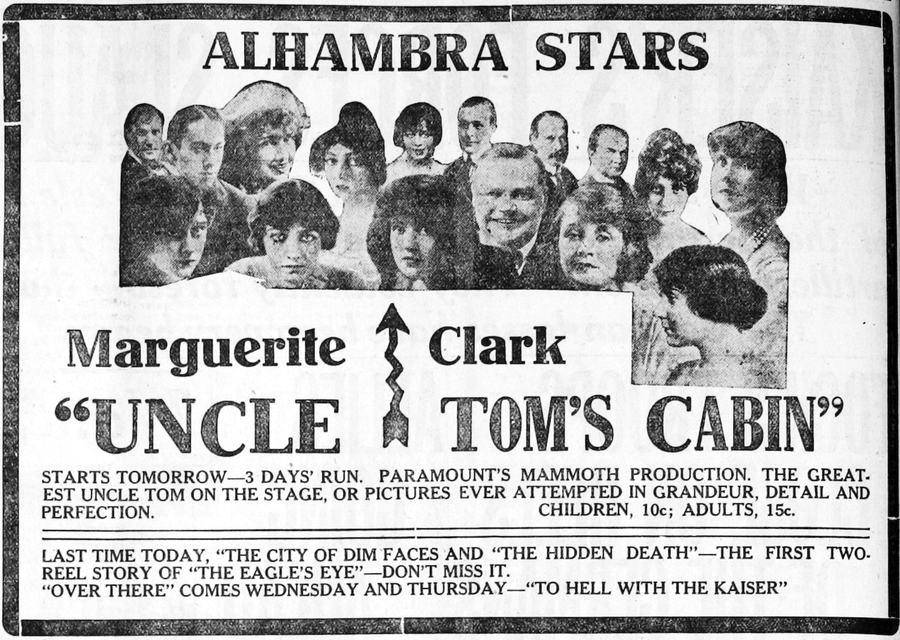
A definitive 5.8/10 rating for a film that redefined the boundaries of cult cinema. Uncle Tom's Cabin remains a cornerstone of transgressive art.
The year 1918 represents a fascinating juncture in the evolution of the moving image—a period where the language of cinema was shedding its primitive skin and embracing the complexities of feature-length storytelling. Amidst the global upheaval of the Great War, J. Searle Dawley undertook the daunting task of translating Harriet Beecher Stowe’s Uncle Tom’s Cabin for the silver screen. This version, headlined by the diminutive yet formidable Marguerite Clark, stands as a monumental, albeit complex, artifact of its era. It is not merely a retelling of a well-worn narrative; it is a visual liturgy that oscillates between the melodramatic and the profoundly spiritual, capturing a specific American zeitgeist with a lens that is both empathetic and restricted by the societal paradigms of the early 20th century.
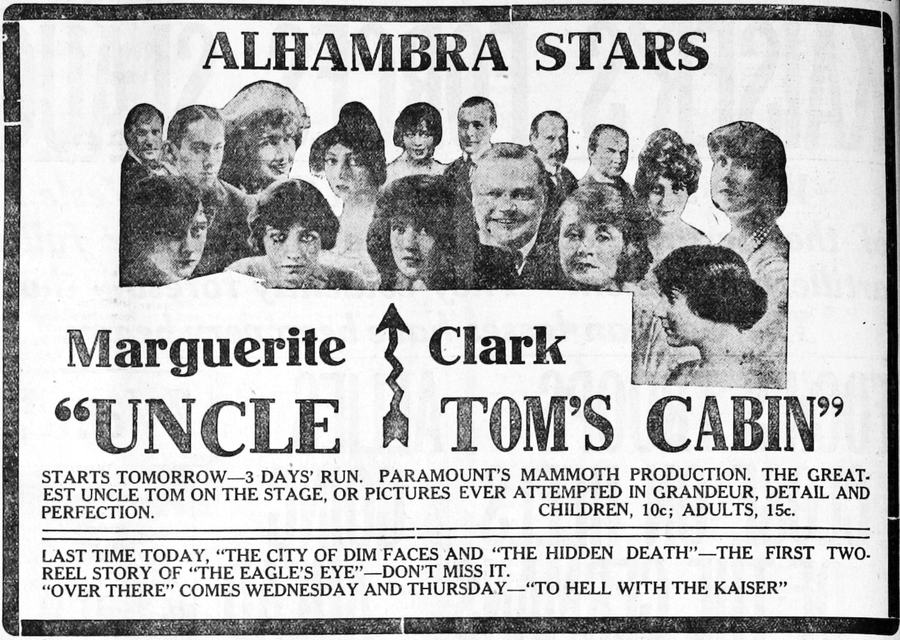
One cannot dissect this film without confronting the technical and performative audacity of Marguerite Clark. In a move that highlights the theatrical traditions still clinging to cinema at the time, Clark portrays both the ethereal Little Eva and the 'mischievous' Topsy. This dual role serves as the film’s emotional fulcrum. As Eva, Clark embodies a Victorian ideal of purity—a translucent, almost ghost-like presence whose impending mortality is signaled by every soft-focus frame. Conversely, her portrayal of Topsy, while problematic through a modern sociological lens due to the use of blackface and caricature, showcases an incredible kinetic energy. The technical achievement of having Clark interact with herself in 1918 is nothing short of miraculous, surpassing the simpler trick photography found in contemporaneous works like The Diamond from the Sky.
This duality creates a strange, almost surreal atmosphere. It forces the audience to reconcile two disparate archetypes of childhood within the same physical vessel. While the performance of Topsy leans heavily into the tropes of the era, the sheer labor involved in the double exposure sequences demonstrates Dawley’s commitment to pushing the medium’s boundaries. It is a far cry from the straightforward narrative structures of A Gentleman from Mississippi, opting instead for a visual complexity that mirrors the internal contradictions of the source material itself.
The sequence of Eliza’s flight across the Ohio River remains one of the most iconic images in silent cinema, and Dawley’s 1918 rendition treats it with a visceral intensity. The use of actual ice floes and the stark, high-contrast cinematography imbue the scene with a sense of genuine peril. Unlike the more staged environments of Behind the Lines, there is an environmental grit here that anticipates the realism of the later silent era. The river becomes more than a geographical barrier; it is a psychological Rubicon, separating the hellscape of the plantation from the abstract promise of the North.
Dawley’s direction utilizes the frame to emphasize isolation. When Tom is sold and moves further South, the lushness of the St. Clair estate provides a deceptive comfort. The sea blue (#0E7490) hues of the river voyages, suggested by the tinting processes common in high-quality prints of the era, contrast sharply with the dark orange (#C2410C) shadows of Simon Legree’s cotton gin. This visual storytelling is far more sophisticated than the comedic antics of Tillie Wakes Up, proving that by 1918, the industry was fully capable of utilizing light and shadow to convey moral weight.
As the narrative descends into the third act, we encounter Walter P. Lewis as Simon Legree. His performance is a masterclass in silent-era villainy—all hulking presence and predatory movement. Legree represents the antithesis of the Christian stoicism exhibited by Tom. The conflict between them is not merely one of master and slave, but of two opposing worldviews. Tom’s refusal to break, his insistence on a higher moral authority, transforms the film from a social drama into a hagiography. This thematic depth is reminiscent of the moral struggles depicted in The World Apart, yet it carries a historical weight that few other films of the period could match.
The brutality of the Legree plantation is handled with a restraint that, paradoxically, makes it more harrowing. The whip is often suggested rather than explicitly shown in its full impact, allowing the viewer’s imagination to fill in the gaps of Tom’s suffering. This psychological approach to horror is a sophisticated touch, distinguishing the film from the more overt action of Hell Bent. Tom’s eventual martyrdom is framed not as a defeat, but as a final escape—a sentiment echoed in the film’s ethereal closing shots.
Comparing Uncle Tom’s Cabin to other 1918 releases reveals its unique position. While Over Night or The Man from Mexico were providing audiences with lighthearted escapism, Dawley was grappling with the original sin of the American experiment. Even when compared to international fare like the Hungarian Az aranyásó, the American version of Uncle Tom’s Cabin feels uniquely preoccupied with its own national trauma. It lacks the romantic fatalism of The Leap of Despair, replacing it with a specifically Protestant brand of redemptive suffering.
Furthermore, the film’s pacing is remarkably modern. Where A Long, Long Way to Tipperary relies heavily on sentimental montage, Dawley builds tension through character interaction and spatial continuity. The transition from the St. Clair home to the Legree plantation is a jarring descent that effectively communicates the precariousness of life under an institution that views humans as liquid assets. It is a narrative ruthlessness that one might find in Vendetta, but applied here to a social reality rather than a personal grudge.
The climax of the film—Tom’s death and his subsequent vision of Eva—is a sequence of profound cinematic beauty. The use of superimposition to show Eva beckoning from the heavens is a hallmark of the era’s spiritualist leanings, similar to the mystical elements in The Reincarnation of Karma. For a 1918 audience, this was not merely a special effect; it was a reassurance of divine justice in a world that seemed increasingly devoid of it. The arrival of George Shelby Jr. serves as a tragic irony—a 'too little, too late' gesture that emphasizes the finality of Tom’s journey.
In the broader context of silent cinema, this version of Uncle Tom’s Cabin is a vital link between the short-form storytelling of the early 1900s and the epic proportions of the 1920s. It lacks the raw, unpolished nature of Immediate Lee or the simple domesticity of Little Meena's Romance. Instead, it aspires to the level of high art, attempting to synthesize literature, social commentary, and technical innovation into a single, cohesive experience.
Ultimately, the 1918 film is a tapestry of contradictions. It is a work of immense empathy that nonetheless operates within the racial prejudices of its time. It is a technical marvel that relies on ancient theatrical tropes. Yet, through the performance of Marguerite Clark and the steady hand of J. Searle Dawley, it achieves a haunting resonance. It remains a crucial watch for anyone seeking to understand the roots of American narrative cinema and the ways in which film has always been our most powerful tool for both reflection and myth-making. The flickering images of Tom’s sacrifice and Eliza’s courage continue to echo, a testament to the enduring power of Stowe’s characters and the nascent genius of the silent screen.
IMDb —
1917
Community
Log in to comment.