DbcultAccessing Vault...
7.2/10
Senior Film Conservator
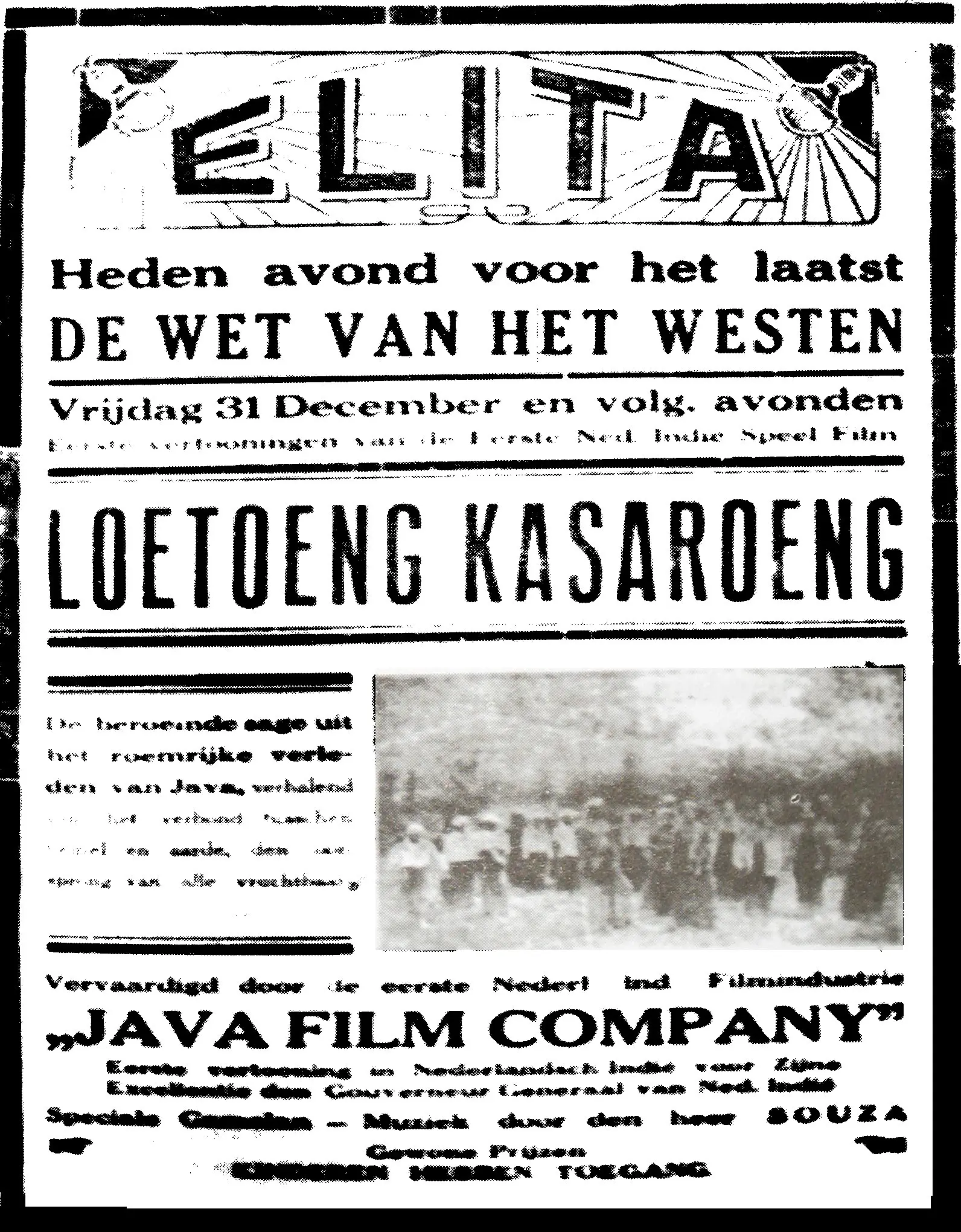
A definitive 7.2/10 rating for a film that redefined the boundaries of cult cinema. Loetoeng Kasaroeng remains a cornerstone of transgressive art.
Can a film from 1926 still speak to a modern audience, or is it merely a ghost of a forgotten era? Short answer: yes, but only if you approach it as a cultural artifact rather than a Friday night blockbuster.
This film is for the dedicated cinephile, the history student, and the lover of global folklore; it is certainly not for anyone who requires high-definition clarity or the fast-paced editing of the twenty-first century.
This film works because it captures a pure, unadulterated version of Sundanese mythology before it was filtered through decades of modern cinematic tropes.
This film fails because its technical limitations—even for the mid-1920s—often obscure the emotional weight of the performances.
You should watch it if you want to witness the exact moment the Indonesian film industry was born in the Dutch East Indies.
Loetoeng Kasaroeng is more than just a movie; it is a historical landmark. Directed by L. Heuveldorp and produced by G. Krugers, it represents the first feature-length film ever produced in what is now Indonesia. At the time, the industry was non-existent. The creators had to rely on local aristocrats, known as the Menak, to fill the roles because professional screen actors simply did not exist in the region. This gives the film a strange, regal stiffness that feels entirely different from the polished Hollywood productions of the same year, such as The Moonstone.
The casting of Oemar and Martoana brings a level of cultural authenticity that a Western cast could never have replicated. They weren't just acting; they were performing a legend that was part of their DNA. This wasn't a performance for a paycheck. It was a performance for posterity. This creates a tone that is both somber and deeply sincere. There is no irony here. There is no winking at the camera. It is a straight-faced delivery of a miracle story.
To talk about the cinematography of G. Krugers is to talk about the birth of a visual language in a tropical climate. Unlike the controlled studio environments of Scandal, Loetoeng Kasaroeng was shot largely on location. The natural light of West Java is both a blessing and a curse in this film. In some scenes, the harsh sun washes out the details of the costumes, while in others, it creates a haunting, ethereal glow that suits the supernatural themes of the plot.
The film’s pacing is undeniably slow. It moves with the rhythm of a traditional shadow puppet play (wayang) rather than a modern narrative. For a contemporary viewer, this can be grueling. However, if you look at the way the camera lingers on the forest, you see a director trying to capture the spirit of the land itself. The lutung costume is a specific point of interest. It is primitive, yes. It looks like a man in a rough suit. But in the context of 1926, it was a bold attempt at practical special effects that predates the sophisticated creature work we see in later decades.
The heart of the film is the conflict between Purbasari and Purbararang. This is not a subtle drama. It is a loud, moralistic battle. Purbararang’s jealousy is depicted with broad strokes, typical of silent cinema where facial expressions had to do the work of a thousand words. When she mocks Purbasari for having a monkey as a lover, the cruelty is palpable. It reminds me of the social ostracization depicted in The Perfect Flapper, though transposed from a jazz-age party to a mythic jungle.
The scene where Purbasari is exiled is perhaps the most moving. There is a shot of her walking into the dense foliage that feels genuinely lonely. The lack of sound actually enhances this moment. You don't need a swelling orchestral score to feel the weight of her isolation. You only need the grain of the film and the stillness of the trees. It works. But it's flawed.
Is this film worth watching today? The answer depends entirely on your patience for cinematic archeology. If you are looking for entertainment in the traditional sense, you will likely be disappointed. The film is largely lost in its original form, with only fragments and reconstructions remaining to tell the full story. However, if you are looking to understand the evolution of Southeast Asian storytelling, it is essential viewing.
It provides a fascinating contrast to other films of the era like Percy or Guarding Old Glory. While those films were exploring Western tropes of heroism and comedy, Loetoeng Kasaroeng was attempting to codify a national identity through folklore. It was a political act as much as an artistic one. To watch it is to pay respects to the foundation of an entire nation's creative output.
Pros:
The film serves as an irreplaceable historical document. It features genuine cultural performances from the Sundanese aristocracy. The use of location shooting gives it a grounded, earthy feel that many studio-bound silent films lack. It successfully translates a complex spiritual myth into a visual medium without losing the core moral message.
Cons:
Much of the original footage is lost or degraded, making for a challenging viewing experience. The acting style is extremely theatrical and may feel dated even to fans of silent cinema. The technical execution—specifically the lighting and the creature suit—is noticeably amateurish compared to contemporary European or American films.
One of the most striking things about Loetoeng Kasaroeng is its lack of colonial influence. Despite being directed by a Dutchman, the story is entirely focused on indigenous values and social structures. There are no European characters, and the Dutch presence is invisible. This makes it a rare example of 'auto-ethnography' in early cinema. It is the East Indies looking at itself, rather than being looked at by the West. This is a radical stance for 1926.
Furthermore, the film’s treatment of the supernatural is refreshingly matter-of-fact. In many Western films of the time, such as The Moonstone, the 'mystical' is often treated as a mystery to be solved or a scam to be debunked. Here, the magic is real. The monkey is a god. The curse is a physical reality. This sincerity is the film’s greatest strength.
Loetoeng Kasaroeng is a difficult film to love but an easy one to respect. It lacks the polish of its contemporaries, but it possesses a soul that is rooted in centuries of tradition. It is a rough, flickering diamond. It is a testament to the power of story over technology. While it may not provide the visceral thrills of modern cinema, it offers a window into the birth of a culture's visual identity. It is a ghost worth visiting. It is a legend that refuses to die. We give it a recommendation for the curious, with a heavy warning for the impatient.
IMDb —
1922
Community
Log in to comment.