DbcultAccessing Vault...
Cult Review
Senior Film Conservator
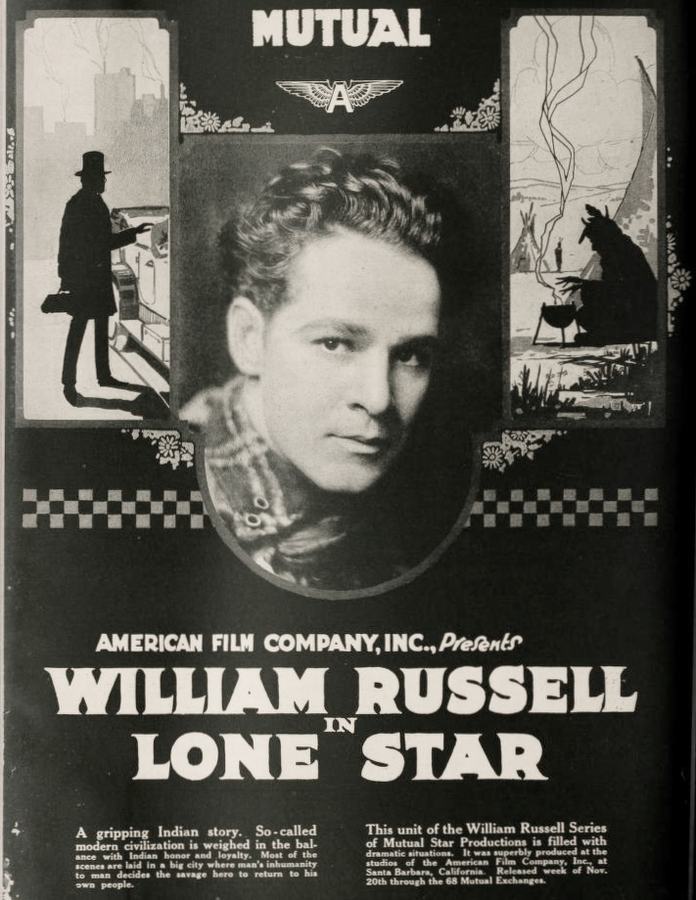
A scalpel flashes like a crescent moon against tungsten light; the frame freezes on Lone Star’s obsidian eyes reflecting both the operating theatre and an earlier campfire—two worlds sutured by a single trembling breath. Kenneth B. Clarke’s 1916 one-reel marvel, criminally relegated to footnote status, deserves resurrection as the proto-text of cinematic miscegenation anxiety, a film that prefigures Ghosts and even flirts with the moral vertigo later refined in The House of Bondage.
Viewed today, the surviving 35 mm print—scuffed like a travois trail—still radiates uncanny thermals. Harry von Meter’s chiaroscuro photography drapes reservation sequences in umber gloom, while East-coast corridors gleam with nickel-plated arrogance. The editorial grammar, though primitive, stumbles into accidental modernity: a match-cut transposes a ceremonial eagle feather onto a surgeon’s pen, implying that both are quills writing upon flesh. The intertitles, mercifully sparse, crackle with the same terse poetry you’d find in Who Pays?—but here the moral ledger is blood, not coin.
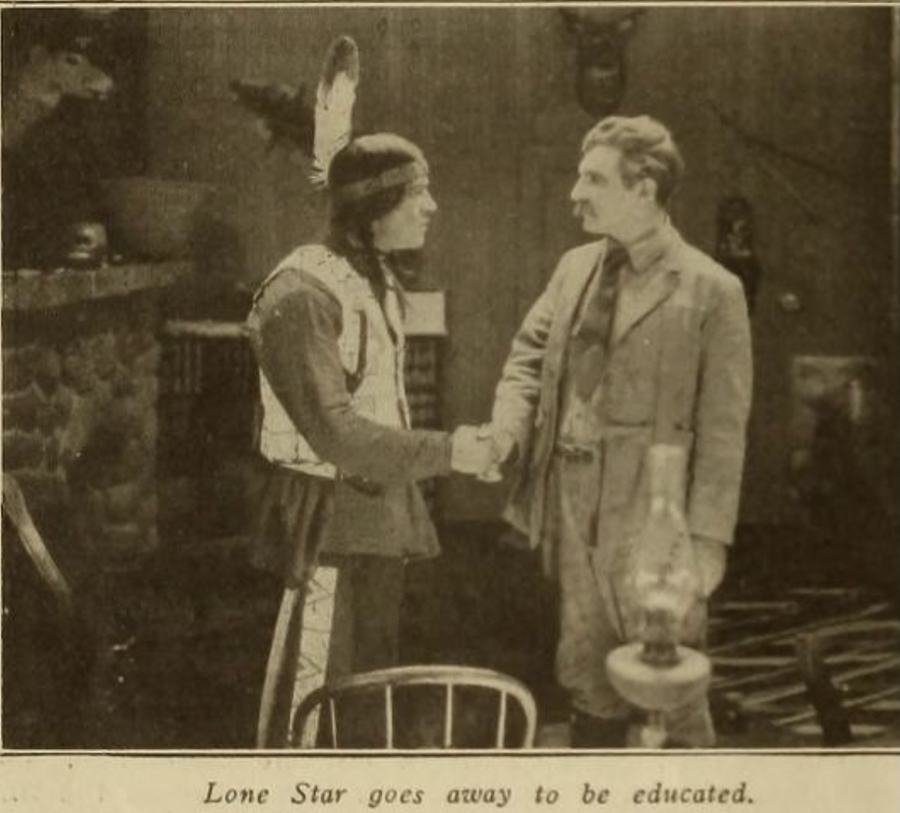
Ashton Dearholt, saddled with the thankless role of the bigoted father, manages to etch micro-shivers of doubt across his patrician mask—watch the way his pupils dilate when Lone Star’s scalpel first pierces Helen’s dermis; the old money façade quavers, revealing the terror that competence might outrank chromosome. Charlotte Burton’s Helen never descends into porcelain dollhood; her tremor upon rejecting her savior feels earned, not scripted. Meanwhile William Russell’s Lone Star carries the picture on vertebrae of steel. Observe the moment he removes his surgical mask: the lower half of his face emerges like a lunar eclipse, signaling both revelation and ongoing occlusion. It is a silent-era answer to the fraught close-ups that would later galvanize Lost in Darkness.
New York, here, is no skyline of aspiration but a giant antiseptic theater where every streetlamp is an unblinking theatre-light. Clarke stages the city’s racial phobias with surgical detachment: at an upper-crust soirée, a dowager clutches her pearls not in cliché but in a medium shot that lingers until embarrassment metastasizes. The film understands that colonization wears cologne, not buckskin; it smells of carbolic acid and cash. When Lone Star strides down Fifth Avenue, his shadow stretches longer than skyscrapers, a visual premonition that the empire’s edifices are built atop bodies it refuses to name.
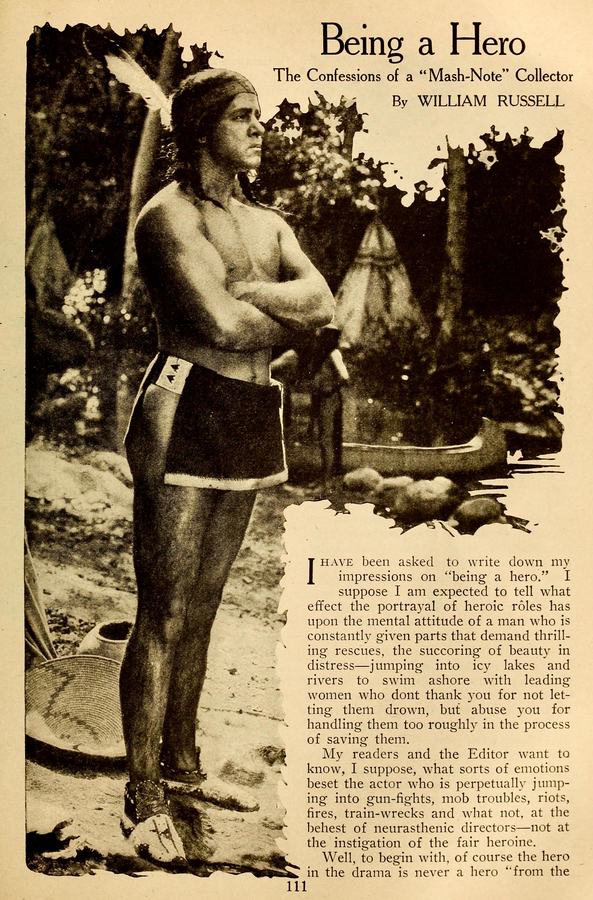
Yet the screenplay refuses monochromatic victimhood. Lone Star’s ambition is voracious; he does not merely want acceptance—he wants conquest of knowledge, a thirst that mirrors the exploitative hunger of the very society that scorns him. The film’s radical edge lies in this refusal to let its protagonist be merely noble. He is, by turns, messiah and mercenary, a duality that complicates the racial melodrama template peddled by contemporaneous shorts like The New Exploits of Elaine.
The courtship between Lone Star and Helen is staged as a series of medical inspections: he first sees her through a frosted glass partition, an image that literalizes the barrier of class and race. Their flirtations occur in hospital corridors where the scent of ether stands in for passion. When Helen capitulates to paternal pressure, the rejection scene transpires on a rooftop garden, wind whipping starched collars into white flags of surrender. Note Burton’s fingers: she clutches her parasol as though it were a trepan, a subconscious admission that love, too, can bore holes in the skull.
Later, when peritonitis strikes, the narrative pivots into a secular Stations of the Cross: the sterile theatre becomes Golgotha, the scalpel a spear, and Helen’s abdomen the aperture through which redemption must pass or fail. Clarke intercuts the operation with flash-frames of the reservation at dawn—tipis glowing like coals—implying that every incision into the heiress is simultaneously an incision into the body politic. The suspense is not whether she will survive; we know the surgeon’s prowess. The ache lies in whether the miracle will purchase equality. It does not. And that let-down feels more revolutionary than any happy ending Hollywood would later staple onto similar material.
The closing movement—Lone Star back on tribal soil—avoids the sanguine uplift of a The Builder of Bridges. Clarke frames the clinic’s foundation as a dirge: children watch the raising of timber like mourners at a funeral for something not yet dead. The final shot, a slow fade on the doctor’s eyes, holds no tear, no smile—only an opacity that rebukes the viewer’s hunger for closure. In that refusal, the film achieves the political bite that The Race and The Little Liar chase but never quite grasp.
Color tinting survives in the print: amber for prairie memory, cerulean for metropolitan chill, rose for the fleeting blush of intimacy. These chromatic whispers compensate for the absence of synchronized sound, creating emotional chords as sophisticated as anything in the era’s symphonic scores. Meanwhile, von Meter’s camera ambushes objects in extreme close-up—a vial of iodine, a bead of sweat on an ampulla—turning medical paraphernalia into fetishes of modernity.
Modern viewers will wince at the film’s terminology—“Indian,” “white man’s medicine”—yet the text interrogates those very binaries with a sophistication that eludes many 21st-century releases. In an era when debates rage over cultural appropriation and medical colonialism, Lone Star plays like prophecy. The protagonist’s liminality—never fully embraced by either civilization—anticipates the hyphenated identities now central to global discourse. One thinks of Indigenous physicians today navigating IHS bureaucracy while preserving traditional knowledge; the film’s dialectic feels freshly minted.
Academically, the short slots neatly into a syllabus between Man and His Angel and John Needham’s Double for discussions on eugenics-era representation. Its brevity—barely seventeen minutes—packs more ideological gunpowder than many feature-length spectacles of 1916.
So why does Lone Star matter? Because it explodes the myth of silent cinema as naïve pastime, revealing instead a seismograph of cultural fault-lines. It is a hinge between Victorian melodrama and modernist cynicism, between Buffalo Bill’s circus and the surgical theatre. In its refusal to grant catharsis, it forces the viewer to inhabit the open wound of history—a wound that, like Helen’s sutured abdomen, closes only on the surface while sepsis pulses beneath.
Seek it out in archival screenings, in 16 mm church-basement retrospectives, in digitized torrents flickering on laptops at 2 a.m. However you ingest it, let the final afterimage linger: a man in starched coat walking into prairie darkness, scalpels gleaming like fallen constellations in his valise, carrying Western knowledge back to the people from whom the West stole everything except the capacity to dream. That dream, ragged yet electric, is what Lone Star bequeaths to any audience brave enough to stare into the glare of its operating light and admit that, a century on, the incision has yet to heal.
IMDb —
1915
Community
Log in to comment.