DbcultAccessing Vault...
4.5/10
Senior Film Conservator
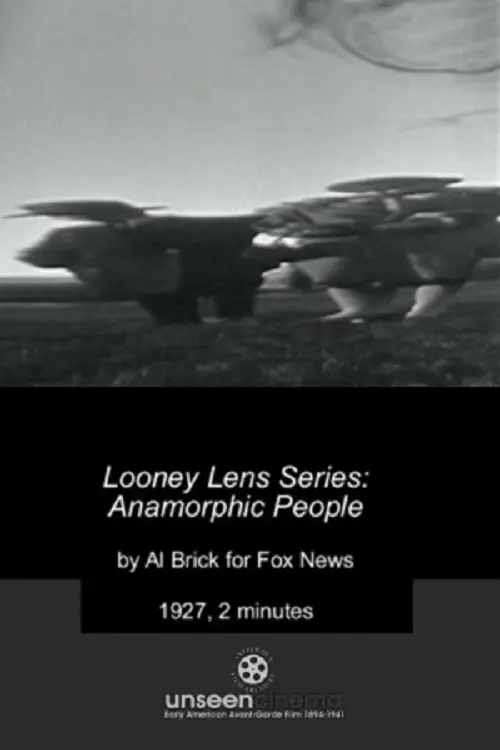
A definitive 4.5/10 rating for a film that redefined the boundaries of cult cinema. Looney Lens: Anamorphic People remains a cornerstone of transgressive art.
Short answer: yes, if you crave radical experimentation. Short answer: no, if you demand traditional storytelling. Al Brick’s Looney Lens: Anamorphic People is a film that prioritizes form over function, using anamorphic distortion not as a gimmick but as a philosophical tool to interrogate how we see the world.
This film works because it dares to eliminate the boundary between subject and medium. It fails because it assumes the viewer will share its obsession with visual deconstruction. You should watch it if you’ve ever stared into a funhouse mirror and wondered what it would feel to live inside one.
Looney Lens thrives in its contradictions. The film’s entire runtime—just 23 minutes—revolves around a single, unbroken shot of a figure moving through a mirrored anamorphic chamber. Every gesture becomes a performance of distortion: a walk turns into a wobble, a raised hand stretches into an impossible shape. This isn’t cinema as narrative; it’s cinema as sensory disruption.
The opening sequence, where the subject walks directly toward the camera, is masterful. The lens warps their face into a smudge of features, a visual metaphor for how perspective erases identity. Later, a moment where the subject pauses and stares directly into the camera—a moment of stillness in a film defined by chaos—creates an eerie intimacy that contrasts with the film’s technical brutality.
Brick’s direction is ruthlessly precise. The camera never moves, the subject’s actions are limited to walking, pausing, and waving, yet the film avoids monotony by leveraging the mirrors’ ever-shifting distortions. One standout moment occurs when the subject turns sideways—their body splits into two overlapping figures, a visual joke that also questions the reliability of the viewer’s own eyes.
The cinematography, though rudimentary by modern standards, feels revolutionary in its intent. The grainy black-and-white film stock amplifies the anamorphic effects, creating a tactile texture that digital remakes would flatten. Compare this to the stark clarity of The Official Motion Pictures of the Heavyweight Boxing Contest—where every detail is preserved—and you see the deliberate aesthetic choice here to obscure, not clarify.
Looney Lens isn’t just about what we see—it’s about what we can’t. The film’s refusal to provide framing context mirrors its visual distortion. There are no titles, no credits, no narrator. You’re dropped into this warped world and left to navigate it. For some, this will feel like an invitation to interpret; for others, it’s a frustrating game of ‘guess what the artist is trying to say.’
It’s a film that demands you confront your own assumptions. When the subject’s face stretches impossibly wide during a close-up, it’s not just a technical trick—it’s a challenge. Are we, as viewers, the ones distorting reality, or is the medium distorting us?
Looney Lens: Anamorphic People is not a film for everyone. Its abstract, almost self-indulgent approach will alienate those seeking escapism. But for a niche audience—filmmakers, visual artists, and philosophy students—it’s a fascinating case study in how form can become content.
It works. But it’s flawed. And that’s the point. The film’s imperfections are baked into its DNA, just like the cracks in the mirrors it uses. Whether you call this avant-garde brilliance or an overly pretentious exercise in minimalism depends on how comfortable you are with a film that asks more questions than it answers.
If you’re willing to surrender to its logic, this is a film that lingers. It’s a reminder that cinema isn’t just about telling stories—it’s about making you see the world differently. Even if you hate it, you’ll never look at a mirror the same way again.
IMDb 6.9
1933
Community
Log in to comment.