DbcultAccessing Vault...
Cult Review
Senior Film Conservator
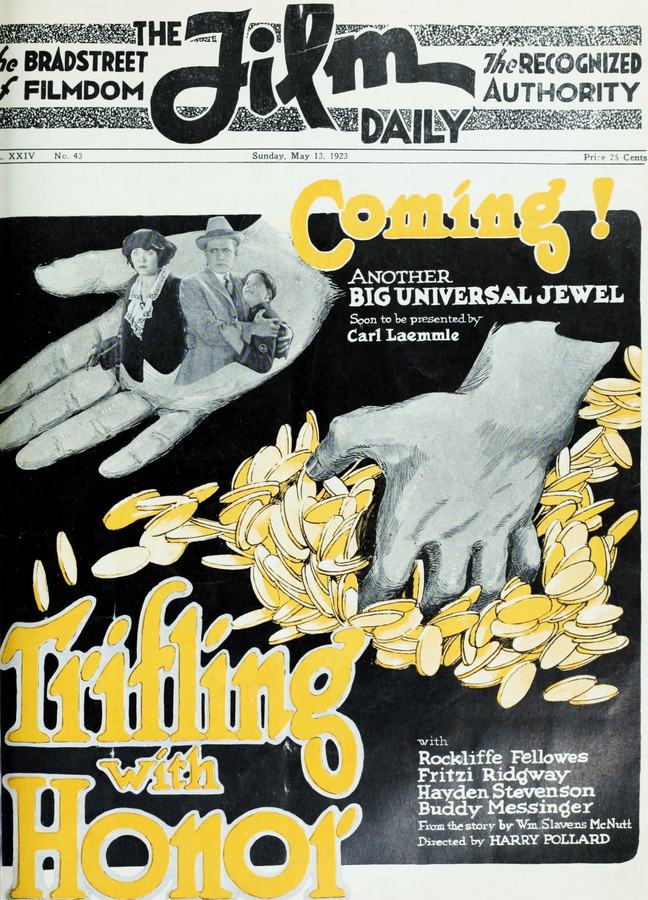
In the annals of silent cinema, where grand gestures and stark moralities often painted narratives with broad, undeniable strokes, Trifling with Honor emerges as a surprisingly nuanced exploration of redemption, societal judgment, and the arduous path to self-respect. This 1923 production, though perhaps not as frequently lauded as some of its contemporaries, offers a compelling character study wrapped within a classic rise-and-fall-and-rise-again structure, anchored by a protagonist whose journey from the shadows of criminality to the bright lights of athletic stardom resonates with timeless appeal. It's a film that asks profound questions about identity, the weight of a past mistakes, and the transformative power of genuine reform.
The narrative plunges us headfirst into the grim reality of the “Gas-Pipe Kid,” a moniker that immediately conjures images of urban squalor and desperation. Played with a raw, visceral energy that was characteristic of the era, the Kid’s initial plight is one of unvarnished tragedy. His release from prison, rather than heralding a fresh start, merely delivers him back to a landscape of loss: a deceased mother, an evicted father, and the crushing weight of systemic poverty. This opening sequence, stark and devoid of sentimentality, establishes the deep-seated injustices that often fuel the very transgressions society condemns. His violent outburst against the landlord, while unlawful, is portrayed not as pure malice but as a desperate, misguided act of filial loyalty and simmering rage against an indifferent world. It’s a moment that, despite its illegality, garners a flicker of understanding, if not sympathy, from the audience. The escape, facilitated by Ida Hunt, his devoted sweetheart, beautifully portrayed by Fritzi Ridgeway, underscores the enduring power of human connection amidst adversity, a beacon of hope in a seemingly hopeless existence.
What follows is a cinematic leap, a temporal ellipsis that transports us years into the future, where the “Gas-Pipe Kid” has shed his ignominious past and emerged as Bat Shugrue, a celebrated baseball star. This transformation is pivotal, not merely for the plot’s progression but for its thematic depth. Shugrue, whose athletic prowess is matched only by his carefully curated public image of “clean living,” becomes an idol, a paragon of virtue for countless boys who devour tales of his exploits. The film masterfully illustrates the duality of public perception versus private truth, a theme that resonates across many silent dramas, but here finds a particularly compelling expression through the unique lens of sports. The writers, Raymond L. Schrock, Frank S. Beresford, and William Slavens McNutt, craft a narrative arc that feels both aspirational and deeply human, avoiding the pitfalls of a simplistic rags-to-riches tale.
The performance of Rockliffe Fellowes, who embodies Shugrue, is central to the film's success. He navigates the character's complex emotional landscape with remarkable subtlety for the silent era, conveying the internal struggle of a man haunted by his past while basking in the glow of his present success. His transformation isn't just external; it's a profound internal shift, evidenced by the gravity with which he carries his newfound influence. The weight of being a role model, an untarnished figure for impressionable youth, becomes his greatest motivator and, simultaneously, his greatest vulnerability. This nuanced portrayal elevates the film beyond a mere sports drama, positioning it as a commentary on the burden of reputation and the profound responsibility that comes with public adoration.
The narrative reaches its dramatic zenith when Shugrue's carefully constructed world is threatened by blackmailers, figures from his shadowy past who seek to exploit his secret. Their demand to “throw” a game presents a moral quandary of immense proportions. To comply would be to betray everything he has become, to shatter the illusions of his young admirers, and to revert to the very dishonor he has so desperately sought to escape. This moment of decision is the film's beating heart, a profound test of character that elevates Shugrue's journey from a personal struggle to an archetypal battle for integrity. It echoes the ethical dilemmas found in other sports dramas, such as the potential for corruption in The Walk-Offs, though Trifling with Honor frames it through the lens of individual redemption rather than systemic exposé.
Shugrue's refusal to succumb to the blackmailers is a powerful statement, not just of defiance, but of his profound understanding of his own moral compass. It's a testament to the fact that true honor isn't about avoiding mistakes, but about confronting them with courage and honesty. This pivotal choice propels him towards Judge Drury, a character who, in the hands of Emmett King, embodies a wise and compassionate justice. The scene where Shugrue unburdens himself, confessing the entirety of his past, is a masterclass in silent film acting and narrative economy. Without a single spoken word, the weight of his confession and the judge’s contemplative response are conveyed through subtle facial expressions and gestures, a testament to the power of visual storytelling.
Judge Drury’s decision is arguably the most progressive and enlightened aspect of the film. Rather than adhering to a rigid interpretation of the law, he recognizes the greater societal value of Shugrue’s redemptive journey. The judge’s pronouncement – that Shugrue is “more valuable free than in jail” – is a remarkably forward-thinking sentiment for its time, advocating for rehabilitation and the recognition of an individual’s capacity for positive influence over punitive retribution. This theme of a second chance, of finding worth beyond past transgressions, is a recurring motif in cinema, seen in films like Big Dan, where characters wrestle with their reputations and the opportunity to rebuild their lives. Here, however, it's amplified by the public nature of Shugrue's heroism.
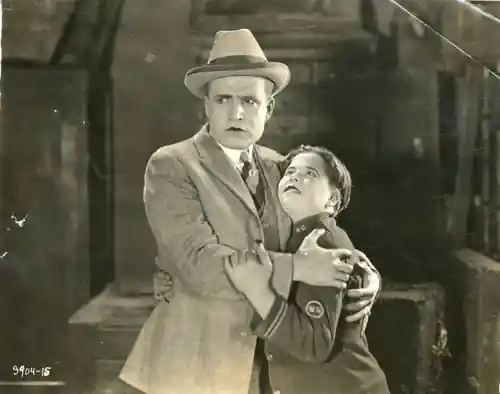
The conclusion, with Shugrue reunited with Ida, offers a satisfying emotional closure, reinforcing the idea that genuine love and unwavering support are crucial components of any redemptive arc. Ida is not merely a romantic interest; she is a steadfast anchor, a symbol of the unwavering faith that enables Shugrue’s transformation. Her presence throughout his journey, from his initial escape to his final vindication, highlights the importance of personal connections in navigating life’s most profound challenges. The performances of Buddy Messinger, Hayden Stevenson,
From a technical standpoint, Trifling with Honor is a well-crafted example of early 1920s filmmaking. The direction, while not overtly flashy, effectively uses close-ups to convey emotion and wider shots to establish setting, particularly the contrast between the grimy urban slums and the expansive baseball fields. The pacing is deliberate, allowing the audience to fully absorb the emotional weight of each scene, a common characteristic of silent films that relied heavily on visual storytelling and audience interpretation. The film's use of intertitles is judicious, providing necessary exposition without overwhelming the visual narrative, a balance that was crucial to the success of silent features.
The screenwriters, Schrock, Beresford, and McNutt, deserve commendation for constructing a narrative that, despite its melodramatic flourishes typical of the era, manages to feel genuinely impactful. They craft a compelling moral dilemma and resolve it in a way that feels both dramatically satisfying and ethically insightful. The script avoids easy answers, instead opting for a resolution that champions empathy and the belief in human potential for change. This depth of character and theme allows Trifling with Honor to transcend its genre, making it more than just a baseball film or a crime drama; it's a profound statement on the human condition.
Comparisons to other films of the era reveal Trifling with Honor’s unique place. While it shares thematic elements with other stories of moral awakening, such as Brave and Bold, its specific fusion of sports heroism with a criminal past provides a distinct flavor. It avoids the overt romanticism sometimes found in films like The White Dove, grounding its emotional core in a more gritty, realistic struggle for respect. The dramatic tension, while palpable, steers clear of the more overt sensationalism that might be found in a pure crime thriller like The Sphinx, instead focusing on the internal conflict of its protagonist.
Ultimately, Trifling with Honor stands as a powerful testament to the enduring human capacity for change and the societal responsibility to offer pathways to redemption. It’s a film that argues eloquently for the belief in second chances, for looking beyond a person’s past mistakes to see their potential for good. The journey of the “Gas-Pipe Kid” to Bat Shugrue is more than just a narrative arc; it’s a metaphor for the transformative power of self-awareness, courage, and the unwavering support of those who believe in us. It reminds us that true honor is not merely the absence of wrongdoing, but the conscious choice to live with integrity, even when that means confronting the most uncomfortable truths about oneself.
For modern audiences, this silent gem offers a window into the moral sensibilities of a bygone era, yet its core themes remain strikingly relevant. In a world still grappling with questions of criminal justice reform, the power of public figures, and the relentless scrutiny of personal histories, Trifling with Honor serves as a resonant reminder that true strength often lies not in flawless perfection, but in the courageous pursuit of a better self. It's a film that deserves to be rediscovered, not just for its historical significance, but for its timeless message of hope and the profound beauty of human resilience. The film’s nuanced portrayal of Judge Drury, who prioritizes the broader good of society and the rehabilitative potential of an individual, remains a powerful and perhaps even idealistic vision of justice that continues to inspire discussion and reflection today. This isn't just a story about baseball; it's a story about the universal game of life, played out on the grandest stage of human conscience.
The careful construction of the plot, which builds tension through the looming threat of exposure, culminates in a resolution that is both emotionally satisfying and intellectually stimulating. It's a testament to the collaborative efforts of the cast and crew, from the compelling lead performance by Rockliffe Fellowes to the thoughtful screenplay by Schrock, Beresford, and McNutt, that Trifling with Honor continues to speak volumes without uttering a single word. It invites us to ponder the nature of heroism, the meaning of a clean slate, and the ultimate triumph of character over circumstance. A truly engaging piece of cinematic history, offering more than just entertainment, but a profound meditation on the journey towards redemption.
IMDb 6.4
1932
Community
Log in to comment.