DbcultAccessing Vault...
Cult Review
Senior Film Conservator
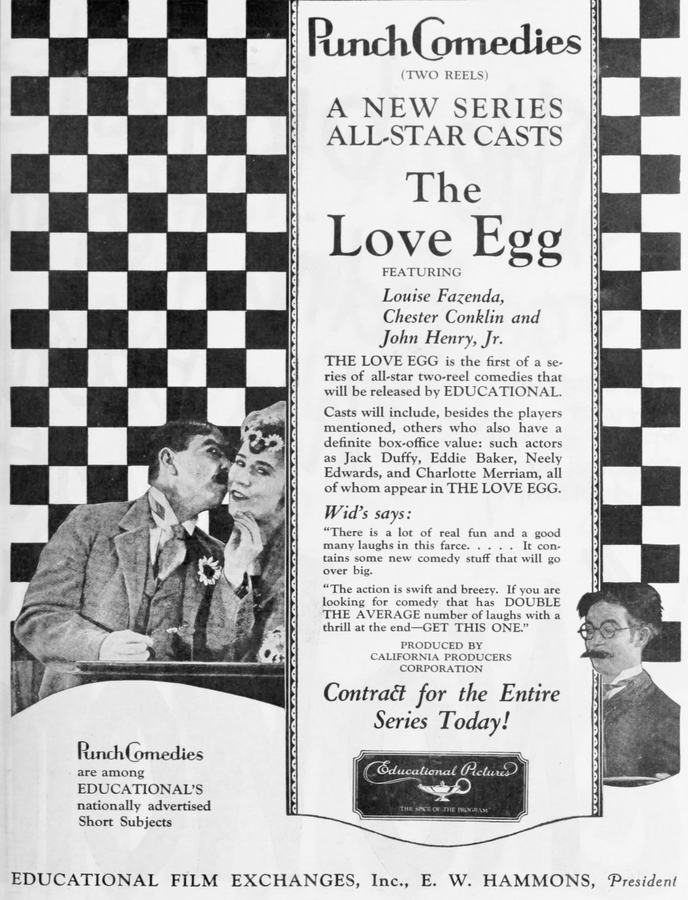
The Love Egg, a 1924 silent film directed with the quixotic charm of a bygone cinematic era, is a film that lingers in the mind like the faint echo of a forgotten melody. At its core lies a narrative so disarmingly simple that it risks being dismissed as whimsical fluff—until one peels back its layers to uncover the existential undertones humming beneath the surface. The film’s premise hinges on a rural girl’s act of quiet desperation: writing her name on an egg, a gesture that feels both childlike and profoundly symbolic. This egg, a humble object, becomes the catalyst for a chain of events that pits the futility of human connection against the absurdity of fate.
Louise Fazenda’s portrayal of the lonely girl is a masterclass in understated performance. Her character, a figure caught between the cloying demands of rural life and an unspoken yearning for something more, is rendered with such delicate nuance that her silence speaks volumes. When she etches her name onto the egg, it is less an act of hope and more a quiet rebellion—a way to assert her existence in a world that often overlooks her. The egg, in this context, becomes a metaphor for the human soul: fragile, marked by individuality, and destined to be found (or misfound) by the wrong person at the wrong time.
Chester Conklin’s character, a man whose antipathy toward corporate life borders on the pathological, is the antithesis of Fazenda’s quiet stoicism. His transformation from a sullen office worker to a man chasing an illusory paradise is both comically exaggerated and eerily relatable. Conklin’s physicality—his exaggerated expressions, the manic energy he brings to every scene—serves as a counterbalance to Fazenda’s restraint. Together, they form a narrative yin and yang, their contrasting energies propelling the film into a realm where absurdity and poignancy coexist.
The egg, this central artifact, is the film’s most compelling narrative device. It is a symbol of potential, of the possibility that a single act of hope might ripple through time. Yet, it is also a harbinger of irony. When Conklin’s character finds the egg, he interprets it as a divine sign, a prompt to abandon his mundane existence in pursuit of a romanticized version of domestic bliss. The film, however, does not allow this fantasy to materialize. Instead, it subverts expectations by revealing that the woman he seeks is already entangled in the machinery of societal norms—a soon-to-be-married figure whose life is as predetermined as the egg’s eventual crack.
"The tragedy of The Love Egg is not in its conclusion, but in the realization that no amount of yearning can rewrite the script of one’s circumstances."
This twist is executed with a deftness that is both humorous and heartbreaking. The film does not vilify the girl or the man; instead, it presents them as pawns in a larger game of societal expectation. The impending second marriage she faces is a stark reminder of the limited agency afforded to women in the early 20th century, a theme that resonates even in the context of modern cinema. The film’s refusal to offer a tidy resolution—choosing instead to end with the man’s disillusionment and the girl’s silent acquiescence—cements its place as a quietly revolutionary piece of storytelling.
What elevates The Love Egg from a mere curio of the silent film era is its technical ingenuity. The film’s use of visual metaphors is particularly noteworthy. The egg, repeatedly shown in close-up, becomes a visual motif that evolves in meaning: from a symbol of hope to a harbinger of irony, and finally to a relic of unfulfilled desire. The cinematography, though modest by today’s standards, is suffused with a warmth that mirrors the film’s emotional core. Shadows are used not for menace but for melancholy, and the lighting in the girl’s rural home evokes a sense of claustrophobic intimacy.
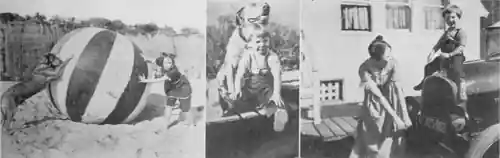
The comedic elements, often delivered by Conklin’s over-the-top antics and the antics of Teddy the Dog, are not mere filler but integral to the film’s tone. They provide a necessary contrast to the underlying melancholy, ensuring that the narrative does not become mired in its own poignancy. The dog, in particular, is a standout presence, his antics a reminder that even in a film steeped in existential themes, there is room for lightheartedness.
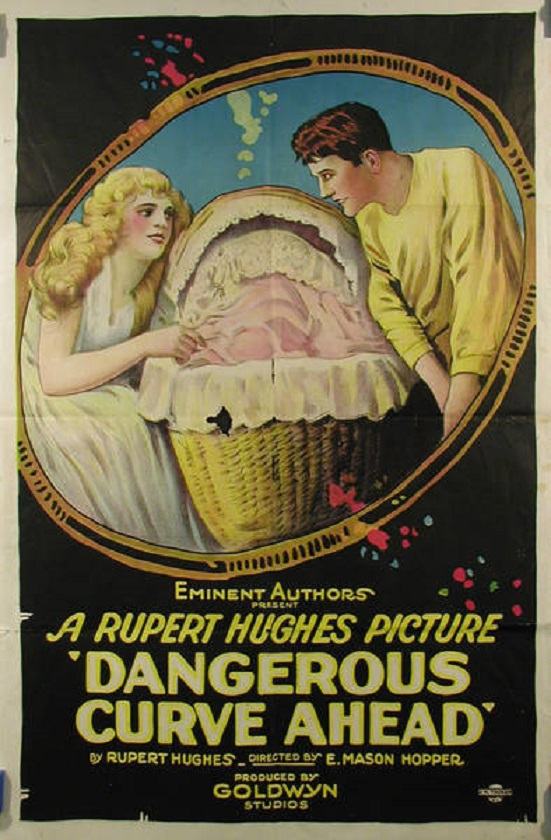
When placed alongside other films of the era, The Love Egg reveals its unique position in the silent film canon. Unlike The Invisible Enemy, which leans heavily into suspense and moral allegory, The Love Egg is a character-driven piece that prioritizes emotional resonance. It also diverges from the more overtly romantic Raindrops, which lacks the existential undertones that give The Love Egg its depth. The film’s blend of comedy and pathos recalls the structure of A Man in the Open, but where the latter is a taut psychological study, The Love Egg is more whimsical in its approach.
The film’s exploration of societal constraints and individual agency can also be compared to Lend Me Your Name, though the latter’s focus on identity theft is a far cry from the quiet tragedy of Fazenda’s character. Perhaps the most apt comparison is with Love's Law, another film that juxtaposes romantic idealism with the harsh realities of social expectation. Both films use their protagonists’ misfortunes to critique the rigidity of their respective worlds, but The Love Egg does so with a subtlety that is rare in the genre.
Decades after its release, The Love Egg remains a film worth revisiting, not only for its historical significance but for its timeless meditation on longing and futility. In an age where streaming platforms inundate viewers with content, the film’s deliberate pacing and symbolic richness serve as a reminder of cinema’s ability to convey profound truths through the simplest of narratives. It is a film that rewards close attention, offering layers of meaning that unfold with each viewing.
For modern audiences, the film’s themes of miscommunication and misplaced hope are eerily prescient. In a world where digital interactions often replace face-to-face connections, the girl’s solitary act of writing her name on an egg feels both quaint and hauntingly relevant. The man’s journey, driven by a desire to escape the grind, mirrors the yearnings of contemporary viewers who seek meaning in an increasingly alienating landscape. The Love Egg is not just a relic of the silent film era—it is a mirror held up to the human condition, reflecting our enduring search for connection and the often cruel irony of fate.
In conclusion, The Love Egg is a film that defies easy categorization. It is a comedy that aches with melancholy, a romance that resists conventional resolution, and a character study that lingers long after the credits roll. Its enduring appeal lies in its ability to balance whimsy with weight, to make the audience laugh even as they feel the sting of its truths. For those willing to look beyond its surface, it is a treasure trove of cinematic artistry—a testament to the power of silent storytelling to speak volumes without a single word.
IMDb —
1915
Community
Log in to comment.