DbcultAccessing Vault...
6.7/10
Senior Film Conservator
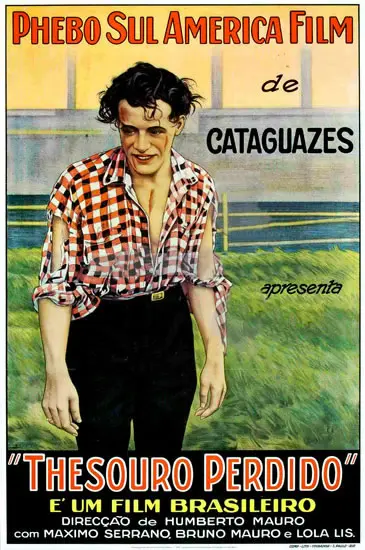
A definitive 6.7/10 rating for a film that redefined the boundaries of cult cinema. Lost Treasure remains a cornerstone of transgressive art.
Is Lost Treasure worth watching today? Short answer: No, unless you are a dedicated film historian or a student of Latin American cinema. This 1923 silent film is a technical curiosity rather than a piece of entertainment for the modern viewer. It is for those who appreciate the 'Cycle of Cataguases' and is definitely not for anyone seeking a fast-paced action movie.
For the casual viewer, Lost Treasure is a difficult sit. It lacks the rhythmic editing of Soviet cinema or the expressionistic depth of German films from the same era. However, for those interested in the evolution of regional filmmaking, it is an essential text. It represents the birth of a cinematic identity in Brazil, far removed from the urban centers of Rio de Janeiro. It is a slow, deliberate, and often repetitive experience that rewards patience with historical insight rather than narrative thrills.
1) This film works because: it demonstrates the raw, unpolished ambition of early Brazilian filmmakers working with almost zero infrastructure.
2) This film fails because: the narrative structure is archaic and the central conflict regarding the map is stretched far beyond its natural lifespan.
3) You should watch it if: you want to witness the literal foundations of South American cinema and the early work of the legendary Humberto Mauro.
To understand Lost Treasure, one must understand the context of its creation. In the early 1920s, the small town of Cataguases became an unlikely hub for cinematic innovation. Humberto Mauro, alongside João Pacheco, began experimenting with cameras and narrative techniques that were largely self-taught. This film is the result of that isolation. It doesn't look like Adam's Rib or other high-budget American productions of 1923. It looks like a group of men in a field trying to figure out how to tell a story with a box of glass and light.
The film’s reliance on outdoor locations was born of necessity, but it gives the movie a grit that indoor studio films of the time lacked. When the bandits are searching for the map, the dust on their clothes and the harsh sunlight on their faces feel real. There is no artifice here. It is a primitive aesthetic, but it is an honest one. Mauro’s direction is tentative, yet you can see the sparks of the visual language he would later perfect in films like A Daughter of the Law.
The performances in Lost Treasure are exactly what you would expect from 1923 provincial cinema: broad, theatrical, and heavily reliant on physical pantomime. Máximo Serrano and Pedro Fantol play their roles with a rugged intensity that occasionally borders on the absurd. However, within the context of a silent adventure, their exaggerated gestures serve a purpose. Without dialogue, the power dynamics of the bandit group must be conveyed through sneers, lunges, and the aggressive clutching of the treasure map.
One specific scene stands out: the moment the map is first revealed. The way the camera lingers on the faces of the men—João Pacheco and Antonio de Almeida—shows a rudimentary understanding of the 'close-up' as a tool for suspense. They aren't just looking at a piece of paper; they are looking at their ticket out of poverty. It’s a moment of genuine human greed captured in a flickering, low-frame-rate medium. It is simple. It works. But it’s flawed.
The cinematography in Lost Treasure is a battle between Mauro’s vision and his equipment. There are moments where the framing is surprisingly sophisticated, utilizing deep focus to show the bandits in the foreground while the vast Brazilian landscape stretches out behind them. This sense of scale is something that even more polished films like Dangerous Waters often struggled to achieve on studio sets. Mauro understood that the landscape was a character in itself.
However, the pacing is where the film truly suffers. By modern standards, a group of men looking for a map should be a high-stakes race. In Mauro’s hands, it is a series of slow walks and long pauses. The editing lacks the kinetic energy found in Westerns like Greased Lightning. Instead, we are treated to long takes that overstay their welcome. It is a slog. There is no other way to describe the middle thirty minutes of this film. It requires a level of historical forgiveness that most viewers simply won't have.
One surprising observation is how much Lost Treasure feels like an American Western, despite its Brazilian roots. It is clear that Mauro and his team were consuming imported films and attempting to replicate the 'frontier' mythology within their own borders. The bandits are coded like outlaws from The Girl of the Golden West, yet they inhabit a world that is distinctly South American. This cultural blending is the most interesting aspect of the film. It isn't just a treasure hunt; it’s a colonial art form being adapted by a local population to tell their own stories of lawlessness.
Pros:
- Essential historical context for South American cinema.
- Authentic location shooting that provides a sense of time and place.
- Early evidence of Humberto Mauro's directorial instincts.
Cons:
- Extremely dated acting techniques.
- Poor narrative pacing and repetitive scenes.
- The 'treasure map' plot is thin and lacks significant stakes.
Lost Treasure is a relic that belongs in a museum, not on a Friday night watchlist. It is a fascinating look at the 'Cycle of Cataguases' and the sheer willpower required to make a film in 1923 Brazil, but as a piece of narrative fiction, it has largely crumbled under the weight of time. If you are looking for a silent epic with more emotional resonance, you might prefer Wilhelm Tell or the domestic drama of Adam's Rib. Lost Treasure is a rough draft of a masterpiece that would never quite arrive, but it remains an important first step for one of Brazil's greatest directors. Watch it for the history, but keep your expectations low for the entertainment value. It is a pioneer's effort. It is brave. It is also, quite frankly, boring.
IMDb 7.3
1935
Community
Log in to comment.