DbcultAccessing Vault...
Cult Review
Senior Film Conservator
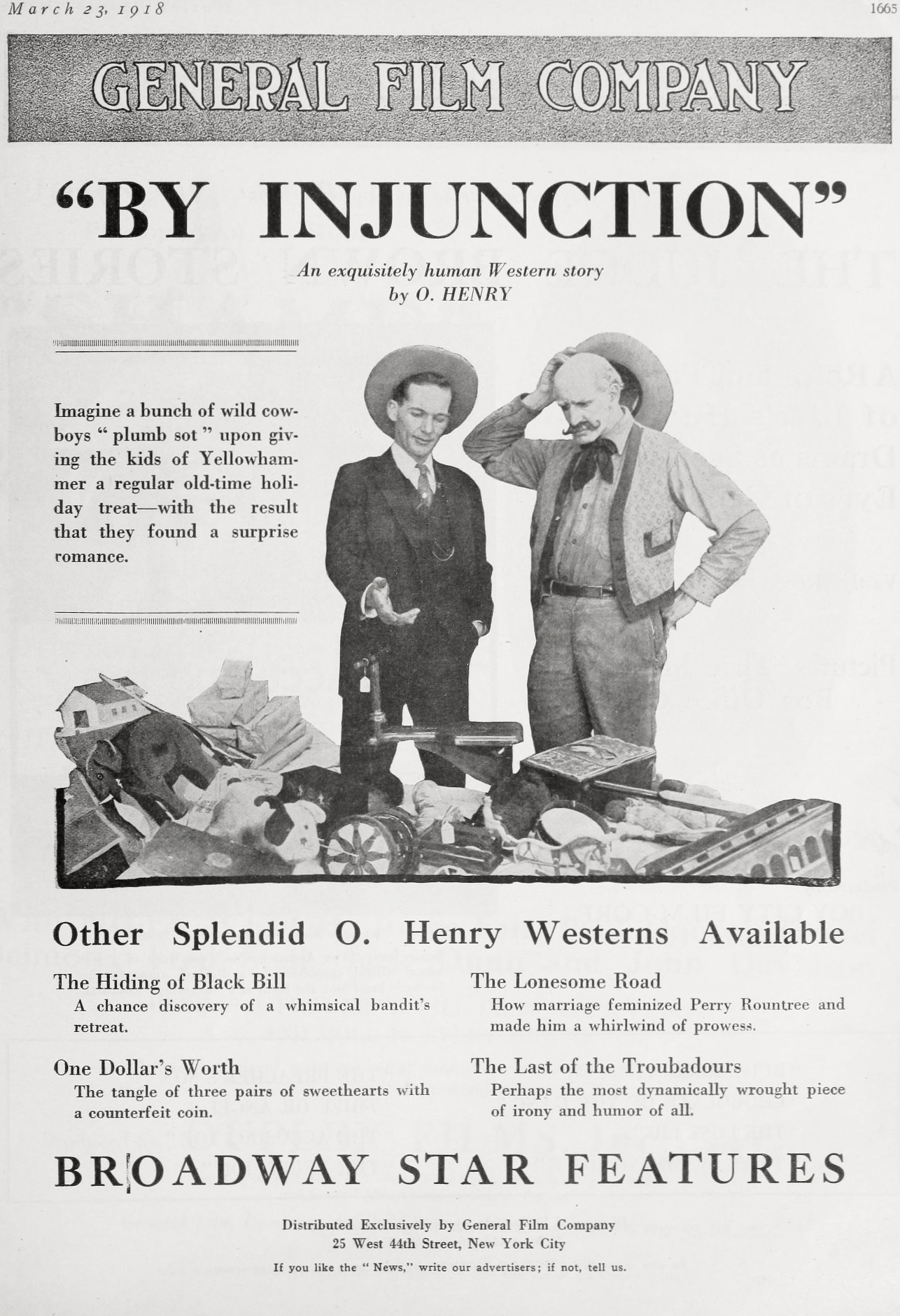
Amidst the sun-bleached prairies where cattle outnumber men ten thousandfold, 'By Injunction' unfolds as a visceral tapestry of masculine fragility disguised as Western heroism. Director Walter Rodgers paints McAllister's fiefdom not as idyllic wilderness but as a pressure cooker of simmering rivalries—a domain where power derives from control of resources and women alike. The film's genius resides in its inversion of cowboy mythology; these aren't noble horsemen but flawed creatures navigating a moral vacuum. When Purcell (J. Carlton Wetherby) observes Buck (Roy McCray) repairing a windmill with quiet efficiency, his face undergoes a tectonic shift—the realization that competence threatens entitlement more violently than any gunslinger ever could.
Rodgers stages the gambling den sequence as Shakespearean tragedy. Chandeliers cast jaundiced light on sweating faces while a roulette wheel spins like a miniature guillotine. Purcell's manipulation transcends mere cheating; he weaponizes Buck's emergent hope against him. Notice how cinematographer George Peters lingers on the collapsing architecture of Buck's posture—shoulders curving inward as coins disappear, fingers whitening around his last silver dollar. This isn't gambling; it's ritual sacrifice. The scene's auditory design proves revolutionary for 1918: diegetic piano melodies warp into dissonant chords with each loss, while Purcell's encouragements echo as though shouted down a well. When Buck finally loses McAllister's $5,000, the silence swallows the room whole—a vacuum preceding explosion.
Contrasting the era's passive heroines, Palmer invests Panchita with volcanic agency. Her courtship with Buck unfolds through stolen moments redolent with coded rebellion: fingers brushing while passing reins, shared laughter during branding that excludes Purcell. Watch her eyes during the wedding scene—a clandestine ceremony in a barn—where defiance glows brighter than any bridal veil. When she slips Buck her mother's garnet brooch for his exile, the gesture becomes both dowry and battle standard. Palmer crafts a woman who understands the frontier's brutal mathematics: love requires collateral. Her performance predates but spiritually aligns with The Big Sister's proto-feminism, proving women weren't mere set dressing in early Westerns.
Lucien Hubbard's adaptation of O. Henry's story transplants the author's signature New York grifters into chaps and spurs with startling efficacy. The frontier becomes another concrete jungle where survival depends on psychological sharpshooting. McAllister's tyrannical benevolence—dispensing jobs and judgments from his porch throne—directly parallels Tammany Hall bosses Henry chronicled. Purcell's machinations evoke 'The Gentle Grafter' tales, albeit with higher stakes than stolen pocket watches. Hubbard preserves Henry's twist structures too: Buck's marriage revelation lands like a gut-punch, transforming his flight from cowardice to sacrificial strategy. This narrative DNA connects to The Cabaret Girl—another Hubbard-scripted tale where love flourishes amidst deception.
J. Carlton Wetherby crafts cinema's first great workplace harasser long before the term existed. His Purcell never raises his voice; intimidation flows through calculated silences and proximity violations. Observe how he stands inches behind Buck during roundup tallies, breath fogging the ledger. Witness the reptilian smile when offering Buck 'luck' money for roulette—coins heated in his palm like poison. Wetherby weaponizes camaraderie as a Trojan horse, his bonhomie curdling whenever Panchita enters the frame. This nuanced villainy surpasses mustache-twirling clichés, anticipating the corporate antagonists of The Safety Curtain by decades. Modern audiences will recognize the gaslighting playbook: isolating targets, weaponizing generosity, and reframing self-defense as aggression.
Cinematographer George Peters maps the story's ethical landscape through visual syntax. McAllister's ranch appears in oppressive wide shots—buildings crouched beneath skylines that dwarf human presence. Contrast Buck's exile sequences where the frame contracts into claustrophobic close-ups: dirt-rimmed nails gripping reins, sweat etching canyons in his neck. Most revolutionary is Peters' use of Dutch angles during Purcell's manipulations, tilting the world 15 degrees off-axis to visualize psychological disintegration. The saloon's color palette tells its own story: sanguine red walls for bloodlust, malarial yellow lampshows for greed, and the sea blue felt of the roulette table resembling a bottomless estuary. These techniques pioneered subjective cinematography later seen in V Lapah Zheltago Dyavola.
Buck's quest for restitution reveals the film's economic subtext. His journey—driving cattle through Comanche territory, mining silver in caves haunted by claim-jumpers—illustrates how frontier capitalism demands bodily sacrifice. Rodgers frames money as contaminated object: Purcell's ill-gotten coins glint like parasites in close-up, while Buck's earned wages appear in wholesome paper bundles. The $5,000 debt becomes metaphysical burden; tracking shots show Buck's posture straightening as he nears repayment sum. This monetary morality play mirrors societal anxieties post-WWI, where war profiteers faced public vilification. The film posits that in lawless lands, personal honor becomes the only viable currency—a theme later explored in The Law of the Great Northwest.
Despite lacking spoken dialogue, the film generates astonishing auditory imagination through visual rhythm. Editor Thomas Middleton cuts cattle drive sequences to phantom hoofbeats—shots lengthening as herds fatigue. During the climactic confrontation, rapid montage of facial close-ups (McAllister's rage, Purcell's panic, Buck's resolve) creates a cacophony of silent shouts. Rodgers employs 'visual staccato' in fight scenes: frames flickering like struck matches to imply impact sounds. This synesthetic approach influenced later silents like The Tiger, proving dialogue wasn't necessary for complex storytelling. The most resonant 'sound' emerges from Buck's wordless reunion with Panchita—a 47-second embrace where fingers tracing facial contours scream louder than any score.
Unlike the mythologized West of John Ford, 'By Injunction' anticipates revisionist Westerns in its moral murkiness. McAllister's unchecked authority mirrors the corrupt judges in The Guilty Man, while the focus on financial precariousness aligns with Depression-era films. Yet it avoids the romanticism of The Primrose Ring or Periwinkle. The film's closest spiritual relative might be Le crépuscule du coeur—both dissect how honor survives transactional societies. Rodgers presents the frontier not as land of opportunity but as an ecosystem where dignity requires constant recalibration against compromise.
Roy McCray achieves the miraculous: making stoicism electrifying. His Buck communicates through containment—economy of gesture magnifying emotional impact. Watch his hands when accepting the roundup job: one finger extended to tap the contract, radiating responsibility without bombast. During exile, McCray crafts physical transformation through subtraction: cheekbones emerging like geological formations, posture compressing under guilt's weight. His reunion with Panchita becomes masterclass in restraint—tremors in his jaw betraying seismic emotion while body remains statue-still. This performance blueprint would inform Gary Cooper's style decades later. McCray proves heroism isn't defined by draw speed but by the quiet calculus of sacrifice—a notion later explored in Conquered Hearts.
Rodgers stages the pre-gambling dance as choreographed warfare. Couples swirl in concentric circles resembling rifle targets, with Purcell cutting through patterns like a bullet. The editing syncs to phantom waltz tempo—three-beat cuts (close-up feet, rotating skirts, anxious faces) establishing unbearable tension. When Buck and Panchita dance, the frame slows, their movements becoming fluid counterpoint to the staccato chaos. Purcell's interruption—'claiming' Panchita mid-step—plays as territorial violation underscored by abrupt silence in the imagined music. This sequence exemplifies Rodgers' thesis: Western civility is performative, a thin veneer over Darwinian conflict. The dance hall's sea blue bunting hanging limp in the heat becomes ironic banner for suppressed violence.
More than century after its release, 'By Injunction' resonates precisely because it dismantles Western tropes it helped create. McAllister's authoritarianism reflects contemporary anxieties about unchecked capitalism. Purcell's psychological warfare predates #MeToo workplace narratives. Buck's quest for redemption through economic atonement mirrors modern debt culture. Rodgers' visual language—particularly his use of environment as emotional amplifier—directly influenced Nicholas Ray's Home and Anthony Mann's noirs. The film endures not as nostalgia piece but as unflinching examination of masculinity's fragile economies. In our era of performative morality and financial precarity, Buck's journey from disgrace to self-forgiveness remains startlingly urgent—a testament to cinema's power to excavate timeless human struggles beneath period costumes.
IMDb 5.3
1933
Community
Log in to comment.