DbcultAccessing Vault...
Cult Review
Senior Film Conservator
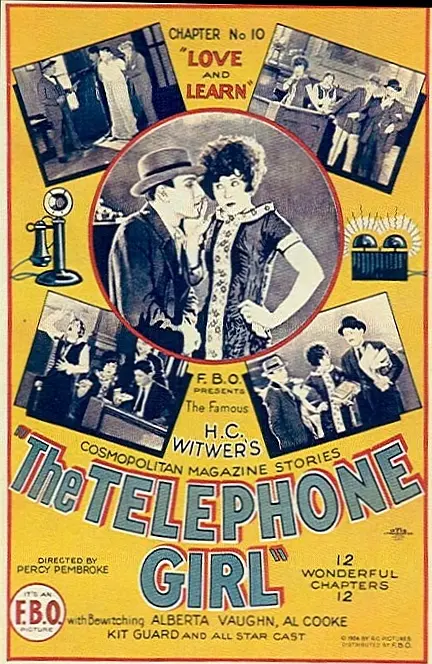
The year 1928 represents a curious inflection point in the history of the moving image. While the industry was bracing for the seismic shift of synchronized sound, films like Love and Learn were quietly refining the visual language of silent storytelling to its most potent form. This production, born from the creative synergy of director Scott Pembroke and the linguistically inventive H.C. Witwer, offers a fascinating glimpse into the cultural anxieties of the Jazz Age—specifically the tension between the traditional pedagogical structures and the unbridled, often chaotic spirit of the youth movement.
One cannot discuss this film without acknowledging the literary backbone provided by H.C. Witwer. Known for his 'Leather Pushers' series and a distinctively gritty, slang-heavy prose, Witwer brought a sense of grounded realism to the screenplay that many contemporary comedies lacked. Unlike the ethereal slapstick found in Smile Please, the humor here is derived from character-driven situational irony. The protagonist's struggle is not with falling pianos or banana peels, but with the linguistic and social nuances of a society that views his academic prowess as a hindrance rather than an asset.
The dialogue cards—often a mundane necessity in silent film—vibrate with Witwer’s signature wit. They capture a moment in American history where the vernacular was evolving at a breakneck pace. This linguistic evolution mirrors the protagonist’s own journey. He begins the film speaking in the sterile, lifeless tones of a scholar and ends it having mastered the rough-and-tumble lexicon of the streets. It is a linguistic 'coming of age' that resonates far more deeply than the standard romantic tropes of the era.
Arthur Rankin delivers a performance that is surprisingly nuanced for the period. In an age where overacting was often the default to compensate for the lack of audio, Rankin utilizes a restrained physicality. His character’s discomfort in his own skin is palpable; you can see the mental gears grinding as he tries to apply logical syllogisms to the flirtations of Alberta Vaughn. Vaughn, conversely, is a revelation of kinetic energy. She represents the 'New Woman'—independent, savvy, and utterly unimpressed by pedigrees. Her performance avoids the shrillness seen in some of the more hyperbolic roles of The Scarlet Road, opting instead for a grounded charisma that makes the central romance feel earned rather than inevitable.
The chemistry between the two is the film's engine. It’s a classic 'opposites attract' dynamic, but it’s played with such sincerity that it transcends the cliché. When Rankin’s character finally breaks his academic shell, the transformation is visual. His posture shifts, his gaze steadies, and the cinematography by the uncredited but capable crew captures this metamorphosis with subtle lighting changes that move from the harsh, flat light of the library to the more atmospheric, shadow-drenched world of the night.
Scott Pembroke’s direction is invisible in the best way possible. He avoids the avant-garde flourishes that might have distracted from the character study, yet he maintains a rhythmic pace that keeps the narrative from sagging. There is a specific sequence involving a social gathering that is edited with a precision reminiscent of Greater Than Fame, where the cross-cutting between different social strata highlights the protagonist’s isolation. Pembroke uses the frame to emphasize the weight of books and the claustrophobia of the study, contrasting it with the wide-open, albeit dangerous, spaces of the city.
The supporting cast, featuring stalwarts like Al Cooke and Kit Guard, provides the necessary comedic relief without veering into the grotesque. Their presence serves as a reminder of the vaudevillian roots of early cinema, yet they are integrated into the plot with more care than one sees in typical 'programmer' films of the time. Even Gertrude Short, in her limited screen time, manages to imbue her character with a sense of history that suggests a world existing beyond the edges of the frame—a hallmark of high-quality silent filmmaking.
To truly appreciate Love and Learn, one must view it against the backdrop of its contemporaries. While films like The Love Egg leaned heavily into the absurd, Pembroke’s work maintains a tether to reality. It shares a thematic DNA with Tarnish in its exploration of social reputation, but it lacks the heavy-handed moralizing found in Children of Dust. Instead, it offers a more cynical, and perhaps more honest, look at the American dream of self-improvement.
The film also avoids the melodramatic pitfalls of The Storm. There are no grand natural disasters here, only the internal storm of a man realizing his life’s work has been a shield against living. This internal focus makes the film feel remarkably modern. It anticipates the screwball comedies of the 1930s, where the battle of the sexes was fought with wits rather than just pratfalls. In many ways, Rankin’s character is a precursor to the 'absent-minded professor' archetype that would later be perfected by actors like Cary Grant.
From a technical standpoint, the film is a masterclass in economy. The sets are evocative without being ostentatious, utilizing a depth of field that was becoming standard in late-20s Hollywood. The use of shadows in the library scenes evokes a sense of dusty antiquity, which is sharply contrasted with the bright, high-key lighting of the dance halls and streets. This visual dichotomy reinforces the central theme of the film: the choice between the safety of the past and the vibrancy of the present.
The costume design also deserves mention. Alberta Vaughn’s wardrobe is a textbook example of 1928 fashion—cloche hats, dropped waists, and shimmering fabrics that catch the light with every movement. These aren't just clothes; they are armor and weaponry in the social battles she fights. In contrast, Rankin’s ill-fitting, conservative suits emphasize his disconnect from the current moment. He looks like a man from Lord Loveland Discovers America, lost in a world that has moved on without him.
In the final analysis, Love and Learn is more than just a relic of a bygone era. It is a sophisticated piece of social commentary that uses humor to explore the perennial conflict between the theoretical and the practical. It lacks the epic scale of Wolfe; or, the Conquest of Quebec, but it possesses a human scale that is arguably more enduring. The film’s refusal to provide easy answers or a saccharine ending—opting instead for a hard-won maturity—sets it apart from the standard fare of 1928.
For the modern viewer, the film offers a double layer of enjoyment. On one level, it is a charming, witty comedy with excellent performances. On another, it is a poignant historical document, capturing the last gasps of the silent era’s visual eloquence. It reminds us that before the world started talking, it had already perfected the art of showing us exactly who we were. While it may not have the historical weight of Der Weltspiegel or the dark intrigue of Behind the Mask, it holds its own as a vital, breathing piece of cinema that deserves to be rescued from the shadows of obscurity.
The legacy of Scott Pembroke and H.C. Witwer is secure in this film. They managed to create something that feels both specific to its time and universal in its themes. Whether you are a scholar of the silent era or simply a lover of well-crafted stories, Love and Learn is a curriculum worth enrolling in. It is a reminder that the most important lessons are rarely found in books, but in the messy, unpredictable, and ultimately rewarding experience of living.
IMDb —
1926
Community
Log in to comment.