DbcultAccessing Vault...
Cult Review
Senior Film Conservator
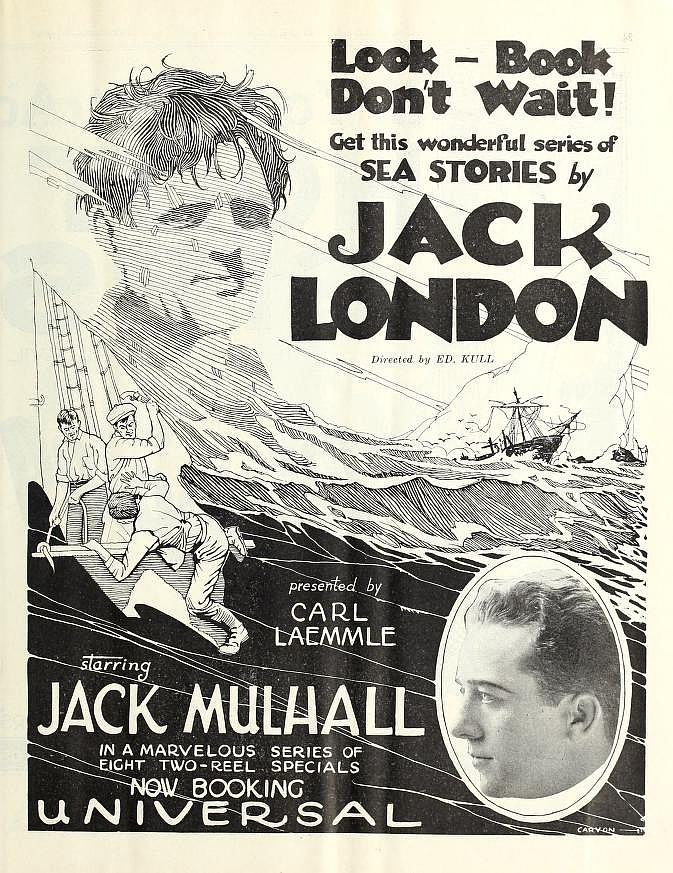
In the pantheon of early silent cinema, few works manage to capture the raw, unvarnished kinesis of the American frontier quite like the adaptations of Jack London. White and Yellow, released in 1922, stands as a formidable testament to this legacy. It is not merely a film; it is a salt-crusted artifact of an era when the San Francisco Bay was a wild, lawless expanse of opportunity and danger. As the first entry in a series of eight two-reelers, this production establishes a high-water mark for maritime realism, eschewing the polished artifice of studio sets for the unpredictable, undulating reality of the open water.
The film’s narrative engine is fueled by the socioeconomic friction of the era. We find ourselves thrust into a world where fish are more valuable than gold, and the lines between legality and piracy are as blurred as the horizon line in a thick NorCal fog. Unlike the romanticized adventures found in Tarzan of the Apes, which relied on exotic escapism, White and Yellow grounds its stakes in the grueling reality of labor and environmental stewardship. The 'Fish Patrol' serves as our moral compass, yet their authority is constantly tested by the ingenuity and desperation of those they pursue.
The casting of Jack Mulhall and Louise Lorraine provides a fascinating dynamic. Mulhall, with his rugged physicality, embodies the Londonian hero—a man of action whose intelligence is expressed through his hands and his instincts. There is a certain atavistic quality to his performance that mirrors the primal themes of the source material. In contrast to the more theatrical performances found in The Notorious Miss Lisle, Mulhall’s approach is surprisingly modern, favoring understated intensity over the grandiloquent gestures common to the period.
Louise Lorraine, though often relegated to the periphery of the action in these early two-reelers, brings a necessary groundedness to the proceedings. Her presence suggests a domesticity that is constantly threatened by the volatility of the bay. One cannot help but compare the gender dynamics here to those in Let Katie Do It, where female agency is more central to the plot. In White and Yellow, the women are the anchors, holding steady while the men are tossed about by the literal and metaphorical tides of fortune.
Technically, the film is a marvel of location shooting. The cinematography captures the San Francisco waterfront with a documentary-like precision that is rare for 1922. The interplay of light on the water—the shimmering 'yellow' of the sun and the 'white' foam of the cresting waves—serves as a visual metaphor for the film's central conflict. The directors utilize the natural environment not just as a backdrop, but as an active participant in the drama. The boats are not mere props; they are claustrophobic stages where life-and-death struggles unfold in the span of a few square feet.
This focus on environmental authenticity sets the film apart from the more stylized productions of the time, such as The Eagle, which favored grand, operatic sets. In White and Yellow, the grit is real. You can almost smell the drying nets and the pungent odor of the day's catch. The editing, handled with a rhythmic understanding of suspense, keeps the viewer pinned to the screen, mirroring the frantic pace of a chase across the choppy waters of the Embarcadero.
One must address the title and the racialized tensions it implies. In the context of 1922, the 'White and Yellow' dichotomy was a reflection of the pervasive 'Yellow Peril' sentiment that dominated California's political discourse. However, the film—much like London’s own writings—often complicates these simplistic prejudices. While it depicts a rivalry, it also acknowledges a shared expertise and a mutual respect for the dangers of the sea. It lacks the overt, heavy-handed didacticism found in The Pride of Palomar, opting instead for a more nuanced portrayal of economic competition.
The 'yellow' men in the film are depicted as formidable adversaries—clever, resilient, and deeply connected to the maritime landscape. Their presence is a constant reminder of the burgeoning multiculturalism that would eventually define San Francisco, despite the systemic efforts to suppress it. The film functions as a historical mirror, reflecting the anxieties of a white working class that felt its dominance slipping away in the face of global migration and industrial change. It is a fascinating, if sometimes uncomfortable, glimpse into the psyche of early 20th-century America.
The format of the two-reeler (approximately 20-30 minutes) requires a narrative economy that many modern feature films would do well to emulate. There is no room for superfluous subplots or indulgent character beats. Every frame must advance the story or heighten the tension. White and Yellow excels in this regard, delivering a dense, packed experience that feels much larger than its actual runtime. It shares this lean efficiency with other shorts of the era, like Tempest Cody Bucks the Trust, which also focused on a singular, high-stakes conflict.
This brevity allows the film to maintain a fever pitch of excitement. The 'vivid cross section of the drama of life' promised in the plot summary is delivered with surgical precision. We see the mechanics of the fish traps, the strategic maneuvering of the patrol boats, and the desperate hand-to-hand combat that ensues when words fail. It is a cinema of movement and consequence, where every decision has an immediate impact on the character's survival.
When we compare White and Yellow to other contemporary works like The Luck of Geraldine Laird or The Daughter Pays, the difference in texture is palpable. While those films often dealt with the drawing-room dramas and social hierarchies of the landed gentry, White and Yellow is a proletarian epic. It is a story of men and women whose lives are dictated by the seasons, the tides, and the market price of salmon. It celebrates the sweat and the struggle of the working class, elevating their daily battles to the level of myth.
The film’s influence can be seen in later maritime dramas that sought to capture the same sense of authenticity. The DNA of Jack London’s 'Tales of the Fish Patrol'—and by extension, this film—can be found in everything from 1930s adventure serials to modern documentaries about commercial fishing. It established a template for the 'man vs. nature vs. man' triangle that remains a staple of action storytelling to this day.
In conclusion, White and Yellow is a vital piece of cinematic history that deserves more than a mere footnote. It is a vibrant, kinetic, and deeply evocative exploration of a bygone era. Through its expert blend of location shooting, physical performance, and socio-economic subtext, it offers a window into the soul of a young, restless America. Whether you are a scholar of silent film or a casual viewer seeking a visceral adventure, this film provides a rich, rewarding experience that lingers long after the final frame has flickered out.
As we look back from a century’s distance, the rivalries of the San Francisco Bay may have changed, but the fundamental human drive for 'fish and fortune' remains as potent as ever. White and Yellow captures that drive with a clarity and a ferocity that is truly timeless. It is a brine-soaked masterpiece that reminds us of the power of cinema to preserve the ephemeral struggles of the past for the contemplation of the future.
Reviewer's Note: For those interested in the evolution of racial themes in early cinema, I highly recommend a side-by-side viewing with Under False Colors to see how identity was negotiated on screen during this transformative decade.

IMDb 6.9
1931
Community
Log in to comment.